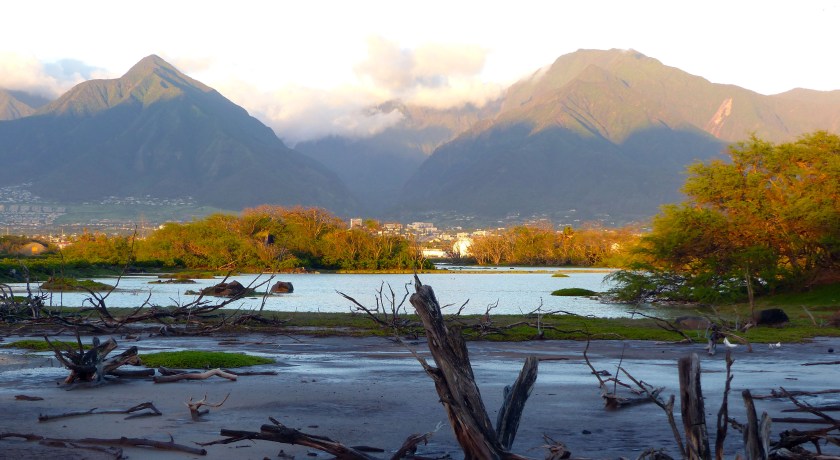
Snow on Maui


kanahapndsfeb212017

Kanaha Pond Wildlife Sanctuary, Maui

Oh -my title – sorry about that. Agatha Christie once joked that a writer who opened a story with the line “Hell!” said the Duchess couldn’t help but grab the attention of a reader. I’m hoping the title of this post will perform the same function. Happily, no snow is falling on Maui. No need to abort a vacation — or panic. Still, to me, the six young Snow Geese I saw at Kanaha Ponds seem almost as out of place as the white stuff.

I’m fascinated with rare birds and their stories. What freak wind or event sent these teenagers off into the vast Pacific? How did they find this remote island thousands of miles away from the Arctic sloughs where they hatched? How will they find their way back? It’s a work in progress, I suppose. For the time being, at least, their futures are linked, this little band of goose kids a long way from home.
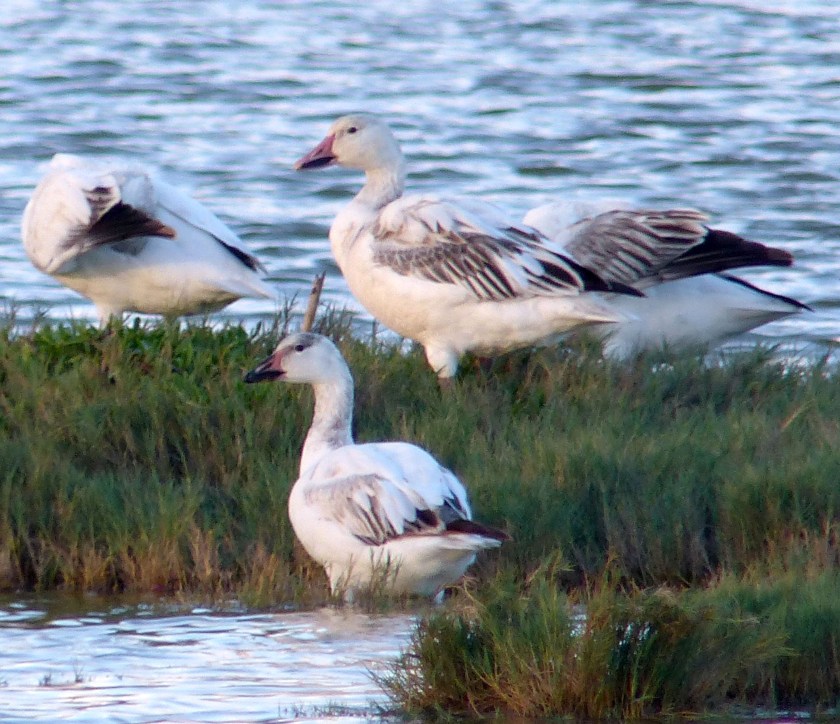
snowgeesemauife212017

Snow on Maui

The Snow Geese rarities aren’t the only fascinating birds at Kanaha. NeNe Goose, a bird I’ve wanted to meet since I was a boy, nests here. Not terribly long ago, NeNes were one of the rarest birds in the world, only thirty individuals on their way to extinction, saved at the last minute by captive breeding and the heroic efforts of volunteers and governments. NeNe live from here at sea level to the cinder plains high up on Haleakala, the volcano that looms nearby. They’re quite tame and still need protection. Slim, fast, ferocious Mongooses are a particular threat, killing goslings and, I think, eating eggs. NeNe are still the rarest geese in the world, by the way.
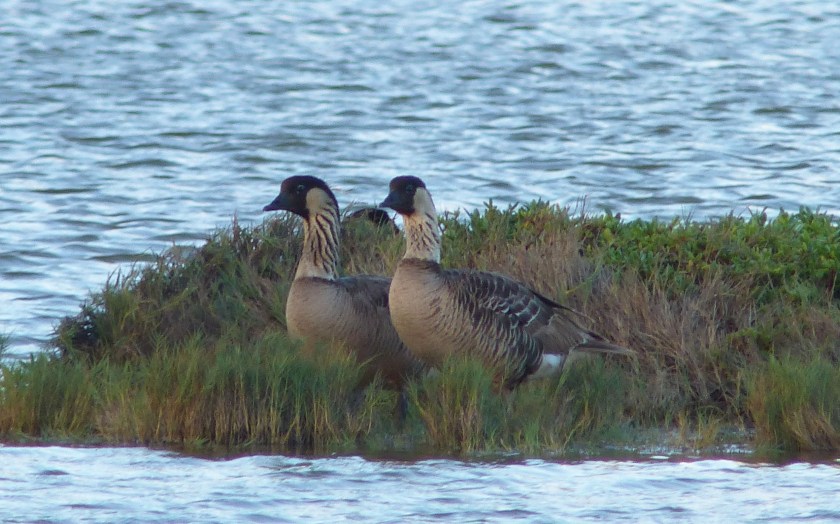
hawgeese

NeNe

At home, I go to great lengths to try to see a Pacific Golden Plover, vainly searching every passing flock of Black-bellied Plovers for a bird without black armpits, a good identifier. Pacific Goldens are common here, seen on most lawns and boulevards. Now, in February, they are already forming pair bonds and defending territory. In a few months they’ll start for Alaska, a distance of almost five thousand kilometers, and they’ll do the flight in three days. Non-stop, sixty-five kilometers an hour! Then they’ll come back to exactly the same place in Maui in the fall. The birds I’m seeing here are truly home, on their special spots at Kanaha, on Maui.
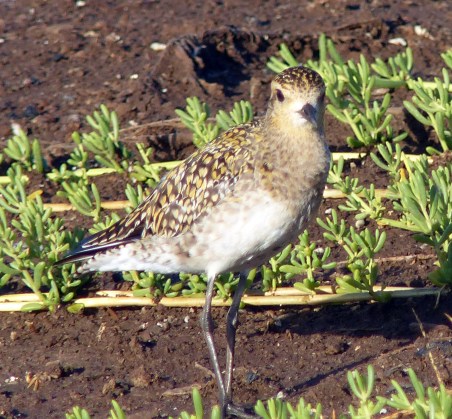
pacgoldplovfe212017

Pacific Golden Plover

Wandering Tattlers also make the long journey from northwestern North America to Hawaii. I love that name! Hawaiians call them Ulili, after the sound of their call. Lovely too. Messenger birds. The Hawaiian singer Iz wrote a song about them. Two Ulili wander amongst the many noisy Black-necked Stilts who populate the shallows. There are Sanderling and a couple of Ruddy Turnstones here too. Nice.

tattlermaui2017

Wandering Tattler

I’ve quickly grown fond of Kanaha Ponds but then I always like the solitude, and the life, of marshes, especially early in the day. This morning, the warm wind blows strong and the handsome Chestnut Munia which forage in small flocks use it to move quickly from place to place — and are consequently very hard to photograph.

chestnutmuniafe212017

Chestnut Munia

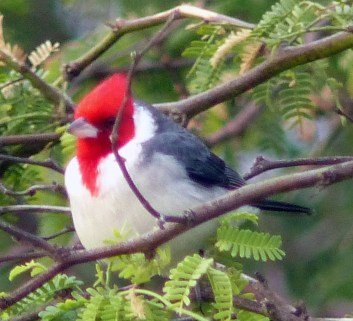
Both Northern and Red-crested Cardinals are more cooperative. Both species are active enough to indicate mating season is in progress, although the Northern Cardinal looks a bit shabby. Now I’m wondering – when is mating season here? Both Cardinals are introduced birds as are the Munia and others, like Common Mynahs. There are few native Hawaiian species at sea level now. Most have succumbed to mosquito borne diseases (mosquitoes are also not native to Hawaii). You have to go high up the mountain to find the beautiful, colourful honey creepers. I’ll do that soon.

northcardmaui

Northern Cardinal

rccardmauife212017

Red-crested Cardinal

rjfmaui

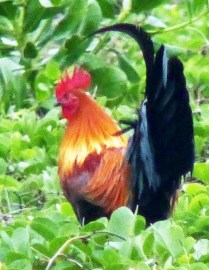
Red Junglefowl

A few Red Junglefowl forage in amongst the low plants at the edges of the ponds. Junglefowl, the ancestors of chickens. Quite spectacular really — if you don’t think chicken.


Winter Birding West Coast Style…

I needed to go to Washington state to pick up copies of my latest mystery novel, the Bent Box, and figured I might as well also pick up a few birds while I’m down there. There’s been a female Common Eider hanging out at a place I’ve never heard of called Purdy Spit near Gig Harbor. The Eider is a rare, rare bird on the west coast so, what the heck, I’ll go have a look. And since I’m going that far, I plan to visit some of my favourite places in Oregon, like Baskett Slough and the Finley Reserve. Weather is a problem though. It’s still unseasonably cold and snow is a possibility.

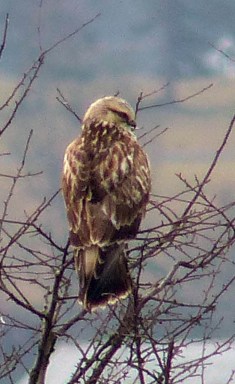
rlghawkja92017

Rough-legged Hawk

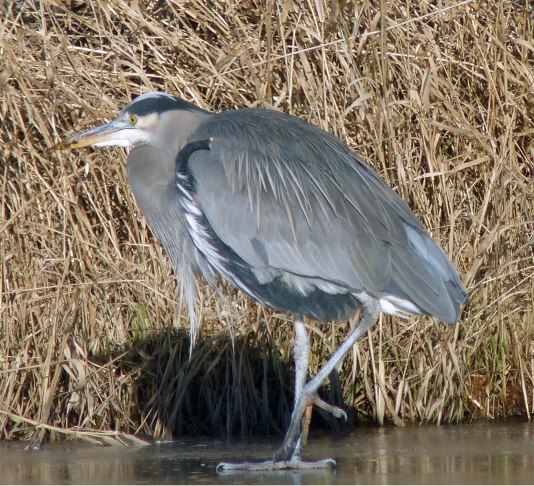
I take a side trip to Samish Flats and spot at least a dozen Red-tailed Hawks, tons of Trumpeter Swans, some Great Blue Herons, scores of Bald Eagles, ducks by the hundreds and a Rough-legged Hawk or two. At Tacoma, I turn towards Gig Harbor and Purdy Spit. When I’m a few miles from my destination, my GPS capriciously decides I’m an hour and a half away. Foiled. I turn back. Who cares about a stupid rare bird anyway? I pay the bridge toll and continue to Nisqually. Nisqually’s nice but the wind is cutting. And it’s damp too. After an hour of birding there, I’m chilled to the bone. When I get to the motel, my fingers are still numb.

hrnoniceja112017

Great Blue Heron on Ice

froznisqlja92017

Nisqually – Frozen

I’m booked into a cheap highway motel in Centralia figuring that I can go south or west from there the next morning. I know nothing about Centralia except what I’ve seen from the highway, which hasn’t been all that impressive. Off the highway, however, Centralia is quite nice. It’s one of the things I really like out these birding trips, the chance to explore, to discover places I would never have seen otherwise. It gets better. I luck into McMenamin’s Olympic Club – a pleasant surprise!

olymicstoveja92017

The Olympic Club, Centralia

With its built-in movie theater and a huge wood-burning stove, the Olympic Club is a treasure. The smell of the fire, the warmth, the food, the glass of Hammerhead Ale, well, on a cold night who could ask for more. Wyatt Earp or Wild Bill Hickok would feel right at home here.

comeidrja102017

Common Eider

Next morning I hear Portland and the coast are expecting a big dump of snow so I turn back north. I decide to have one last stab at the Eider. When I get to Purdy Spit, which turns out to be ten minutes away from where I was yesterday, I find some birders already scoping the water. They’re kind enough to point out the duck to me, which is good because it’s a mile away on the other side of the bay. I can see it with my scope but I’m just shooting blind with my camera. Luckily I got a few pictures but nothing I’d submit to Audubon.
bohemwaxwgsja102017

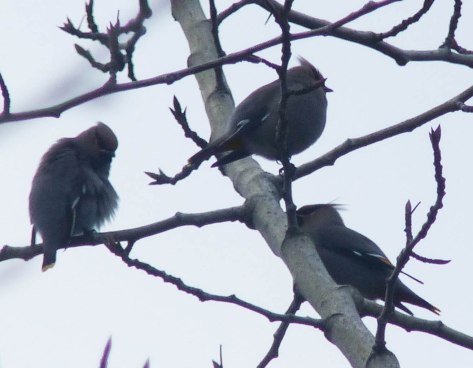
Bohemian Waxwings

I’ve booked a motel in Bellingham. It’s just a few hours away so I’ve got time to bird some more. I follow up on reports of Bohemian Waxwings in Magnuson Park in Seattle. Happily they’re easy to find (with help from another birder already viewing them). I know these attractive birds quite well from my years living in northern BC and I’m surprised I never added them to my life list before. Now I do. Before I get to Bellingham, I head back down to Samish Flats. It’ll be dark soon and the Short-eared Owls that winter there should be hunting.
shrtearedowlfeb12016

Short-eared Owl

Sure enough I spot one – a beautiful bird, one of the most prettiest owls, I think. Unfortunately, the light’s too low and the bird moving around too much to get a good shot. For this post, I’ll use a stand-in, a bird I photographed last year. But I’m frozen again. I don’t think I’ve been really warm since I sat by the Olympic Club’s towering wood stove last night and ate my dinner. I know – whine, whine, whine. If it wasn’t for that fantastic view and the wonderful birds, well…

mtbakrja102017

Mount Baker


Bird Count

winoutfocusde172016

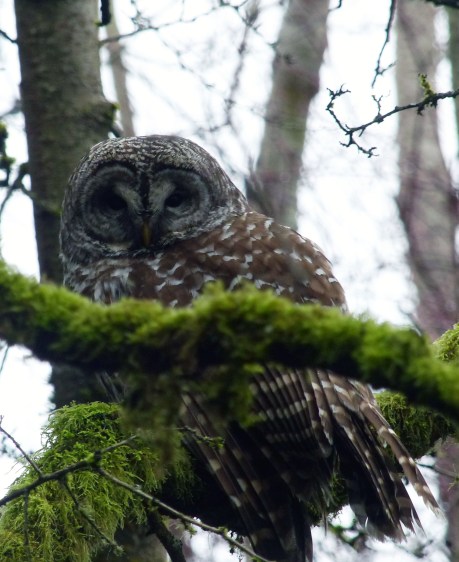
The temperature hasn’t risen above zero and it’s snowing. Not much. At the southern tip of Vancouver Island, it’s enough to keep people home. I’m at Cattle Point in Victoria taking part in the annual Christmas Bird Count. A small group this year, led by young Geoffrey, a talented birder. It’s only just light and he’s already spotted three owls — two Barred and a Great Horned. Amazing.

bowlja202016-copy

Barred Owl

wintertrailde172016

The Perilous Trail

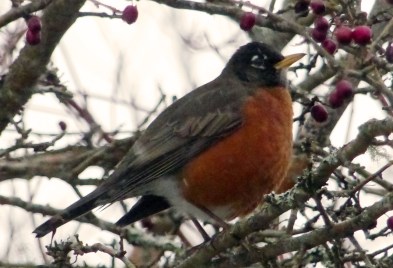
wintrobinde172016

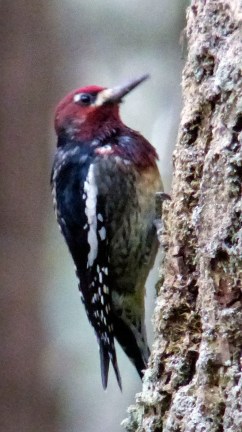
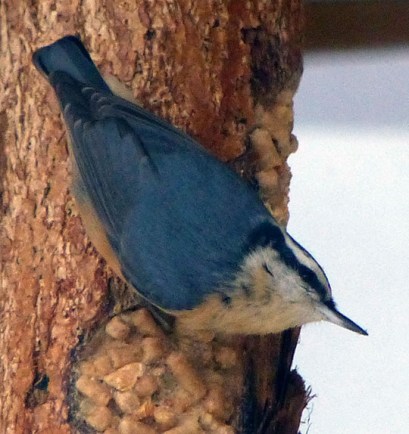
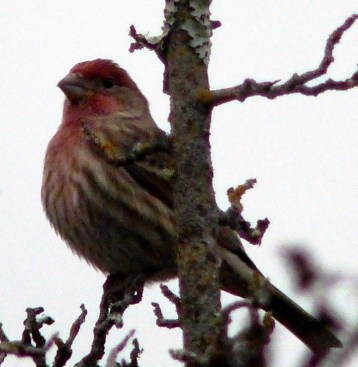
It’s quiet. A somber day — a dusting of white and a leaden sky. We move back into the park to get out of the wind. Except for small flocks of noisy Robins, most birds are lying low. The visibility is lousy too. I never do see the Goldfinch somebody spots, immobile and invisible (to me) in a nearby birch. But red pops. Robins, Housefinches, an active Red-breasted Nuthatch and a Red-Breasted Sapsucker, its chest gluey with sap from its wells, really stand out.

rbsapoc62015

Red-breasted Sapsucker

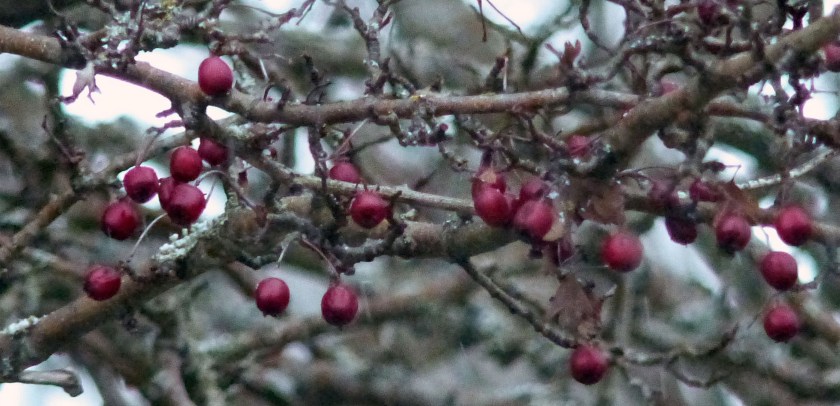
I took a course in colour theory once, the upshot of which was that every colour has a shape. I tried. I stared at various hues until my eyes crossed and that never sunk in. Now I try to figure out if there’s some sort of complimentary dealy going on. Red intensified by the green-blue light of the morning but, really, I have no idea. I like it the effect though. Scarlet rose hips and dark red haws on the thorns help too. What with snow and shades of red and green, it’s kind of Christmassy – nice.

rbnutde172016

Red-breasted Nuthatch

hsefinchde172016

Housefinch

hawsdece172016

Haws


Chachalacas

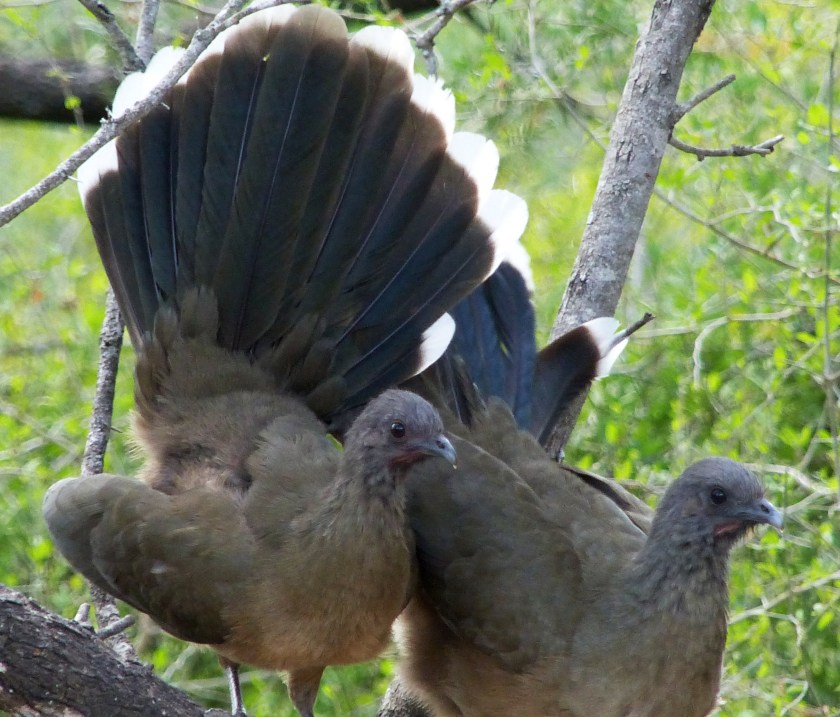
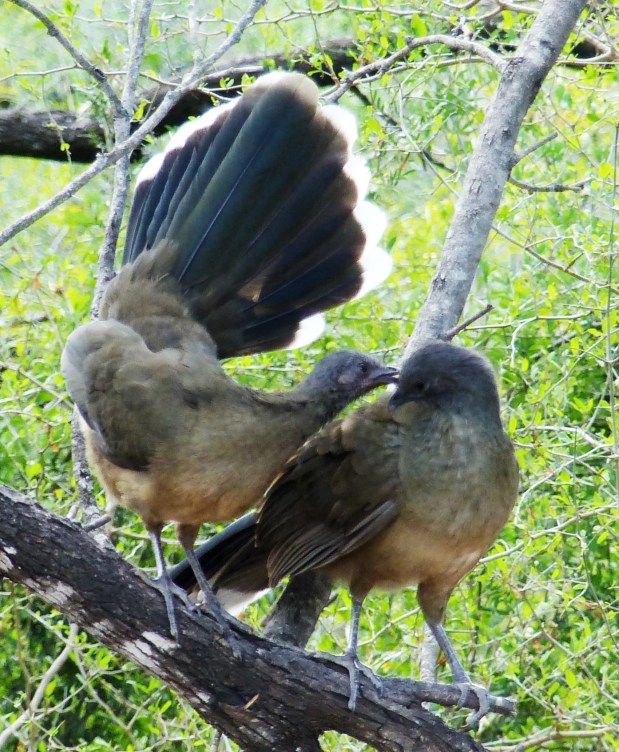
Chachalacas are quite common in southern Texas. Noisy too. Very. I met Texans who admitted to homicidal thoughts around these chicken-like birds. They are up with the sun, even if you’re not. Still, I’m fond of them. Mind you, I also think the poultry barns are the best part of a fall fair, so there’s that. These two seemed to be out on a date.

chacas2no32016

I didn’t see you. I’m looking at whatever it is over there.

chacasno32016

Are you sure?

chacas4

I thought you’d never ask…

Flycatchers


tropkingoct152014x2

Tropical Kingbird

It’s mid-November in British Columbia but I’m out looking for a Tropical Kingbird. Yes –  tropical!  I think I’ve mentioned these wayward birds before. A few of them seem to show up somewhere on the coast each winter. It’s their brain wiring apparently – a misread of the magnetosphere by mostly young birds.

The Kingbird belongs to the Tyrant flycatcher clan, a family that includes some spectacular and engaging species. And they are tyrants in terms of attitude. Fierce little birds when they need to be, and very protective, driving away even the largest raptors.

vrmlionflyno22016

Vermilion Flycatcher

Vermilion Flycatchers are favourites of mine. I think they look more tropical than the Kingbirds. Easy to imagine these small, bright red birds flitting through a jungle canopy somewhere far to the south, maybe near a squad of Toucans. Like many flycatchers, they don’t try to hide, so photographing them is relatively easy. The same is true of Scissortail Flycatchers like the ones I saw recently in Texas. Extravagantly long tails and peach-coloured sides – beautiful!

scrrtailflyno42016

Scissortail Flycatcher


The Owl

The woods around the visitor center at Laguna Atascosas in Texas. Like almost every other birder here, I’m looking for a Tropical Parula, a rare and pretty warbler that nobody’s seen today. I pass little knots of people scanning the trees with their binoculars. Soon we’re all on nodding terms.

It’s hot and too late in the day for birds to move around much, which means that the Parula (if it’s still here) will be hunkered down deep in the foliage. I still haven’t had breakfast and it seems silly to stick around. Then the amazing happens. A raucous group of Green Jays push out an Eastern Screech Owl. The bird stops for pictures about ten feet away! The chances of this are remote but when it happens it’s wonderful, like finding treasure. It’s one of the things I love about birding.

scrowl3n42016

Eastern Screech Owl


estrnscreechno42016

So you’re here!

Raptor Day

I’m at a birding festival in Texas. It’s unseasonably hot and very humid. My destination is the Laguna Atascosas Wildlife Refuge where I’m hoping to see rare Aplomado Falcons. The day doesn’t start well. I’m up early and keen but my GPS takes me to a bridge that is out and poorly marked detours have me driving around in circles for three hours. Twenty miles of so in three hours! I finally luck out and spot the road in, which turns to be one of the worst thoroughfares I’ve ever been on. I do see a gorgeous White-tailed Hawk but then nothing.

wthawkn2016

White-Tailed Hawk

I’m getting discouraged but then, wonder of wonders, I spot two Aplomados and brake. They’re on adjacent fence posts about thirty feet away – beautiful- but when I get out to take pictures, my lens fogs up – something about air conditioners, humidity, and glass. Physics again, my nemesis!

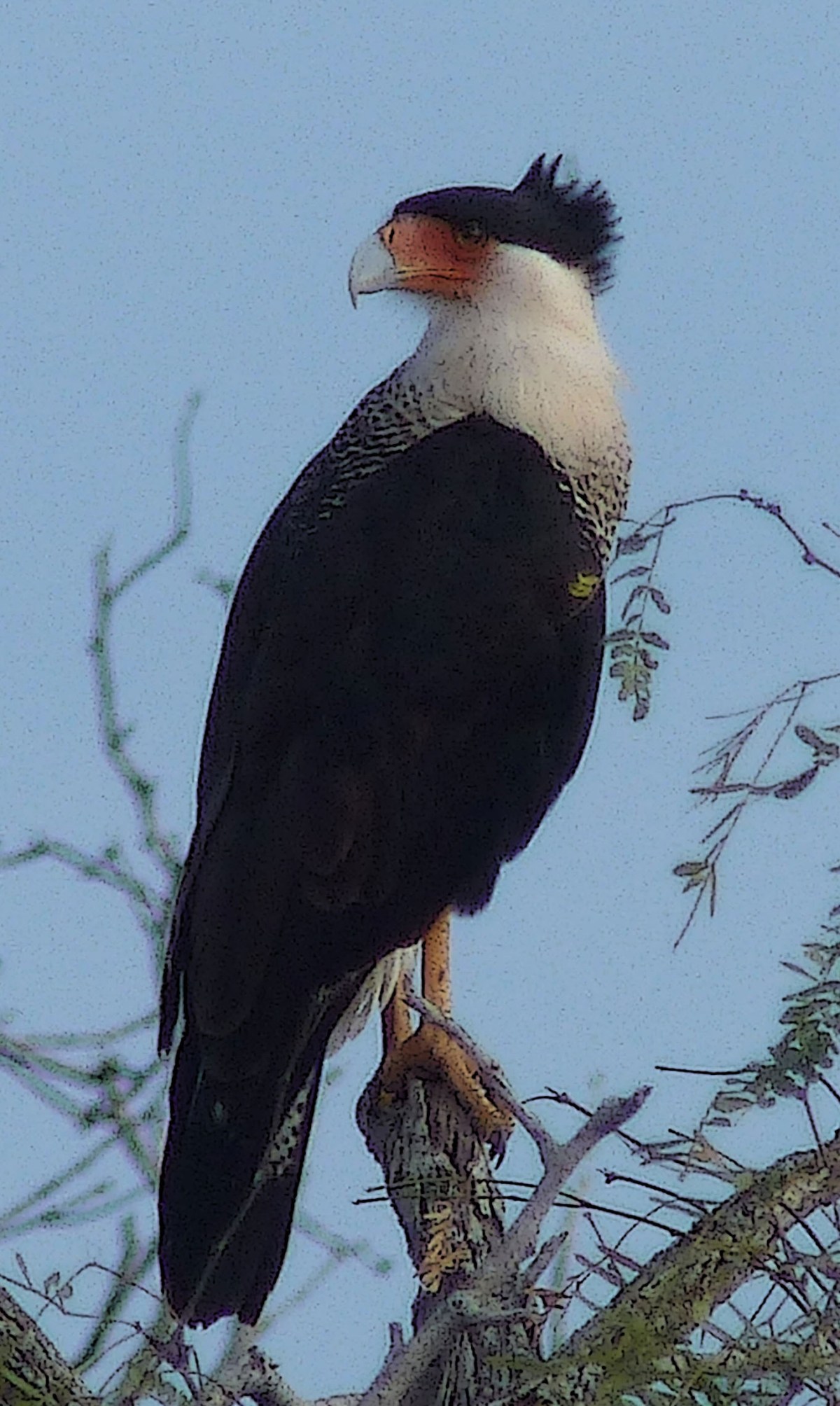
I finally clear things up but as I try to line up a shot, the falcons, disgusted, hightail it. It’s not my day. Or is it? Birding is funny. After I resign myself to failure, my luck changes. The day becomes a raptor day – and one of the my best. I see a dozen birds of prey – the Aplomados, Peregrine Falcons, White-tailed Kites, Kestrels, Harriers, Crested Caracaras, White-tailed Hawks and the highlight, an Eastern Screech Owl. I’ll talk about that marvellous bird in the next post.

caracposterno4

Crested Caracara

pergr2no42016

Peregrine Falcon

kitewtno12016

White-tailed Kite

For those who don’t know the Aplomado, I offer a picture of a bird rehabilitated by the Raptor Project, an organization that looks after injured birds who are too damaged to be released. You can see what I missed when my lens fogged up back at Atascosas! The wild birds looked angular and deadly, not the least bit cute like this chap.


aplomadofal

 Raptor Project Aplomado, with Harris’s Hawk

Autumn Ducks: Hooded Merganser

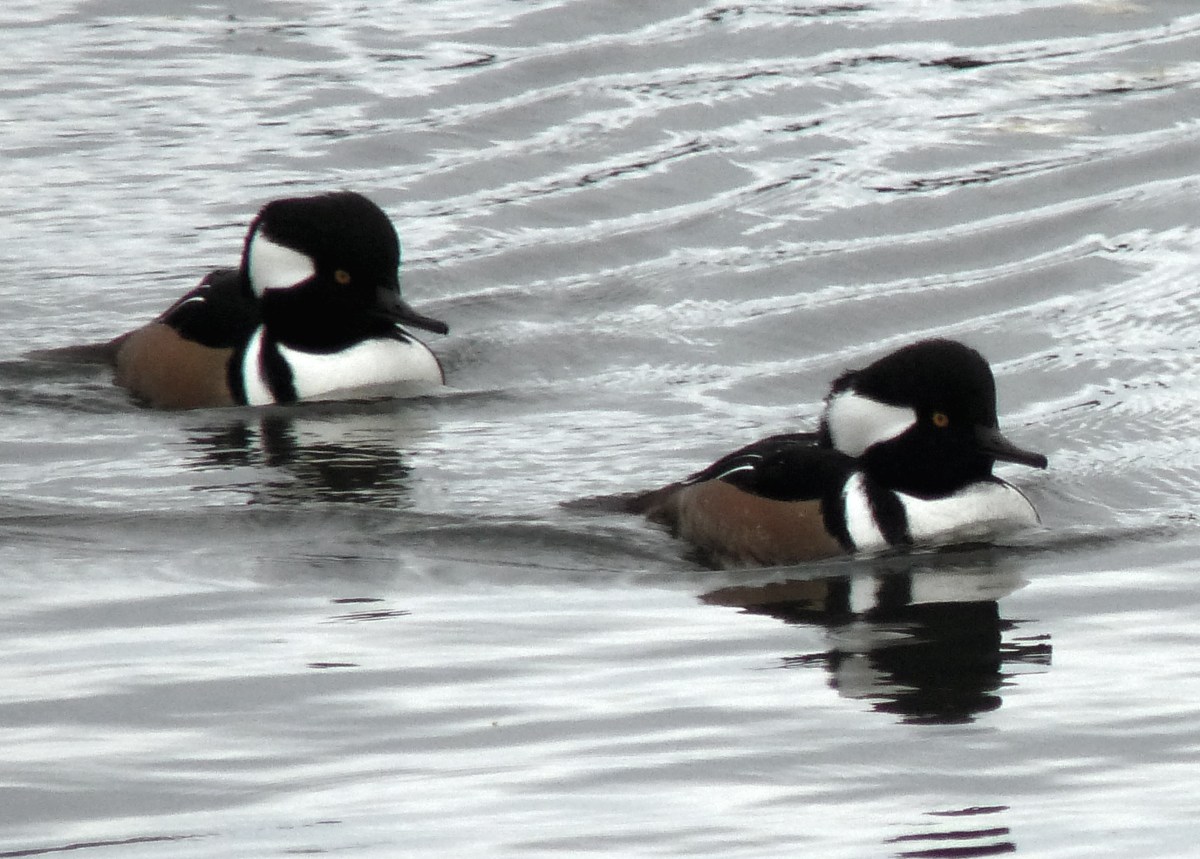
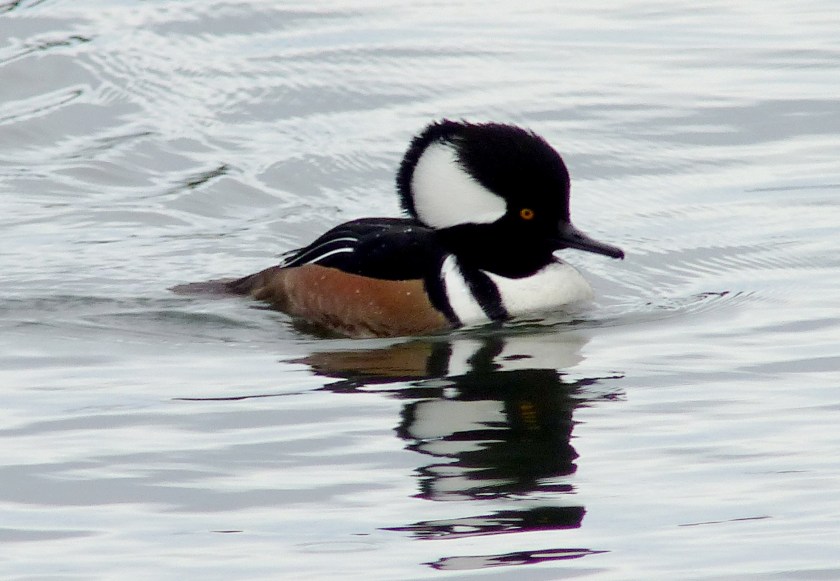
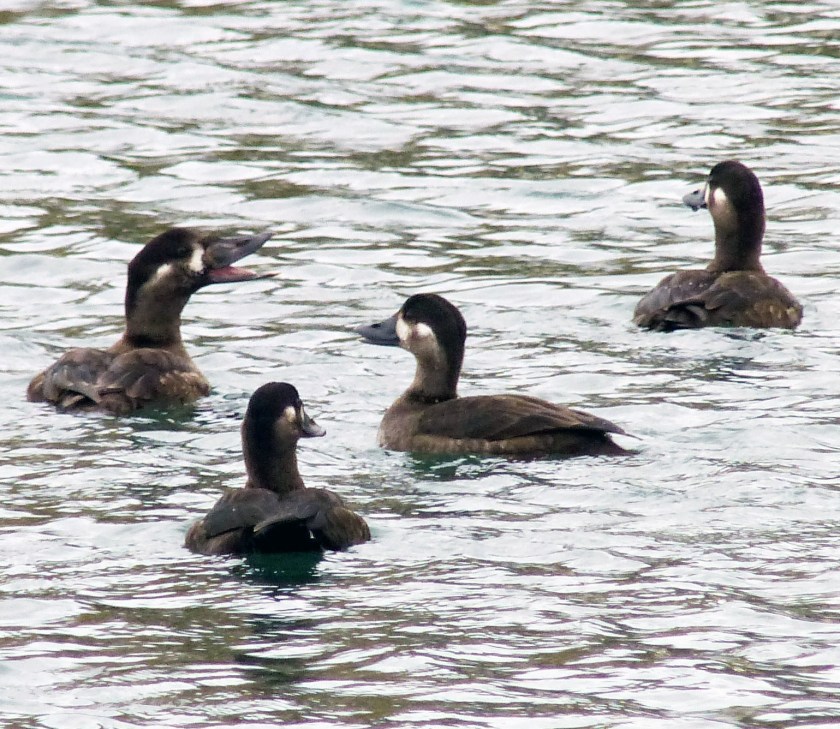
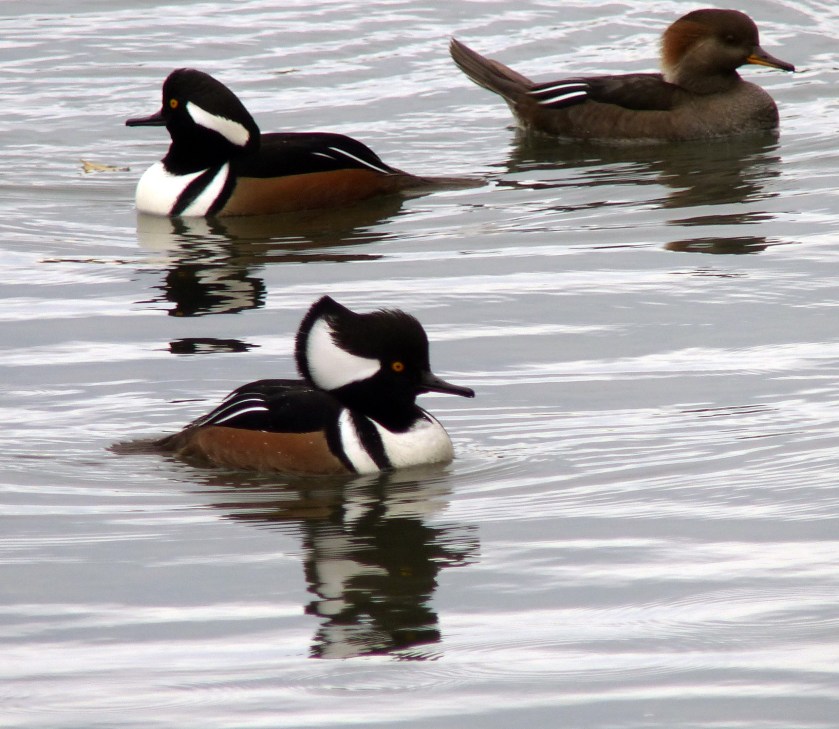
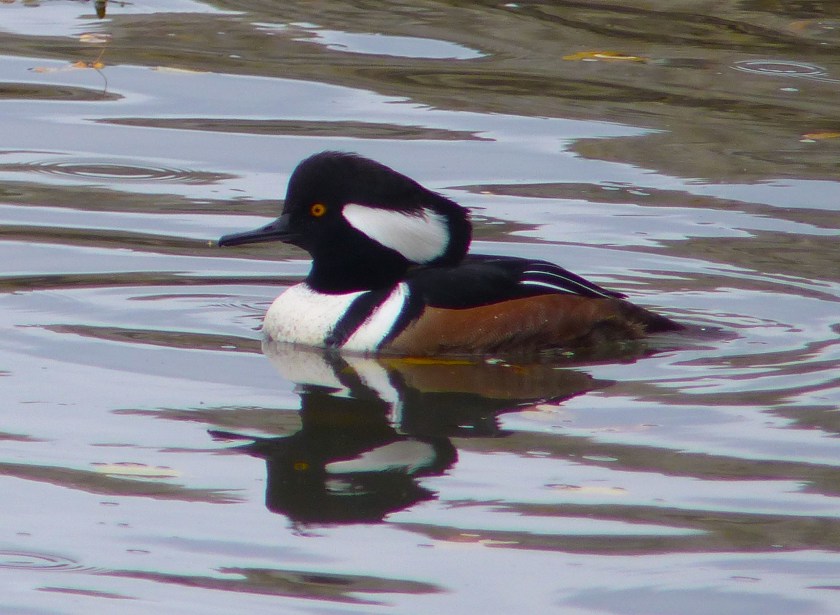
Is there a prettier duck than the ‘Hoodie’? A group has just arrived in our little bay, the males posturing and flashing their crests as they compete for females. Buffleheads are here too, right on time – the 3rd week in October for us. And our Widgeon have returned, tumbling in on the winds of the last October storm. Coming home for the winter, I guess, and soon to be grazing on the local park lawns. No sign (yet) of the crimson-headed Eurasian Widgeon that spent last winter here. A squadron of young Surf Scoters has joined the Buffleheads, a bit of a surprise in such shallow water.

hdmerg2oc252016

Hooded Merganser Drake

yngscotersoc252016

Surf Scoter Teens

hmergs0c25

Competition

hdmergxoc25

Today’s Champion


Mexican Birds 1

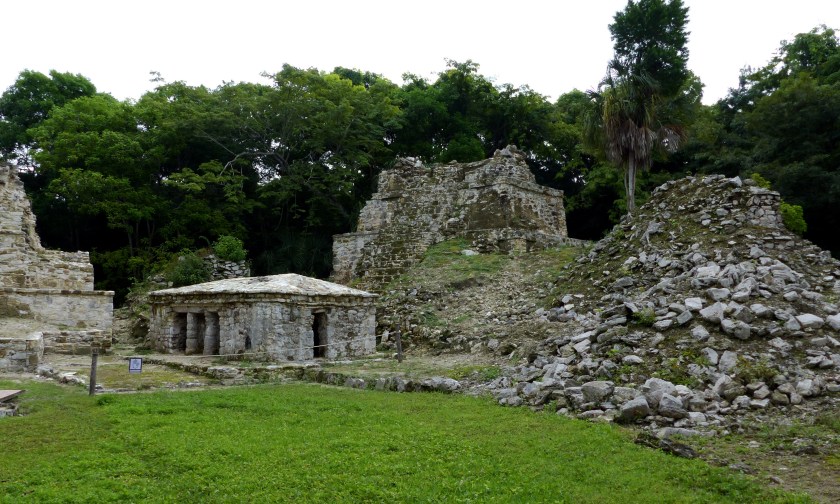
Amid the ruins of Muyil, a Mayan city in the Quintana Roo, an Violaceous Trogon. Seeing a marvellous bird like this in a place like Muyil helps one forget about the heat, the bugs, and the early morning. The guide’s cheese loaf at mid-morning was nothing to write home about either.

olivaceoustrogde52015

Violaceous Trogon

The excavated part of a much larger city. Muyil, a trading center, was inhabited for over a thousand years and abandoned more than five hundred years ago.

muyilde52015

Muyil, Quintana Roo


Rare Birds – The Emperor Goose

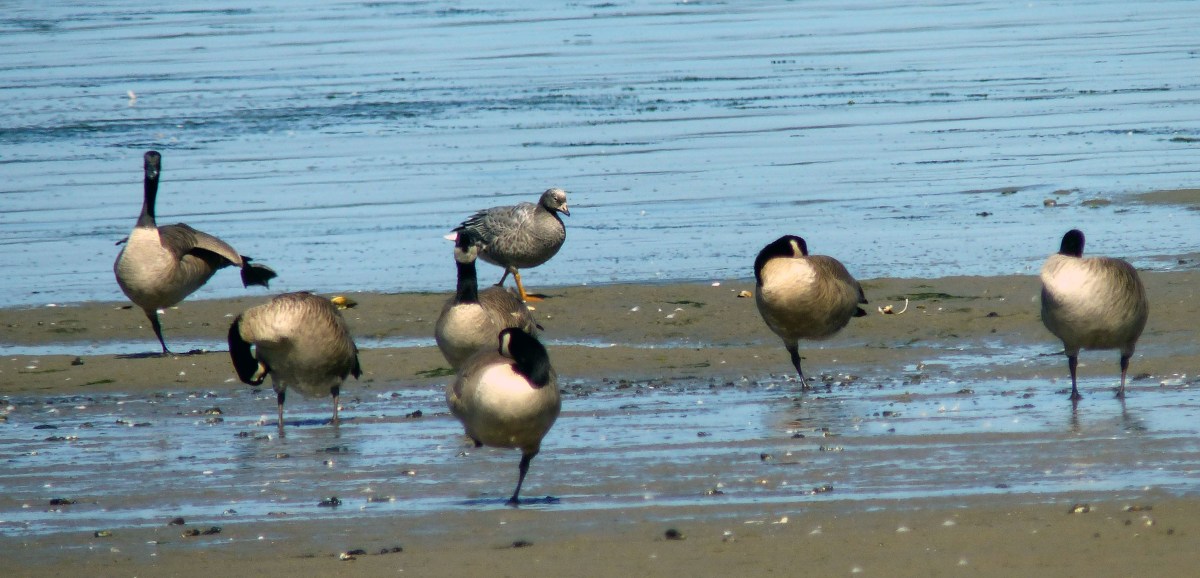
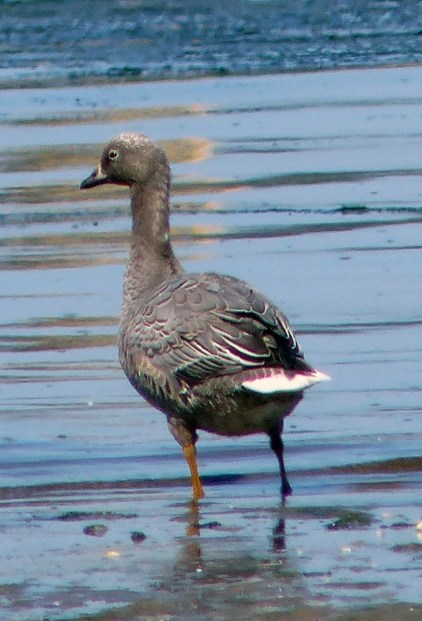
I got the rare bird report when I was in Salem, Oregon in September. A number of people had reported an Emperor Goose near Coos Bay, also in Oregon, and I don’t have one on my list. Coos Bay is bit of a drive from Salem but what the heck — I’m at location around noon. It’s a nice sunny day and there are thousands of Canada Geese around but that’s it. After an hour or so, I abandon the quest. I decide to make one more try at the top of a bluff. Unfortunately, I can only see about six feet of beach from my vantage point which, it turns out, is all I need. The Goose in question obliging walks into the frame. Sometimes you just get lucky! This one is lovely blue-gray bird with pinky legs and a white topknot, a young bird a long way from the Aleutians, where it probably ought to be at this time of the year.

empgoos3sep212016

Emperor Goose