The Heronry

I’m hoping for a Great Horned Owl this morning. I know several live in Beacon Hill Park but I’ll be darned if I can find them. Pity I’m not looking for Mallards, which are here in abundance. How long has it been since they made the Rare Bird list? A Eurasian Widgeon is grazing near one of the artificial channels and the American Black Duck that has wintered at Fountain Lake for the past few years is still around. A couple of female Hooded Mergansers cruise past, fishing for Pumpkinseeds, I guess. Nice birds but familiar.
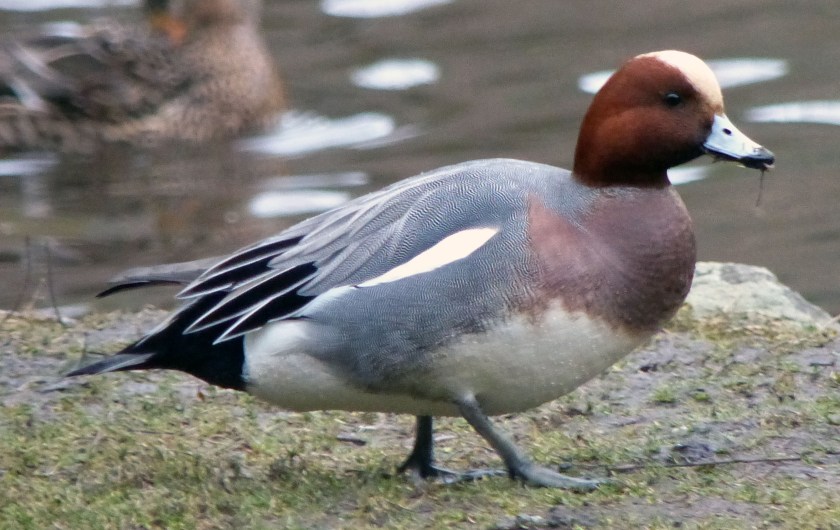
Eurwidgma112017

Eurasian Widgeon

It’s very still. There are few people around and I’m focussed on the trees looking in vain for owl shapes, my mind wandering. I suddenly remember the Hippopotamus poem by Patrick Barrington and it sticks, hard. I can remember some but not all. “I had a hippopotamus, I kept him in a shed; I fed him up on vitamins and vegetable bread...”  After that, there was a hippo “portrait done by a celebrity in chalks.” Oh, dear.

Hoodfemma112017

Hooded Merganser

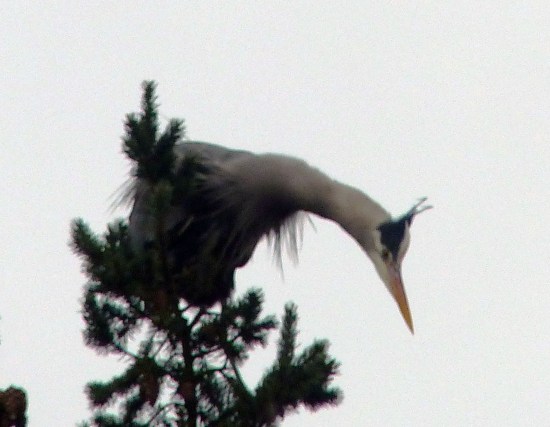
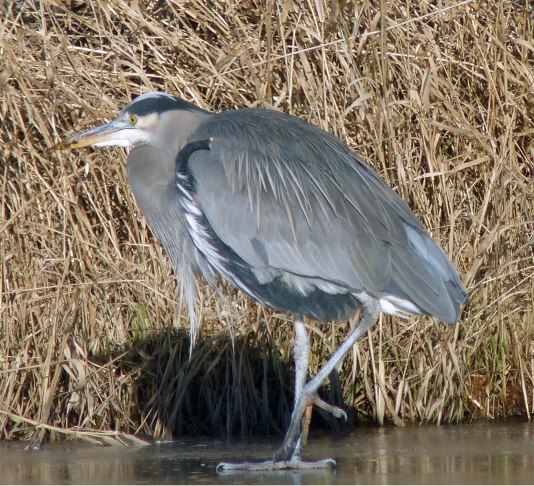
The guy’s landlady does the hippo in with a machine gun she borrows from “her soldier nephew Percy “- I’m sure of that. So sad. But what’s the rest? I’m really concentrating now, so much so that a horrific gurgling yawk! startles me — someone’s being strangled and shockingly close by too! It’s not that, of course, although it takes me a fraction of a second to realize this. A big ungainly bird flaps and climbs upwards through the dark branches of the cedar I’m under, and then another – Great Blue Herons on the move. It’s mating season and nests are being built. This will be the new heronry. I definitely do not want to be standing beneath a heronry and take my leave. When I finally get a view of the treetops, I see something for the first time – male Herons raising their crests. Wonderful. Even the quietest birding days offer us something marvellous.

Her2crestMar112017

Position One

HeroncrestsMa112017

The Finale

And, oh, yes…

“No longer now he gambols in the orchard in the spring; no longer do I lead him through the village on a string.

No longer in the mornings does the neighbourhood rejoice; to his hippopotamusically-modulated voice.”

And then it gets sadder.

Well, they don’t write ’em like that anymore…
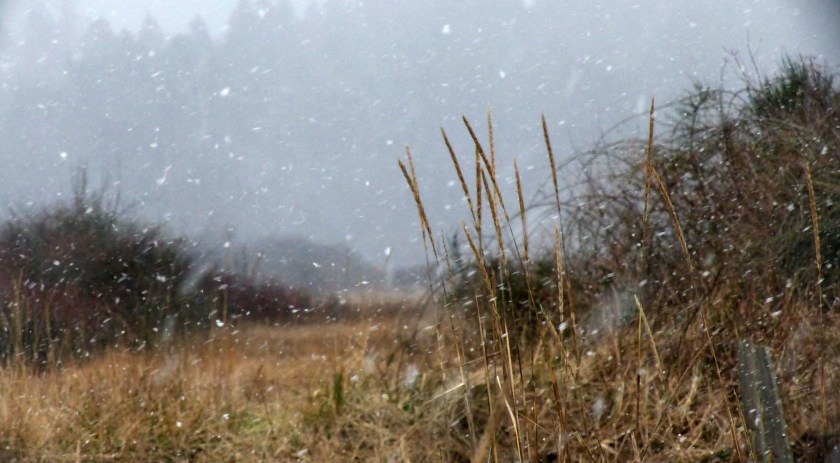


Sometimes the light is just right…

MarsnowSSpitfMar62017

Good grief, snow again!

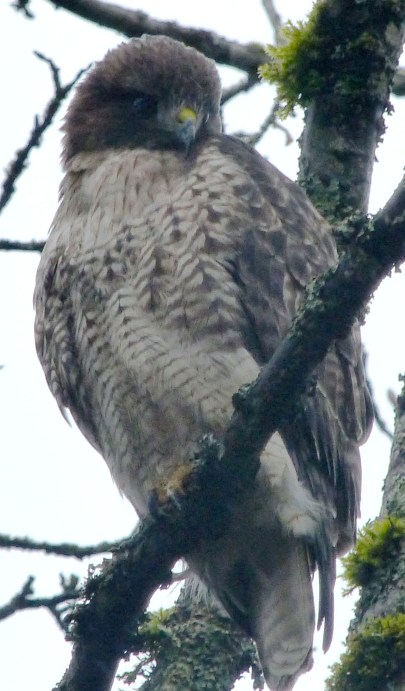
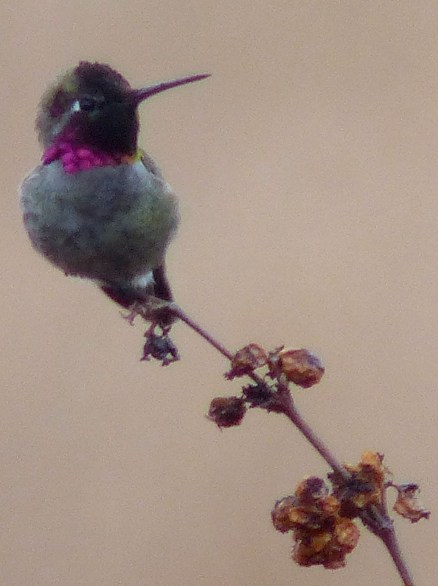
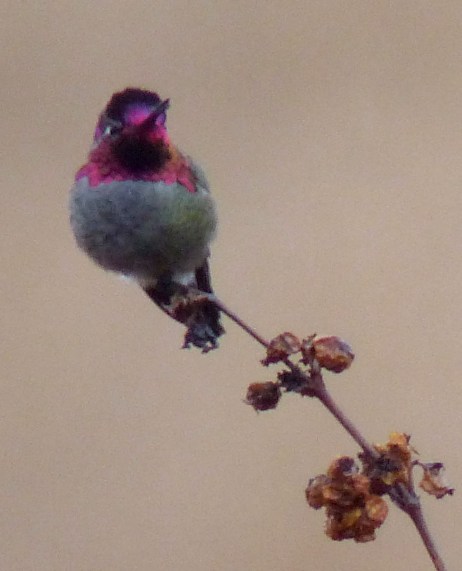
None of my target birds seem to want to make themselves available today. It’s cold again at Swan Lake. A chill east wind generated, they say, by La Nina (with a tilde) persists. Even today in March, when we should be counting blooms, we’re getting transient and unexpected snow squalls. Happily, they pass quickly but the sky stays overcast, threatening. In this weather, few people are out on the trails so it’s quiet. Nice. I like the solitude. It’s when I feel closest to nature, the closest I come to walking meditation. I take a number of shots of Anna’s Hummingbirds just because, and of a young Redtail watching the meadow. A proper photographer would probably have picked up on the quality of the light. Not me. I’m just hoping for the best. It’s when I’m home, and have uploaded the day’s ‘catch’ that I discover, once again, that it’s good to keeping shooting because, well, you never know. I couldn’t have gotten better views of the male’s fantastic gorget and head colours if I’d schemed and planned, or got the depth of field as right as I think I did.

RedtailjuvFe262017

Redtail Hawk

Annas3fe262017

Anna’s Hummingbird

Annas2Feb262017

AnnasFe262017

Anna’s Hummingbird


Hosmer Grove

haleakalamorn

Haleakala Morning

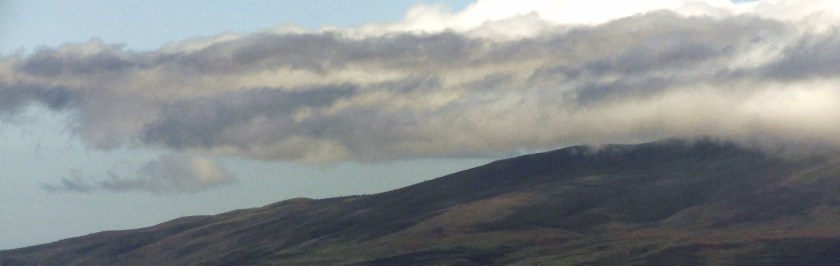
At 7000 feet on the slopes of Haleakala, it’s easy to forget the tropical heat at beach level. It’s cold and windy up here, so much so that we’ve had to drag out the winter jackets we wore to the airport in Victoria during the snowstorm. I could use my toque too (stocking cap for American readers). A few hardy campers take down their tiny tents and pack up. Europeans. Wearing shorts! Crikey!


gumtreeshosmerfe212017

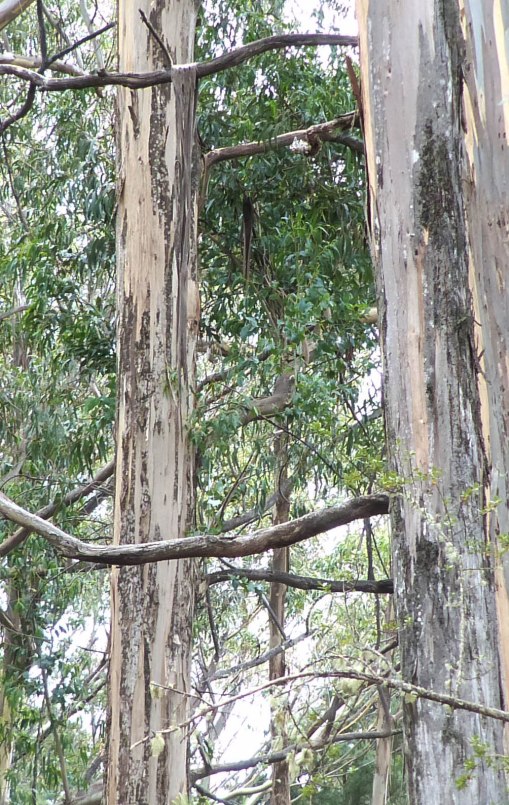
Eucalypts – Hosmer Grove

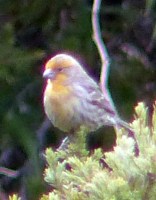
Happily, no noisy campers hike the trail through the eucalyptus forest. Nice to hear the wind soughing and the birds singing. Shaggy gum trees, the Eucalypts, exude a volatile resin, a perfume, and the air is scented with it. And the breeze carries another fragrance too – sandalwood. There is a single remaining Sandalwood tree here somewhere. We see movement in the canopy and strain for a glimpse of birdlife but, aside from a single flash of red, nothing. The trail isn’t long, half a mile at most. An overlook at the edge of a deep, brushy ravine is more productive. Finally, a bird shows itself – a House Finch, with a yellow face rather than the scarlet of lower elevations. It’s the first time I’ve seen this phase although I think it’s a fairly common variation on the theme. Left alone, introduced birds would, in time I suppose, evolve into new species – Maui’s versions of Darwin’s Finches perhaps.

fichhosmerfe212017

House Finch

iiwi2feb212017

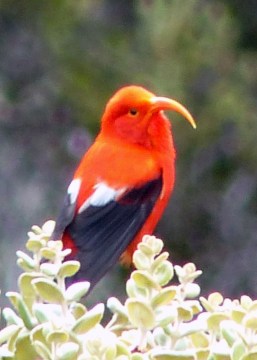
I’Iwi

The forest protects us from the wind, which is welcome, and the view is good. Another flash of red on the other side of the cut. I’m going to be limited to distance shots I reckon, not great with my hand-held camera – a Panasonic Lumix FZ200 with a converter.

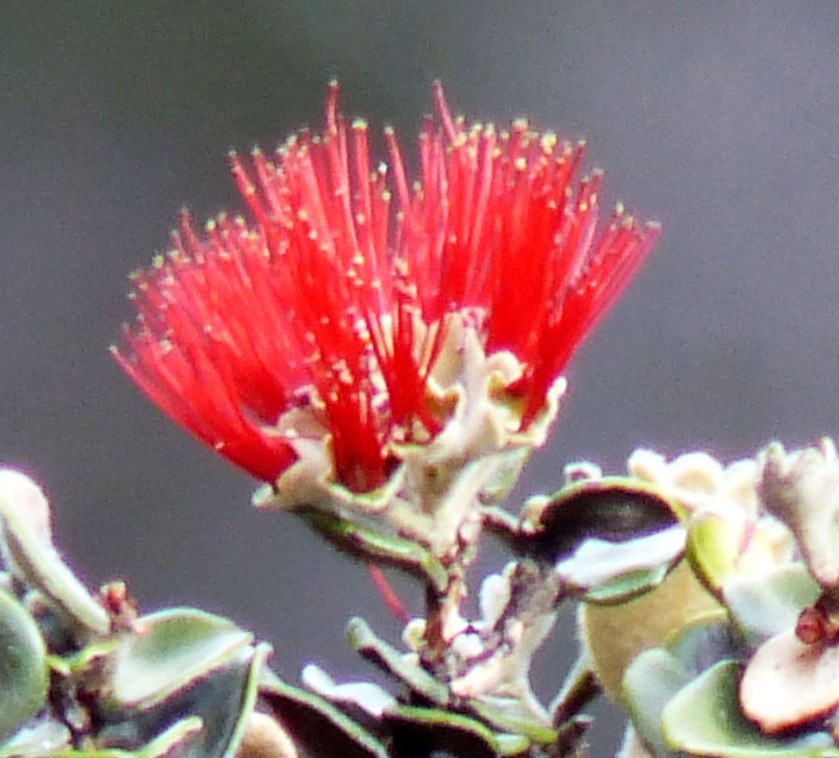
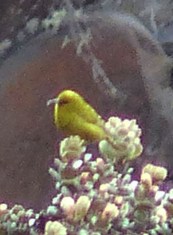
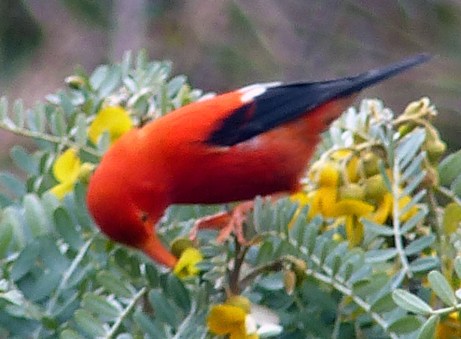
I hear what I think are I’Iwi – a series of duck-like mini-quacks. For a few minutes, nothing, and then a blur of red in amongst the vermilion flowers of an ‘Ohi’a bush on the other side of a forested ravine, an endemic forest bird a last — my first I’Iwi. Other birds too – a bright green Amakihi, an olive-green Maui Creeper – nectar feeders like the I’Iwi. A half a dozen crimson and black Apanane flit about the bushy slopes too fast to photograph this morning. I like the name – Apanane – also a kind of honey creeper.

ohiaflowerfe212017

‘Ohi’a Lehua flower

amakihife2017

Amakihi

iiwifeedingfe212017

I’Iwi – nectar gathering


Snow on Maui

cran621's avatarBird Noetz

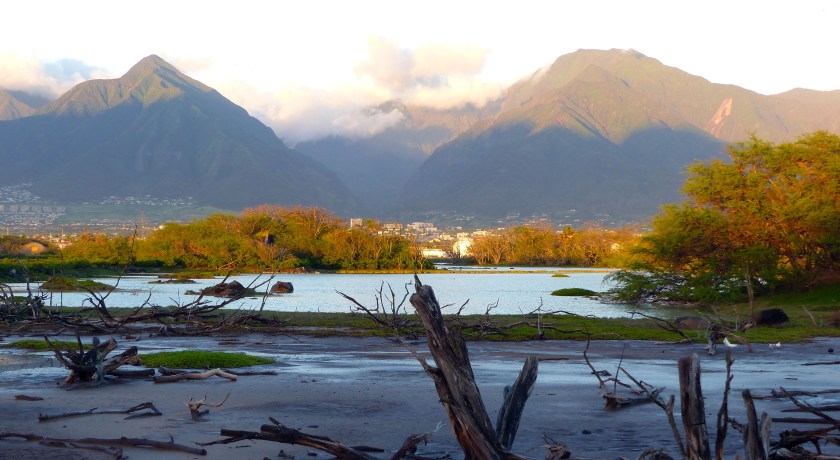
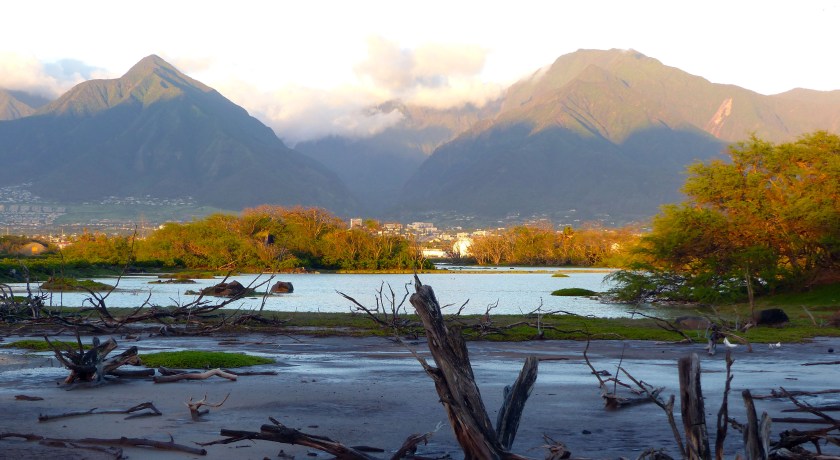
kanahapndsfeb212017Kanaha Pond Wildlife Sanctuary, Maui

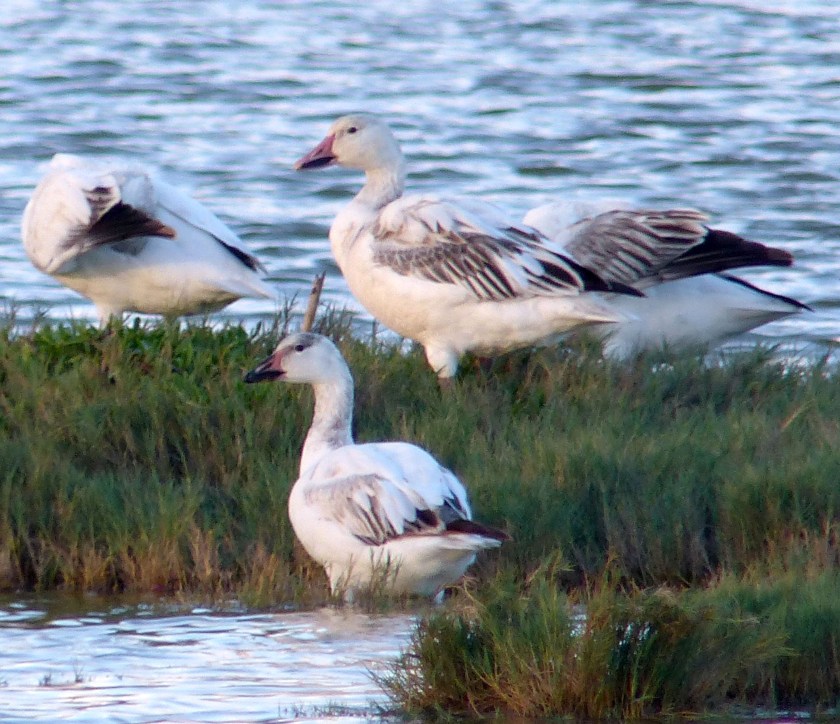
Oh -my title – sorry about that. Agatha Christie once joked that a writer who opened a story with the line “Hell!” said the Duchess couldn’t help but grab the attention of a reader. I’m hoping the title of this post will perform the same function. Happily, no snow is falling on Maui. No need to abort a vacation — or panic. Still, to me, the six young Snow Geese I saw at Kanaha Ponds seem almost as out of place as the white stuff.

I’m fascinated with rare birds and their stories. What freak wind or event sent these teenagers off into the vast Pacific? How did they find this remote island thousands of miles away from the Arctic sloughs where they hatched? How will they find their way back? It’s a work in progress, I suppose. For the time being, at least, their…

View original post 511 more words

Snow on Maui


kanahapndsfeb212017

Kanaha Pond Wildlife Sanctuary, Maui
Oh -my title – sorry about that. Agatha Christie once joked that a writer who opened a story with the line “Hell!” said the Duchess couldn’t help but grab the attention of a reader. I’m hoping the title of this post will perform the same function. Happily, no snow is falling on Maui. No need to abort a vacation — or panic. Still, to me, the six young Snow Geese I saw at Kanaha Ponds seem almost as out of place as the white stuff.

I’m fascinated with rare birds and their stories. What freak wind or event sent these teenagers off into the vast Pacific? How did they find this remote island thousands of miles away from the Arctic sloughs where they hatched? How will they find their way back? It’s a work in progress, I suppose. For the time being, at least, their futures are linked, this little band of goose kids a long way from home.

snowgeesemauife212017

Snow on Maui

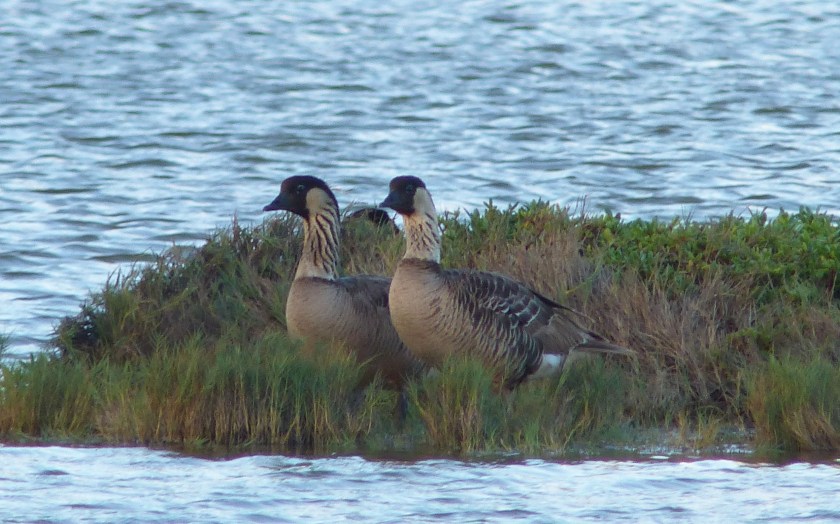
The Snow Geese rarities aren’t the only fascinating birds at Kanaha. NeNe Goose, a bird I’ve wanted to meet since I was a boy, nests here. Not terribly long ago, NeNes were one of the rarest birds in the world, only thirty individuals on their way to extinction, saved at the last minute by captive breeding and the heroic efforts of volunteers and governments. NeNe live from here at sea level to the cinder plains high up on Haleakala, the volcano that looms nearby. They’re quite tame and still need protection. Slim, fast, ferocious Mongooses are a particular threat, killing goslings and, I think, eating eggs. NeNe are still the rarest geese in the world, by the way.

hawgeese

NeNe

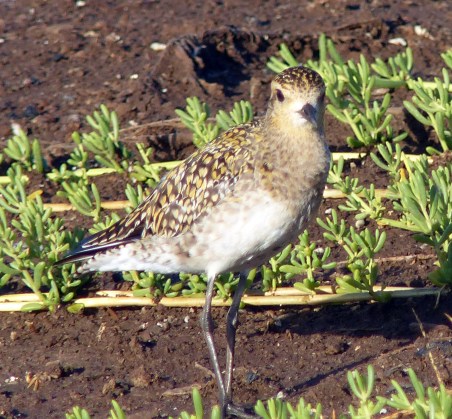
At home, I go to great lengths to try to see a Pacific Golden Plover, vainly searching every passing flock of Black-bellied Plovers for a bird without black armpits, a good identifier. Pacific Goldens are common here, seen on most lawns and boulevards. Now, in February, they are already forming pair bonds and defending territory. In a few months they’ll start for Alaska, a distance of almost five thousand kilometers, and they’ll do the flight in three days. Non-stop, sixty-five kilometers an hour! Then they’ll come back to exactly the same place in Maui in the fall. The birds I’m seeing here are truly home, on their special spots at Kanaha, on Maui.

pacgoldplovfe212017

Pacific Golden Plover

Wandering Tattlers also make the long journey from northwestern North America to Hawaii. I love that name! Hawaiians call them Ulili, after the sound of their call. Lovely too. Messenger birds. The Hawaiian singer Iz wrote a song about them. Two Ulili wander amongst the many noisy Black-necked Stilts who populate the shallows. There are Sanderling and a couple of Ruddy Turnstones here too. Nice.

tattlermaui2017

Wandering Tattler

I’ve quickly grown fond of Kanaha Ponds but then I always like the solitude, and the life, of marshes, especially early in the day. This morning, the warm wind blows strong and the handsome Chestnut Munia which forage in small flocks use it to move quickly from place to place — and are consequently very hard to photograph.

chestnutmuniafe212017

Chestnut Munia

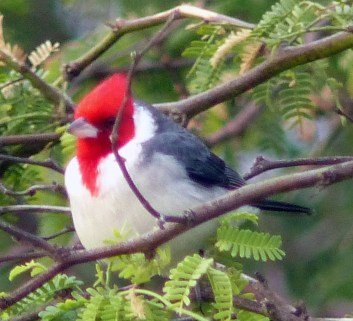
Both Northern and Red-crested Cardinals are more cooperative. Both species are active enough to indicate mating season is in progress, although the Northern Cardinal looks a bit shabby. Now I’m wondering – when is mating season here? Both Cardinals are introduced birds as are the Munia and others, like Common Mynahs. There are few native Hawaiian species at sea level now. Most have succumbed to mosquito borne diseases (mosquitoes are also not native to Hawaii). You have to go high up the mountain to find the beautiful, colourful honey creepers. I’ll do that soon.

northcardmaui

Northern Cardinal

rccardmauife212017

Red-crested Cardinal

rjfmaui

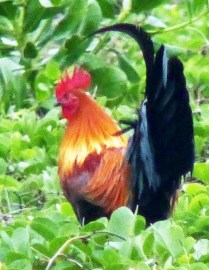
Red Junglefowl

A few Red Junglefowl forage in amongst the low plants at the edges of the ponds. Junglefowl, the ancestors of chickens. Quite spectacular really — if you don’t think chicken.


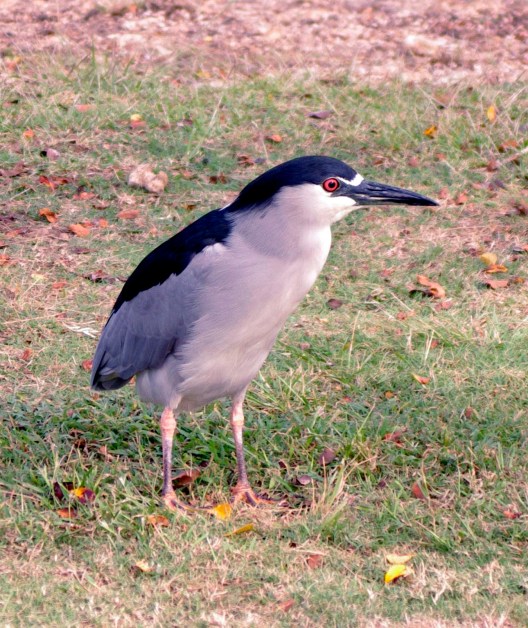
Night Heron

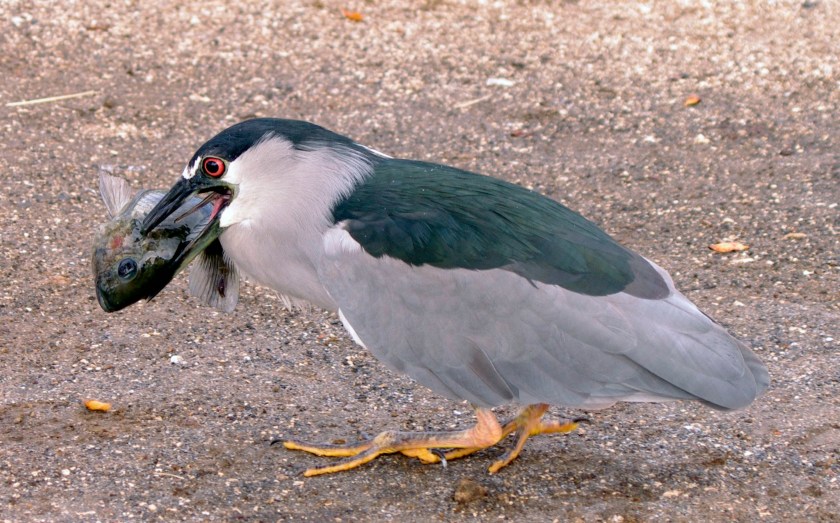
I’m thinking about Hawaii and rooting through photos I took there a year or so ago. I’d almost forgotten about the Night Heron in Ala Moana Park in Honolulu. The bird hung around a fisherman who was having good luck hooking Tilapia. I’ll let the pictures tell the story.

bcnightheronno20132

Ready when you are, buddy.

bcnighthrneatingno20131

On it!

bcnightherneating5

I’ll take it from here.

bcnighteating6

Thanks!

It’s Bl**dy February Again…

drearja202017

Drear!

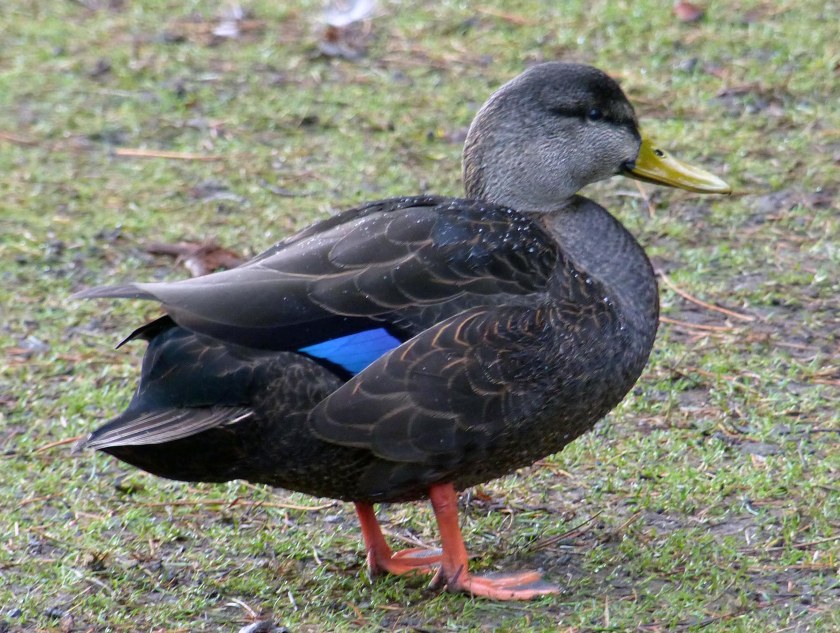
I lifted title from a line in an old Flanders and Swann song about the weather. They talk about January but February works for me. It’s drear this morning in the park and cold enough to keep some ice on the ponds. Delightful word, drear, and apt. I’m looking for birds but they are are hardly stirring. The Peafowl are still perched high in a fir, almost out of sight, ‘staying in bed’ on this grey Sunday morning, a dozen lumps like enormous chickens. Most of the Mallards and Widgeon are dozing too but the Black Duck that has shown up here for the past three or four winters is out trying to cadge a meal.

black-duck2

American Black Duck

Small birds are moving but mostly staying out of sight. I spot a couple of Golden-crowned Kinglets and a Towhee but mostly it’s a turned into a ‘birding by ear’ day. The still, damp air seems to amplify bird sounds. No singing yet, just the thin ‘yawk’ of Red-breasted Nuthatches, the chitter of Kinglets, the harsh faulty-doorbell call of Spotted Towhees.

goldcrndkinglja202017

Golden-crowned Kinglet

towhee2a

Spotted Towhee

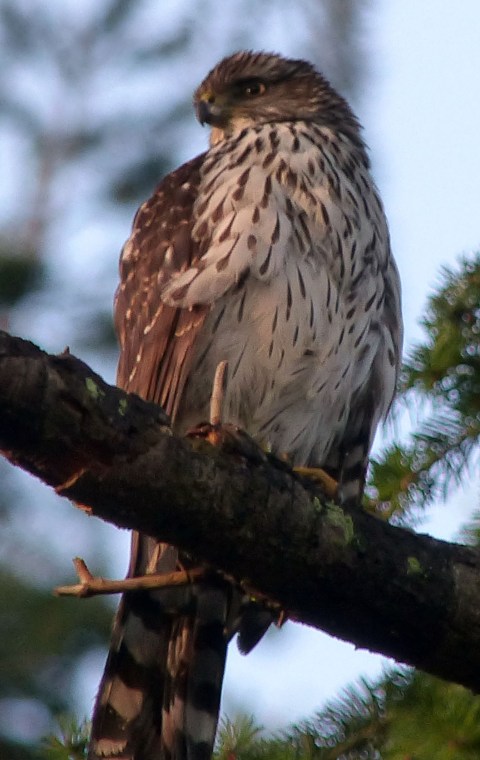
I hoped to see the Sharp-shinned Hawk I spotted the other day but have no luck in that regard. Luckily, I got some good shots last time so I’m going to pretend.

sharp

Sharp-shinned Hawk

Back to the word bl**dy in my title. My English mother used to scold me if I used it, saying that ‘we don’t use that word around this house’. It’s blasphemy rather than swearing, I think, but likely my mother just thought it was ‘common’. To this day, I’m reluctant to spell it out. My father, usually very proper, often used the word, as in ‘get you bl**dy feet off the table!’. But I digress. Still, it really felt like bl**dy February again — today –in the park.

The Lake

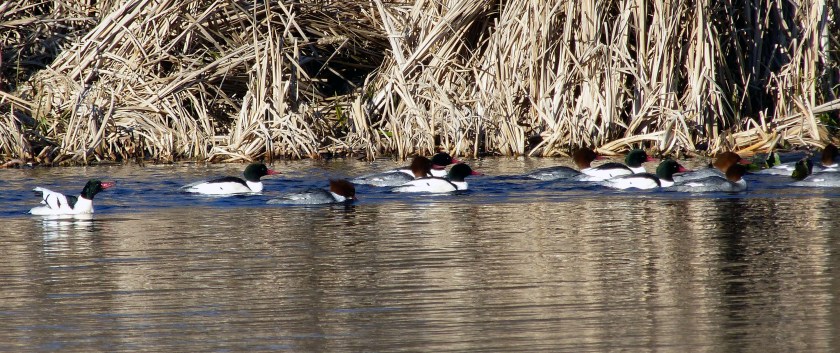
The last time I visited Swan Lake a week or two ago, most of its remaining  waterfowl clustered around a small lead of open water, some swimming, others skating comically around the perimeter. Now the Lake is open and busy. Ring-necked Ducks and Canada Geese are here. Fleets of Common Mergansers fish, diving in unison. A squadron of sleepy Ruddy Ducks passes, stiff tails held at the traditional forty-five degree angle; the birds move together, either pushed by the breeze or through some coordinated, semi-conscious and unseen paddling.

mergsja312017

Common Mergansers

ruddysja312017

Ruddy Ducks

heronja312017

Great Blue Heron

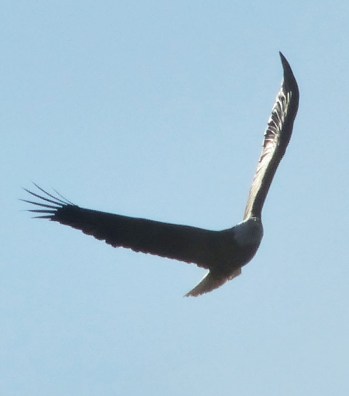
Half-concealed in the rushes, a Blue Heron watches from the rushes, alert to something. There it is — a Bald Eagle. It comes in over the lake like a warplane, hidden at first behind a screen of firs and then dropping down to settle into a stealthy glide. The target is a mixed flock of Glaucous-winged and Thayer’s Gulls but the lookouts are on the ball this time and the intended victims disperse in a hurry. The Eagle, looking slightly irritated, makes a half-hearted stoop and then is gone.

eagleja312017

Bald Eagle

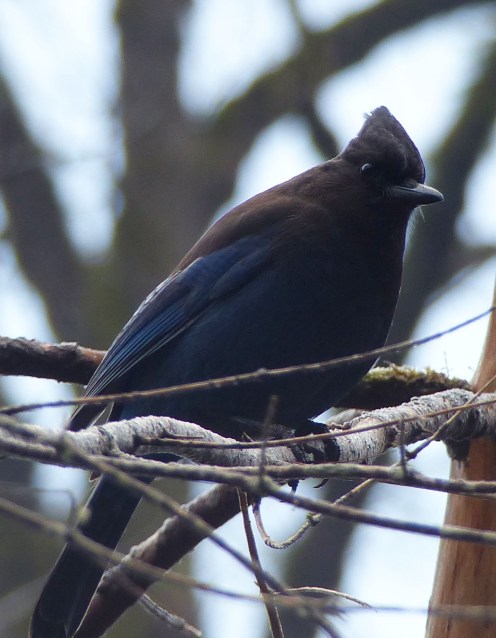
The breeze is suddenly quite cold so I leave the lakeside and take one of my favourite owling paths where it’s more sheltered. No owls today unfortunately. A pair of Steller’s Jays makes it clear I’m not welcome and sends me on my way with a series of raspy calls. It’s mating season preliminary time; male Red-winged Blackbirds are also starting to sing, although singing might not be the right word to describe their familiar, spring-heralding call.

walwayslkja312017

selljyja242017

Steller’s Jay

Out in the sunlight again, I’m startled by a very loud ‘peep’ and then another, which I realize is the sound made by the extended tail feathers of an Anna’s Hummingbird at the bottom of its courtship dive. A moment of two later, the bird alights close by and gives me the ‘hairy eyeball’, its purple gorget extended and catching the sun.

annnasja312017

Anna’s Hummingbird


Gone Gulls and Pink-footed Geese

I’ve been to the sewage ponds again searching for a Glaucous Gull that’s supposed to be there and, once again, it’s not. Sewage ponds, for crying out loud! I know I keep harping on about Glaucous Gulls. This is the last time — I give up. Plus I’m starting to think the reference picture a rival birder gave me is throwing me off.

gull3a

Glaucous Gull

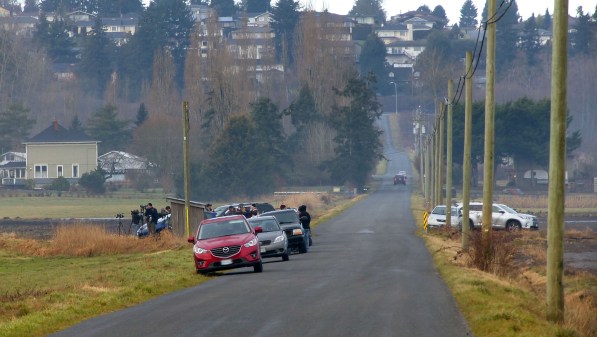
On the other hand, I did view two Pink-footed Geese at Martindale Flats. These birds summer in Greenland and I never expected to see them on our coast — or anywhere. I think they arrived on one of the fierce Nor’easters that recently plagued us but who knows. The geese stayed with a flock of Canada and Cackling Geese. Geese are sociable that way — accommodating. They never did come close enough for me to get good pictures but then you can’t have everything. They also attracted a flock of birders including some who had come long distances just to be able to record these rare birds – and to get their own lousy shots.

pfootedgeese3ja232017

Pink-footed Geese

birdersja232017

Birder Flock

Winter Birding West Coast Style…

I needed to go to Washington state to pick up copies of my latest mystery novel, the Bent Box, and figured I might as well also pick up a few birds while I’m down there. There’s been a female Common Eider hanging out at a place I’ve never heard of called Purdy Spit near Gig Harbor. The Eider is a rare, rare bird on the west coast so, what the heck, I’ll go have a look. And since I’m going that far, I plan to visit some of my favourite places in Oregon, like Baskett Slough and the Finley Reserve. Weather is a problem though. It’s still unseasonably cold and snow is a possibility.

rlghawkja92017

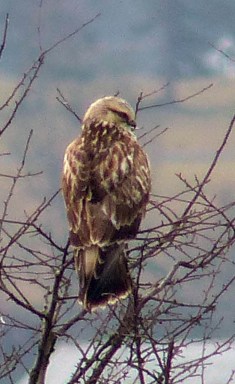
Rough-legged Hawk

I take a side trip to Samish Flats and spot at least a dozen Red-tailed Hawks, tons of Trumpeter Swans, some Great Blue Herons, scores of Bald Eagles, ducks by the hundreds and a Rough-legged Hawk or two. At Tacoma, I turn towards Gig Harbor and Purdy Spit. When I’m a few miles from my destination, my GPS capriciously decides I’m an hour and a half away. Foiled. I turn back. Who cares about a stupid rare bird anyway? I pay the bridge toll and continue to Nisqually. Nisqually’s nice but the wind is cutting. And it’s damp too. After an hour of birding there, I’m chilled to the bone. When I get to the motel, my fingers are still numb.

hrnoniceja112017

Great Blue Heron on Ice

froznisqlja92017

Nisqually – Frozen

I’m booked into a cheap highway motel in Centralia figuring that I can go south or west from there the next morning. I know nothing about Centralia except what I’ve seen from the highway, which hasn’t been all that impressive. Off the highway, however, Centralia is quite nice. It’s one of the things I really like out these birding trips, the chance to explore, to discover places I would never have seen otherwise. It gets better. I luck into McMenamin’s Olympic Club – a pleasant surprise!

olymicstoveja92017

The Olympic Club, Centralia

With its built-in movie theater and a huge wood-burning stove, the Olympic Club is a treasure. The smell of the fire, the warmth, the food, the glass of Hammerhead Ale, well, on a cold night who could ask for more. Wyatt Earp or Wild Bill Hickok would feel right at home here.

comeidrja102017

Common Eider

Next morning I hear Portland and the coast are expecting a big dump of snow so I turn back north. I decide to have one last stab at the Eider. When I get to Purdy Spit, which turns out to be ten minutes away from where I was yesterday, I find some birders already scoping the water. They’re kind enough to point out the duck to me, which is good because it’s a mile away on the other side of the bay. I can see it with my scope but I’m just shooting blind with my camera. Luckily I got a few pictures but nothing I’d submit to Audubon.

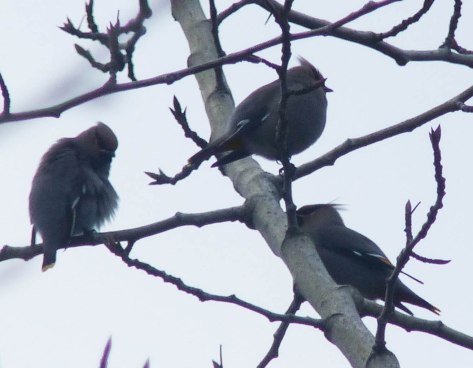
bohemwaxwgsja102017

Bohemian Waxwings

I’ve booked a motel in Bellingham. It’s just a few hours away so I’ve got time to bird some more. I follow up on reports of Bohemian Waxwings in Magnuson Park in Seattle. Happily they’re easy to find (with help from another birder already viewing them). I know these attractive birds quite well from my years living in northern BC and I’m surprised I never added them to my life list before. Now I do. Before I get to Bellingham, I head back down to Samish Flats. It’ll be dark soon and the Short-eared Owls that winter there should be hunting.

shrtearedowlfeb12016

Short-eared Owl

Sure enough I spot one – a beautiful bird, one of the most prettiest owls, I think. Unfortunately, the light’s too low and the bird moving around too much to get a good shot. For this post, I’ll use a stand-in, a bird I photographed last year. But I’m frozen again. I don’t think I’ve been really warm since I sat by the Olympic Club’s towering wood stove last night and ate my dinner. I know – whine, whine, whine. If it wasn’t for that fantastic view and the wonderful birds, well…

mtbakrja102017

Mount Baker