Our perennial Low in the Gulf of Alaska is setting up nicely, so the autumn storms are starting. And the remnants of a ‘weather event’ in the western Pacific are heading our way too. Ma…
About
Between Pacific Storms: October Memories

Our perennial Low in the Gulf of Alaska is setting up nicely, so the autumn storms are starting. And the remnants of a ‘weather event’ in the western Pacific are heading our way too. Makes me think the archaic word ‘tempest’ ought to be revived. Even so, birding between fronts is not a bad idea. You never know what will arrive on the heels of a great storm. The big blow is due in a day or so but I won’t go far today. Out past the pumpkin patch, I think, and Swan Lake.
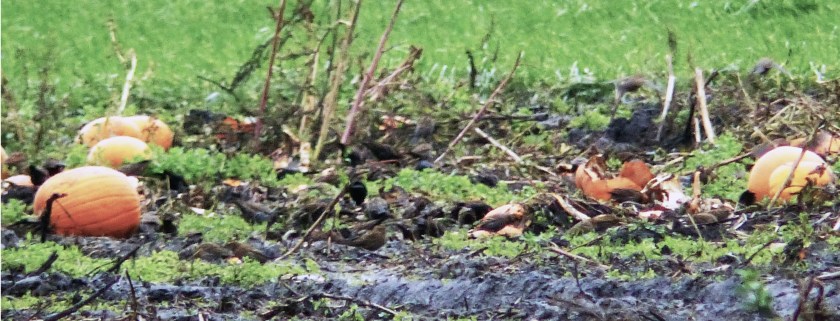
Picked Over

Canada Geese Incoming
Rain softens everything and I mean more than the mud-making mixing of earth and water, although there’s plenty of that too. For all its pleasures, summer has a bright, loud harshness to it that needs to be relieved by early mornings and late evenings. Fall pleases me more.
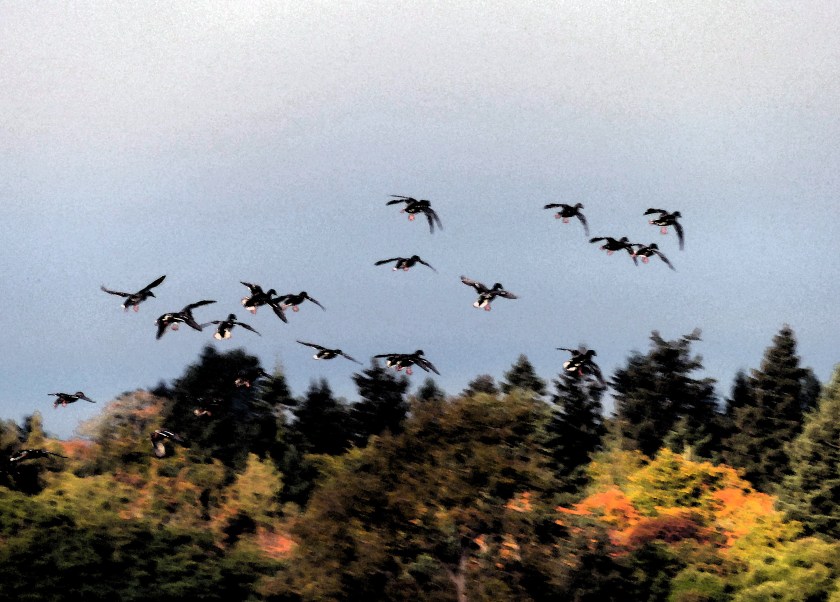
Mallards Flaps Down
Migrating waterfowl are passing through. Lots of them. A mixed flock of Mallard, Pintail and Widgeon drops into a now harvested grain field, sounding off as they land. Skeins of vocalizing Canada Geese and the smaller Cackling Geese decorate the skies in every direction.
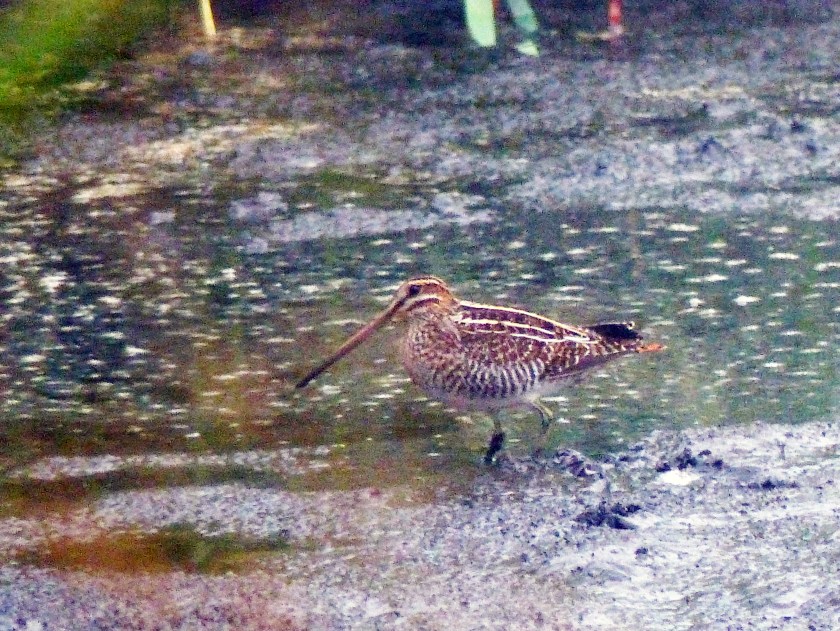
Wilson’s Snipe
I see nothing unusual in the fields so I check out some newly replenished ponds. The rain quietens my footsteps and makes it easier for me to arrive at a finger of slough undetected. I’m in luck. A Wilson’s Snipe is out and very visible. Somehow these secretive birds must know that hawks generally avoid flying in the rain. I stand dead still, watching, until the bird wanders off into the long grass.
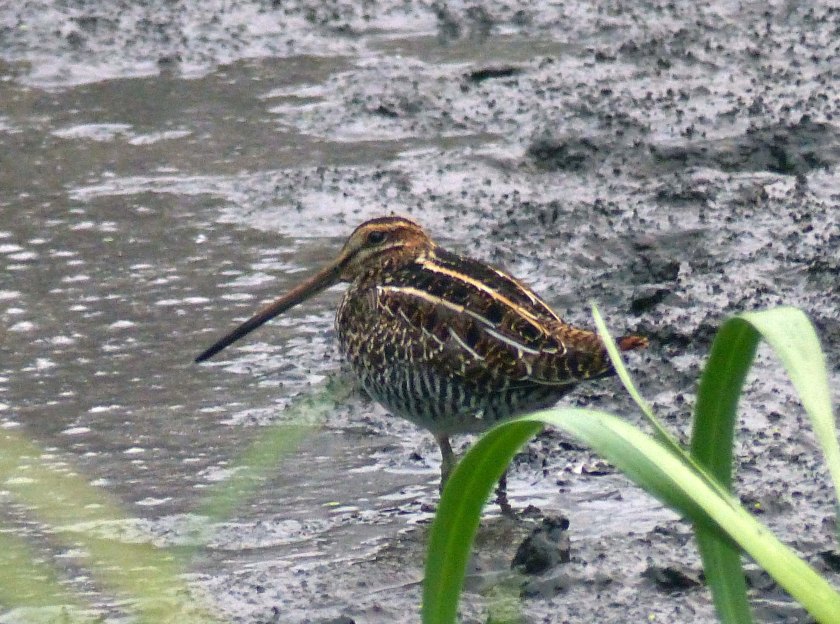
Rain Bird – Wilson’s Snipe
There are other birds to see too. A young, slightly bedraggled Cedar Waxwing looks like he’s going to a punk event somewhere. The black mask only adds to the illusion. He gives me the ‘once over’ as I go by but stays put. The punk attitude, I guess — I don’t care what you think as long as you notice me. Not to be outdone, a Steller’s Jay hops into view. I think the blue is Cerulean (more or less). Must be Crest Day at the Lake.
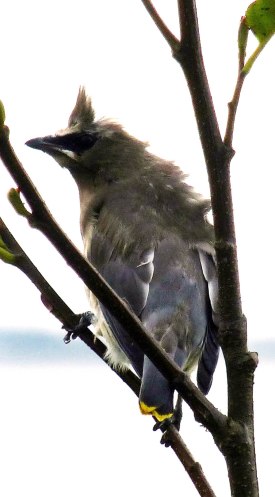
Waxwing Punk
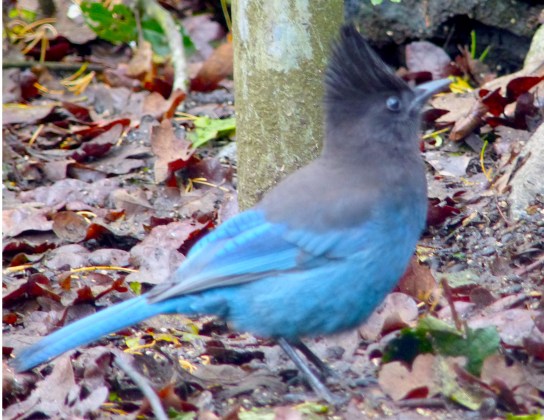
Another Crest – Steller’s Jay
And speaking of illusions, I catch a glimpse of a Barred Owl, too deep in a thicket to get a good photo, but looking very ghostly on this pre-Halloween ramble. He or she is wide awake in the half light of the interval between storms. No flying tonight perhaps. Not in the teeth of (at least) gale-force winds. Not in a tempest!
Ghost Owl
The Godwits
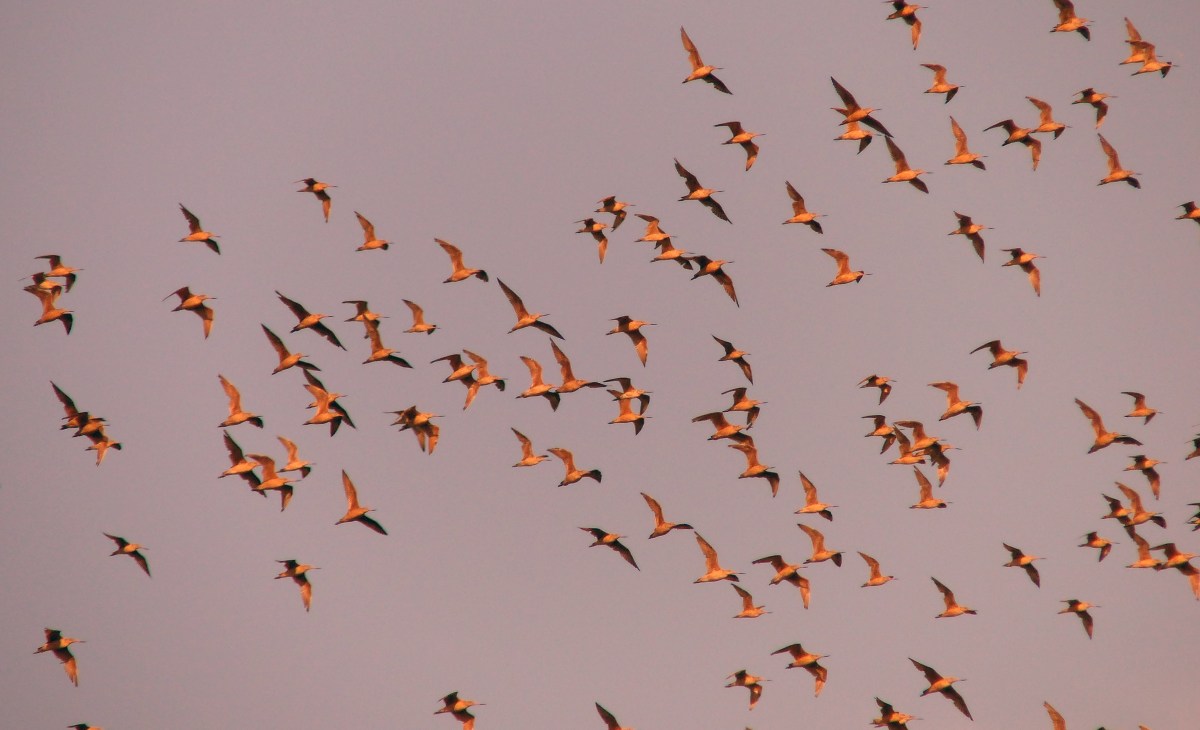
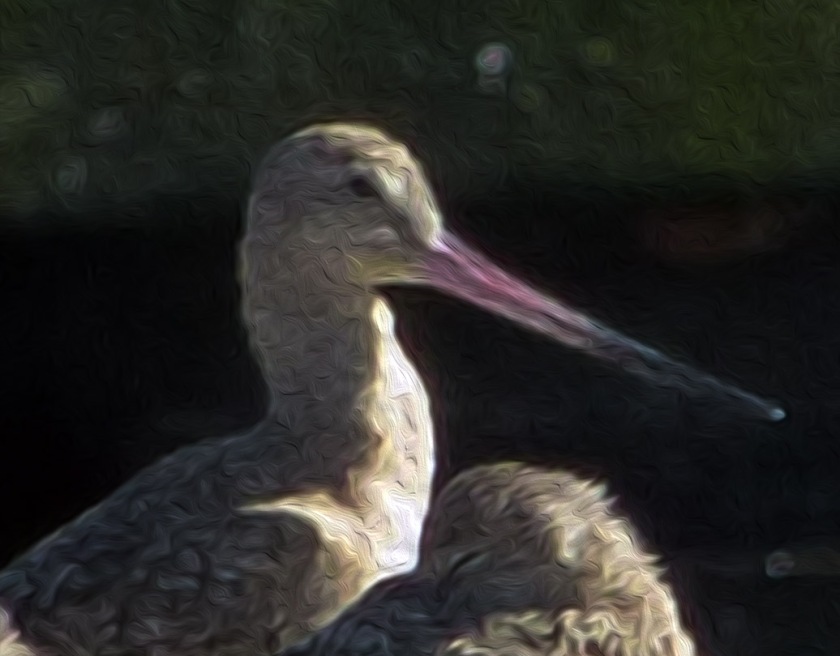
An Alice in Wonderland Bird
I’m on the Washington coast looking for a rare Bar-tailed Godwit. Apparently, one has attached itself to a large flock of Marbled Godwits, a common enough bird here in autumn. Common, but cool. At least to me. I’m not sure why Godwits amuse me but I think Alice in Wonderland when I see them. It’s the long, pink, black-tipped upturned bill perhaps — a parliament of councillors in a Through the Looking Glass world, with their long noses poking into everyone else’s business.
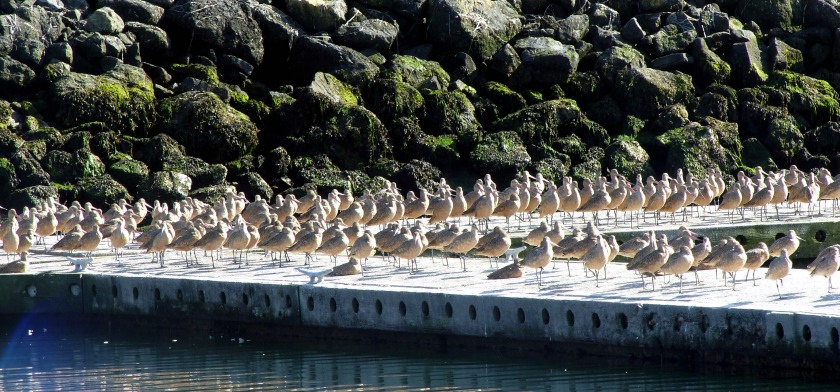
Godwits
In real life, the Godwit bill is a precision instrument; I suspect the tip is a bit flexible too. I’ve seen Godwits head down, bills eyeball deep in the sand. A seaworm, small crustacean or other delicacy is retrieved and slurped down. Very efficient. They nest in the prairies, by the way, and are monogamous, although how they tell each other apart is beyond me.
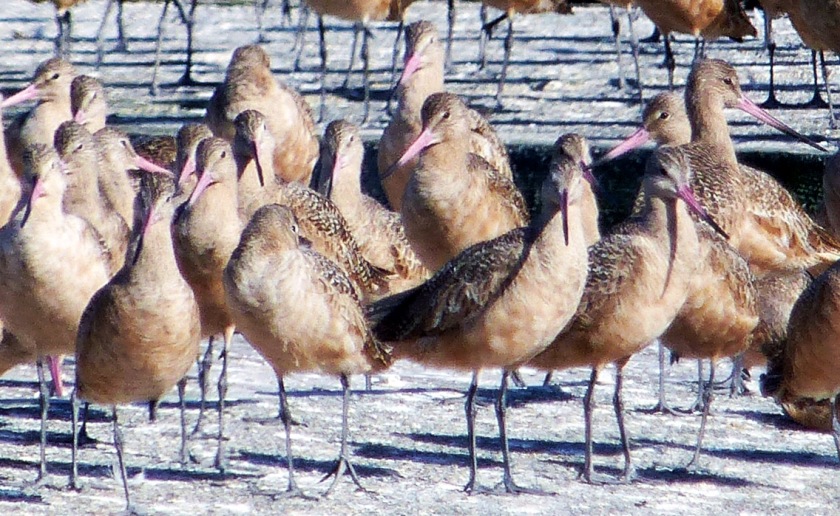
More Godwits
Finding the Bar-tailed amongst its Marbled cousins isn’t easy — a case of ‘one of these things is not like the other‘ or ‘Where’s Waldo‘. They all look pretty much the same. I finally spot the bird just as the flock, for some inexplicable reason, takes to the air and flies off. How long it will remain with the flock is anybody’s guess. Bar-tailed Godwits make the longest cross-ocean migration of any bird – some 7000 miles! That’s Alaska to New Zealand without touching down. Amazing.
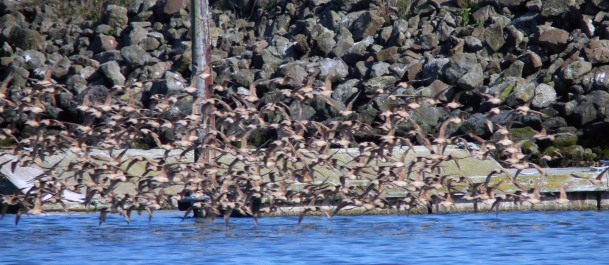
Out o’ Here! – More Godwits
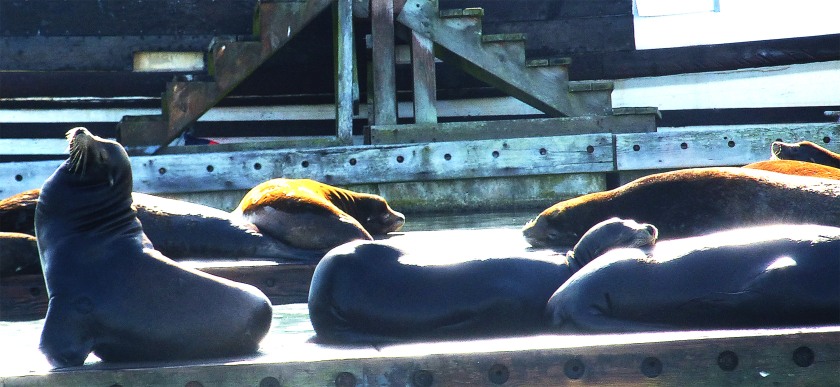
California Sea Lions
As the Godwits wheel by, I take ‘bursts’ of photos hoping to catch a picture of the elusive rare bird — like a gunfighter in a western movie with dozens of bullets in his six-shooter. Maybe I had success– I’m not sure. I look through my pics until my eyes wither and I still can’t pick out the Bar-tailed. As a consolation, I take shots of California Sea Lions hauled out, barking like crazy and virtually sinking the dock.

Godwits and Heermanns’s Gulls – Hard To Pick out A Bar-tail!
The Wagtail

Leaving Port
I intended this post to be about seabirds, about the Albatrosses, Skuas, Jaegers, Fulmars, and the other birds of the deep water zone forty miles from shore, the kind you have to go on a ‘pelagic’ to see. We saw all of them, which was great. A few rarities too. But the real story arrived at twenty-seven miles from port, on our way home.
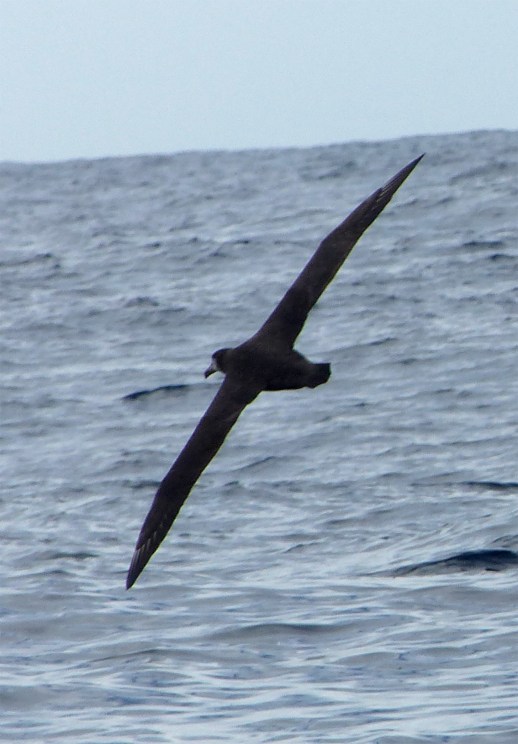
Black-footed Albatross
We left Westport, Washington at six-thirty in the morning, fought ten foot swells most of the way out, saw seabirds, tried to take pictures, and tried not to be seasick. Luckily, the seas calmed on the way back and the journey less of a challenge. With lower swells to deal with, the pictures got better too.

Northern Fulmar
It’s getting on to mid afternoon. We’ve been looking at the sea for hours and some people have gone into the cabin and crashed. Not all of us though. Good thing too. A tiny bird appears in the western sky, a passerine, a land bird, flying a steady direct path towards us. It’s a Grey Wagtail, an Eurasian bird. It’s flown many miles, thousands likely. From where? Siberia or Japan seem most likely. The pluck of that little creature, weighing only a few ounces is astonishing! We are a long way from even seeing land. The Wagtail is working against a slight headwind but his course is arrow-straight.

Yellow Wagtail in Spain
I get no pictures of the gallant, little bird (although I do get good shots of the back of another birder’s head). The Wagtail above is a cousin, a Yellow Wagtail from Spain. Did our bird make it? Who can say? One showed up in California years ago, and two in British Columbia, again a long time ago. The thing is, how does he even know where he’s going? How does he keep that straight course across leagues of featureless ocean? It’s another example of birds as mysteries. I like to think he made it okay. He seemed determined – and strong.
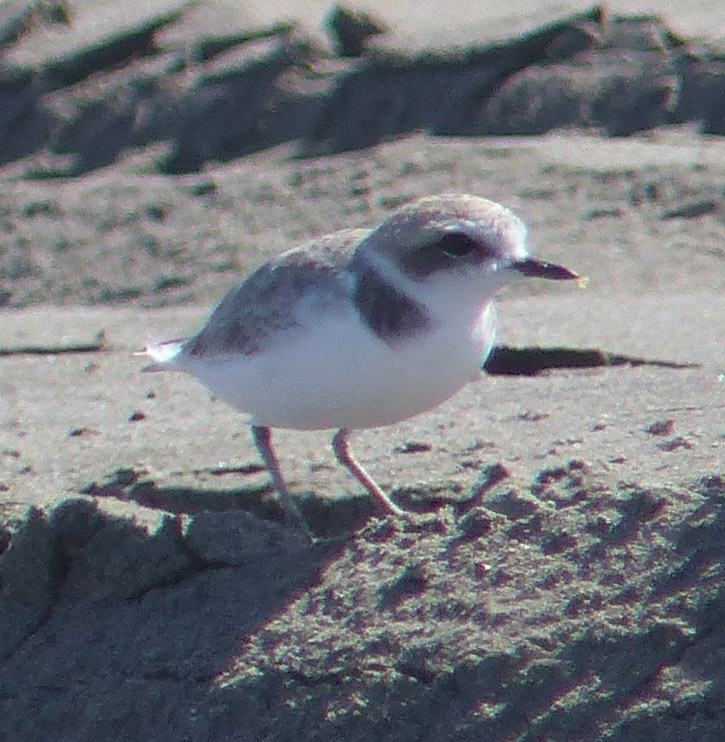
Snowy Plovers
Snowy Plover Land
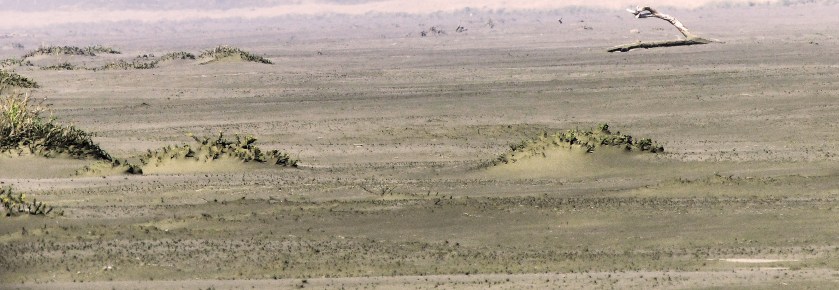
In a way, this story is about misplaced assumptions. And being wrong – again. Remembering that Snowy Plovers nest (in season) near Grayland, Washington. I make a quick decision, take an access road to the beach and hope for the best. I don’t expect much, especially since pickups and jeeps are everywhere on the sand. I’m not planning on spending more than a half hour here anyway but it breaks up the long drive I’m on.
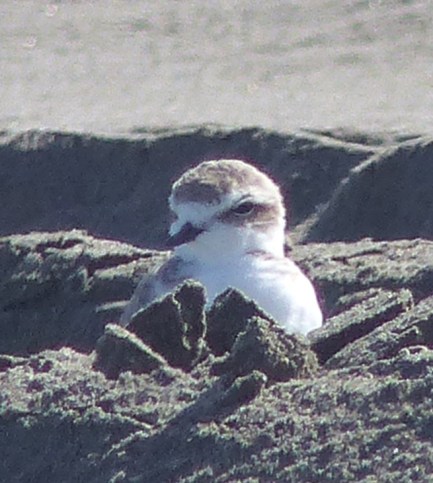
Snowy Plover in a Rut
I walk down the last half mile down the road. A jeep passes me at speed, tears down to the tideline, does a couple of spectacular water fountaining donuts and then leaves. Now, I think, there’s no way I’ll see any of the tiny plovers. The jeep will have freaked them. Wrong.
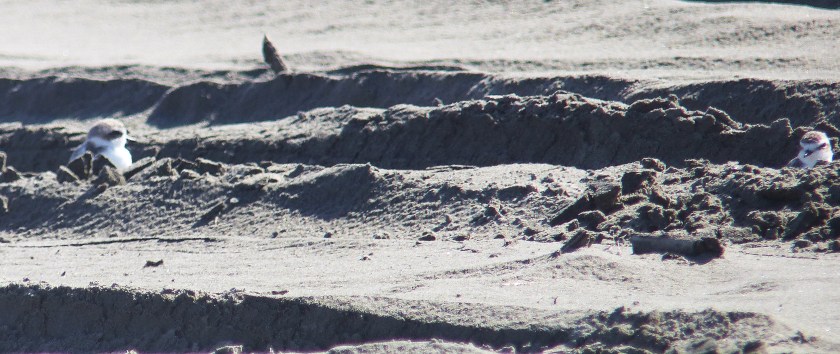
Come Here Often?

I’m Thrilled
The Plovers appear. And they’re thrilled. They’re in and out of the vehicle tracks, scooting from furrow to furrow, like so many tawny mice. I can only guess why. Perhaps, the jeep tires have turned up tasty little critters, or maybe the ruts are just good to hide in. I find the vehicles irritating but, to the birds, I guess they’re like big ruminants, herds of elk maybe. And perhaps they take advantage of them in the same way egrets and other birds do in Africa when they tag along with elephants. Minus the bird advantages of elephant droppings, of course.
Swan Lake Sora

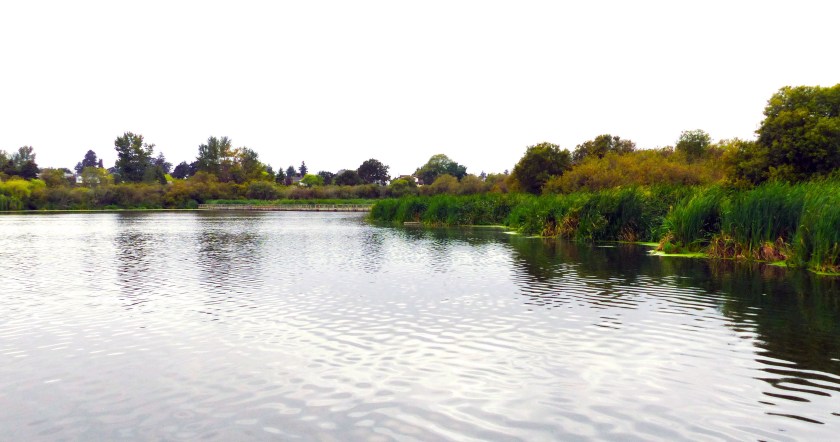
Swan Lake
A few male Hooded Mergansers have arrived at the little bay near my home and the forecast is for rain, sure signs that summer is indeed over. Soon, the wet weather will set in. I make a last warm weather trip to Swan Lake, a local hot spot. The lake is glass smooth and flecked with, I think, fluff from Cottonwood trees. Four young Pied-billed grebes are feeding at the limit of my camera’s usable range. Plus they won’t keep still. Cute little guys but very active, diving every five seconds or so. It’s like a fairground ‘bash a mole’ game; they never reappear in the same place twice.

Pied-billed Grebe
I’m hoping to add a Sora, a swamp-dwelling rail, to my year list. I know one (at least) inhabits the dense stand of bulrush at the west end but I’ve tried for this secretive bird umpteen times and it keeps eluding me. I shouldn’t take it personally. On my last visit a week or so ago, a pair of young otters popped up through the duckweed, lifted their anvil heads to scan the shoreline and then, snakelike, slid out of the water and into the cattails. Slick, deadly and quiet. Human beings aren’t the only predators the Sora is alert to.
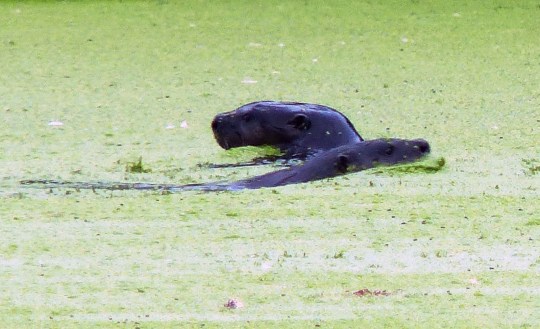
Swan Lake Otters
I give up on the bird the on my first pass and carry on to the meadow. I hear birds in the trees but the foliage is so dense I don’t see much so I decide to have one more try at the Sora. A Blue Heron though sets up for a nice shot. The Herons are so commonplace that it’s nice to spend some time examining them–such a handsome bird.
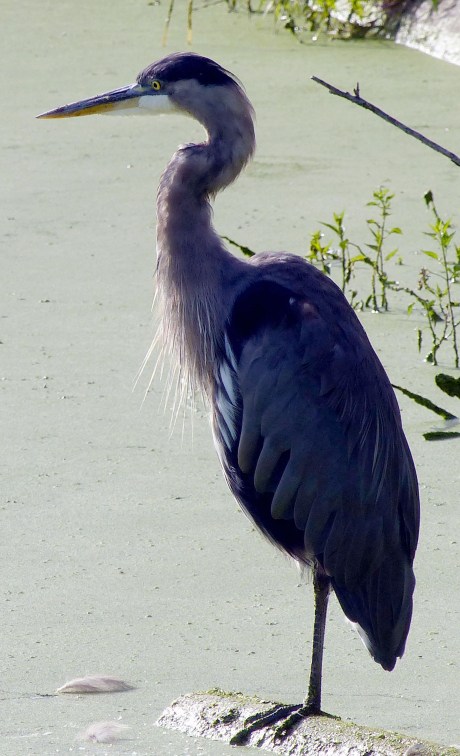
Great Blue Heron
I take some shots and, for some reason, I turn thinking the Sora might be near. And it is! Ten feet away and watching me. I have to pivot quietly to get a picture, which on a floating bridge isn’t easy but the bird seems relaxed, picking its way along the water’s edge. And then, like magic, it’s gone. I always feel grateful when a bird shows up like this. I may have said so in an earlier post. It’s like a favour and I appreciate the gesture. Thank you, Sora!

The Elusive Sora
Chincoteague Memories- 2014

Chincoteague Sunset
We’re on Chincoteague Island on Virginia’s Eastern Shore. This really is a water world, acres and acres of tidal marsh populated by terns, plovers, egrets, herons, eagles, ospreys and the ultra skinny rails. Beyond the islands, the Atlantic. Wild ponies are the big attraction here. The famous Chincoteague Ponies were featured in a children’s story decades ago and are still celebrities. We take a boat to see them and the some of the birds who inhabit this special environment.

East Coast Bald Eagle

Snowy Egret
Herons and egrets do especially well here. Hard to imagine now but by the early part of the 20th century, many species were almost wiped out because of fashion. That was the great age of hats, when fancy feathers enhanced the fantastic milliner creations we see today only in pictures. Plume hunters slaughtered all the adult birds in a colony and left the young to starve. Happily, largely through the efforts of two women, Harriet Hemenway and Minna Hall, the plume trade came to an end and birds like the Snowy Egret can flourish.

Little Blue Heron
Back to the ponies. Pony numbers are controlled for the sake of the environment. Each year, as our skipper, Barnacle Bill (it’s true) tells us, surplus ponies are swum across to Chincoteague from Assateague to be auctioned off. It make for a festival and I gather, everybody gets wet. Unfortunately, we only glimpse the ponies. Some porpoises, perhaps sent by the tourist board, swim up to help alleviate the disappointment.
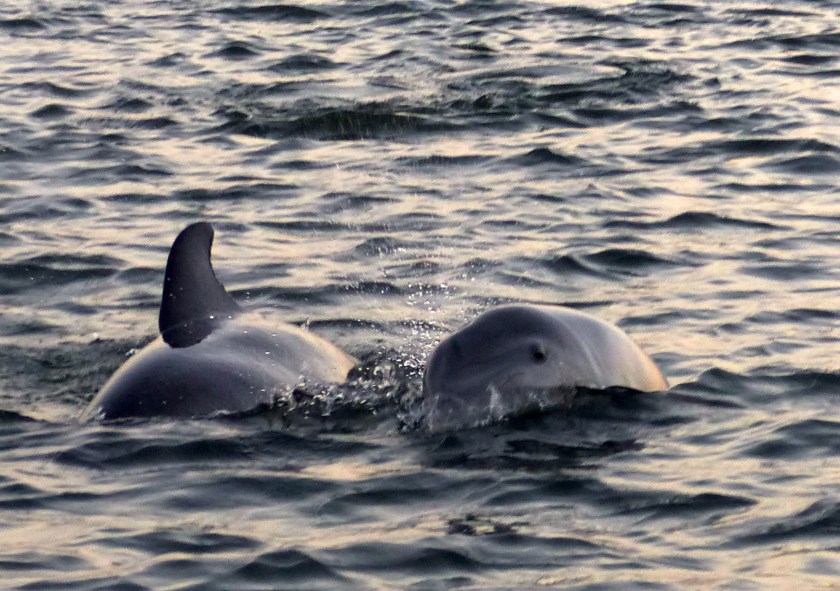
Tourist Board Porpoises – Chincoteague
Just before dark, we turn back towards the harbour. Now the only sounds are lapping water, the flutey whistles of shorebirds, and the hum of the outboard. It’s cooled down too, and we have to zip up our jackets and hunker. As we round the mole, we see the lights and towers of nearby NASA’s Wallops Island launch center from which rockets regularly thunder up into the sky. It’s a strange contrast to this marshy outpost where the locals seem to have their own way of speaking, and where crabbing and fishing have been mainstays for centuries. Speaking of which, seafood might be the correct choice for dinner.
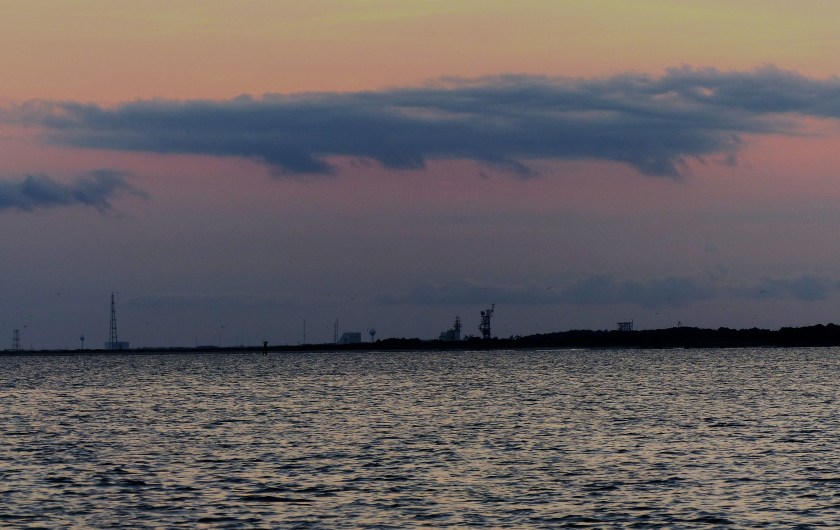
Wallops Island Flight Facility
Tideline Birds
Harbor Seals – Now that I have your attention.
With the tide as low as it is during the night and the waxing moon, shorebirds are moving at night now. I’m awake before dawn and hear the drawn out piping of Black-bellied Plovers passing overhead and the three syllable cheer of the Yellowlegs in the cove. Geese are flying too although these are not going anywhere in particular. They’re local. But their honking reminds me of my years in the north. In the fall, huge flocks of Canadas pass through on their way south, making a kind of music, until one frosty morning, the skies are empty and quiet. After that, winter.

Black Oystercatcher
I’m ready at first light to go to the point, to take advantage of the slowly rising tide, to check out who arrived during the night. I’m hoping for something on the rarer end of the spectrum, a Pacific Golden Plover perhaps. I know the Black-bellied Plovers will be there for sure. And they are. Along with Surfbirds, Black Turnstones, Black Oystercatchers – and gulls.
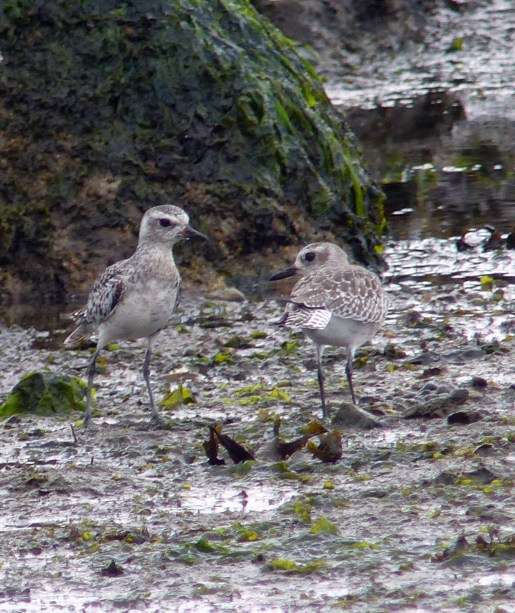
Ready to Spar – Black-bellied Plovers
A scuffle breaks out between two young Plovers. It’s hard to tell how serious the fight is but in the natural world everything counts.The birds look identical to me but one drives the other off. What does it mean? I guess that when they head to their breeding grounds in the high Arctic, the winner will succeed there and the loser will fail. It’s all about dominance. But, who knows? Breeding is months and several thousand miles of hazards from here, and now.

To the Victor Go The Spoils?
I scan for rarities but find nothing remarkable. It’s still very early and the usual irritation here-people letting their dogs roam the tideline freely in spite of the birds-hasn’t yet occurred. It’s so quiet.

Blacktails at the Tideline
A Blacktail doe appears and sniffs the air. She gives some subtle signal of reassurance and a fawn steps out onto the rocks, and then another. Finally, her whole family is there-two fawns from this year and two from last year and a young buck. All healthy looking,sleek from grazing on flowers in the local gardens, likely. The buck might be one of the doe’s offspring from two years ago, or he might just be a flirty hanger on, a teenager with high hopes. Certainly, he won’t be sticking around once the big bucks with their huge, many-tined racks show up.
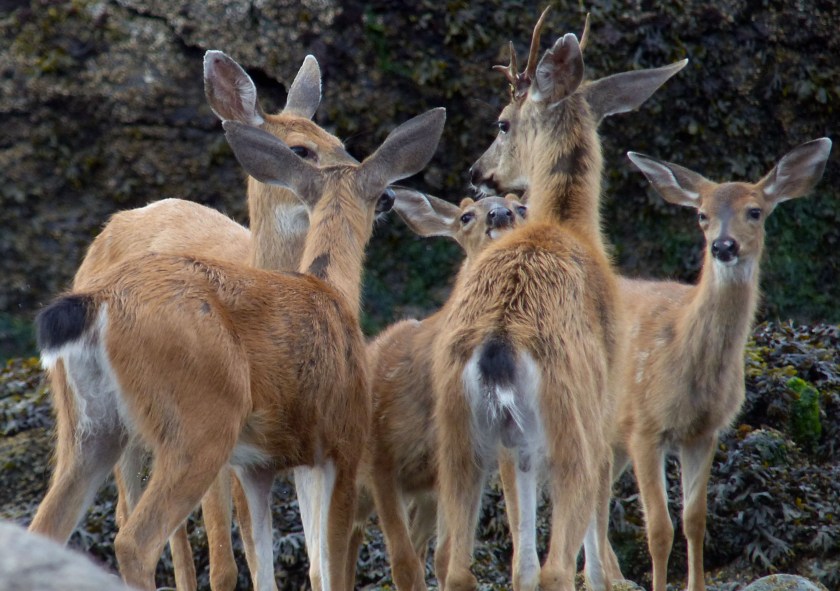
Blacktail Deer Confab
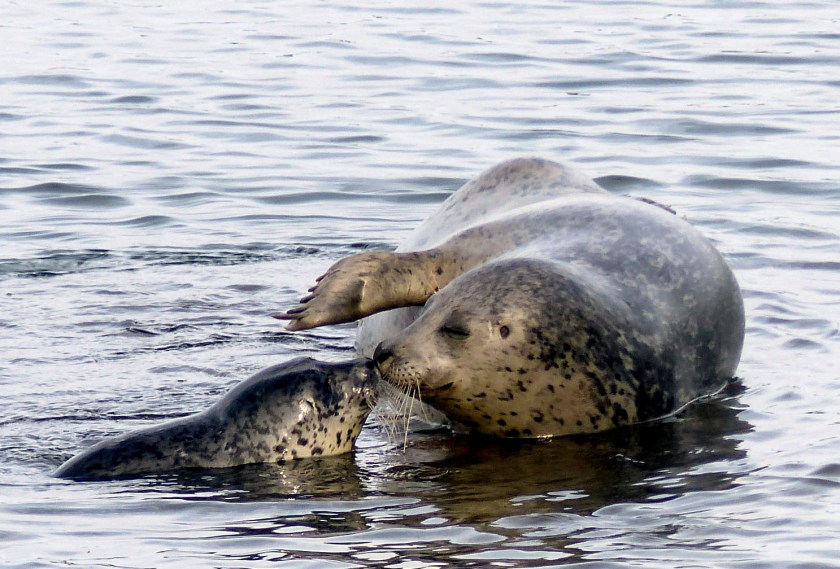
And speaking of youngsters, the Harbor Seal that has hawled out on a rock in the bay for the past several years, each time with with a new pup, is back. She always seems so tender with the young one, and so patient.
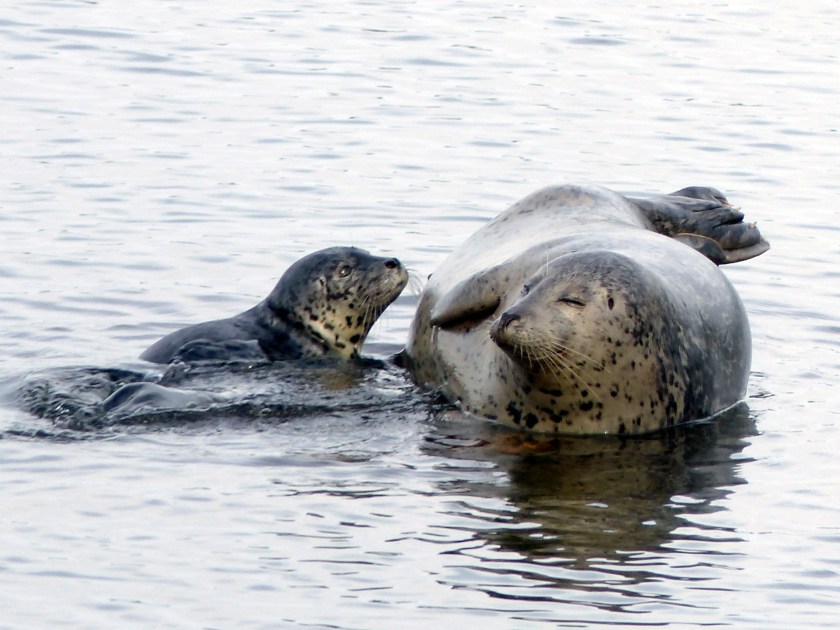
Harbor Seals
Monday Birds
It’s Tuesday, but the day after Labour Day sort of counts as a Monday. It’s a wet outside. Power washing and paving crews seem to be competing in a race to the top of the racket scale. Noise, noise, noise. Best I send my thoughts to a cool clear winter morning in Arizona. Maybe go to Madera Canyon. Maybe see a few good birds.
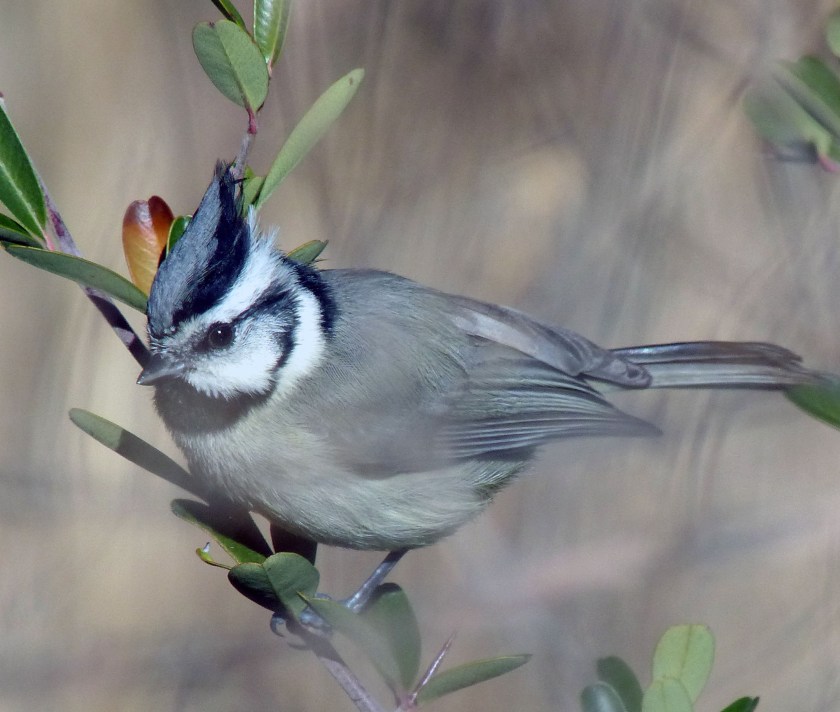
Tufted Titmouse
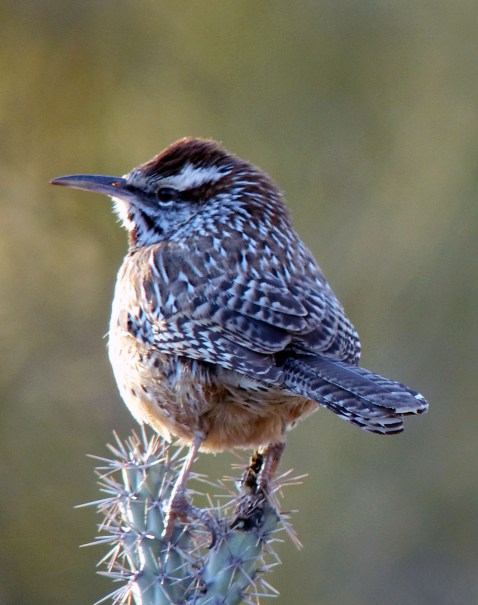
Cactus Wren

Hepatic Tanager
Fog Birds
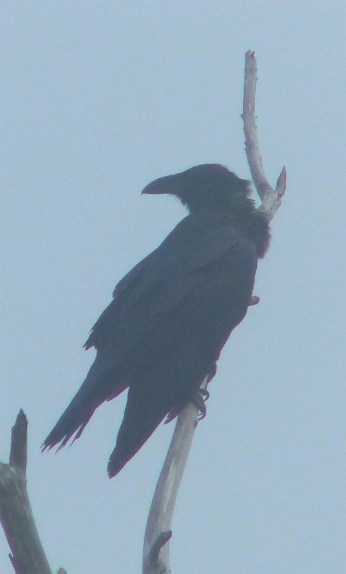
Raven in Fog
The thick fog I saw from the highway waits for me at Saanichton Spit, a long, sandy tongue of land south of Sidney, BC. Tsawout ancestral territory. Now I must make a decision.Two recent sightings brought me here – a Willet and an Upland Sandpiper. The Willet is a large shorebird and uncommon in these parts; the Upland Sandpiper is a prairie bird and quite rare on the coast. I can’t see much yet but you never know with fog, which can clear away in minutes. I decide to stay. A Raven watches me set up my scope and then flies off, disappearing almost immediately. He’s probably thinking something like — ‘a scope, you’ve got to be kidding – in this?’

Beyond the Grass, Nothing
Visibility decreases as I walk and sound takes on a new quality, suppressed unless the source is close; then it’s enhanced. A foghorn sounds from somewhere, the familiar basso profundo moan and close by the soft sibilant call of Savannah Sparrows, clear and bright in the damp air. One hops up on a fence post and then vanishes like a magician’s bird from a hat. A pretty bird with its pale mustard eyebrow.

Savannah Sparrow
Even the commonest structures look different today – a tumbledown lean-to, for example. I passed this wreck dozens of times but, today, I observe it and take in details I haven’t noticed before. Sherlock Holmes tried to teach Watson about this power. ‘You see Watson, but you do not observe‘, he says, when Watson can’t tell him how many stairs he walks up every day at 221B Baker. I think it’s in A Scandal in Bohemia. Birding is great for observing, by the way. Attention to detail is what makes it all work.

When You’ve Seen Better Days
And likewise, the row of shells in a tide channel on the beach. The quality of light and the elimination of visual distraction helps me see this commonplace differently–beach debris now transformed into a string of precious jewels, or a garden. Usually, I’d just crunch on through. Today, I step around it so as not to disturb this most ephemeral of art pieces.
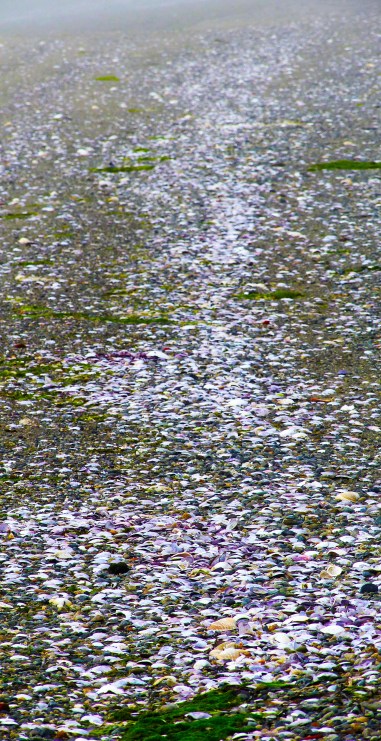
Beach Garden
A small squadron of Western Sandpipers hums past somewhere off to my left, chattering –jeet, jeet. Invisible. I never do see the Willet or the Upland Sandpiper. Likely they were just passing through anyway but I could easily have walked by them. And a hundred other birds, for all I know. I do see a large dark shape in a dead tree. I think eagle but it turns out to be a despondent-looking Turkey Vulture, waiting for the sun and some nice juicy thermals to lift him up into a blue late summer sky.

Turkey Vulture – Fogbound
 Bird Noetz