Time to dress for fall…

ThistlesSept112017

Waist High Veg

The title, from the song in the old movie The Summer of 42, seems apt. It’s gotten cooler here on the coast and migrating birds are passing through. Local birds are flocking too, many fattening up for their own long journey south. I’m at Panama Flats this cool, changeable morning, flushing Savannah and Lincoln’s Sparrows right and left as I push through chest high weeds. Nearby, Goldfinches attack weed heads with precision, scattering chaff. And every berry bush has its diners, including the Savannahs, drawn to insects and the seeds of ‘past it’ berries no doubt.
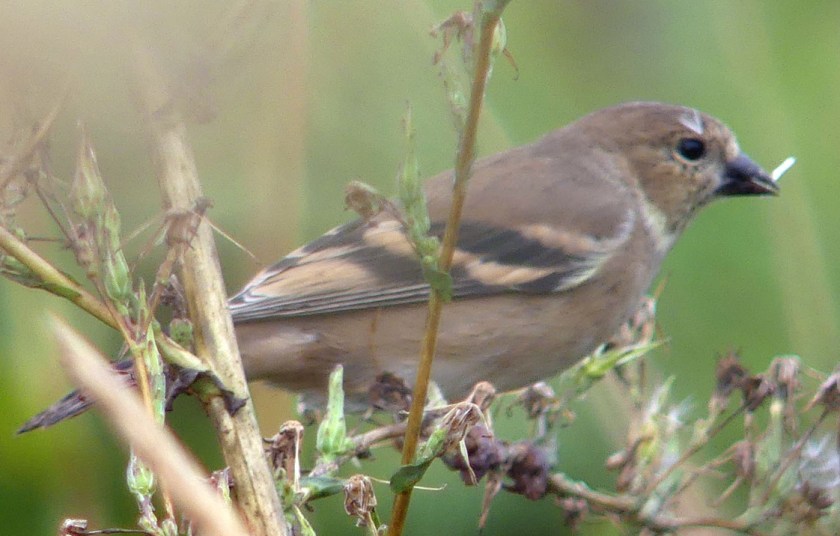
GoldfnchSe192017

Goldfinch

SavpairSe192017

Savannah Sparrows

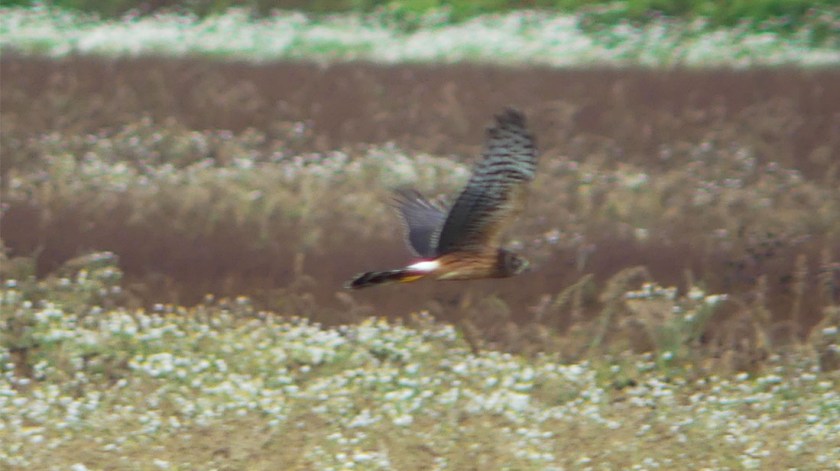
The week’s rarities are three Bobolinks here from the interior. I tried to locate them the other morning and failed. Today’s another day. I’m hopeful until a Merlin flashes by, and then a Northern Harrier hunting voles. The zillion sparrows, which were everywhere moments ago, vanish like summer snow. After perching on a snag and surveying the fields, the Merlin plunges towards the brambles, and then is gone — blindingly fast. It took a sparrow likely, the concussion of the stoop killing the prey in the air. It’s the way of things.
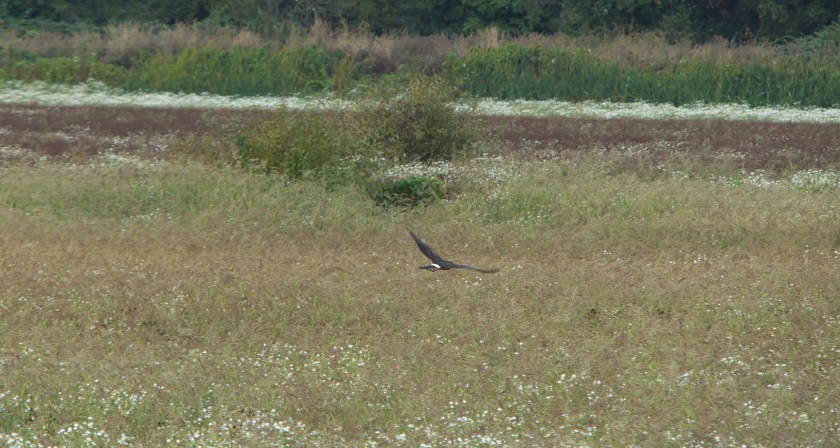
HarrSept192017

Harrier2Sep192017

Northern Harrier

MerlinSept192017

Merlin

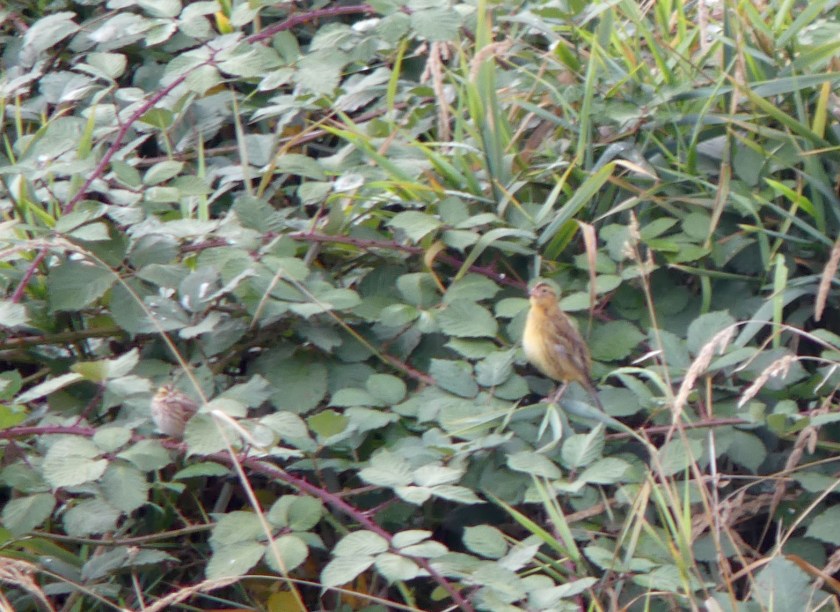
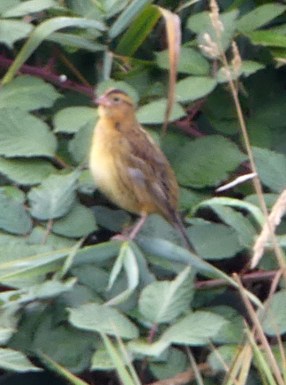
The danger past, sparrows and Goldfinches soon return, with feeding the priority now. No sign of the Bobolink yet. Luckily, I have a fallback strategy. When you can’t find a rare bird, look for excited birders, as I do now. I spot two expert members of the clan along the dike trail glassing a clump of Blackberry. They’ve located one of the Bobolinks,and point it out to me. Great people, birders.
Bobo3

Bobolink

BobdistanceSept192017

Bobolink and Savannah Sparrow

The target is a long way away, a mere yellowish smudge from where I stand. Even using a monopod, I can’t keep my Lumix FZ300 steady enough for a well-focussed shot. With the converter I think I’m out to about 1200 mm, way beyond good picture range. Still, I figure, record photos are better than none at all.

BoboSept192017

Too far…

The Bobolink is a short-tailed member of the (new world) blackbird tribe; in breeding plumage the males are mostly black and white, with Naples Yellow skull caps. This one seems to be a juvenile, its feathers washed with lemon, perching like a Meadowlark. Later on, I find a second bird all on my own, a female this time, much paler.
CansSep192017

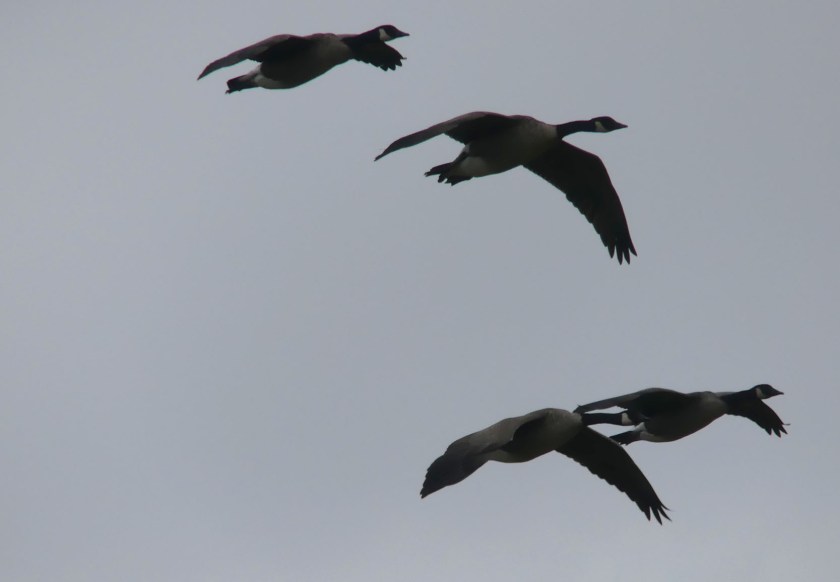
I’m about done here. A flight of Canada Geese cruise over the treetops and land, honking, out of sight in the lush vegetation. Within a few weeks, the autumn rains will come in earnest. Then the waist high weeds will wither, the ponds will fill with water and the Teal, Pintails, Gadwalls, and many other ‘winter birds’ will return. It is, indeed, time to dress for fall…


Tideline

SlbtAu232017a

Morning

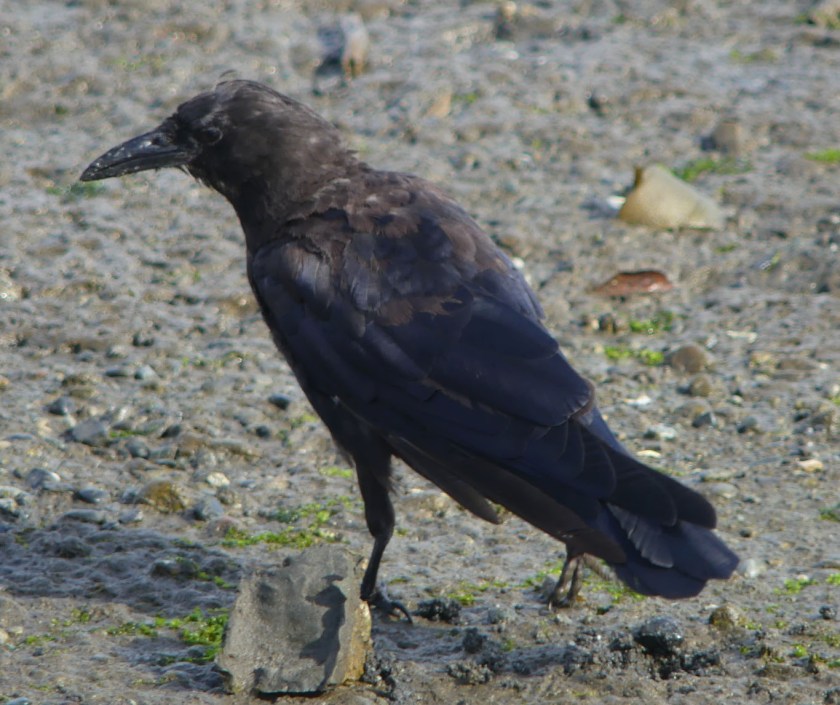
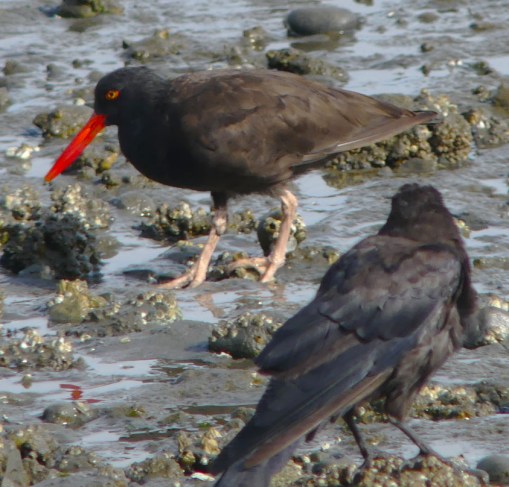
Nice to be up early. The tide is out and the local diners are taking advantage of the fact, like the Mew Gulls working the water’s edge. A young Oyster Catcher probes for sea worms and other delicacies among the rocks. Several young crows, jet-black adult plumage replacing their juvenile brown, follow this other black bird hoping, I suppose, for a free meal. Incidentally, Oystercatcher. It’s a cool name but is catching oysters really a skill? Seriously?

OysrctchAu232017

Black Oystercatcher

YngcrowAu232017

Juvenile Crow

OCandCrwAug232017

You sort of look like my mom…
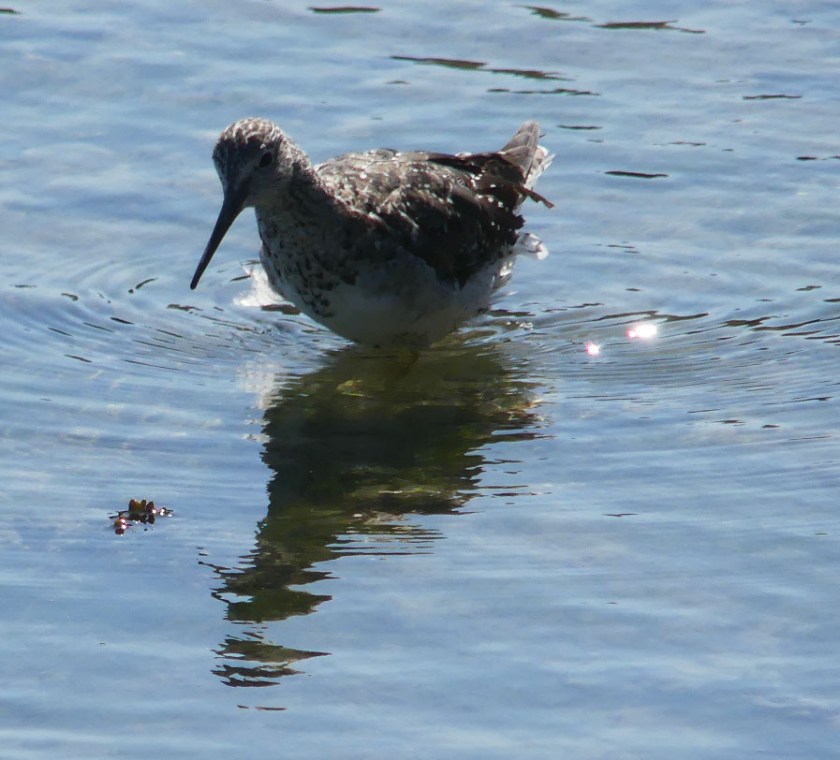
A few seals are here. This adult is surely one of the females who have lately been using our safe little bay as a kind of creche. We counted six tiny pups last night at high tide. A Kingfisher rattles, takes a fish and retreats before I can grab a picture. Seven or eight Greater Yellowlegs have taken up residence here and the same number of Killdeer, piping as they scurry about. I reckon I’ve seen more than a hundred birds and animals in twenty minutes or so. Everybody’s doing their own thing, not minding me. Nice morning this one, nice.


SealAug232017

Harbour Seal

MwGullAug232017

Mew Gull

yllwlgsAug232017

Greater Yellowlegs


Killdeer Bath Time


Mount Hood

MthdviewAu72017

Haze

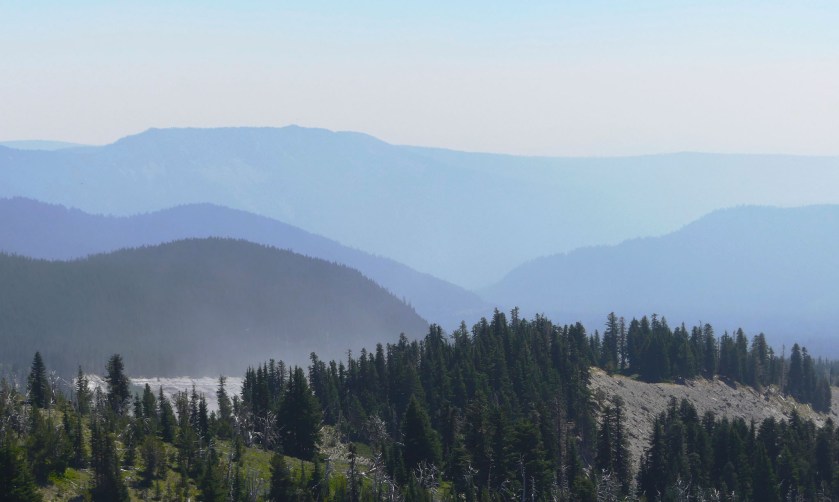
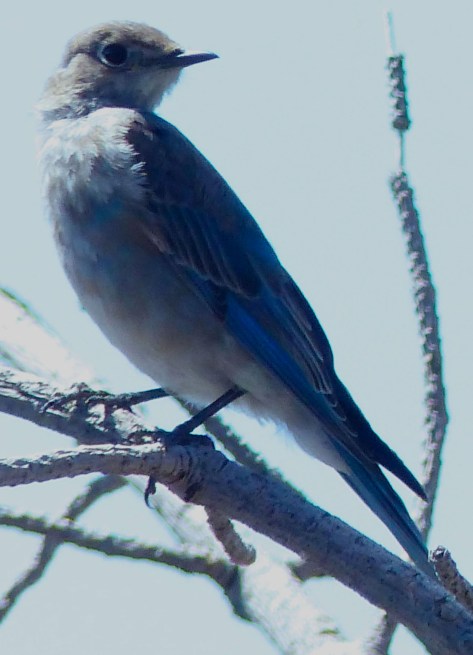
I’m looking down on smoke produced by fires in British Columbia and driven out the valleys of the Fraser and Columbia. With no strong westerlies, or rain, to stop it, the haze now covers the west from Medford to Whistler. And it’s hot, very hot – a hundred and five in Portland. So I’m up here at eleven thousand feet where the air is clean and the temperature comfortable. There’s even snow. I’m looking for Mountain Bluebirds, Clark’s Nutcracker and other high country species but most other visitors aren’t so inclined. They trudge past carrying skis and snowboards heading for the runs a mile away. Good on them – they’re all a lot younger than me. Skiing in August is just about the last thing I feel like doing.

MtHdAu82072017

The Ski Hill

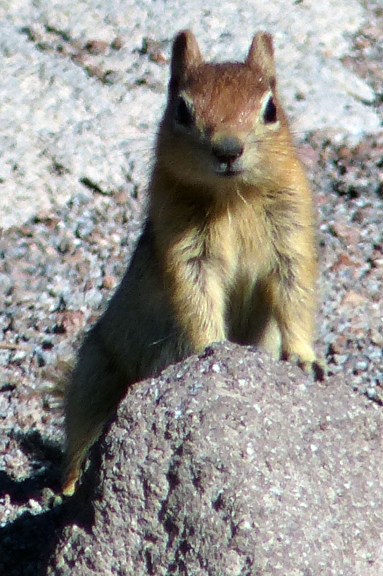
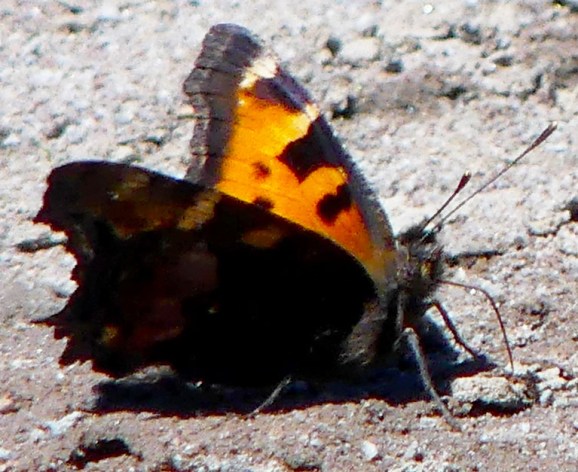
I carry on, sidestepping rivulets of melt water and blooming alpine plants, going higher. Golden-mantled Ground Squirrels seem to be everywhere, gathering and storing food for the winter. Several species of butterflies chase each other across the broken terrain, flashing orange and black. The biggest are Tortoiseshells, strong fliers and fast. I find a comfortable-looking boulder and sit to admire slopes adorned with yellow wild buckwheat, purple asters, fleabane and lupines – how clever of nature to do the complimentary colour thing. Then I empty my shoes of ash and pumice and head down the mountain towards the smoke and heat. Ah, me. At least they have good food and wine in Portland.

ClrksnutAu202014a

Clark’s Nutcracker

MluntBlueJu30mtHd

Mountain Bluebird

GMtlgrndsqau142016

Golden-mantled Ground Squirrel


Paintbrush, Aster Fleabane, Alpine Aster

WesterntortoiseshellAu72017

Western Tortoiseshell


Worn.

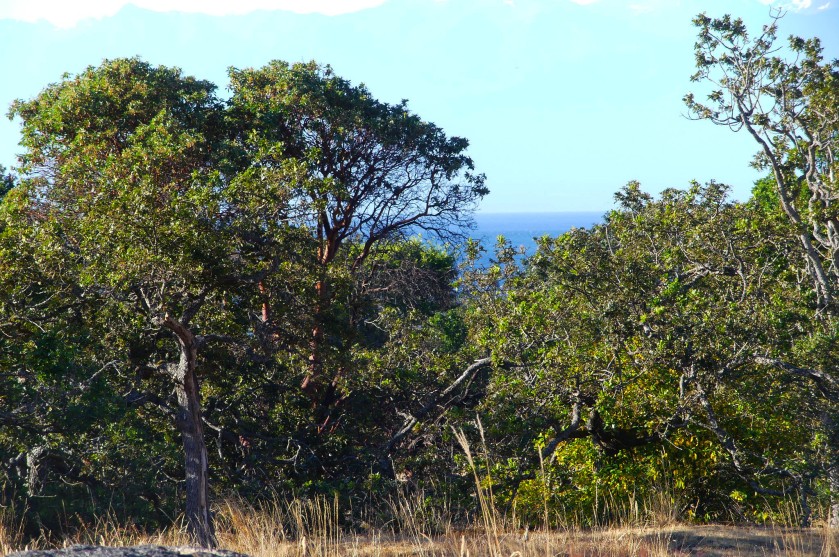
UplandsviewJu192017

Uplands Park View

Today, the Park seems like the Hundred Acre Wood, intimate, private. It’s breezy closer to the sea but I’m out of the wind here in the meadow. I have the trails to myself too. With no runners or dogs to disturb them, young Chickadees and Towhees are active, chasing each other through the foliage like kids. They seemed not to mark the juvenile Cooper’s Hawk that cruised silently past a moment earlier, a serious lapse. Carelessness can get a bird killed here, unless it’s lucky, or the wide-eyed hawk is equally inexperienced and inept, which is not impossible.

CoopersHawkSept2016c

Cooper’s Hawk

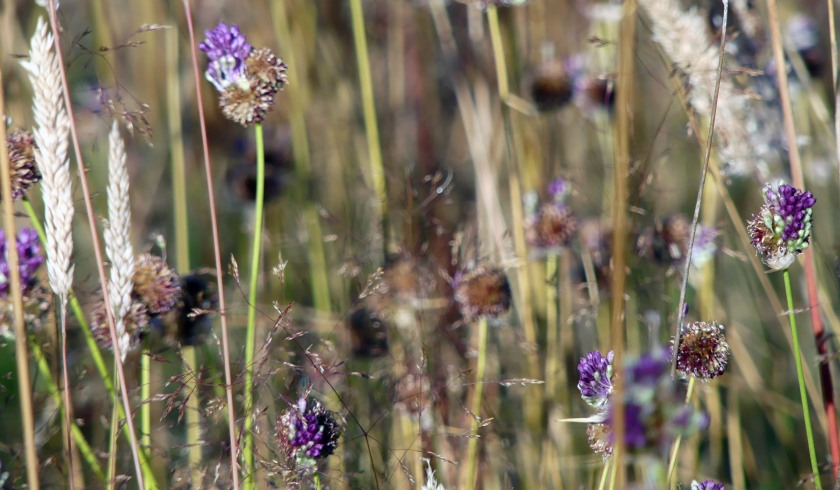
MeadowflwrsJu192017

Meadow Flowers

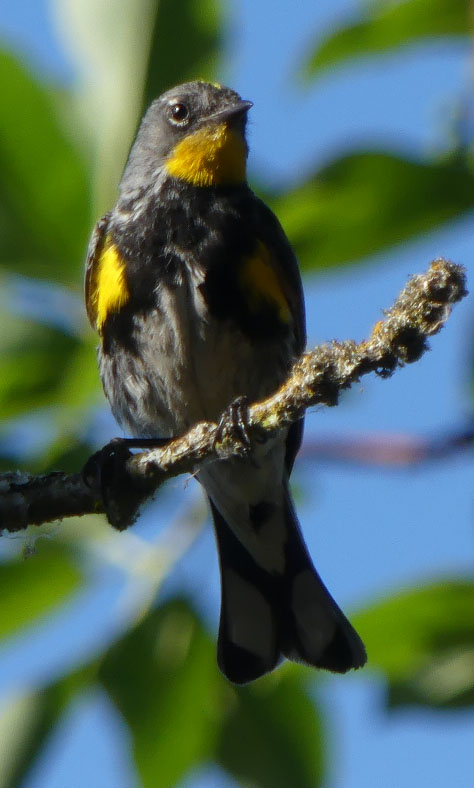
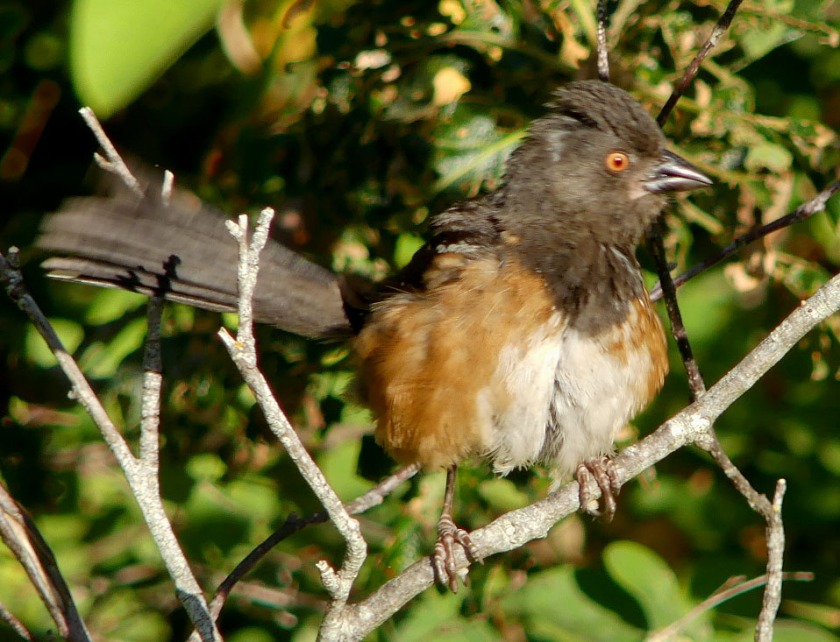
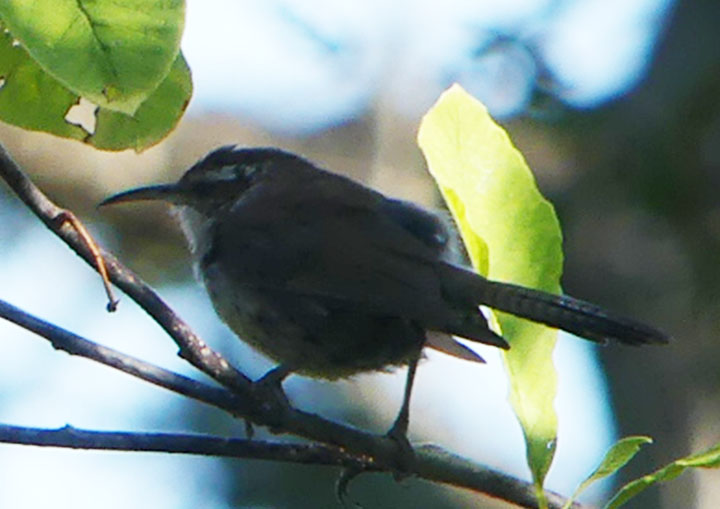
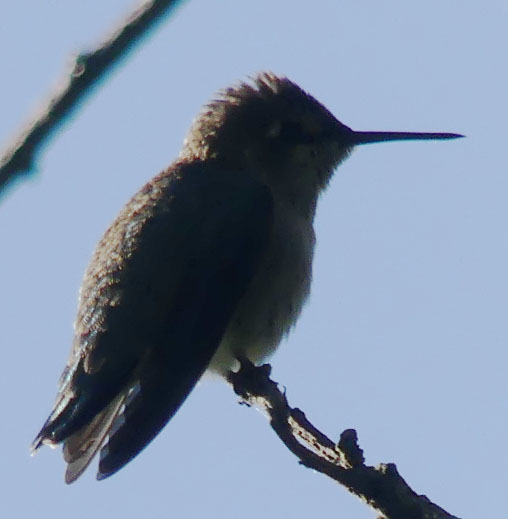
Mostly I see signs of the turning of the year – flowers past their peak, older birds, worn now and replacing feathers. Gone the flamboyant colours and behaviours of mating season. Not completely, perhaps. A Yellow-rumped Warbler is still handsome, a ( pardon me ) ratty Spotted Towhee trills and fidgets a display of sorts nearby, a Bewick’s Wren sings half-hardheartedly in the shade. A Chipping Sparrow, on the other hand, seems content to feed up for the fall migration, keeping its own counsel. An Anna’s Hummingbird takes in the sun, as relaxed as a hummingbird ever gets

YRWarbJu142017

Yellow-rumped Warbler

TowheewrnJu192017

Spotted Towhee

Bewicks2Ju192017

Bewick’s Wren

ChipspwrnJu192017

Chipping Sparrow

AnnasJu192017

Anna’s Hummingbird

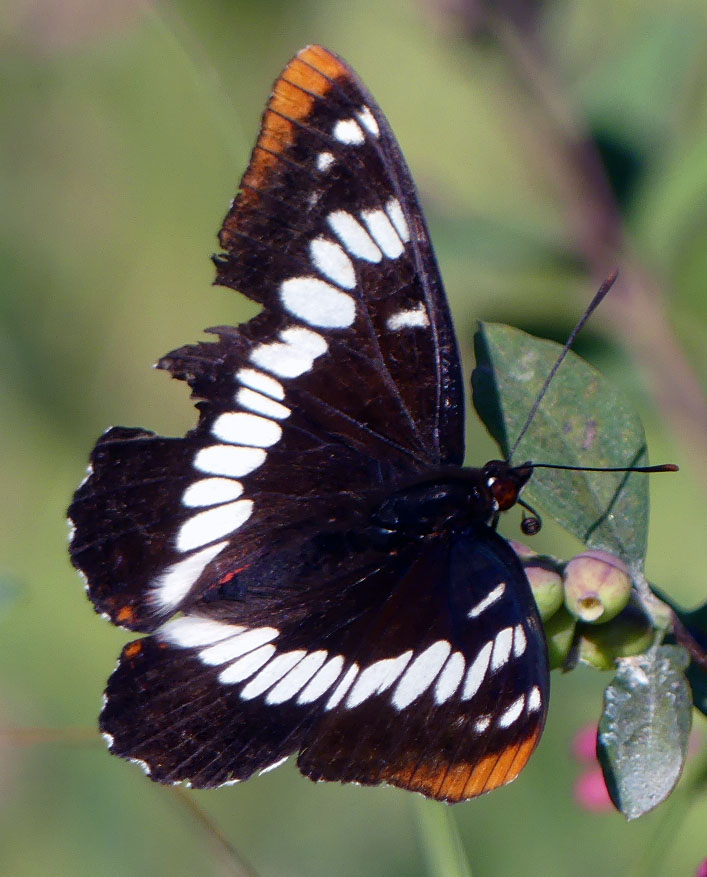
A strikingly-patterned butterfly appears. It’s a Lorquin’s Admiral, looking great from a distance but close up, not so good. Its wings are in tatters, a sign that it’s at the end of its short life. Nice name though – Lorquin’s Admiral.

Lorquin's AdmiralJul142017

Lorquin’s Admiral

Speaking of names, those of butterflies seem more poetic than those of birds – Skippers, Fritillaries, Azures, Parnassians, Hairstreaks. Admirals are Brushfoots. Brushfoots – makes me think of Hobbits. So – I started my walk with Winnie the Pooh and now I’m in Middle Earth. It’s that kind of a morning.

Once assigned, of course, names frequently stick. The competition to put the labels on things must be fierce. Bicycles were originally called velocipedes, which seems so much better. The same people who named birds must have insisted upon ‘bikes’; butterfly aficionados probably would have gone with ‘velos’. Boy, my mind really is wandering now. Talk about worn.


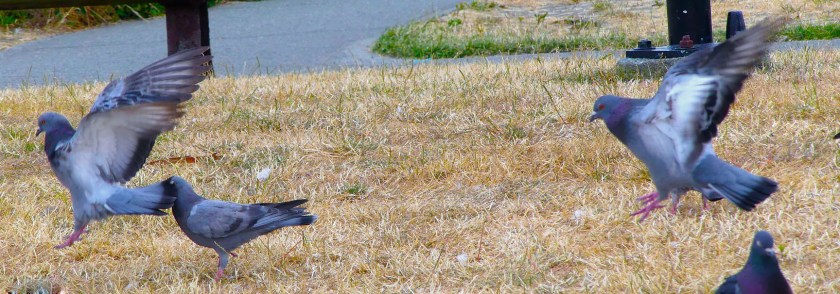
Pigeons! Good grief!

PiggroupJu102017

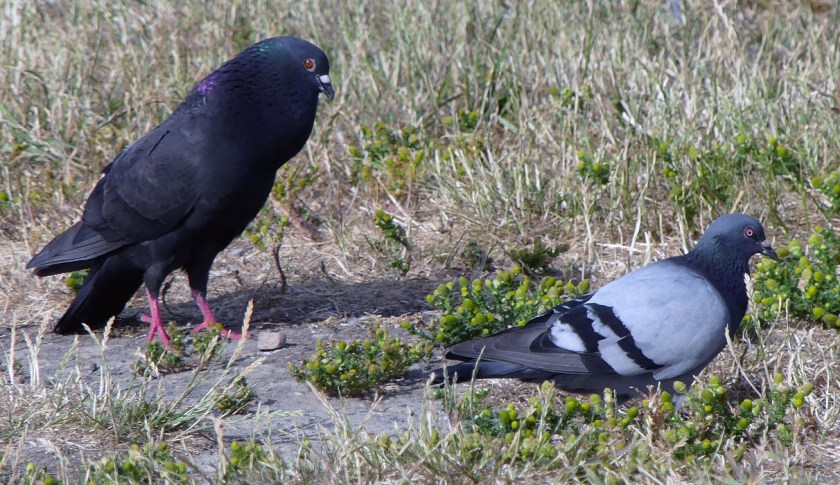
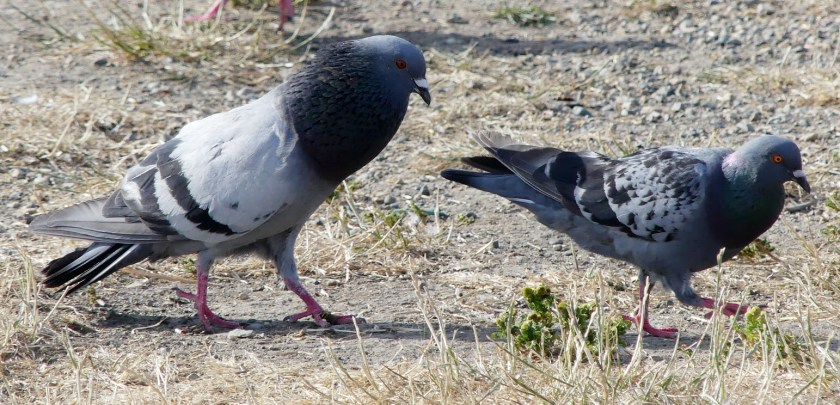
It’s a measure, perhaps, of how slow mid-summer birding has been for me that I offer up this post on pigeons. I don’t mean the sleek, pearl-grey Band-tailed Pigeons, those lovely forest birds, but ordinary Rock Doves. Not well liked generally, these ‘rats of the air’, but I’ve always had a fondness for them.

I won’t bore you with stories of boyhood attempts to become a ‘pigeon fancier’, or of nabbing sleeping birds from under the eaves of the abandoned, towering old Coop with its rotten floors, or of the strange assortment of culled birds begged from real pigeon people, or of the beautiful red Homer, with its mighty chest and prominent cere, the one my friend Lloyd and I grabbed from off a downtown sidewalk. Gosh, that bird was something – a prince among pigeons. He stayed with us for a few days, ate our gleaned scratch grain, gathered his strength and then continued his journey home-at ninety miles an hour if he wanted to kick in the afterburners. Where home was, Lloyd and I never knew. We ought to have recorded his band number but twelve-year-olds often don’t think of these things until it’s too late.

GraypigJu102017.jpg

To make this more like a birding post, I mount a photographic expedition in support of it. I soon discover that there are really good-looking birds in most flocks. When I park out on Turkey Head, the locals descend, ready for a handout. They obviously don’t understand I’m here to do a photo essay, because I have to keep chasing them off the hood of my newly-washed car. It’s very disrespectful (Hey- I’m working here!).

WhpigJu102017

Begging for handouts, incidentally, doesn’t interrupt the mating process with Rock Doves. I’m not sure anything less than a Peregrine Falcon attack would accomplish that. The cooing and billing goes on through the year, which is why there are so many of these feathered ‘rats’ around the world. It’s not their fault. I watch a movie star among Rock Doves as he pouts his way from one female to another until he finally gets his way. He’s got it all going on!

pigscourtju102017

BlackpigJul102017

When a more promising car drives by, the flock lifts off, whirls around, performs some aerial acrobatics and, disappointed, re-descends near me. Pigeons are beautiful flyers, agile and swift, with those wing-tip clapping takeoffs. It’s worth watching pigeons fly; there aren’t many birds who do it better. See how they soar and turn, tumble and dive, flight feathers whistling. Wonderful! It’s those big chest muscles and the area and shape of the wing that does it.

PigsflyJu2102017

They’re relatively good parents too, think ‘pigeon milk’. In the bird world, only Penguins and Flamingos and members of the dove family make ‘milk’ for their offspring. I’ve never lost my love for these birds. Most of the snarky things people say about them could also be said about our own species, which doesn’t mean there’s no such thing as too many pigeons.

Courtpigs3

So that’s it for the Rock Dove, my old pals. Nostalgia still drives me to visit to poultry barns at fall fairs, to check out Pouters, Fantails, Rollers and Tumblers at local shows, to listen to the music of  squawks, coos and peeps and the rustle of feathers, to breathe in the once familiar smells of scratch grain and straw. Other bird smells I try to ignore. I’m selective with with nostalgia. One has to be.

Panama Flats

I like the name of this birding hotspot -Panama Flats. I’m surprised a blues artist hasn’t picked it up. And now, singing ‘How come my dog don’t bark when my best friend comes around?’ is the legendary Panama Flats! But I digress. This is a birding blog after all and the ‘Flats’ are, instead, a series of flooded fields that attract waterfowl and shorebirds in the spring and late fall. A very pleasant, quiet place to be on a warm May morning like this one.

DucklgsMay182017

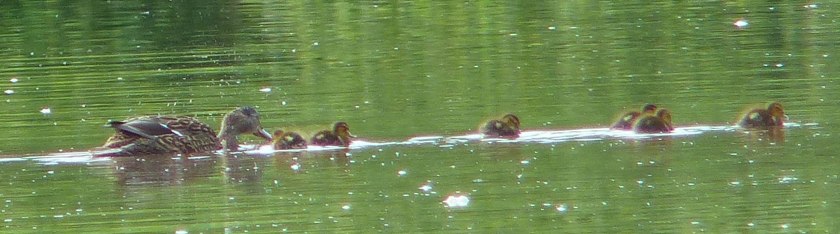
In a few months, the land will be dry, plowed possibly. Water birds that nest here, like Mallards and Canada Geese, have to getting cracking (sorry) early in the year. Today, dozens of ducklings and goslings are following their mums around, learning the ropes.

SpotsandMay182017

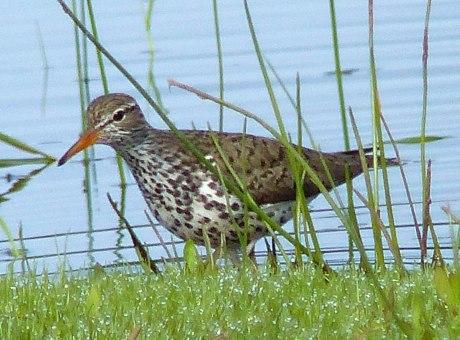
Spotted Sandpiper

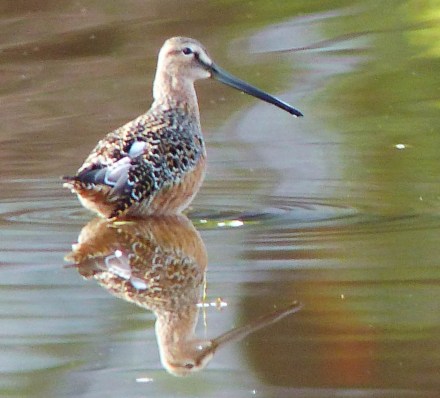
I’m here for a Pectoral Sandpiper, which I see briefly soon after arriving-on its way out, heading north I guess. Not so, the Spotted Sandpipers, actively displaying and chasing each other around the edges of the ponds, carried here and there by the staccato beats of their short wings. A Long-billed Dowitcher, stalking the perimeter surprises itself when it spots me, angling off into a swarm of young Mallards. I’m not fooled, not with that beak.

DowitcherMay182017

Dowitch3

Long-billed Dowitcher

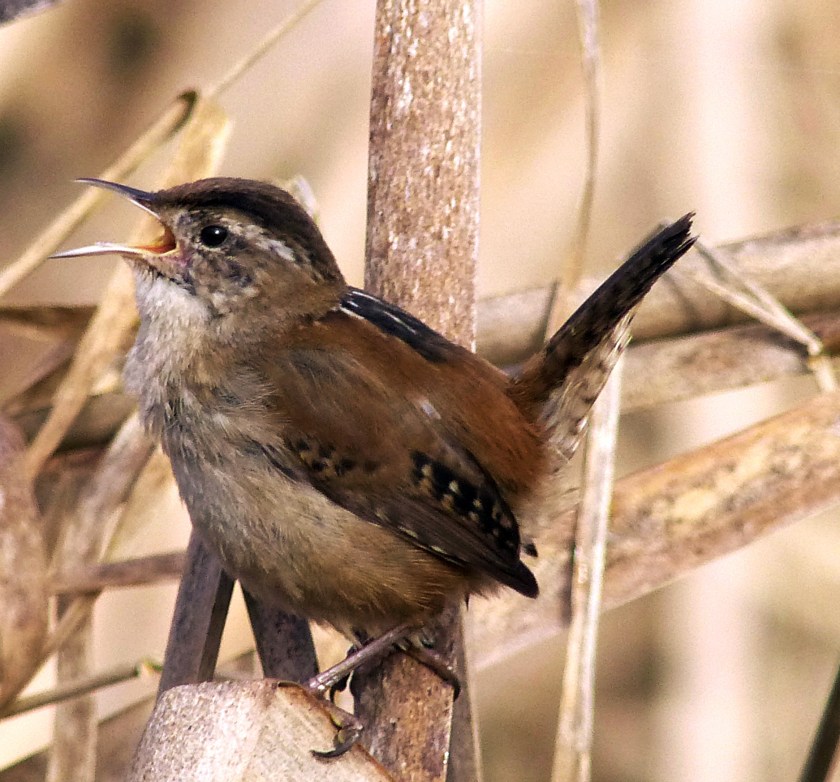
I follow the dykes between the ponds, balancing on the planks and bits of scrap wood people have used to span the cross ditches. A Marsh Wren scolds me from the cattails, a complex series of chuckles and buzzes. Quite charming – if they did but know it.

Marshwren2

Marsh Wren

As the day warms, Barn Swallows appear, darting around after insects. A glossy Purple Martin crisscrosses the larger pond, the distinctive half flapping, half-gliding flight style an added giveaway. A Common Yellowthroat sings his ‘witchity, witchity, witchity’ nearby, looking handsome with his white forehead, black mask and lemon-yellow throat. Forget the blues. It’d be hard to write a good, downer song here, today.

ComYellwthrt2

Common Yellowthroat


Powerline Birding

GoldHGHTSMay82017

The Olympics

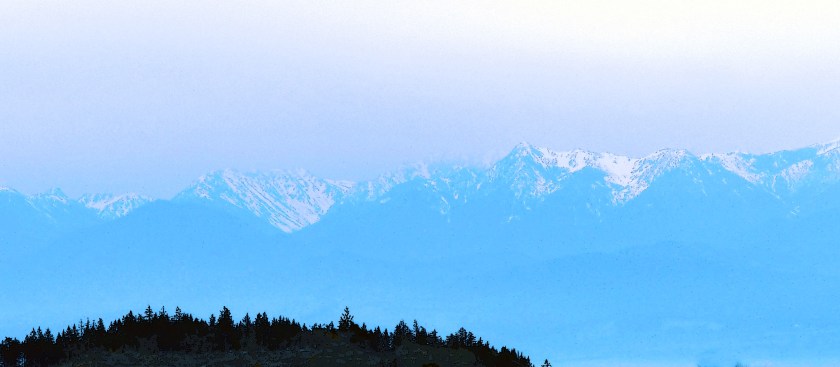
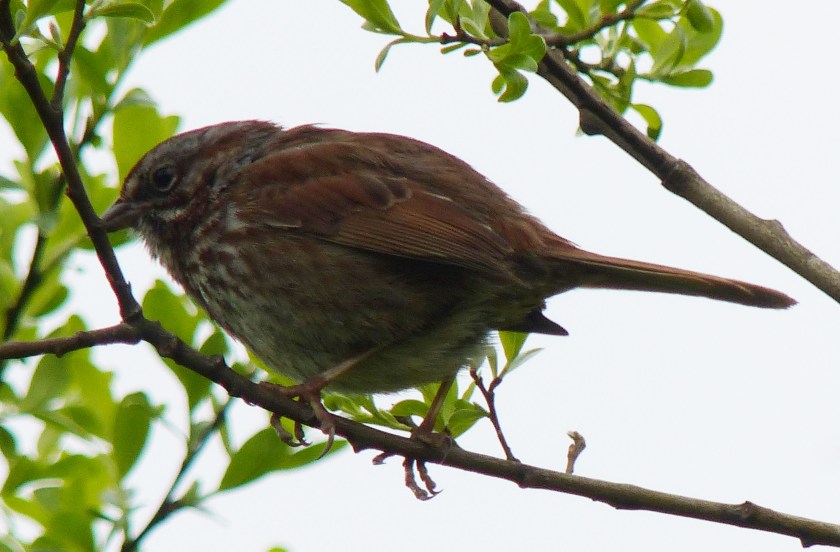
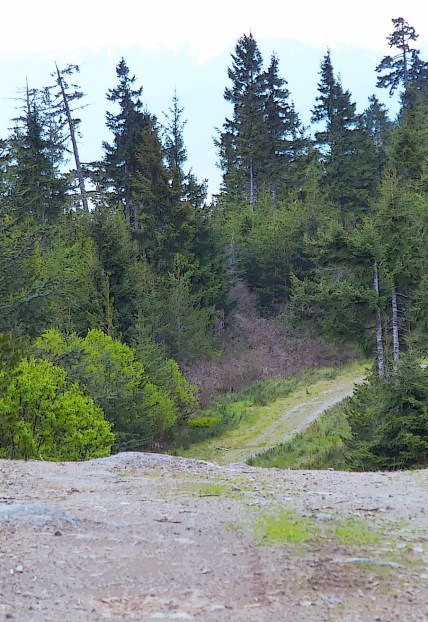
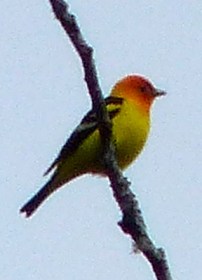
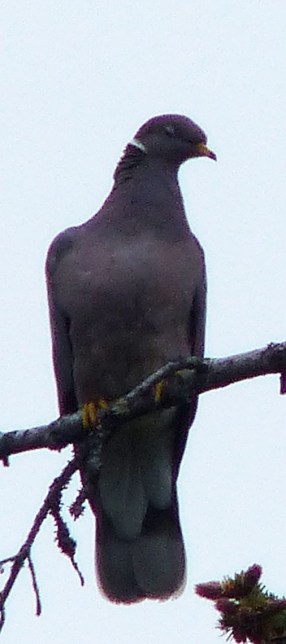
Power lines are among the ugliest by-products of our electronic age but the ‘cut’ also provides wonderful habitat for birds, particularly flycatchers and warblers. I’m up on Goldstream Heights, picking my way over the rocks. Before long, I’m too focussed on the calls of birds to be aware of the huge metal towers looming nearby. A Song Sparrow chips a warning – I’m the topic certainly. As I stop to take in the view of the Olympics across the Strait of Georgia in Washington state, four Band-tailed Pigeons flash by overhead, streamlined, swift flyers like all pigeons. Below them, a tropically-coloured Western Tanager flashes yellow and red, landing briefly on a distant treetop. My mind is on flying birds. Suddenly a MacGillvary’s Warbler startles me with a blast of song. He pops into view, giving me some great looks. Lovely. Even with the towers and high-voltage lines, there are worse places to be than here on a mild May morning.

Mac'swarblmay82017

MacGillvary’s Warbler

SngSprwMay82017

Song Sparrow

GoldpowlineMay82017

Powerline Trail

WestTnMay82017

Western Tanager

BTpigeonMay82017

Band-tailed Pigeon


Two Weeks Back

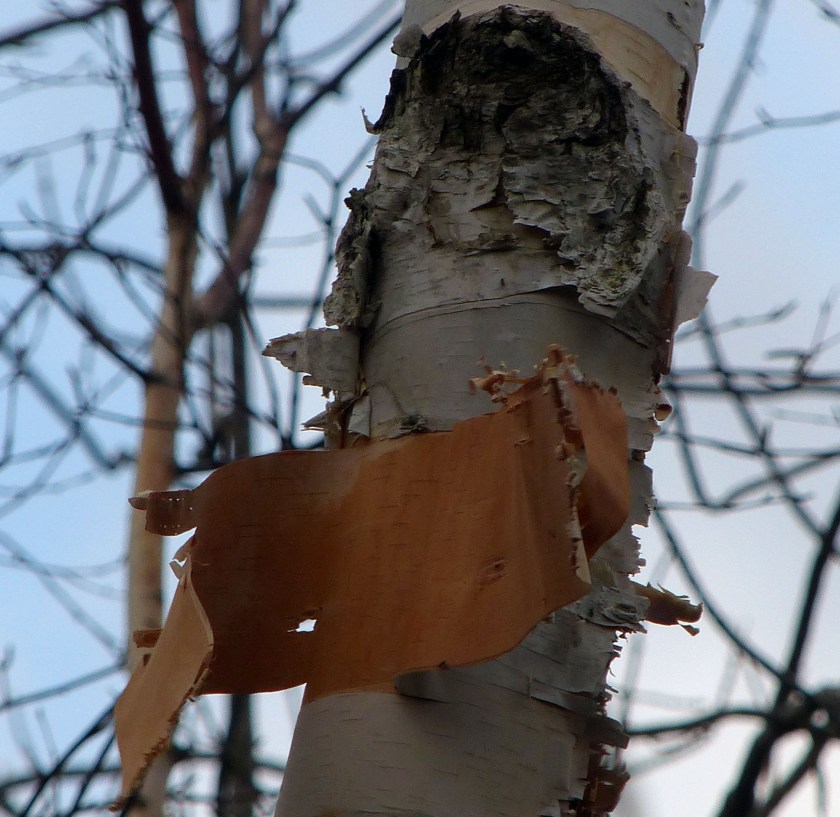
PaperbirshAp142017

Paper Birch

I’m not sure when I’ll ever be in these woods again, walking the once familiar nature trails near my boyhood home. I’m a stranger here now, with fewer reasons to visit. I learned years ago not to expect spring proper until May. Sure enough, we get a snow shower this morning, passing quickly but leaving cold, breezy, damp weather in its wake. I head for Hibou on the shore of Georgian Bay since the path into Bognar Marsh, my other favourite place, is too muddy for a traveller without boots.

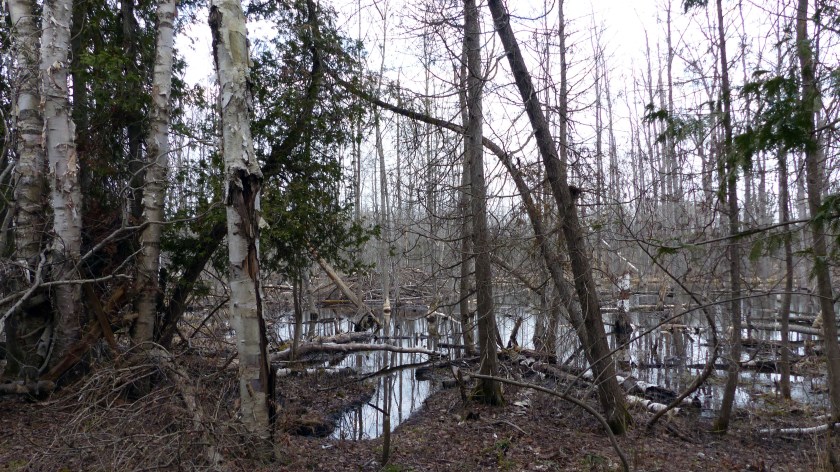
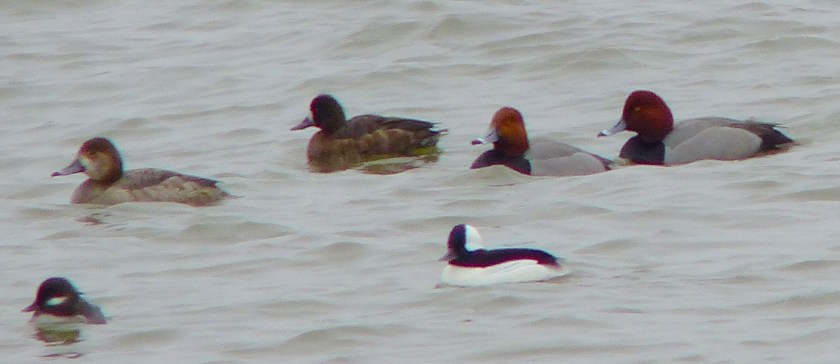
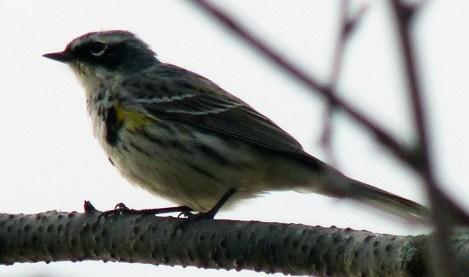
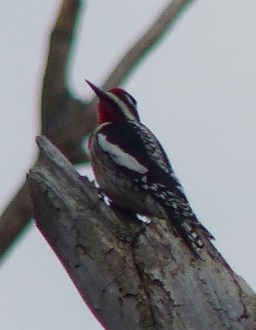
Hibou’s nice too. I soon discover that I’m the only person here. Perfect. The landscape is partially flooded and it’s hard to tell where the beaver pond ends and the rest of the forest begins. I hear the sharp warning slap of a beaver’s tail and spot the lodge. A Yellow-bellied Sapsucker drums a solo on a snag, hoping to attract a mate. Two pair of Redheads cruise the shoreline. The first of the warblers have arrived – Myrtles, usually the earliest to return, and they are singing too. Cold and damp or not, there’s almost never a bad time to be in the natural world.

HibouAp142017b

The Beaver Pond

RedheadsAp142017b

Redheads

MyrtWarbAp142017.jpg

Myrtle Warbler

YellbelsapsuckAp142017.jpg

Yellow-bellied Sapsucker


King Eiders and Red-necked Grebes

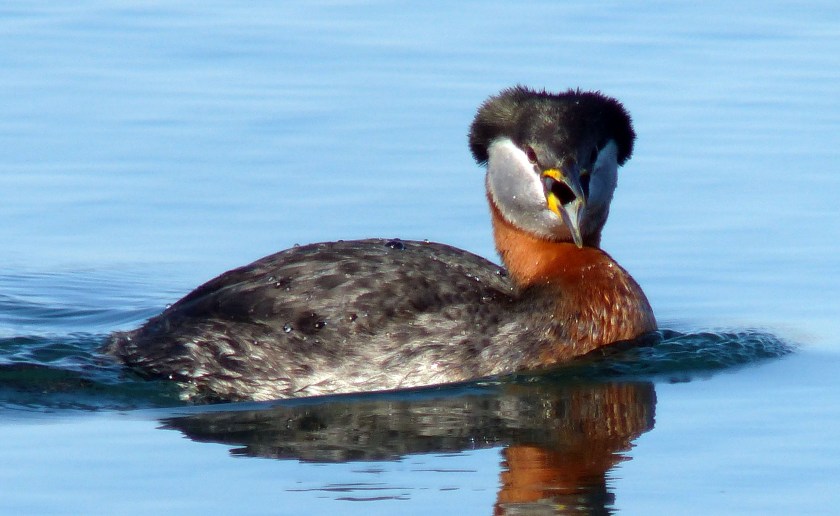
Rdnkgrbap142017

Red-necked Grebe

I need to be at the airport by ten thirty in the morning for my flight home from Toronto. The problem is that I’m staying in historic Niagara-on-the Lake, maybe two hours away. A sensible person would relax and enjoy breakfast at the pleasant B&B where I spent the night, but a rare King Eider lingers at Etobicoke’s Col. Sam Smith Park. It’s out of my way and I’m pressed for time but I do what any half-crazed birder would do under the circumstances. I get up at six, skip breakfast and head out to try to add the Eider to my Life List.

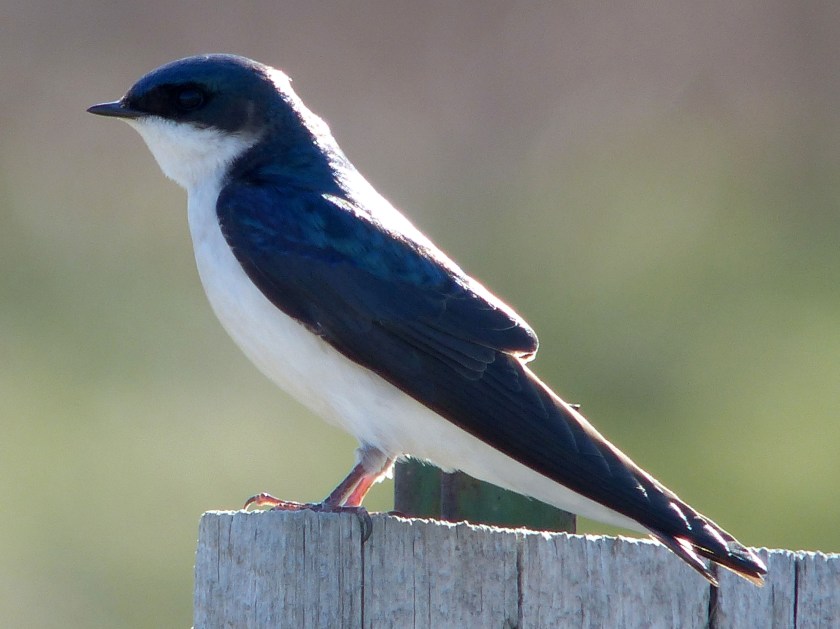
Col. Sam Smith Park is new to me and it’s a lovely spot. It doesn’t hurt that the day is so spring-like. Well, it is spring but I saw snow farther north not two days before and I’m wary. The Tree Swallows are convinced. Dozens of these pretty birds have arrived from Mexico or Central America, claiming the nest boxes volunteers (I think) have set up for them.

TreeSwallAp142017

Tree Swallow

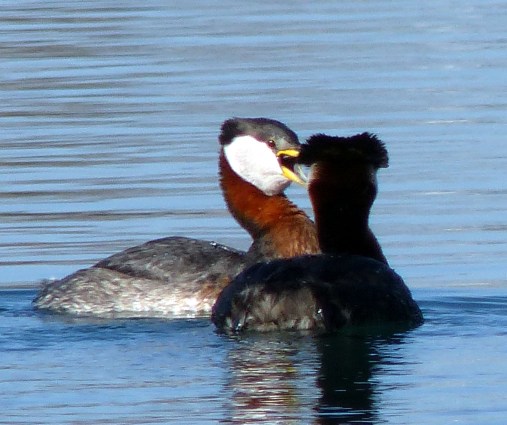
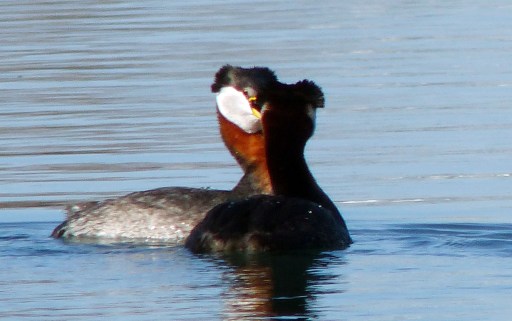
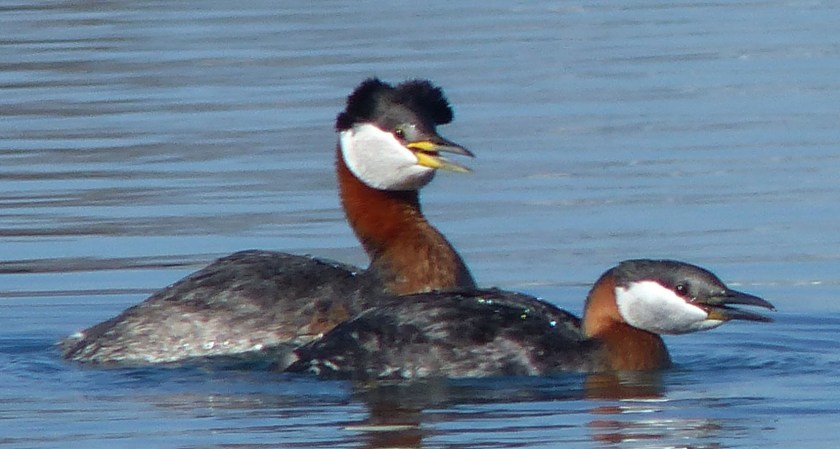
I’m hoping to see the Eider but not overly optimistic. I hadn’t counted on the abundance here of other birds. Red-Necked Grebes – hundreds of them – are courting noisily. Of all waterbirds, grebes have the most spectacular courting rituals, the dances of the various species. My opinion, of course. Today’s gathering of these engaging birds makes for a phenomenal show, all colour, posturing and noise.

REDknecGRBSAp142017

RNG5

RNG3

Rngb

Courting Grebes

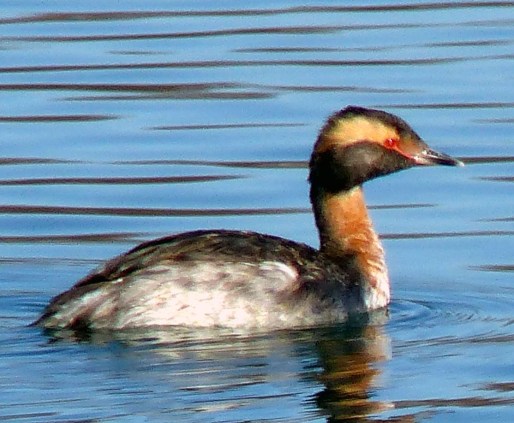
Horndgrbapr142017

Horned Grebe

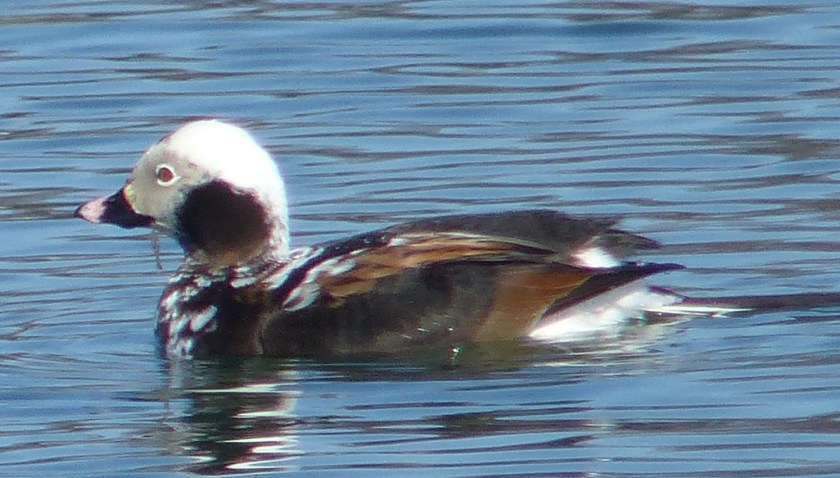
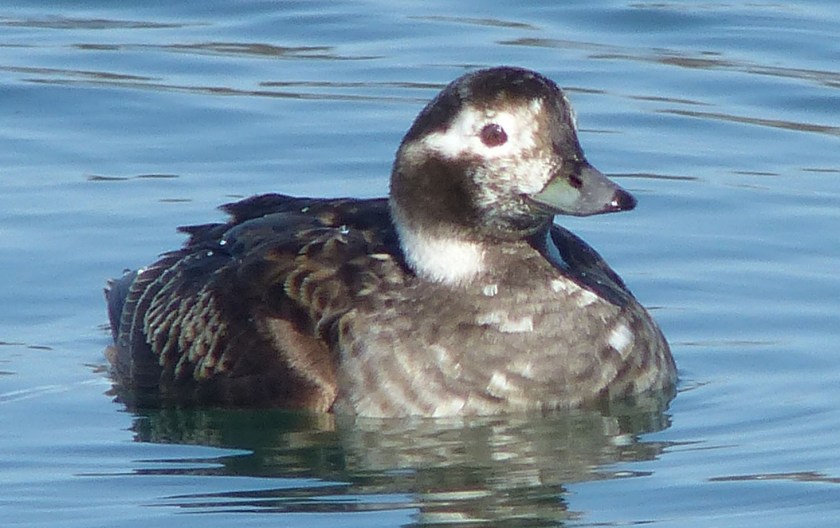
Nor are the Red-necks the only birds caught up in the show. Here and there, Horned and Pied Grebes are scattered amongst their Red-Necked cousins. Numerous Long-tailed Ducks forage for food, gathering energy for their upcoming return to the Arctic. Most of these attractive birds have already paired up. Waiting for them to pop back up to the surface for a picture requires patience. They are the deepest diving of all ducks.

LonTailduchapr142017

LonTailDuckfemaAp142017

Long-tailed Ducks

But now, it’s getting on and I still haven’t spotted the Eider. It’s not where it’s been repeatedly sighted. I hold position as long as I dare, leaving myself barely enough time to get my rental back and to go through security. As I hurry to the parking lot, I spot an unusual looking duck in amongst the floats in the boat basin. It’s strongly back-lit but ‘different’. I take a dozen or so shots. And then I’m gone. At home, I upload my photos. Sure enough, as often happens, the parting (or Parthian) shots are the winners. I have my King Eider. Not great photos perhaps, but good enough for an ID. I’ll miss breakfast anytime for this.

Kingeiderap142017King Eider

Aransas Memory

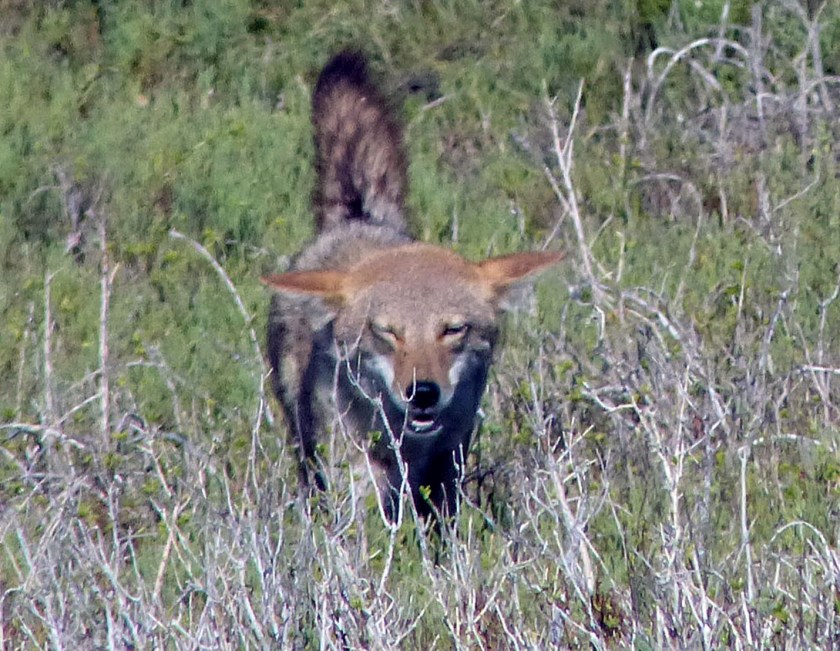
CoytAransasn0102014

Aransas Coyote

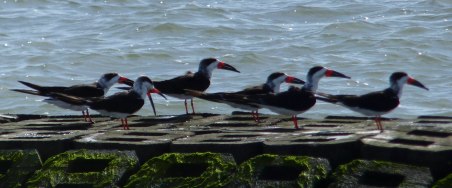
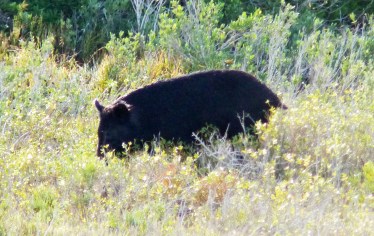
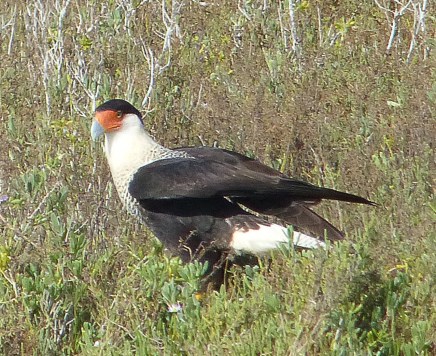
I visited Aransas National Wildlife Refuge in Texas in November of 2014 and saw Whooping Cranes for the first time. I subsequently wrote an article based on my visit – published in Hakai Magazine in 2015. I had hoped to see the birds last November when I was again at Aransas. Since I didn’t take a boat tour, which is the only sure way to view the birds, my expectations were low. Good job, because I saw not a single one of the 300 or so individuals parading about somewhere in these precious marshes – a reminder of how few Whoopers there are in the world. Still, Aransas is a wonderful place, with a variety of wildlife everywhere – Spoonbills, Ibis, Caracara, White-tailed Hawk, and much more. Lots and lots to see.

Blackskimmersno102014

Black Skimmers

BoarAransasNo102014

Feral Pig

LBCrlw2no102014

Long-billed Curlew

CrCaracarano102014

Crested Caracara

As for the cranes, not much has changed. It’s still a precarious existence for these magnificent birds. Loss of habitat at either end of the migration, or a catastrophic event en route, could eliminate the species. More environmental protection is needed, not less. My article, originally titled Whooping Cranes vs Big Oil follows.

Whooping Cranes Vs Big Oil (Hakai, April 23, 2015)

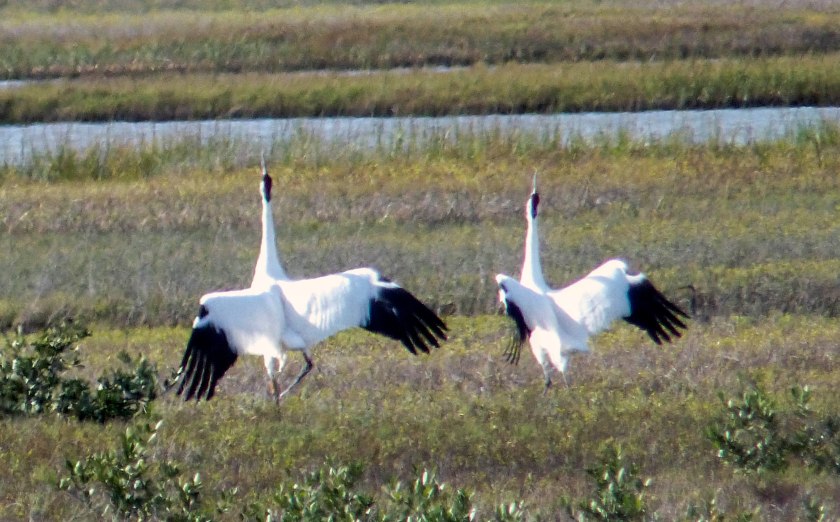
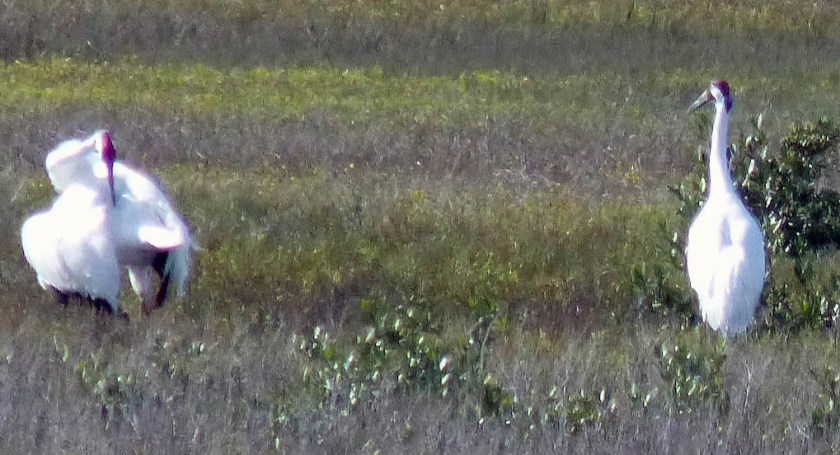
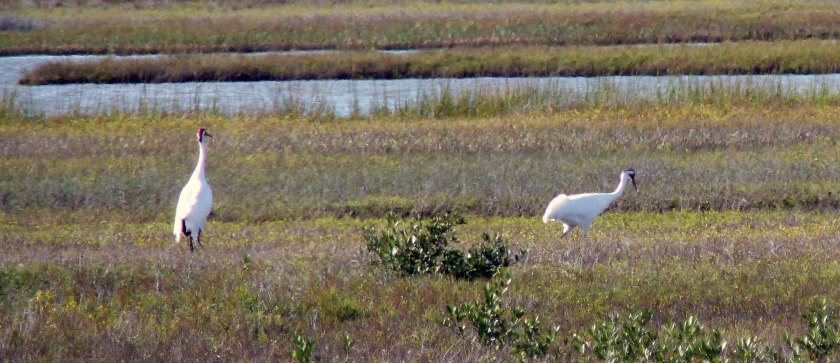
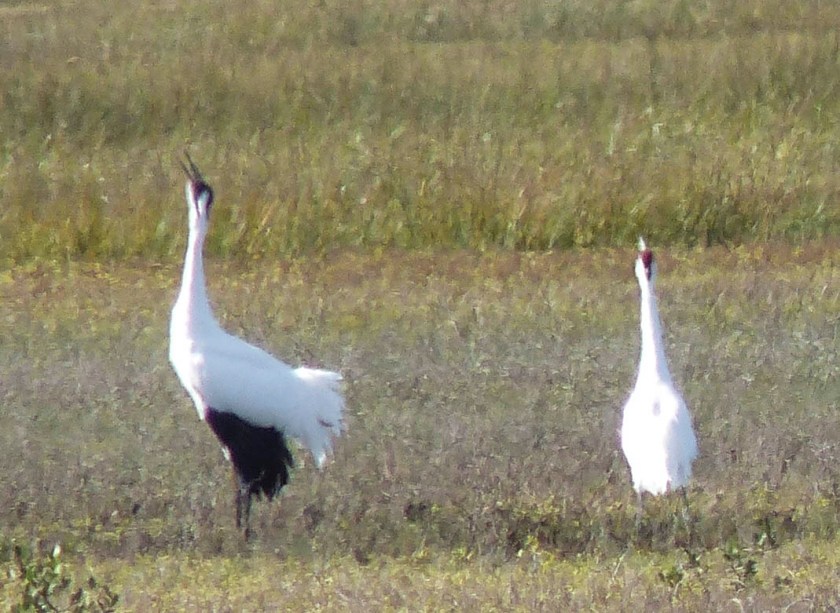
I’m on a boat in Aransas National Wildlife Refuge in Texas viewing whooping cranes on their wintering grounds. They come for the blue crab that abounds in these muddy, cordgrass flats. Many forage in family groups—two white, red-capped adults and a fawn-coloured juvenile. True to their name, the “whoopers” are noisy, trumpeting and dancing to intimidate rivals or strengthen pair bonds.

CranzAransspairdisplyno102014.jpg

Whooping Cranes ‘Dancing’

whcranzdramano102014

Whcransaransasno102014pair

Whooping Cranes – On Territory

I’m delighted to see the birds at last. They belong to the Wood Buffalo/Aransas flock, numbering about 300—the entire free population of the tallest bird in North America. The dozen I’ll see today, on this side trip from Harlingen and the Rio Grande Valley Birding Festival, are my first, but I’ve followed their story since my boyhood in the 1960s. Then, fewer than 50 existed and their survival seemed doubtful.

WhCranzpairno102014

Crabbing

Whoopswhoop2

‘Whooping’

Conserving the cranes is an ongoing challenge. They nest in remote Wood Buffalo National Park in Canada and winter in southern Texas—4,000 kilometers each way. Females lay two eggs but only one chick usually survives—the weaker is killed by its sibling or a predator. Ironically, the surplus chicks helped save the cranes. Scientists gathered and hatched “extra” eggs and slowly rebuilt the flock. The International Crane Foundation uses a variation of that method today in efforts to build a second flock. ICF volunteers dress as adult cranes to ensure chicks bond with other whoopers and use ultra-light aircraft to teach juveniles to fly. Crane conservation is about commitment and, I think, love.

oilrigno12016

Drilling Rig, Port Aransas

At Aransas a barge carrying a Blowout Preventer Valve (BOP) passes a feeding crane family, temporarily blocking my view. BOPs seal underwater oil wells. Threat and threatened are instantly juxtaposed. Unlike the cranes, I know what happens when a BOP fails. When one blew on the Deep Water Horizon Well in 2010, escaping oil destroyed coastal marshes like Aransas from Louisiana to Florida. Another such spill could wipe out wild whooping cranes forever. Nor are the birds secure in Wood Buffalo—Alberta’s Oil Sands are just south of the nesting grounds.

Whhpfamily

Crane Family

I overnight in Corpus Christi near its brightly-lit petroleum refineries, and reflect on whooping cranes and Big Oil. In the darkened marshes, the birds likely watch for prowling bobcats and coyotes, their ancestral enemies, unaware of an omnipresent and vastly greater danger.

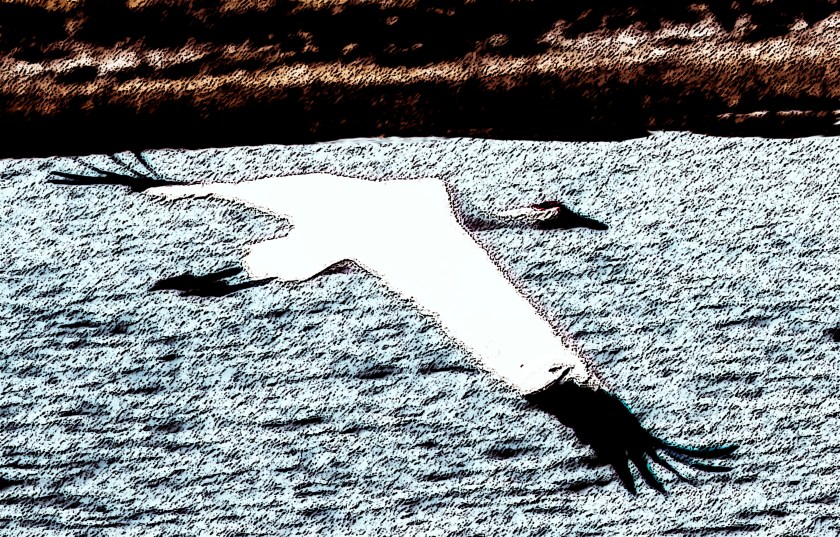
Whoopflysumi1