Panama Flats

I like the name of this birding hotspot -Panama Flats. I’m surprised a blues artist hasn’t picked it up. And now, singing ‘How come my dog don’t bark when my best friend comes around?’ is the legendary Panama Flats! But I digress. This is a birding blog after all and the ‘Flats’ are, instead, a series of flooded fields that attract waterfowl and shorebirds in the spring and late fall. A very pleasant, quiet place to be on a warm May morning like this one.
DucklgsMay182017

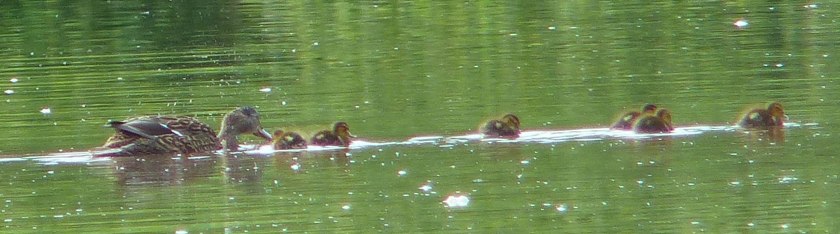
In a few months, the land will be dry, plowed possibly. Water birds that nest here, like Mallards and Canada Geese, have to getting cracking (sorry) early in the year. Today, dozens of ducklings and goslings are following their mums around, learning the ropes.
SpotsandMay182017

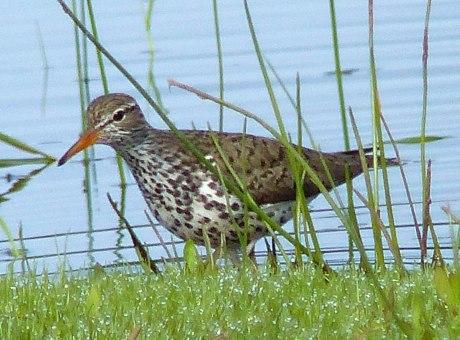
Spotted Sandpiper

I’m here for a Pectoral Sandpiper, which I see briefly soon after arriving-on its way out, heading north I guess. Not so, the Spotted Sandpipers, actively displaying and chasing each other around the edges of the ponds, carried here and there by the staccato beats of their short wings. A Long-billed Dowitcher, stalking the perimeter surprises itself when it spots me, angling off into a swarm of young Mallards. I’m not fooled, not with that beak.
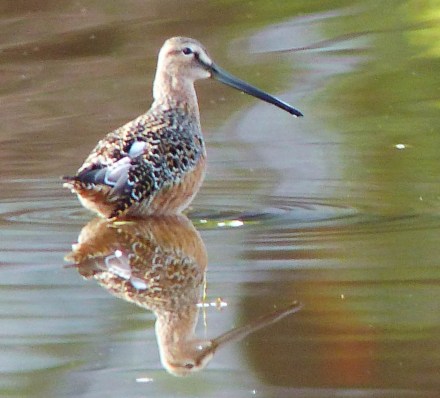
DowitcherMay182017

Dowitch3

Long-billed Dowitcher

I follow the dykes between the ponds, balancing on the planks and bits of scrap wood people have used to span the cross ditches. A Marsh Wren scolds me from the cattails, a complex series of chuckles and buzzes. Quite charming – if they did but know it.
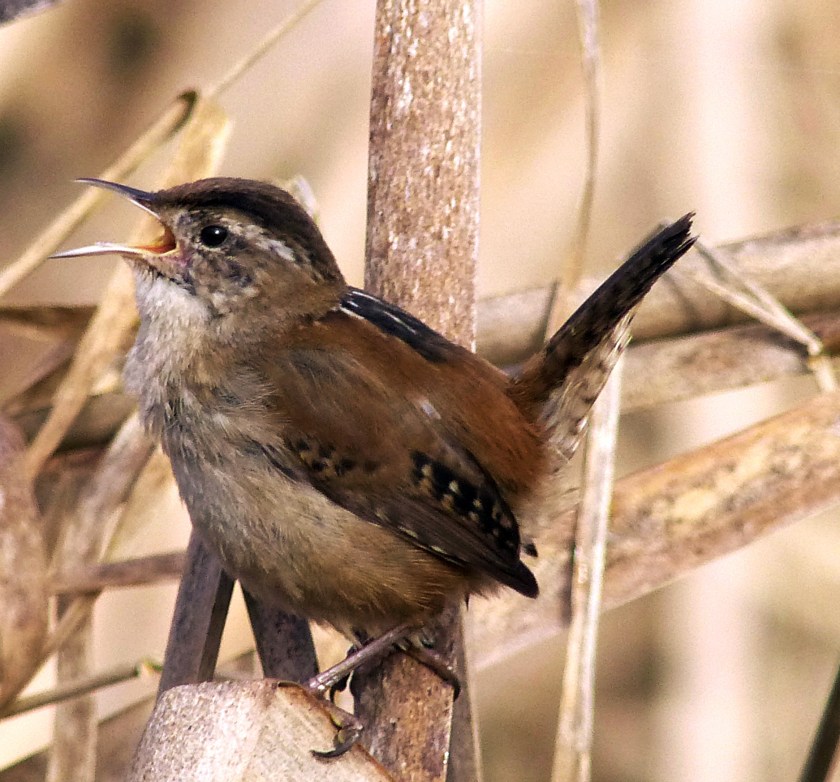
Marshwren2

Marsh Wren

As the day warms, Barn Swallows appear, darting around after insects. A glossy Purple Martin crisscrosses the larger pond, the distinctive half flapping, half-gliding flight style an added giveaway. A Common Yellowthroat sings his ‘witchity, witchity, witchity’ nearby, looking handsome with his white forehead, black mask and lemon-yellow throat. Forget the blues. It’d be hard to write a good, downer song here, today.

ComYellwthrt2

Common Yellowthroat
 

Two Weeks Back

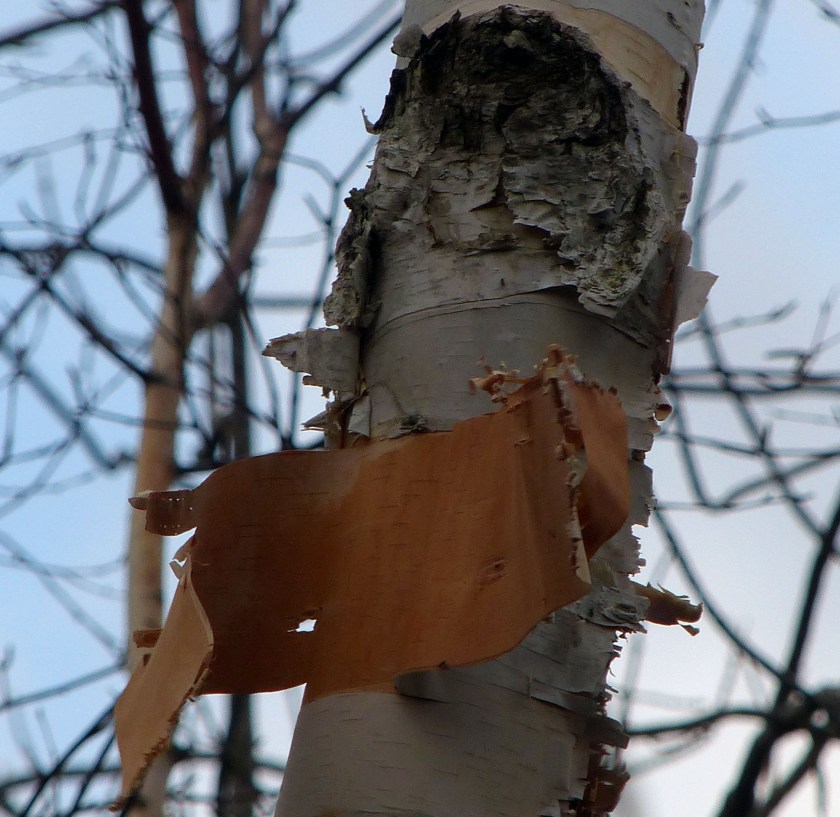
PaperbirshAp142017

Paper Birch

I’m not sure when I’ll ever be in these woods again, walking the once familiar nature trails near my boyhood home. I’m a stranger here now, with fewer reasons to visit. I learned years ago not to expect spring proper until May. Sure enough, we get a snow shower this morning, passing quickly but leaving cold, breezy, damp weather in its wake. I head for Hibou on the shore of Georgian Bay since the path into Bognar Marsh, my other favourite place, is too muddy for a traveller without boots.

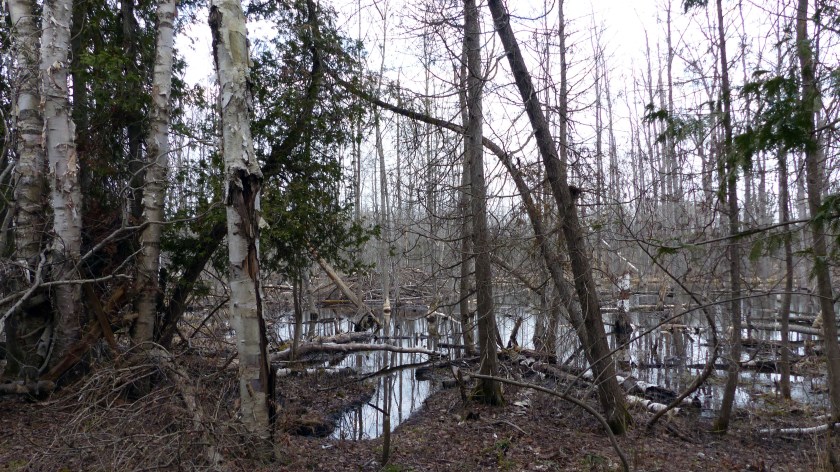
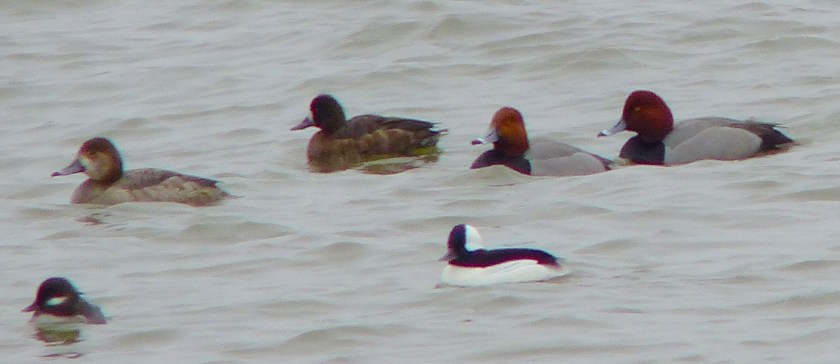
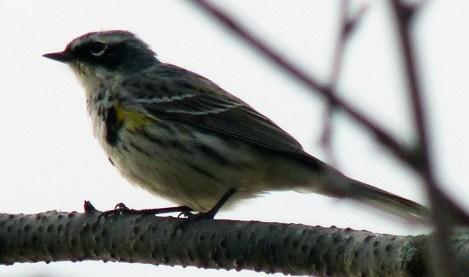
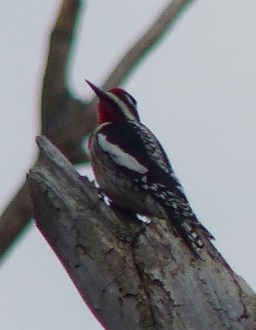
Hibou’s nice too. I soon discover that I’m the only person here. Perfect. The landscape is partially flooded and it’s hard to tell where the beaver pond ends and the rest of the forest begins. I hear the sharp warning slap of a beaver’s tail and spot the lodge. A Yellow-bellied Sapsucker drums a solo on a snag, hoping to attract a mate. Two pair of Redheads cruise the shoreline. The first of the warblers have arrived – Myrtles, usually the earliest to return, and they are singing too. Cold and damp or not, there’s almost never a bad time to be in the natural world.

HibouAp142017b

The Beaver Pond

RedheadsAp142017b

Redheads

MyrtWarbAp142017.jpg

Myrtle Warbler

YellbelsapsuckAp142017.jpg

Yellow-bellied Sapsucker


Aransas Memory

CoytAransasn0102014

Aransas Coyote

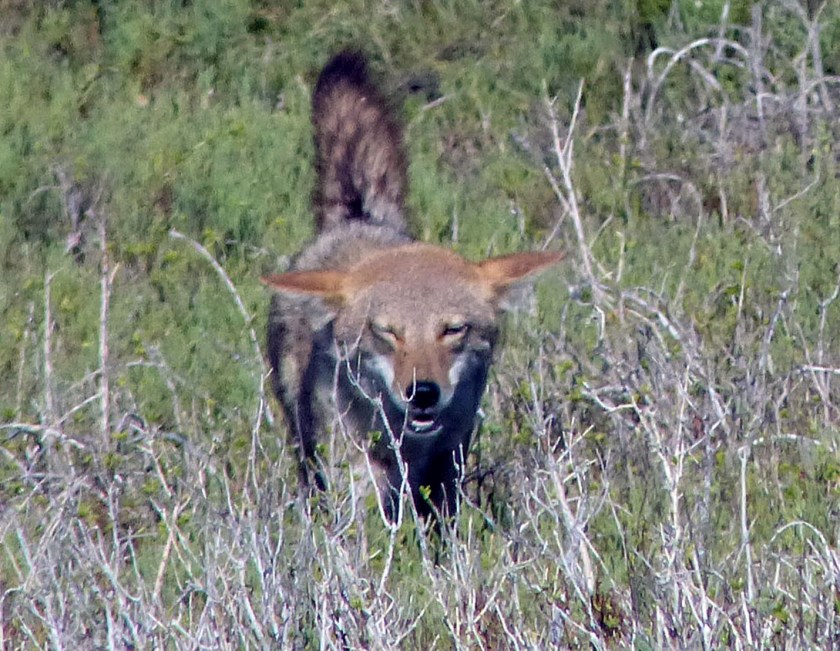
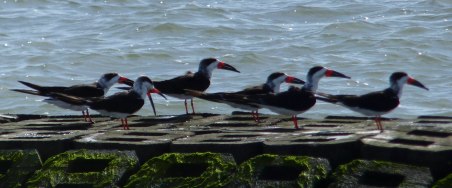
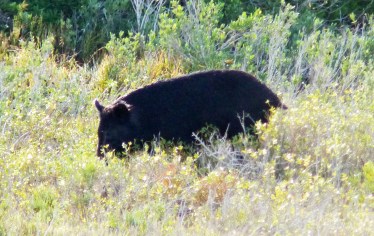
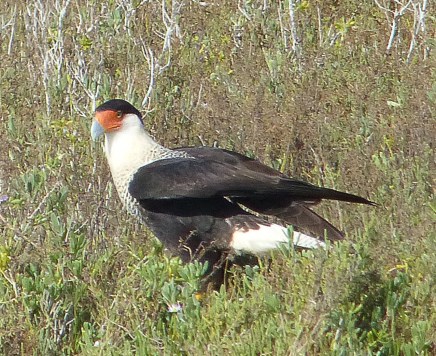
I visited Aransas National Wildlife Refuge in Texas in November of 2014 and saw Whooping Cranes for the first time. I subsequently wrote an article based on my visit – published in Hakai Magazine in 2015. I had hoped to see the birds last November when I was again at Aransas. Since I didn’t take a boat tour, which is the only sure way to view the birds, my expectations were low. Good job, because I saw not a single one of the 300 or so individuals parading about somewhere in these precious marshes – a reminder of how few Whoopers there are in the world. Still, Aransas is a wonderful place, with a variety of wildlife everywhere – Spoonbills, Ibis, Caracara, White-tailed Hawk, and much more. Lots and lots to see.
Blackskimmersno102014

Black Skimmers

BoarAransasNo102014

Feral Pig

LBCrlw2no102014

Long-billed Curlew

CrCaracarano102014

Crested Caracara

As for the cranes, not much has changed. It’s still a precarious existence for these magnificent birds. Loss of habitat at either end of the migration, or a catastrophic event en route, could eliminate the species. More environmental protection is needed, not less. My article, originally titled Whooping Cranes vs Big Oil follows.
Whooping Cranes Vs Big Oil (Hakai, April 23, 2015)

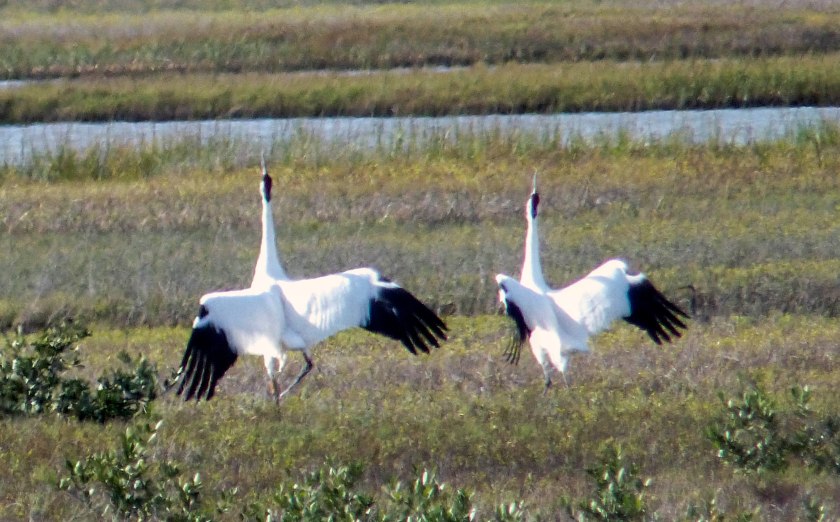
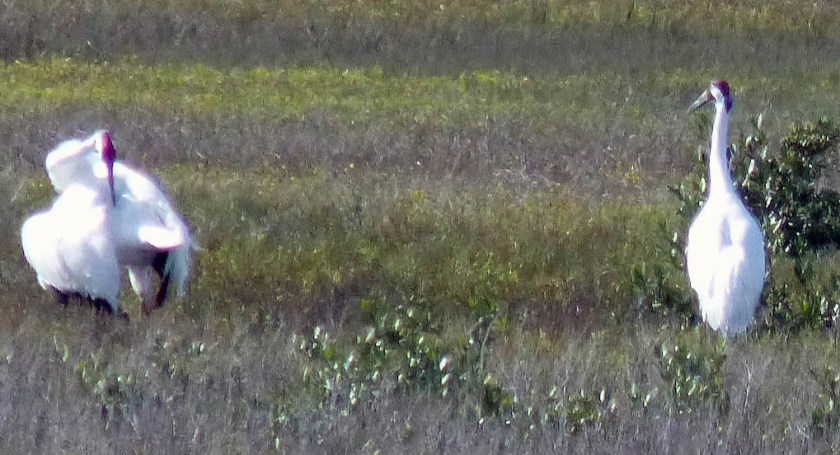
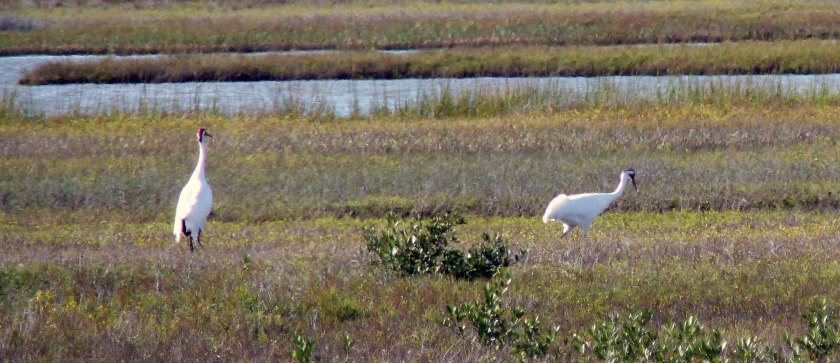
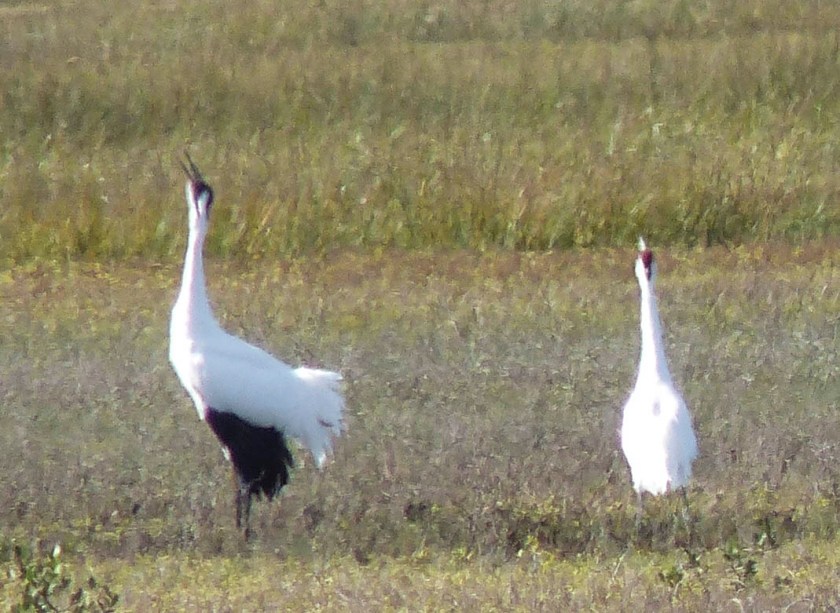
I’m on a boat in Aransas National Wildlife Refuge in Texas viewing whooping cranes on their wintering grounds. They come for the blue crab that abounds in these muddy, cordgrass flats. Many forage in family groups—two white, red-capped adults and a fawn-coloured juvenile. True to their name, the “whoopers” are noisy, trumpeting and dancing to intimidate rivals or strengthen pair bonds.

CranzAransspairdisplyno102014.jpg

Whooping Cranes ‘Dancing’

whcranzdramano102014

Whcransaransasno102014pair

Whooping Cranes – On Territory

I’m delighted to see the birds at last. They belong to the Wood Buffalo/Aransas flock, numbering about 300—the entire free population of the tallest bird in North America. The dozen I’ll see today, on this side trip from Harlingen and the Rio Grande Valley Birding Festival, are my first, but I’ve followed their story since my boyhood in the 1960s. Then, fewer than 50 existed and their survival seemed doubtful.

WhCranzpairno102014

Crabbing

Whoopswhoop2

‘Whooping’

Conserving the cranes is an ongoing challenge. They nest in remote Wood Buffalo National Park in Canada and winter in southern Texas—4,000 kilometers each way. Females lay two eggs but only one chick usually survives—the weaker is killed by its sibling or a predator. Ironically, the surplus chicks helped save the cranes. Scientists gathered and hatched “extra” eggs and slowly rebuilt the flock. The International Crane Foundation uses a variation of that method today in efforts to build a second flock. ICF volunteers dress as adult cranes to ensure chicks bond with other whoopers and use ultra-light aircraft to teach juveniles to fly. Crane conservation is about commitment and, I think, love.

oilrigno12016

Drilling Rig, Port Aransas

At Aransas a barge carrying a Blowout Preventer Valve (BOP) passes a feeding crane family, temporarily blocking my view. BOPs seal underwater oil wells. Threat and threatened are instantly juxtaposed. Unlike the cranes, I know what happens when a BOP fails. When one blew on the Deep Water Horizon Well in 2010, escaping oil destroyed coastal marshes like Aransas from Louisiana to Florida. Another such spill could wipe out wild whooping cranes forever. Nor are the birds secure in Wood Buffalo—Alberta’s Oil Sands are just south of the nesting grounds.

Whhpfamily

Crane Family

I overnight in Corpus Christi near its brightly-lit petroleum refineries, and reflect on whooping cranes and Big Oil. In the darkened marshes, the birds likely watch for prowling bobcats and coyotes, their ancestral enemies, unaware of an omnipresent and vastly greater danger.

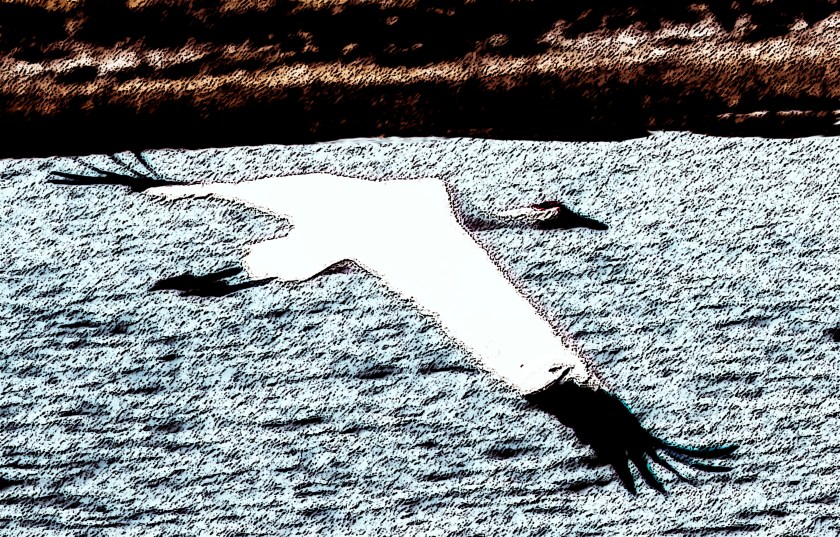
Whoopflysumi1


Observatory Hill-Pygmy Owl Hunting

fogclearinma212017

The Fog Clears

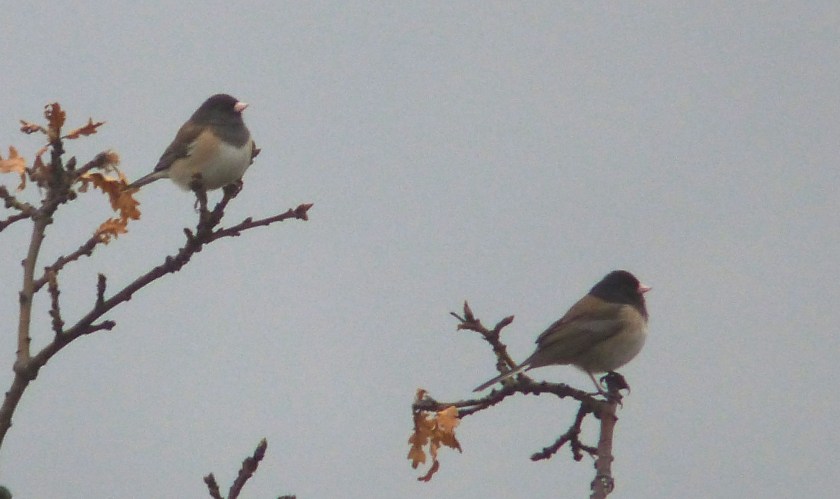
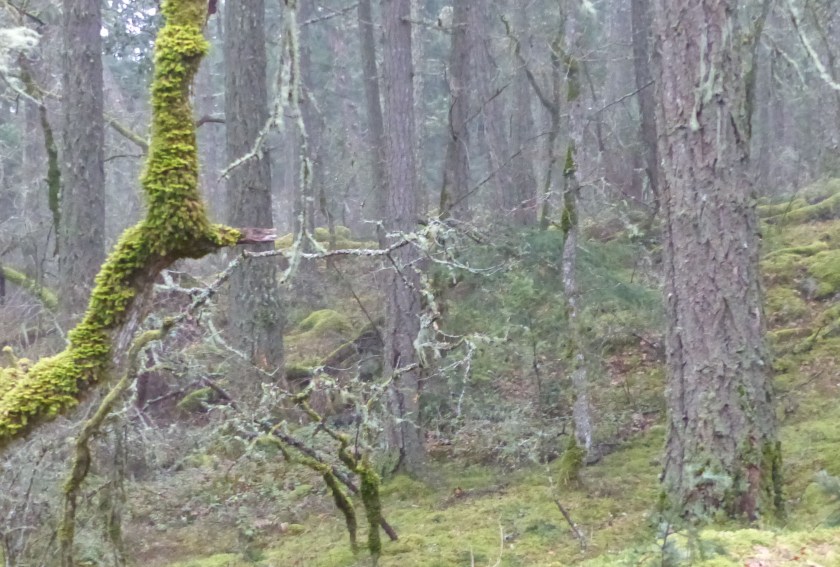
It was bright and clear at sea level when I left home this morning but by the time I get to the top of Observatory Hill heavy cloud is moving in and drifting down into the trees. Red-barked Arbutus, pale maples and the rocky bones of the mountain become ghostly, moss-draped forms; the boles of giant firs, alleys of indistinct columns. I take the trail past one of the smaller telescope-covering domes (the reason it’s called Observatory Hill) and go down into the mist. I can hear birds – nuthatches, drumming woodpeckers, kinglets, a Varied Thrush – but aside from a half dozen Ravens, an Anna’s Hummingbird and a few Dark-eyed Juncos, I see nada. I had hoped to luck into a Northern Pygmy Owl, my real goal this morning. They live up here reportedly and hunt in the daytime, and I have yet to get a picture of one of these fierce little hunters. Now, with the fog, I’m expecting I’ll be plumb out of luck today.

JuncosMa212017x

Dark-eyed Juncos

I hike through the gloomy forest, being careful to stay on trails I know. I’ve been lost in forests before and I do not like the feeling. After an hour or so, a light breeze arrives, quickens, changes direction and begins to scour the cloud from my side of the ‘mountain’. I pause on a rock outcrop for a view of Prospect Lake. It’s so quiet, so peaceful. A young Bald Eagle cruises past, gives me the ‘hairy eyeball’ and carries on. Fine. I’m leaving anyway. After a couple of hours on a cold, foggy mountaintop, I’m ready for a cup of hot coffee and, just maybe, a donut.

EagleObsHill

Bald Eagle

On my way back up through the firs, I hear something – the clear, repeated  ‘toots’ of a Pygmy Owl calling. And from the other side of the trail, a hundred meters or so away, another bird, ‘tooting’ back. I think they do this, male and female counter-calling. They might stand still for a photo if I could just find them. The mist lingers here and there and the sound seems to move around, making it hard to locate the Pygmy. I never do get a picture. My reward for stalking the birds is a brief flash of underwing, and those sounds. Still, the owls are here, on Observatory Hill. Next chance I get, next clear early morning, I’ll be up here searching.


Bufflehead Ballet

Buffles1Ma192017

It’s on

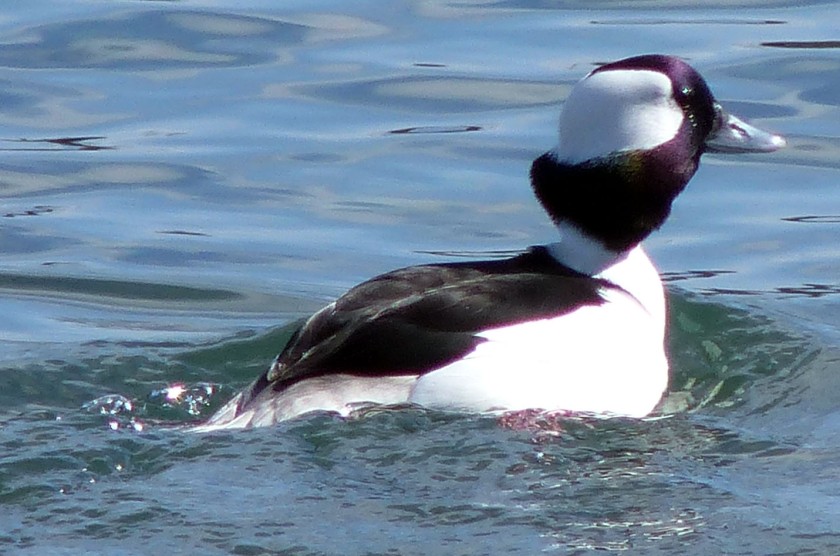
The squads of Buffleheads visiting the bay are in full mating mode now. Neat, tiny ducks ‘hooking up’ or fending off rivals. Buffleheads are monogamous but young birds need to find a partner. They’ll try to steal one if there’s no other way. The activity out there is close to frantic. Everybody’s zooming around, the strikingly-patterned males and the more tastefully-garbed females. And there’s lots of splashing too. The tiny ducks don’t even notice the much larger Common Mergansers who cruise through the melee.

Buff;leand mergsmar192017

Common Mergansers-where?

It’s all necessary, of course. Things have to happen now, or never. Soon, the Buffleheads will leave the coast and migrate into the interior. The females will rear their young in nesting holes originally made by Northern Flickers in trees on small streams and ponds sans Northern Pike, those notorious duckling eaters. For a time, they’ll stop being sea ducks and become freshwater ducks (that’s remarkable too if you think about it). I won’t see them again until the fall, likely on the same date as last year–October 15. Buffleheads are the most punctual of waterfowl.

Buffle3Mar192017

It’s how you look…

I should have more information about these charming little guys at my fingertips. I used to have a detailed monograph devoted to them, a surprise gift from my printer father years ago. Consistent with my life pattern of not needing something until after I’ve thrown it away, I got rid of it -reluctantly – a year or so ago. I’d carried ‘Buffleheads ‘ by Erskine around for decades even though it smelled rather strongly of the aquarium it fell into way back when. Plus its pages stuck together. It had to go. But now, I’m watching Buffleheads doing bobbing neck stretches, chasing each other in circles, flapping, displaying wing patterns and otherwise carrying on and, boy, I wish I still had that book. Sorry, Dad.


Bumper Birds

Now that I think about it, Bufflehead Bumper Boats might be a better title for this post. It’s the closest analogy I can think of. Males circle each other heads down, plowing through the water, raising the vertical crests on the back of their heads, show off the striking white patches on their wings, tearing around as fast as their little pink legs can drive them, bearing off just before the collision, like kids doing bumper boats. The myriad behavioural nuances obviously mean something. Erskine could have told me.

buffle11

Picking Up Speed

Amongst themselves there must be worlds of difference between participants but I can’t tell one of these little showboats from another. And which bird wins? A better black and white pattern might carry the day, or the intensity of the iridescent purple sheen on a male’s head, or good ‘cheeks’ and nape ruff, or maybe the whole package. I suspect nerve and aggression figures in big time.

buffle10

buffle9

Any day now, they’ll be gone, off to their northern lakes and rivers and their nesting holes, not to return until October 15 when dozens will suddenly show up in the bay. I’ll miss the little guys, the smallest of the sea ducks.


The Heronry

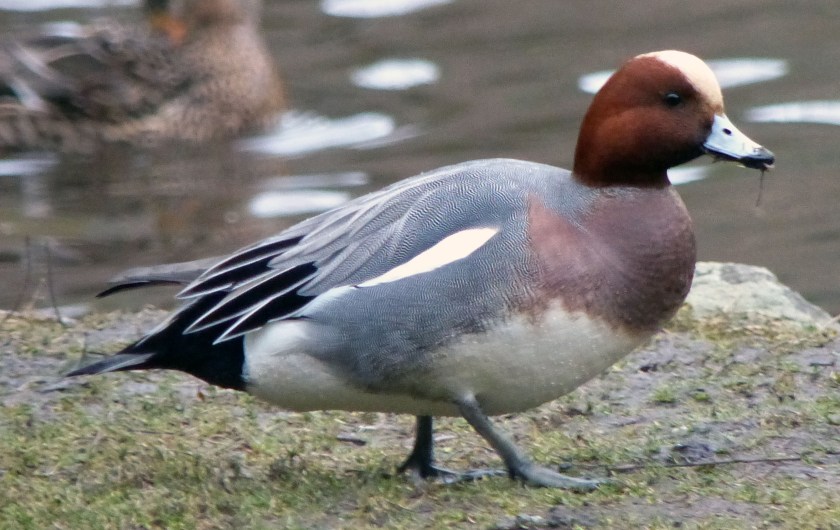
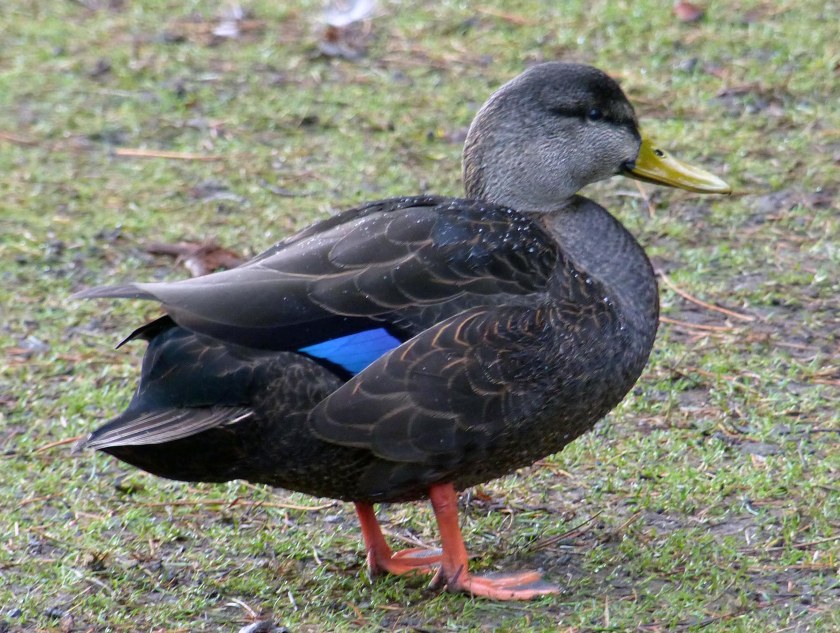
I’m hoping for a Great Horned Owl this morning. I know several live in Beacon Hill Park but I’ll be darned if I can find them. Pity I’m not looking for Mallards, which are here in abundance. How long has it been since they made the Rare Bird list? A Eurasian Widgeon is grazing near one of the artificial channels and the American Black Duck that has wintered at Fountain Lake for the past few years is still around. A couple of female Hooded Mergansers cruise past, fishing for Pumpkinseeds, I guess. Nice birds but familiar.

Eurwidgma112017

Eurasian Widgeon

It’s very still. There are few people around and I’m focussed on the trees looking in vain for owl shapes, my mind wandering. I suddenly remember the Hippopotamus poem by Patrick Barrington and it sticks, hard. I can remember some but not all. “I had a hippopotamus, I kept him in a shed; I fed him up on vitamins and vegetable bread...”  After that, there was a hippo “portrait done by a celebrity in chalks.” Oh, dear.

Hoodfemma112017

Hooded Merganser

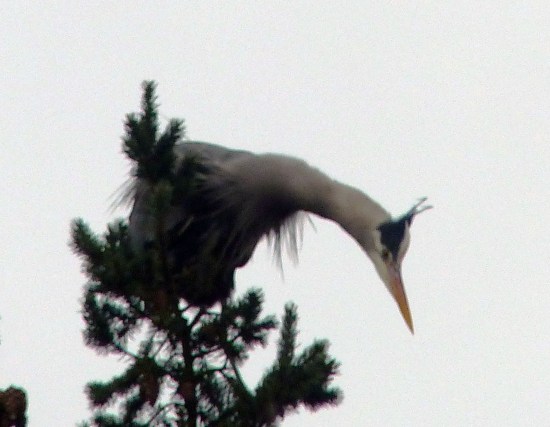
The guy’s landlady does the hippo in with a machine gun she borrows from “her soldier nephew Percy “- I’m sure of that. So sad. But what’s the rest? I’m really concentrating now, so much so that a horrific gurgling yawk! startles me — someone’s being strangled and shockingly close by too! It’s not that, of course, although it takes me a fraction of a second to realize this. A big ungainly bird flaps and climbs upwards through the dark branches of the cedar I’m under, and then another – Great Blue Herons on the move. It’s mating season and nests are being built. This will be the new heronry. I definitely do not want to be standing beneath a heronry and take my leave. When I finally get a view of the treetops, I see something for the first time – male Herons raising their crests. Wonderful. Even the quietest birding days offer us something marvellous.

Her2crestMar112017

Position One

HeroncrestsMa112017

The Finale

And, oh, yes…

“No longer now he gambols in the orchard in the spring; no longer do I lead him through the village on a string.

No longer in the mornings does the neighbourhood rejoice; to his hippopotamusically-modulated voice.”

And then it gets sadder.

Well, they don’t write ’em like that anymore…


Sometimes the light is just right…

MarsnowSSpitfMar62017

Good grief, snow again!

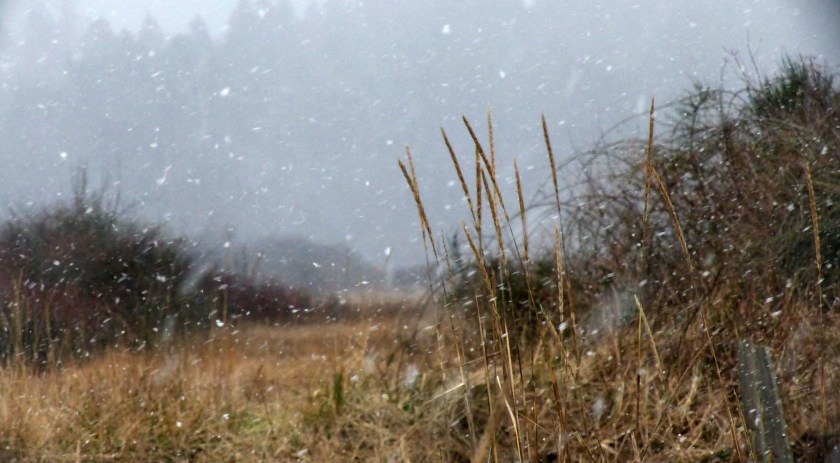
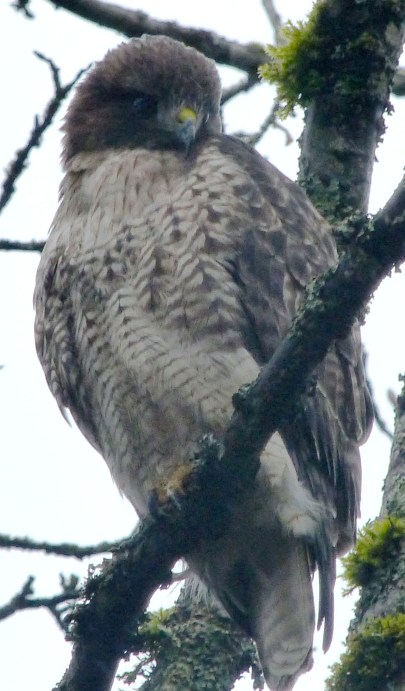
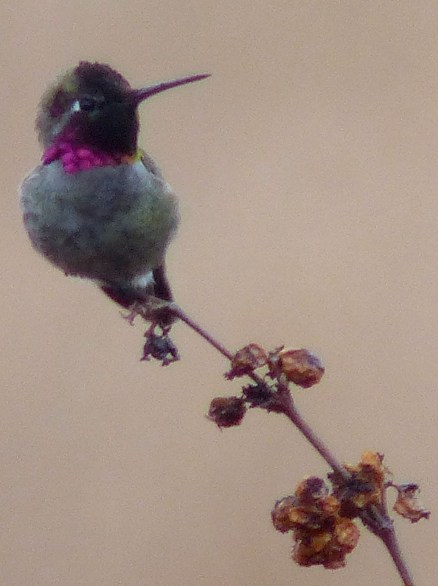
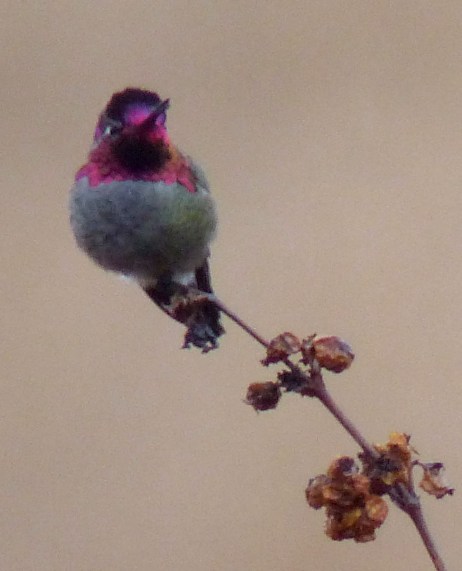
None of my target birds seem to want to make themselves available today. It’s cold again at Swan Lake. A chill east wind generated, they say, by La Nina (with a tilde) persists. Even today in March, when we should be counting blooms, we’re getting transient and unexpected snow squalls. Happily, they pass quickly but the sky stays overcast, threatening. In this weather, few people are out on the trails so it’s quiet. Nice. I like the solitude. It’s when I feel closest to nature, the closest I come to walking meditation. I take a number of shots of Anna’s Hummingbirds just because, and of a young Redtail watching the meadow. A proper photographer would probably have picked up on the quality of the light. Not me. I’m just hoping for the best. It’s when I’m home, and have uploaded the day’s ‘catch’ that I discover, once again, that it’s good to keeping shooting because, well, you never know. I couldn’t have gotten better views of the male’s fantastic gorget and head colours if I’d schemed and planned, or got the depth of field as right as I think I did.

RedtailjuvFe262017

Redtail Hawk

Annas3fe262017

Anna’s Hummingbird

Annas2Feb262017

AnnasFe262017

Anna’s Hummingbird


Snow on Maui


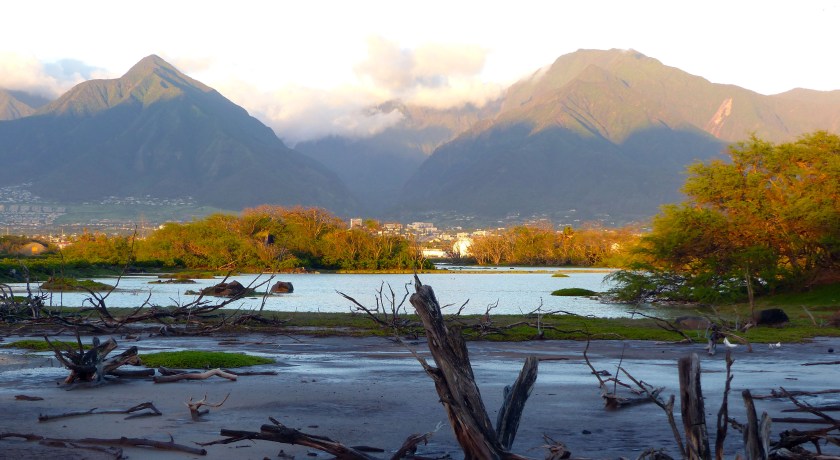
kanahapndsfeb212017

Kanaha Pond Wildlife Sanctuary, Maui

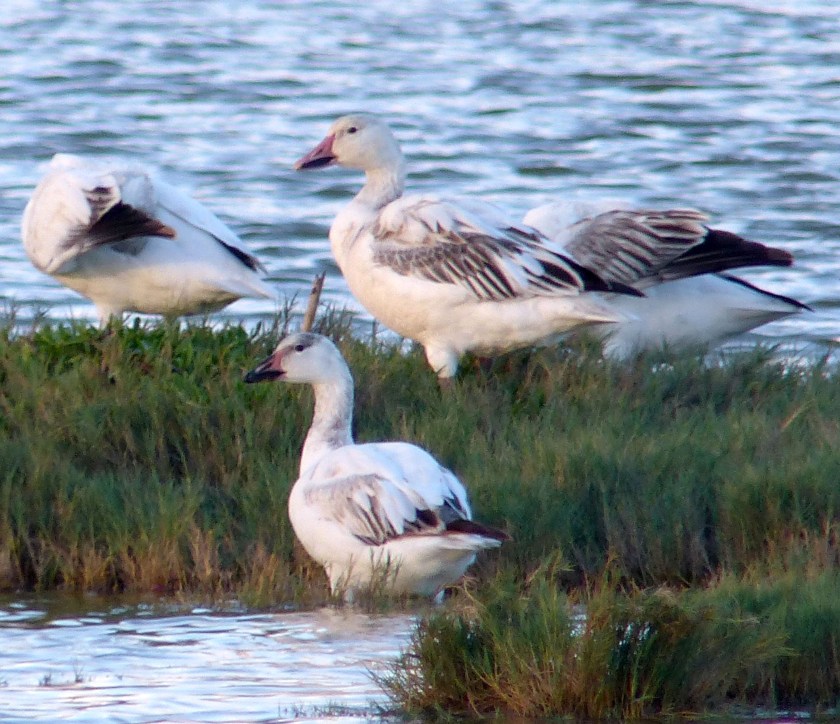
Oh -my title – sorry about that. Agatha Christie once joked that a writer who opened a story with the line “Hell!” said the Duchess couldn’t help but grab the attention of a reader. I’m hoping the title of this post will perform the same function. Happily, no snow is falling on Maui. No need to abort a vacation — or panic. Still, to me, the six young Snow Geese I saw at Kanaha Ponds seem almost as out of place as the white stuff.

I’m fascinated with rare birds and their stories. What freak wind or event sent these teenagers off into the vast Pacific? How did they find this remote island thousands of miles away from the Arctic sloughs where they hatched? How will they find their way back? It’s a work in progress, I suppose. For the time being, at least, their futures are linked, this little band of goose kids a long way from home.

snowgeesemauife212017

Snow on Maui

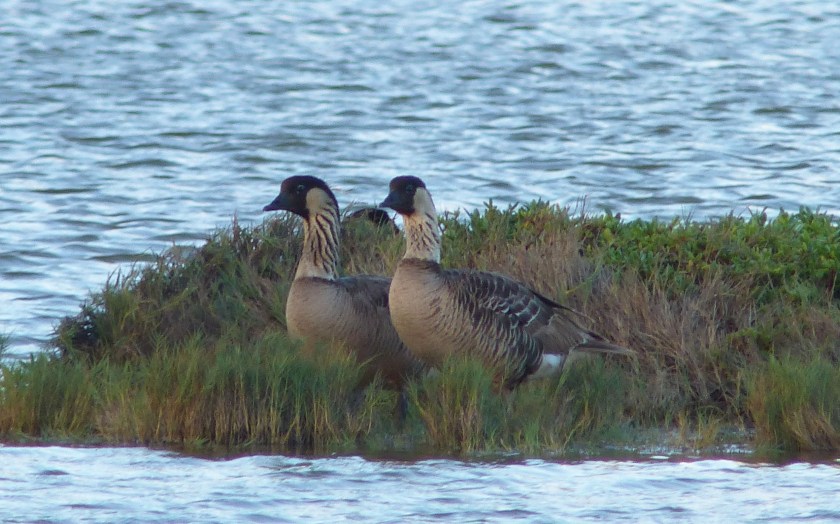
The Snow Geese rarities aren’t the only fascinating birds at Kanaha. NeNe Goose, a bird I’ve wanted to meet since I was a boy, nests here. Not terribly long ago, NeNes were one of the rarest birds in the world, only thirty individuals on their way to extinction, saved at the last minute by captive breeding and the heroic efforts of volunteers and governments. NeNe live from here at sea level to the cinder plains high up on Haleakala, the volcano that looms nearby. They’re quite tame and still need protection. Slim, fast, ferocious Mongooses are a particular threat, killing goslings and, I think, eating eggs. NeNe are still the rarest geese in the world, by the way.

hawgeese

NeNe

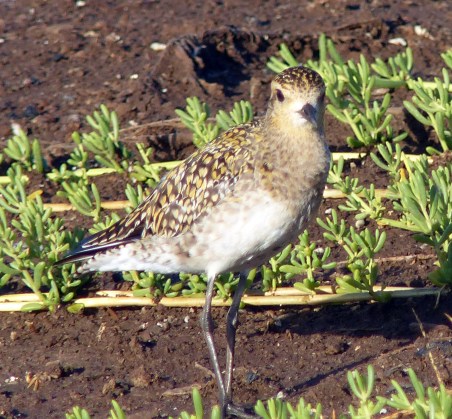
At home, I go to great lengths to try to see a Pacific Golden Plover, vainly searching every passing flock of Black-bellied Plovers for a bird without black armpits, a good identifier. Pacific Goldens are common here, seen on most lawns and boulevards. Now, in February, they are already forming pair bonds and defending territory. In a few months they’ll start for Alaska, a distance of almost five thousand kilometers, and they’ll do the flight in three days. Non-stop, sixty-five kilometers an hour! Then they’ll come back to exactly the same place in Maui in the fall. The birds I’m seeing here are truly home, on their special spots at Kanaha, on Maui.

pacgoldplovfe212017

Pacific Golden Plover

Wandering Tattlers also make the long journey from northwestern North America to Hawaii. I love that name! Hawaiians call them Ulili, after the sound of their call. Lovely too. Messenger birds. The Hawaiian singer Iz wrote a song about them. Two Ulili wander amongst the many noisy Black-necked Stilts who populate the shallows. There are Sanderling and a couple of Ruddy Turnstones here too. Nice.

tattlermaui2017

Wandering Tattler

I’ve quickly grown fond of Kanaha Ponds but then I always like the solitude, and the life, of marshes, especially early in the day. This morning, the warm wind blows strong and the handsome Chestnut Munia which forage in small flocks use it to move quickly from place to place — and are consequently very hard to photograph.

chestnutmuniafe212017

Chestnut Munia

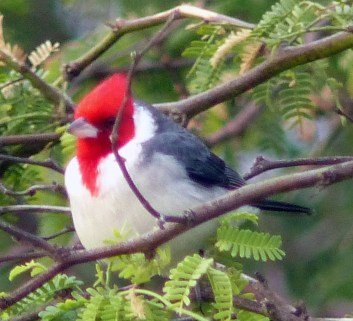
Both Northern and Red-crested Cardinals are more cooperative. Both species are active enough to indicate mating season is in progress, although the Northern Cardinal looks a bit shabby. Now I’m wondering – when is mating season here? Both Cardinals are introduced birds as are the Munia and others, like Common Mynahs. There are few native Hawaiian species at sea level now. Most have succumbed to mosquito borne diseases (mosquitoes are also not native to Hawaii). You have to go high up the mountain to find the beautiful, colourful honey creepers. I’ll do that soon.

northcardmaui

Northern Cardinal

rccardmauife212017

Red-crested Cardinal

rjfmaui

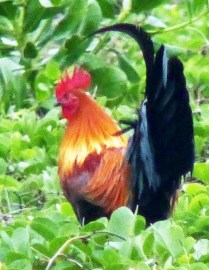
Red Junglefowl

A few Red Junglefowl forage in amongst the low plants at the edges of the ponds. Junglefowl, the ancestors of chickens. Quite spectacular really — if you don’t think chicken.


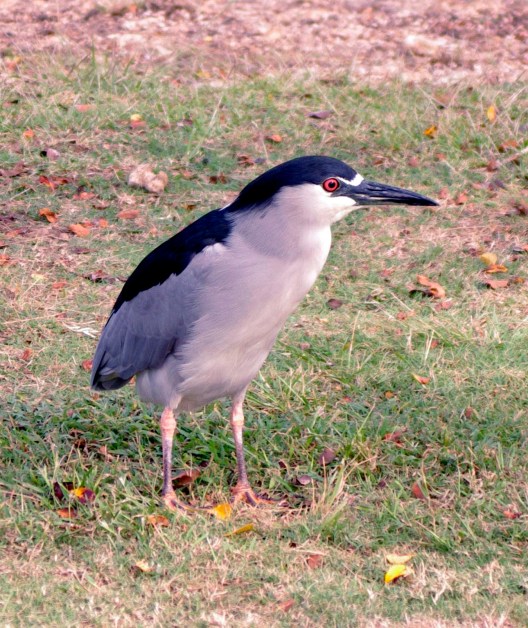
Night Heron

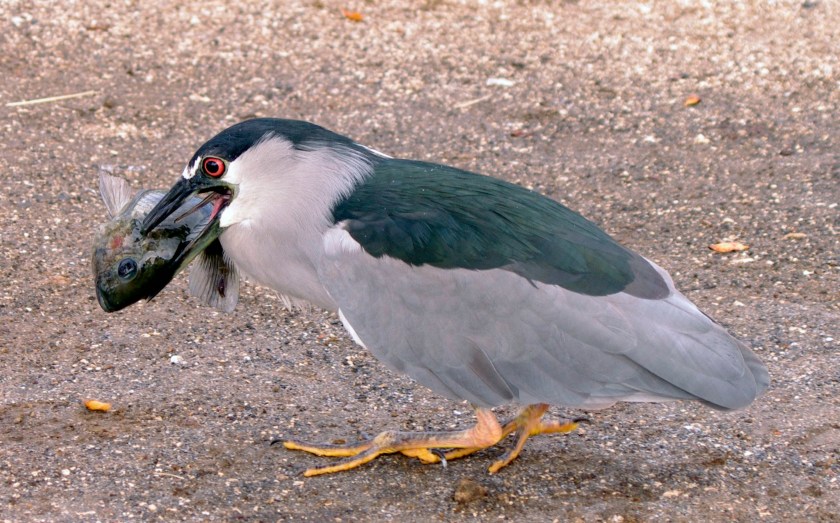
I’m thinking about Hawaii and rooting through photos I took there a year or so ago. I’d almost forgotten about the Night Heron in Ala Moana Park in Honolulu. The bird hung around a fisherman who was having good luck hooking Tilapia. I’ll let the pictures tell the story.

bcnightheronno20132

Ready when you are, buddy.

bcnighthrneatingno20131

On it!

bcnightherneating5

I’ll take it from here.

bcnighteating6

Thanks!

It’s Bl**dy February Again…

drearja202017

Drear!

I lifted title from a line in an old Flanders and Swann song about the weather. They talk about January but February works for me. It’s drear this morning in the park and cold enough to keep some ice on the ponds. Delightful word, drear, and apt. I’m looking for birds but they are are hardly stirring. The Peafowl are still perched high in a fir, almost out of sight, ‘staying in bed’ on this grey Sunday morning, a dozen lumps like enormous chickens. Most of the Mallards and Widgeon are dozing too but the Black Duck that has shown up here for the past three or four winters is out trying to cadge a meal.

black-duck2

American Black Duck

Small birds are moving but mostly staying out of sight. I spot a couple of Golden-crowned Kinglets and a Towhee but mostly it’s a turned into a ‘birding by ear’ day. The still, damp air seems to amplify bird sounds. No singing yet, just the thin ‘yawk’ of Red-breasted Nuthatches, the chitter of Kinglets, the harsh faulty-doorbell call of Spotted Towhees.

goldcrndkinglja202017

Golden-crowned Kinglet

towhee2a

Spotted Towhee

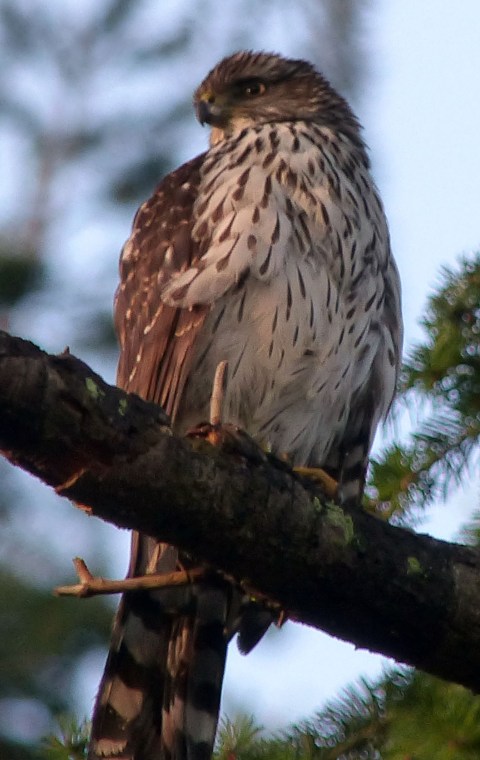
I hoped to see the Sharp-shinned Hawk I spotted the other day but have no luck in that regard. Luckily, I got some good shots last time so I’m going to pretend.

sharp

Sharp-shinned Hawk

Back to the word bl**dy in my title. My English mother used to scold me if I used it, saying that ‘we don’t use that word around this house’. It’s blasphemy rather than swearing, I think, but likely my mother just thought it was ‘common’. To this day, I’m reluctant to spell it out. My father, usually very proper, often used the word, as in ‘get you bl**dy feet off the table!’. But I digress. Still, it really felt like bl**dy February again — today –in the park.