Sandpipers (What’s in a Name)

After five early morning attempts I finally spotted the Wandering Tattler on the Breakwater. I’m not complaining. The sea is flat and the days are warm. The Tattler is a sandpiper, one species in a large family. Like the Wandering Tattler, many have magical names, like characters in a book – Dowitcher, Whimbrel, Willet, Ruff, Greenshanks, Redshanks, Godwit, Stint, Red Knot, Yellowlegs. A children’s book, I think.

WandtattlerAug62015

Wandering Tattler, Victoria, BC

I like their Latin names too. Calidris and Tringa are my favourites. Members of the Tringa family are lanky, like the Tattler. The Calidris folks tend to be shorter and  stockier, more sandpiper like. Red Knots, for example. Makes me think of stories in classical mythology-Calidris met Tringa in Poseidon’s garden one evening and incurred his wrath – that type of thing.
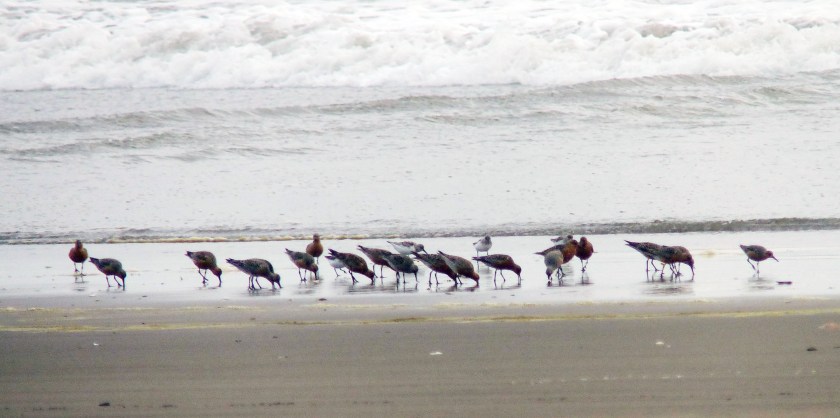
REdKnotsMay182016

Red Knots and Friends, Ocean Shores, WA

And they migrate, often thousands of miles. The bird I saw this morning left the mountains of Alaska days ago. It’s just the beginning of the shorebird season and lots of them are showing up. Yesterday, ten Greater Yellowlegs and a Black-bellied Plover plunked down in the little bay near my home and frolicked. And why not?  After the sun set somewhere north of here, they lifted off and flew all night. Time for a morning bath and a bit of fun!  Is it my imagination or is there a bit of ‘do you mind?’ in the glance of this chap?

yellowlegs20140427_0250

Greater Yellowlegs, Victoria, BC

The Yellowlegs and Plovers are in the first wave of sandpipers. Soon, I’ll be out in the autumn gales, plashing through marshes in my wellies, looking for more species, and always hoping something rare will drop in. A Siberian sandpiper would be nice.


The Hawk (or Youth)

Mid summer is the hinge in the birding year. The spring migration is long past and the fall migration has yet to begin, although a few birds do start south now. It’s hot. Foliage is thick. Birds are hard to spot and most aren’t singing. Nesting season is over and most nestlings have fledged and on their own. No guidance from mom and dad now. With almost zero experience, they’re out bumbling around trying to survive.


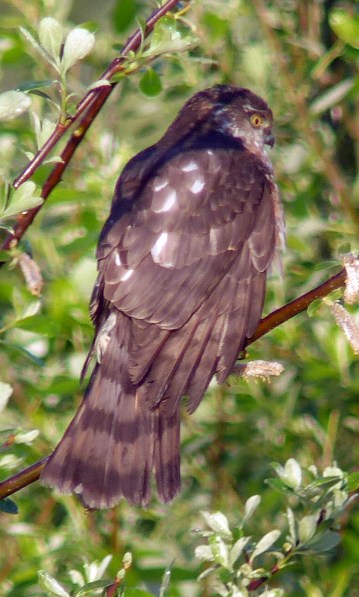
SSHM232015

Sharp-Shinned Hawk – (body-double)

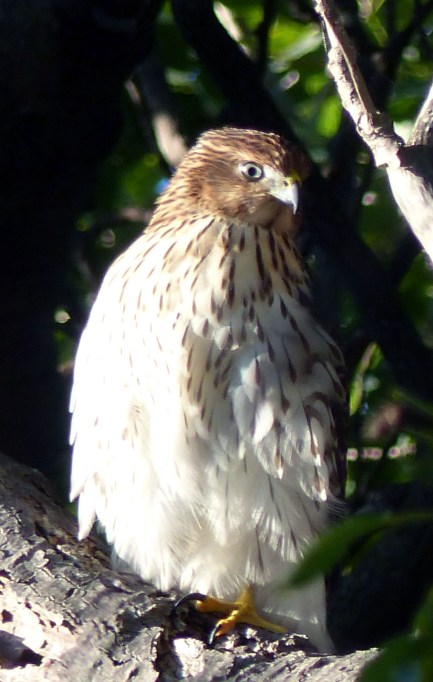
The young Sharp-shinned Hawk is a case in point. He doesn’t know what he’s doing. Sharpies are accipters, bird hawks, like their cousins the Cooper’s Hawk. Designed to fly at speed through the foliage, they have short broad wings and long tail. If you’re a songbird, these are the guys you fret about. And it’s not enough to find a twig and hunker down, protected by branches from attacks from above. I’ve seen accipters climb up almost monkey-like among the tree branches. Sparrow – be afraid, be very afraid!

CoopHawksept42014

Cooper’s Hawk – Juvenile

My young hawk is, however, comically inept. Diving into bushes right, left and center, he’s killed nothing. People are walking past him not five feet away. He doesn’t notice. He’s intent on catching a meal. He needs focus. Unfortunately, each attempt sends birds zooming in all directions like playing cards tossed away by a magician. Not only don’t they seem worried, it’s almost like they’re laughing at the newest murderer on the block. They don’t go very far. The Robin sits on a wire twenty feet away; two sparrows preen on a branch in a neighbouring tree. Worse still, the Rock Doves, AKA pigeons, drop down to pick up crumbs from the road.  Finally, the young hawk flies away, crestfallen. I’m on my way to a rowing lesson, so no camera. Hence the body-double!

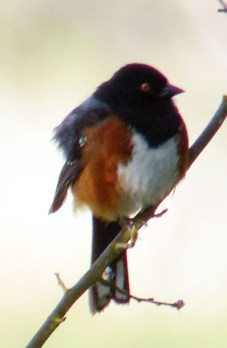
We find very few dead juvenile Sharpies and mine will no doubt find success soon. He’s not the only juvenile no longer protected by his parents. Plenty of inexperienced recently fledged songbirds are making their debuts. It’s what the natural world is all about really – life, death, survival, which is probably why this Spotted Towhee looks so worried.

towhee2a

So, laugh while you can songbirds. With each failure, the young Sharpy is learning. When he’s mastered the ability to strike quickly and silently, he might come for you.


Rare Birds 2

I used to drive my kids across the continent every summer so they could visit their grandparents in southern Ontario. They’re grown now. For the first time in many years, I’ll be driving cross-country to Ontario, a journey which, for me, will have a slight tinge of melancholy attached to it-a sense of times gone and never to return.

But I like driving. My route takes me  through Pendleton, Oregon,  Laramie, Wyoming, Kearney, Nebraska, Bettendorf, Iowa, and Grand Rapids, Michigan. That’s a lot of miles, not to mention the return journey. And then, of course, there are the road hazards, like this alleged BLT.

Rdhazardjul132015

Road Hazard, Michigan

The Kirtland’s Warbler is a rare bird I’d like for my list. To see one means a side trip to  Grayling, Michigan-many extra miles and no guarantees. The birds nest in a tiny area of second-growth pine forest in north central Michigan, and that’s pretty well it. Winters are spent in the Bahamas. The Kirtland’s is very unlikely to come to you; you have to go to it, especially if you’re a westerner.

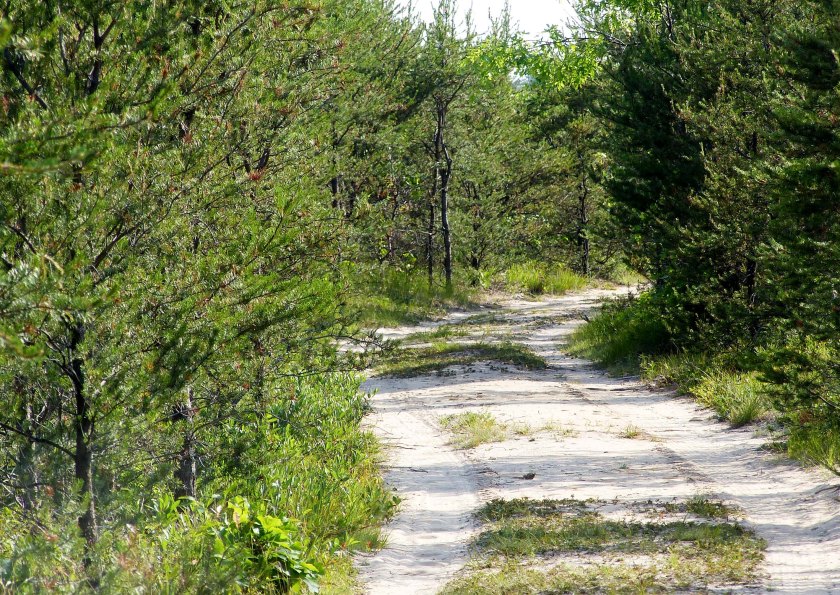
In Grayling, I find my motel and take a break. Grayling is a small town, very small, surrounded by pine forest. I’m going to be here for two nights! Grayling has a nice little independent movie house though so if I get bored on the second night I could take in a show. I check the marquee. The movie is Minions, so maybe not.

KWhabitat

Kirtland’s Warbler habitat

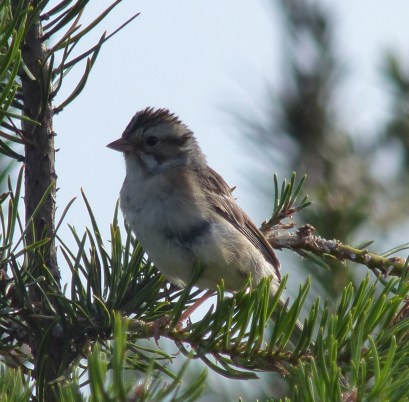
The Warblers are supposed to be in a patch of pines just outside of town. I don’t plan on going too far into the nesting area although the season is pretty well over and the new birds fledged. Some Clay-colored Sparrows appear and check me out. However, it’s a very nice day  and I’m enjoying the quiet of the forest with its wide, sandy trails.

ClColSparrjul112013

Clay-colored Sparrow

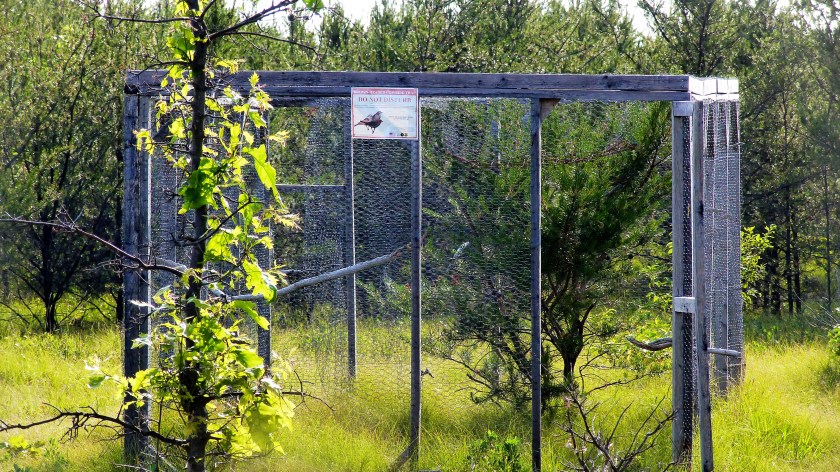
I pass a Cowbird trap. Cowbirds are a particular menace because they lay their eggs in warbler nests. The much bigger Cowbird hatchling pushes the warbler chicks out to die, after which tiny warbler parents bust their you-know-whats to feed and raise the monster changeling.

CBirdtrapjul112015

 Cowbird Trap

Now, I’ve checked pictures people have taken of the Kirtland’s. For reason, I think the birds are usually near the tops of the small pines, which I where I look for them. Other than the rather scruffy yellow and gray-blue bird watching me from a patch of brush, waist-high, I’ve seen nothing. Then it dawns on me-the bird looking at me is a Kirtland’s Warbler! This is another case of not reading the whole description. Every bird book tells us that the Kirtland’s Warbler stays low. I have no idea how many I walked past while I was searching the treetops.


KIrtsWarbJuly112015

Young Kirtland’s Warbler

So…it’s evening, it’s Grayling, Michigan. I’m alone. What to do? Luckily, there’s a small movie house in town…

Minion

Minion


Rare Birds 1

This morning I drove 30 miles to a place I didn’t know, got rained on and then dropped my spotting scope, all before breakfast. This is what birding does to people. I’d actually gone to look for a Laughing Gull, a rare bird in my part of the world. Unfortunately, the gull only shows up at low tide and when I arrived at the location, the tide was full in. Now, I could have checked-I live on the ocean after all. As any sensible person mighy expect, I did not see the Laughing Gull, which was, I guess, doing its laughing some place else. Like many birders, I had succumbed to a kind of rare-birditis, a condition that tends to make “sugar plums dance through your head“. I really wanted to see that bird and I thought I might get lucky.

Rare birds fascinate most birders. And why not? The Laughing Gull is most commonly seen far to the south, on Mexican beaches, or the Florida shore. So what’s it doing in British Columbia, several thousand miles away from its natural habitat? Nobody knows for sure. Just like nobody really knows why this Tropical Kingbird would spend a few weeks at a beach in Washington State, where I saw it in October. There is some speculation that the Kingbird brain wiring gets screwed up, confusing their sense of the earth’s magnetic field. They fly north thinking they’re flying south. I just hope that never happens to me.

TropkingOct152014


Tropical Kingbird, Ocean Shores, Washington

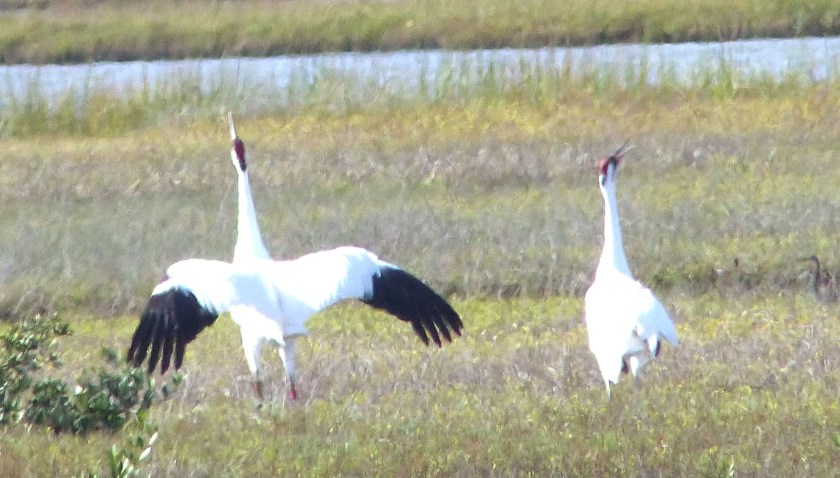
What makes a bird rare?  In some cases, a species is so reduced in numbers that seeing one is special. Usually, such birds are almost constantly under scrutiny so finding them is not difficult-so long as you don’t mind going to them-Whooping Cranes, for example. Just over 300 wild Whoopers survive. Since they nest in vast, swampy and northern Wood Buffalo National Park, you’re not likely to see one in summer. Go to their restricted winter range at Aransas near Corpus Christi in Texas, however, and you’ll almost certainly spot several, especially if you take the Whooping Crane boat tour.

20141110Whoopers
Whooping Cranes, Aransas, Texas


The other rare birds are the strays, the birds who get blown off course and show up thousands of miles from home. When they do, an epidemic of rare-birditis breaks out. A rare bird search is a treasure hunt and some birders will cross the country to add the bird in question to their list.

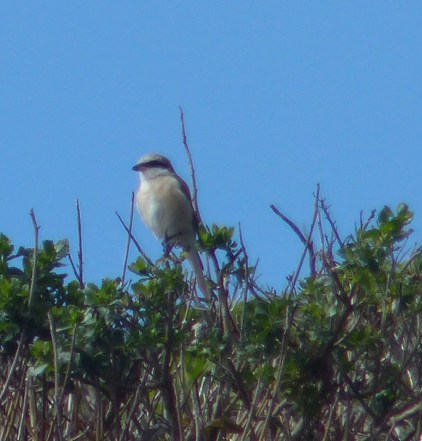
A travelling birder checks the rare bird lists every day, as I did in northern California. If I hadn’t, I wouldn’t have known about the Brown Shrike hanging out near Mendocino which, most of us would agree, is not a bad place to hang out. Shrike, incidentally, hunt like small falcons, catching mice, insects and small birds and impaling them on thorns. This Brown Shrike would normally live in Asia, on the other side of the Pacific.

Brown Shrike, Mendocino California

Brown Shrike, California

I’ve managed to log quite a few rare birds over the past few years. I delight in each and every one. More about them in future posts. Right now, I’ve got to go drive 30 miles to catch low tide and, hopefully, spot that darn Laughing Gull.


The Pleasure of Swamps

Railchick2

I think I’ve said before how much I like swamps and marshes. Bogs too. Incidentally, I can’t say the same about sewage treatment plants, which can be kind of marsh-like. Although these are often good places to find rare birds, one has to weigh the risks. By all means, avoid getting downwind of settling ponds when the breeze freshens (which is is definitely not the right word under the circumstances). By the way, I’ve seen ducks do things in sewage…well, I’d rather not say. I just might not order duck a’lorange anytime soon. But I digress.

Back to swamps. Magical things can happen in swamps. The early morning light can be wonderful. There’s usually wildlife. Normal people generally avoid swamps and bogs, which appeals to the hermit in me.

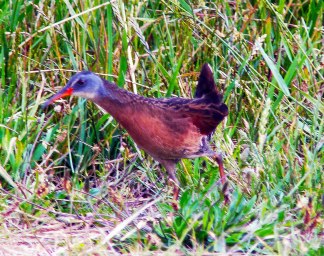
Today, I’m in a swamp looking for Virginia Rails, which I don’t really expect to see, so ‘looking‘ is a euphemism in this case. People rarely see Rails. Hearing one will be good enough.

Walking along a water-filled ditch, l  keep my ears peeled for kiddick, kiddick, kiddick calls, or swampy grunts, or marshy wheeps, the calls of the Virginia Rail. Nothing. My usual  luck with these guys.

But, really, what have I got to complain about? A clear morning, bird song, bunnies, solitude – compensations for not hearing this darn, secretive ‘skinny as a rail’ bird – again. The fledgling swallows are nice too.

Treeswjuvs

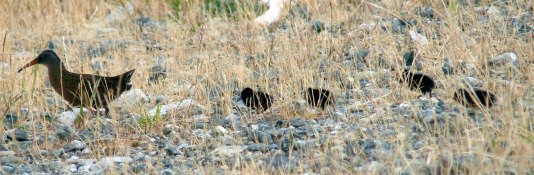
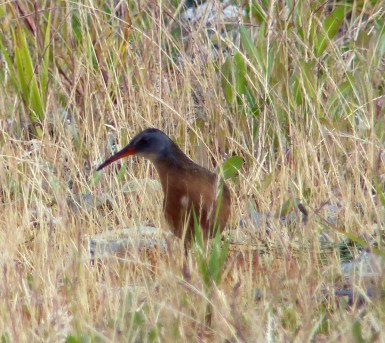
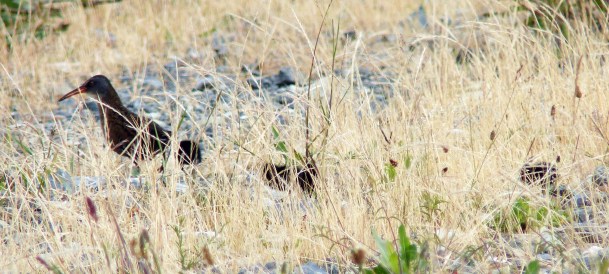
I’ve paused and I’m listening. I’ve been watching birds in the air but I happen to glance down. Incredible. A Virginia Rail is in the long grass, almost at my feet, studying me. I had a similar experience in north-central Michigan with a rare Kirtland’s Warbler once. When this sort of things happens, it’s like winning a prize. In the morning light, the Rail glows chestnut, white, purple and orange –  a really beautiful little bird.

Rail9

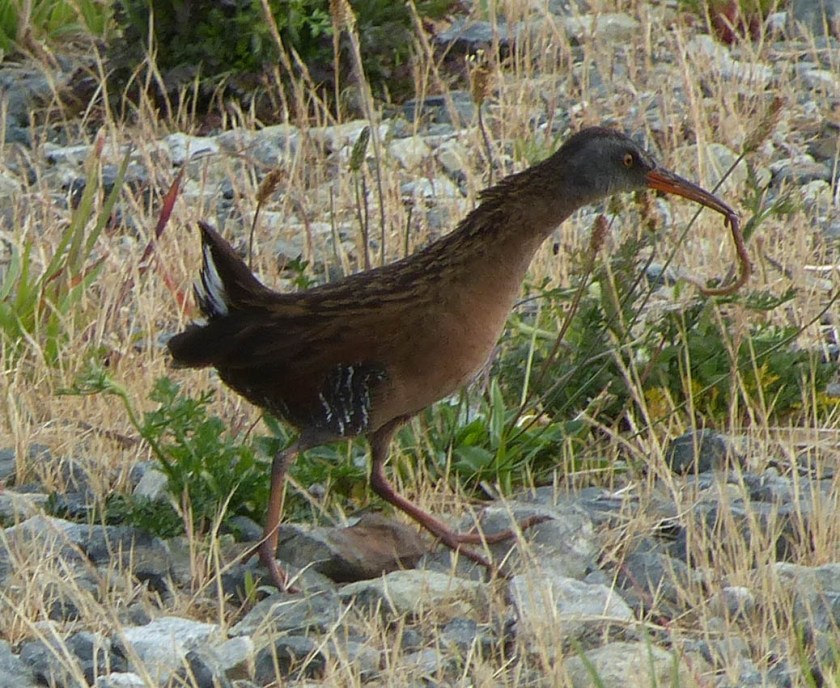
Naturally, when I bring my camera up to take a pic, the Rail vanishes. Fair enough. Then, to my amazement, two minutes later he’s back, after which he appears again, and again. I’m not hidden. I’m just not moving.

Rail2016june25The VR darts back and forth across the path. It’s a male. He’s working, carrying worms.  So, a man on a mission. And he’s calling too – kiddick-kiddick, grunt, wheep – softly. I’m now wondering if there’s a nesting female nearby and he’s feeding her. He is! A second VR stands on the verge. Fantastic – two Rails! The second must be the female. She looks both ways and edges back.
Railfem

And now the really good part. Her partner wheeps from the other side of the path –  a nice little ‘it’s safe and don’t mind that goofy whatever it is standing there with the camera,’ watery sound. She makes a little ‘seep ‘ in response and out they come – the kids, just a few days old.  Four black, golf ball-sized fluff balls with bi-coloured bills, heading for the big water, which is the ditch.

Railfam12

Railchick2


Railfam5

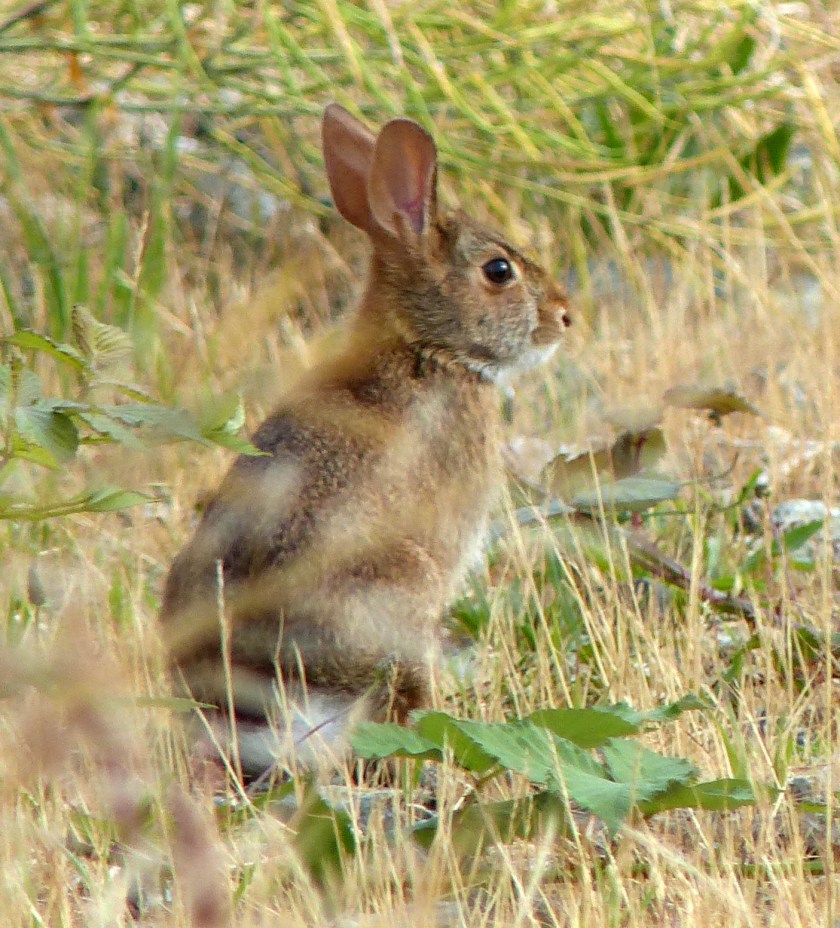
The male appears once more, a quick look up the path. I hear the family move down the ditch and then silence. A couple of Eastern Cottontails show up for second breakfasts, and some California Quail do likewise. Feeding swallows zoom past.

Cottonju2016

I hear runners in the distance. They’re coming my way, talking loudly, galumphing. The spell is broken and the Rails will not reappear. Time for me to go anyway. I’m seizing up from standing motionless for thirty minutes or more and, I’ve just remembered, I haven’t  had my own breakfast yet.

The Wild Coast

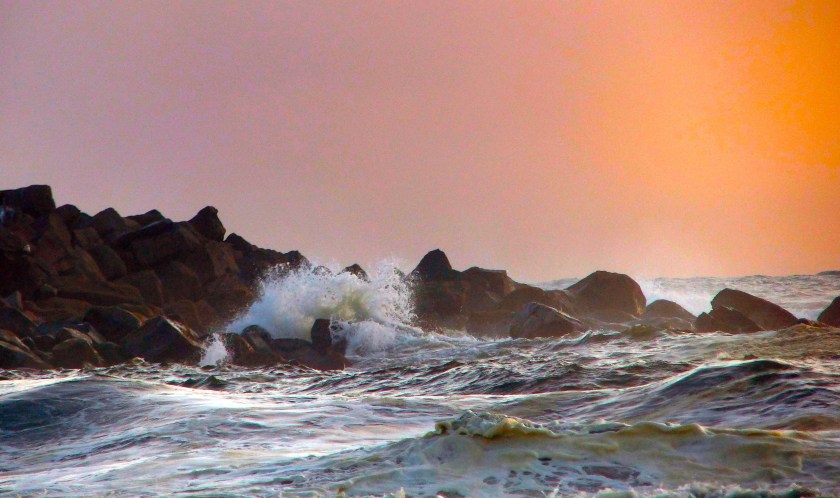
OShoresmay192016

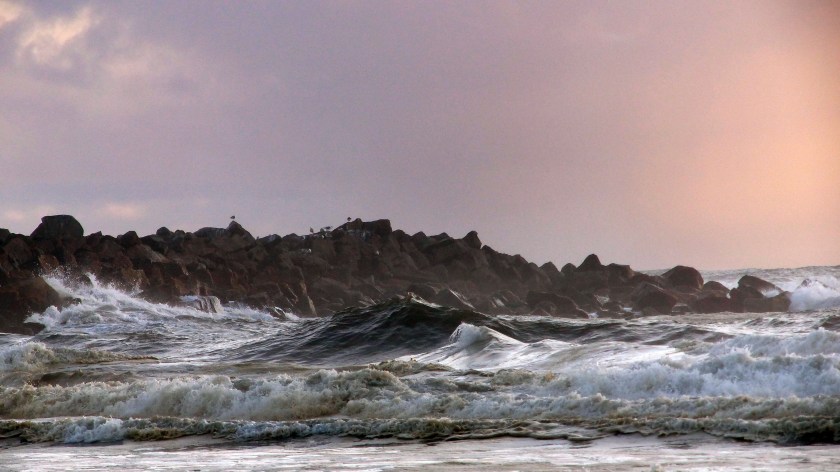
Point Brown Jetty

I’ll say one thing for the west coast of Washington – it’s atmospheric. Well into May and many days are cool, windy and wet – still. Parts of them are anyway. Other parts are glorious.

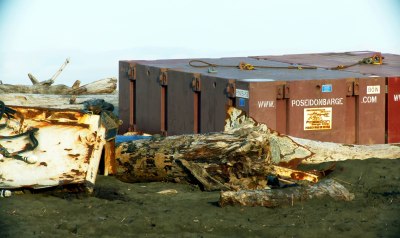
Lots of  storm detritus too and even a shipwreck of sorts. It’s poetic. Lines from Arnold, Masefield, Tennyson spring to mind. Perhaps that old jingoist, Kipling. ‘Harp Song of the Dane Women’ – “What is a woman that you forsake her; line; and go to the the cold, grey widow-maker.” You get my drift.

Tide, storm, sunset, season, birth, death, renewal, and all that jazz. Still, it’s easy to get into a certain frame of mind, to begin to imagine how wild this coast once was, especially when Elk come down through the dunes to visit the sea. Years ago, an old timer told me that the Sasquatch used visit these beaches in the winter to harvest shellfish. I can just about believe it.

ElkOSMay182016

Roosevelt Elk

debrisma192016

Lost Cargo

Privateerma192016x

The Wreck of the Privateer


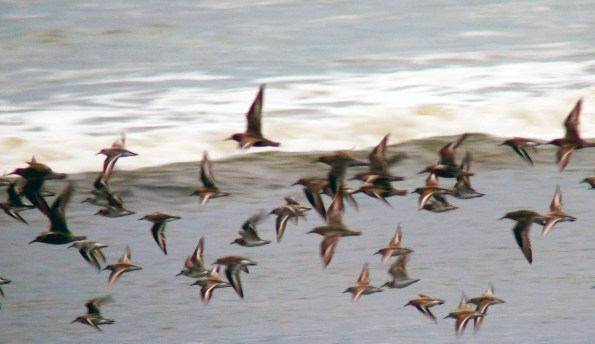
RedknotsMa182016

Red Knots (and friends)

The Red Knots, Plovers, Godwits, Dunlins and the other shorebirds passing through aren’t too concerned with poetry. Their lives are too short and purposeful, and the distances they travel from wintering ground to breeding ground too great. Some Knots travel from South America and back every year.These have probably come from southern Mexico and are on their way to Alaska. I doubt if they’ve heard of Kipling.

Whimbma192016

Whimbrel

I’m kind of attached to Whimbrels and other members of the curlew tribe. One of my favorite boyhood books was ‘The Last of the Curlews’ by Fred Bosworth. It was also my first conservation book too. There were three Whimbrels at Bottle Beach when I was there. I took this picture just before a rain squall drove me under cover. The birds didn’t seem to mind the slanting, drenching rain one bit.

GloryMa192016

The Clouds Lift

And then, at the end of the day, comes the glorious part…


Warblers

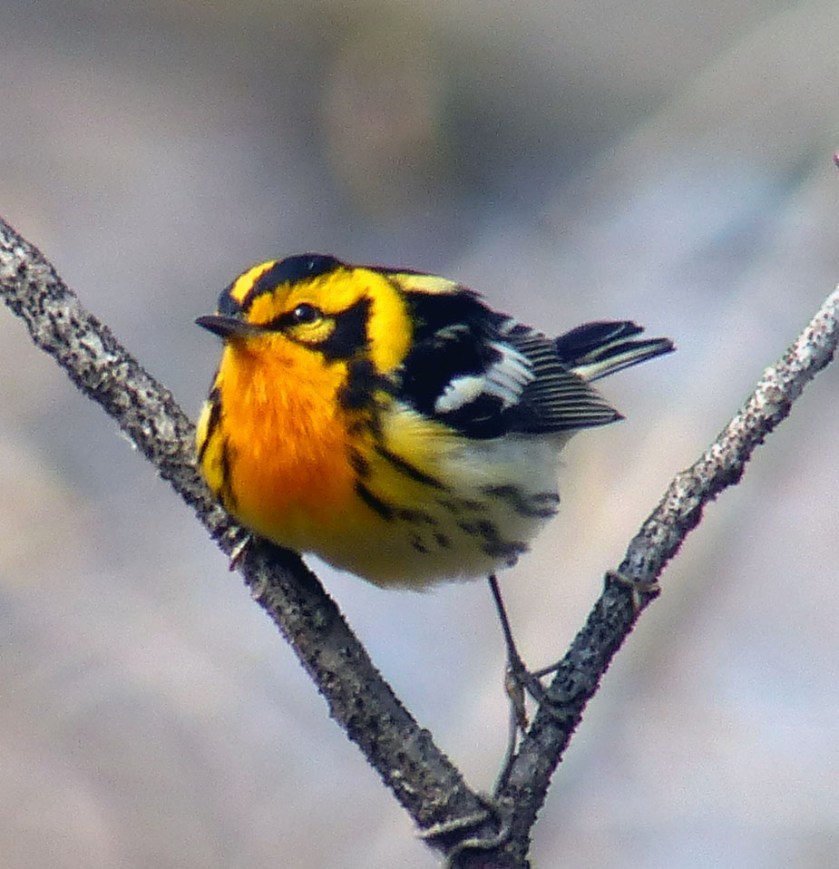
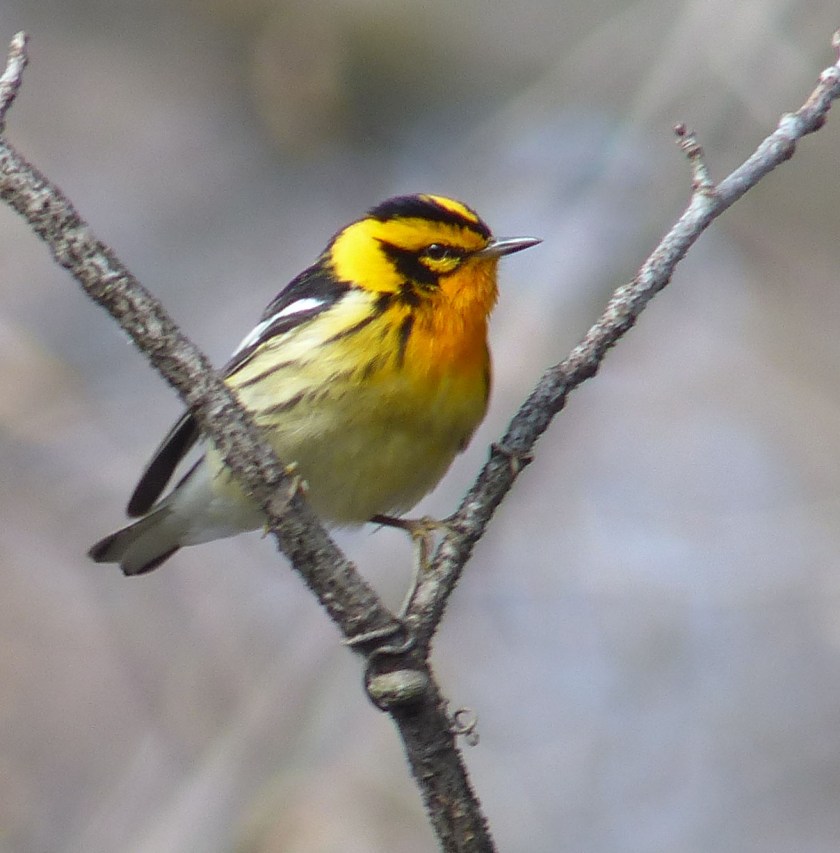
Like most birders, I have lots of pictures of empty branches or, alternately, of foreground branches in perfect focus and a fuzzy ball in the background that ought to be a warbler. Sometimes, however, you get lucky.


BBWarb2

Blackburnian Warbler, Point Pelee, May 2016

BBwarble

Blackburnmay52016

Point Pelee Revisted

I’m back in Ontario, hoping to catch the spring migration, to see the eastern birds I’d otherwise miss. I’m starting at Point Pelee, the southernmost point in Canada (if you don’t count Pelee Island and, I believe, a few other dots in Lake Erie).

PointPsign

Point Pelee is a major birding site because it’s the first land birds crossing the Lake encounter. After flying all night, they have to touch down here to rest and feed. Many will lift off once darkness falls and head for northern forests to stake out territories and start breeding. When conditions are right, the woods can be teeming with birds, using the word teeming somewhat loosely. Lots of birds anyway.Turkey’s don’t migrate so they’re always here. Now is the time for gobblers to strut their stuff, hoping to entice the seemingly oblivious hens.

Turkmy42016

My brother has decided to join me. He’s a sommelier not a birder. Still, having a wine guy around for a few days ain’t all bad. Until he gets here, I bird alone. Like most birders, I  don’t mind that, for a time anyway.

Turkeysmy52016

Spring here has been cool and I realize immediately that maybe I’m a week early. Mornings are positively frigid and, aside from the turkeys, not much is moving around. The little trolley train that takes us to the Point might as well be taking us to look for polar bears, it’s that cold. Happily, the air begins to warm as the sun rises higher and, i think, the wind had shifted so that it’s now coming from the south. I won’t need to buy gloves after all.

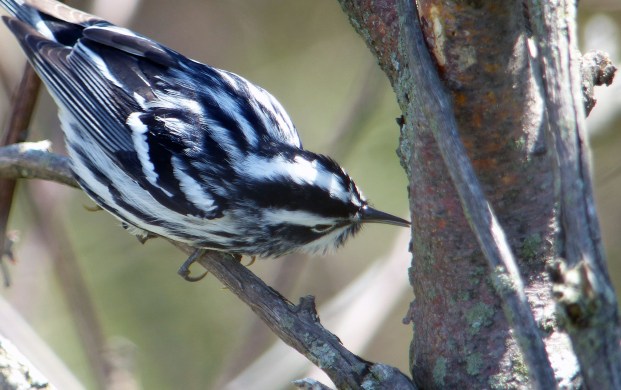
The warblers have been waiting for this too. I glimpse movement and spot a beautiful Black and White Warbler, moving Nuthatch-like around a tree trunk and then the trees low branches. It’s my first Ontario warbler of the year and it’s a beaut.

BWwarbmy52016

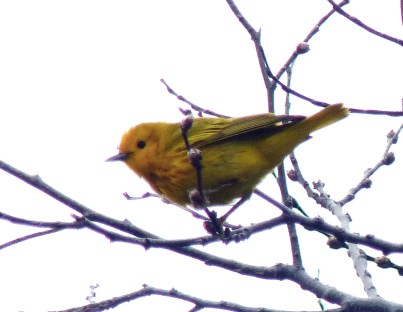
I hop off the tram and head down a trail. As the temperature climbs more birds appear. Yellow Warblers are suddenly everywhere, calling from almost every other bush – sweet, sweet, sweet, I’m so sweet.

Ywarbx

I’m still convinced I’m a week early. I see a couple of Nashville Warblers and a few other birds but the other warblers and the Orioles, Thrashers, and the like are scarce. I stop for lunch, in this case a huge donut and a coffee and then head out to the Point again. Hope springs eternal!

BBplsmay52016

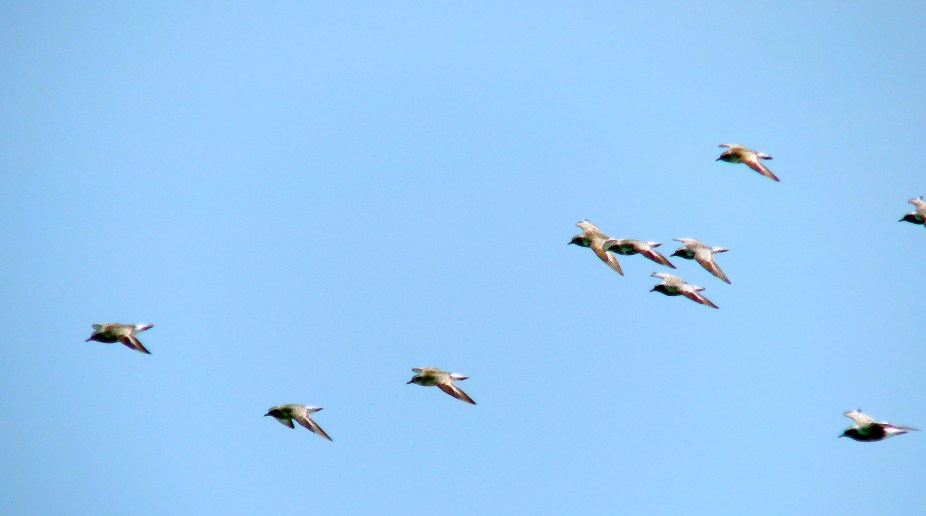
I arrive in time to see a flock of 50 or so Black-bellied Plovers wheeling around trying to touch down on the small triangle of exposed sand. For some reason, the fact that these birds are desperate to land hasn’t occurred to the group of photographers waiting for this to happen, standing ten feet from the spot. No way these birds are going to land. I back off down the trail. The birds fly by me as I go, still looking to touch down somewhere. I get some great shots and I’m not anywhere near the landing pad.

I’m considerably warmer than I was but I’m beat. I’m learning that donuts don’t have much nutritional value no matter how big they are. My brother is due in and we’ve planned dinner together. Steve’s a thrift shop type of guy (and proudly so) and i have no idea how he’s going to be equipped. With a superb bottle of wine, I hope.


Cape Saint Vincent

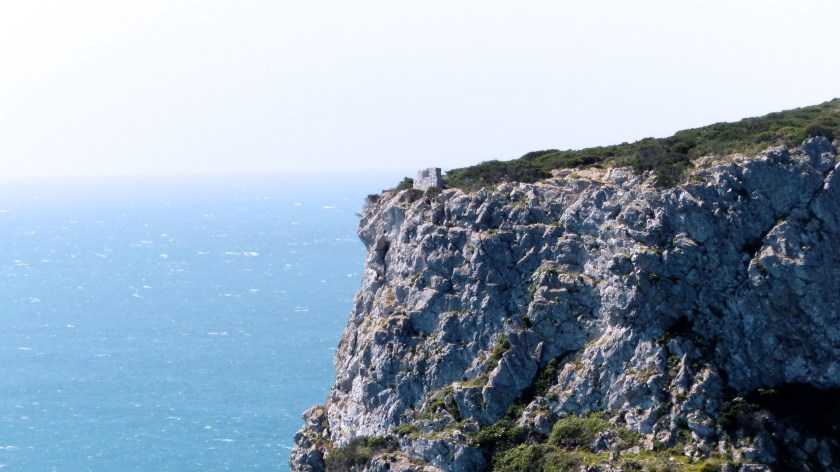
Cape Saint Vincent (Cabo de Sao Vicente) in Portugal is the precipitous and spectacular tip of southwestern Europe.  Henry the Navigator established his famous nautical training school here and so began the age of Portuguese exploration, which resulted, as we all know, in the Rio Olympics.

CapesVapr62016

Cape Saint Vincent: a watchtower

The Cape has history – lots of it. For the Greeks and Romans, it was literally the end of the world, the place where the sun went down into the sea. Neolithic peoples erected standing stones on the site. Who knows what rituals and mysteries were enacted here all those thousands of years ago. A number of famous sea battles were fought near the Cape too, including one involving Horatio Nelson. And Francis Drake plundered the place 200 years before that.

CSV2016

The Fortress: the one remaining wall

Most of the buildings here are modern, or nearly so. For a place with such great significance, there’s not much here to attract regular tourists though. The great Lisbon earthquake of 1755 destroyed pretty well everything. For birders, it’s a wonderful place to watch migrating raptors when they cross from Africa to Europe. We  missed this by a few days, I think. Some Black Redstarts are here though, some to nest on the rocky slopes and others moving off in their turn to northern Europe.

BlackRedstartCSV2016

Black Redstart

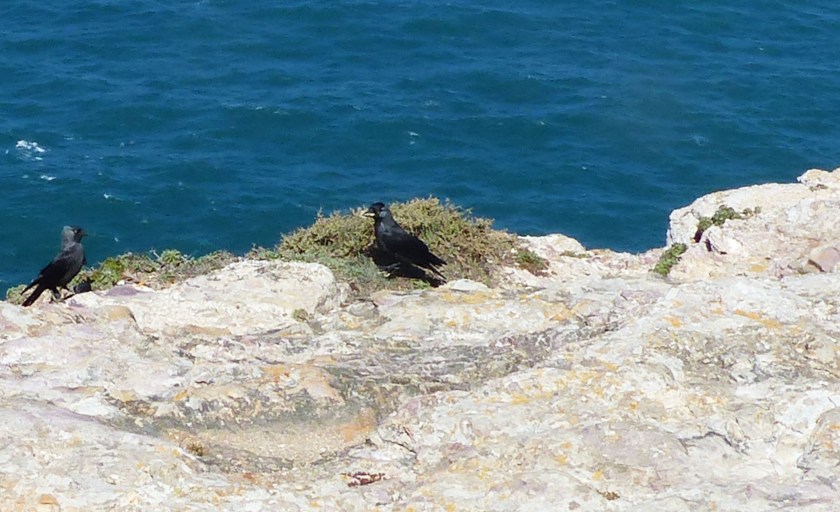
The Jackdaws are here too, a pair building a nest somewhere below the rim. I like these mini-crows with their grey heads. Anyone who has watched an English mystery on television, or a Scandinavian one for that matter, will recognize their calls.  When we hear the Jackdaws during the opening titles, we know darn well that somebody has been murdered and that the likeable detective with personal problems will soon arrive on the scene.

JacdawsCSV2016

 Jackdaws on the edge

It’s been bright and sunny at the Cape though windy, and surfers are already in the sheltered bays 300 feet below us. They’ve got more nerve than I have.  We search the skies for raptors but the wind is from the northwest and certainly not favourable for migrating birds. In any case, we see exactly none. Luckily, a shop that sells those delicious Portuguese custard tarts is not far off. My mother made two kinds of pies from scratch – jam pie and custard pie. I’m not sure how they got her custard pie recipe here in Portugal.