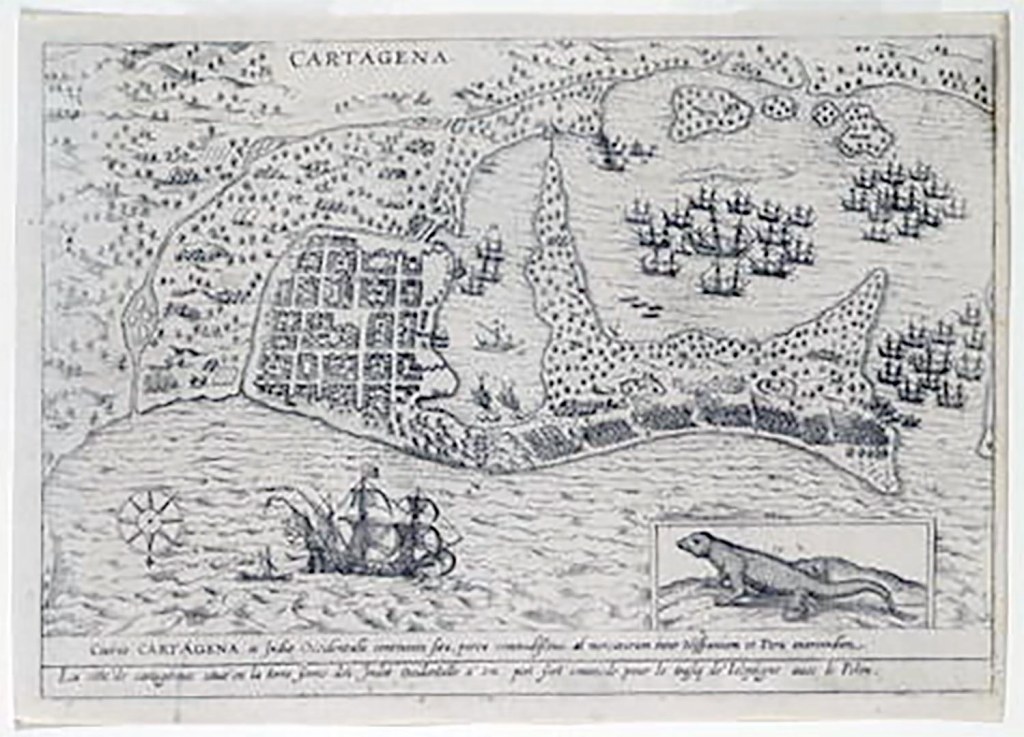
I first heard about this fortress-guarded outpost of the Spanish Empire when, many years ago, as a kid, I read about how Francis Drake captured and plundered the town in 1586. Fortresses still guard the harbour, but English pirates are in short supply. I wasn’t able to check Drake’s bird list, but I’m sure he did okay. Colombia has over 2000 species!
Cartegena in 1586
Cartegena is presently a largish, prosperous city with an ambience that reminds one of Mexico – a little. Another reminder that Latin America is not a monolith, neither geographically nor culturally. Unfortunately, out stay was so brief that we weren’t able to sample much of the country of Gabriel Garcia Marquez. Coconut ice cream was about it.
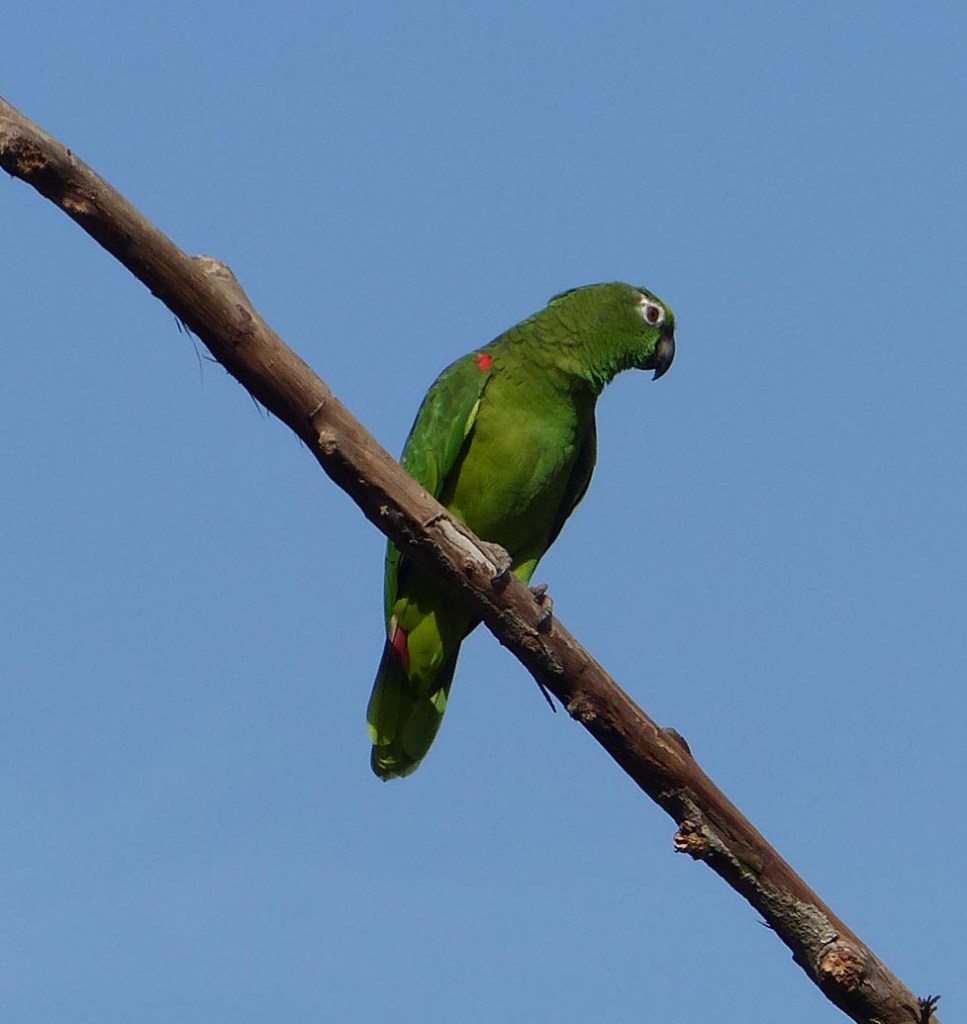
Mealy Parrot
The National Aviary is an hour or more from the cruise terminal by bus, the route taking us past farmland and housing developments. I spotted a few hawks enroute, including a Roadside Hawk and a Common Blackhawk.
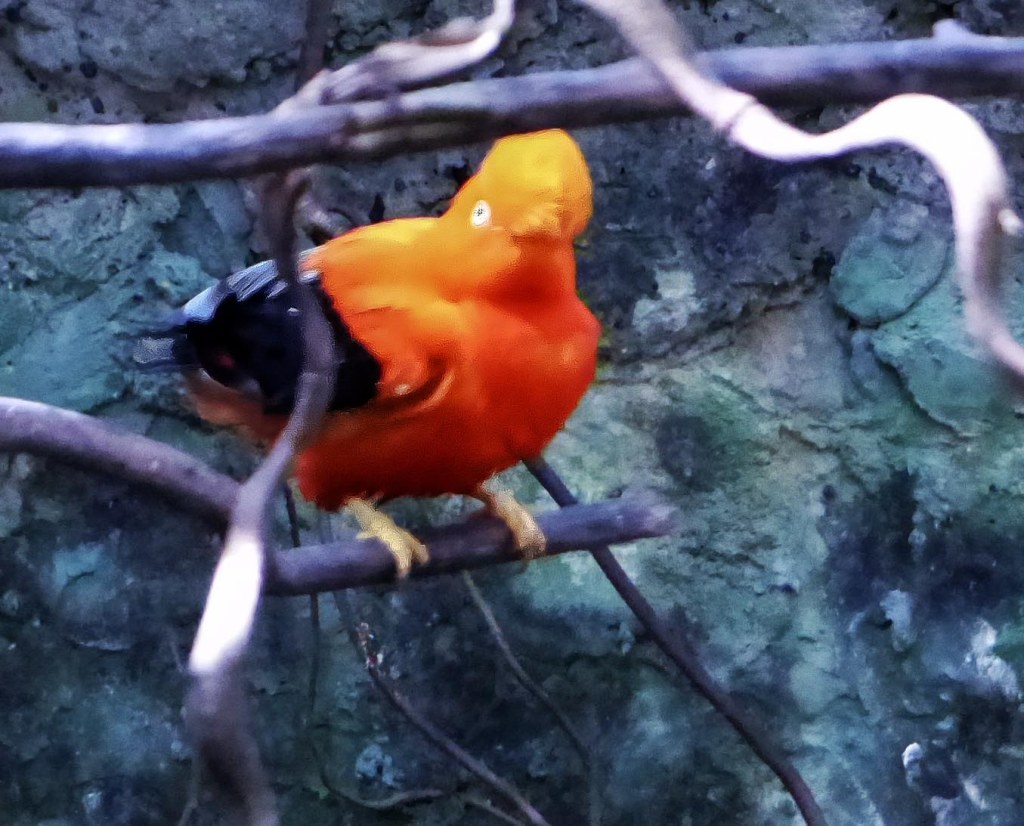
The aviary seems well-maintained and is a pleasure to visit. Lots of birds hanging around the enclosures, of which there are just enough. I did get a chance to see the splendid Cock of the Rock This was a very rare bird when I was a boy, and one that I fantasized about capturing on an Indiana Jones style expedition into the jungle.
Cock of the Rock
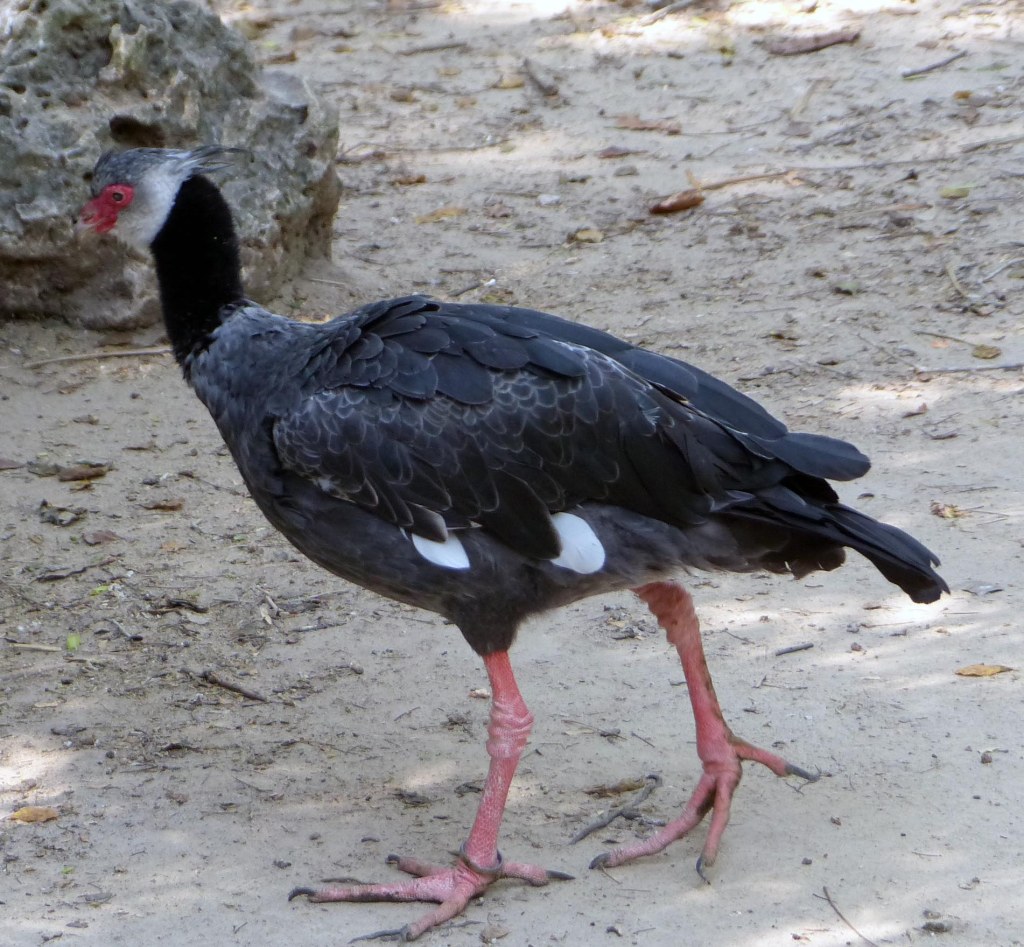
Southern Screamer
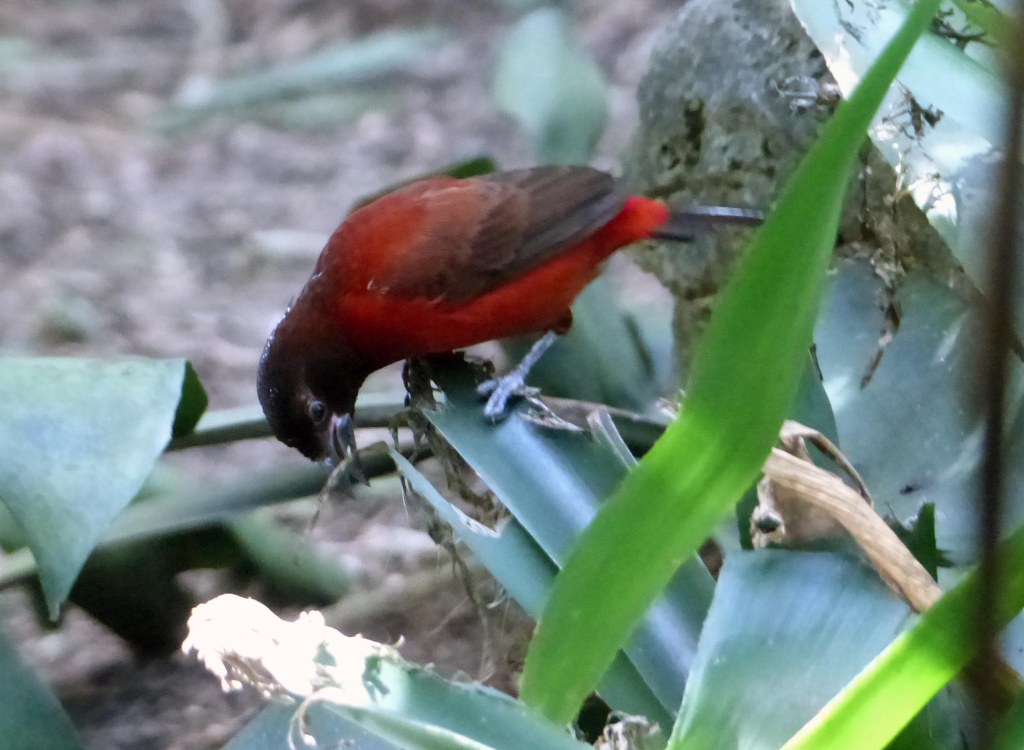
Scarlet-Rumped Tanager (female, I think)
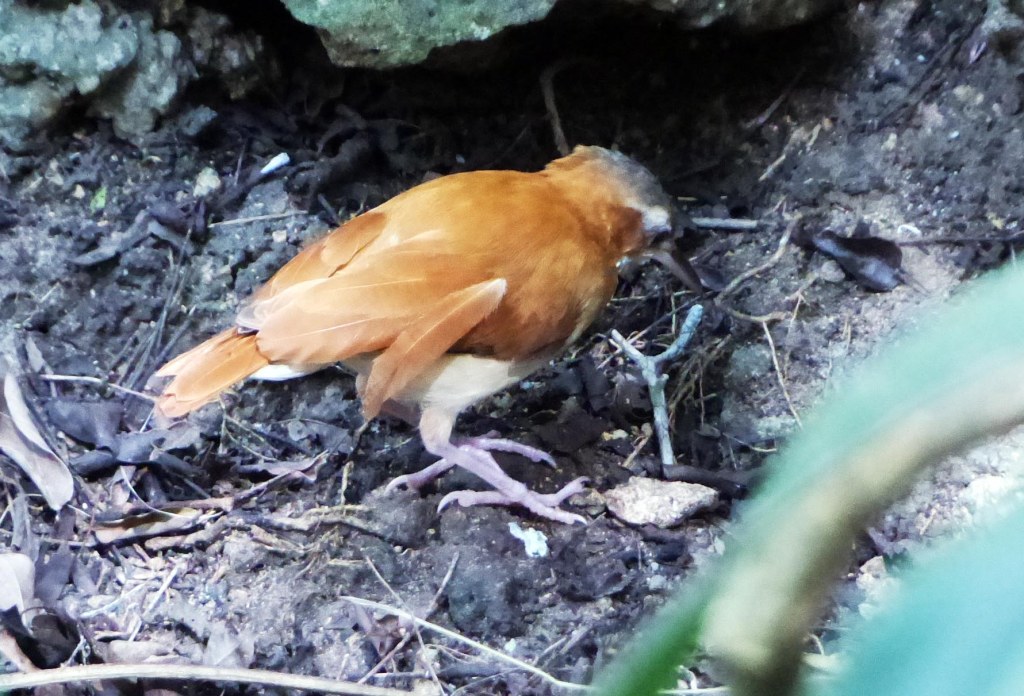
My favourite bird here was the Russet-throated Puffbird. I spotted this one watching the proceedings from a convenient branch. Definitely a wild bird. After a few minutes, it was gone, vacating the premises when my back was turned. Cute bird, though.
Russet-throated Puffbird
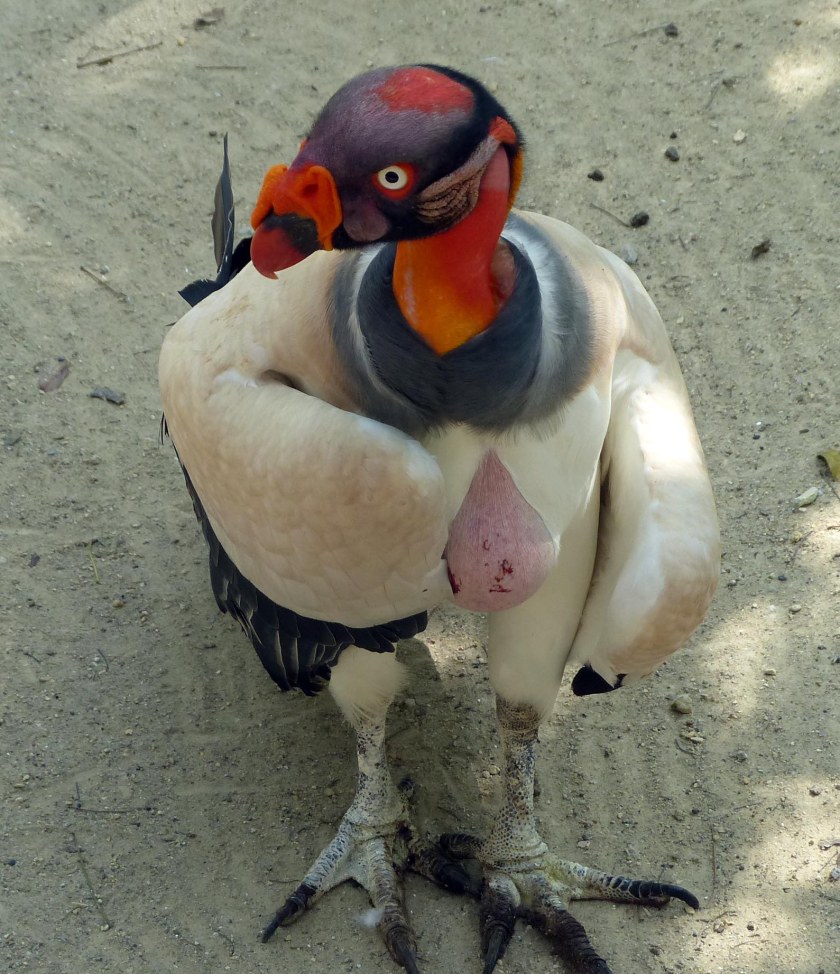
King Vulture
King Vultures — the Aviary has several of these wonderful birds in its collection. I saw one in the wild, flying over the Panama Canal locks. Quite a majestic bird, as this chap clearly knows. Unfortunately, I didn’t get a shot of the wild bird for all sorts of reasons, but, at least I get to see the rescued ones at the Aviary.
This bird had a broken wing, but checkout those feet! No wonder the Kings get first go at the carcass.
This Nightingale Thrush was busy digging around among the roots, perhaps looking for a tasty bug.
Nightingale Thrush
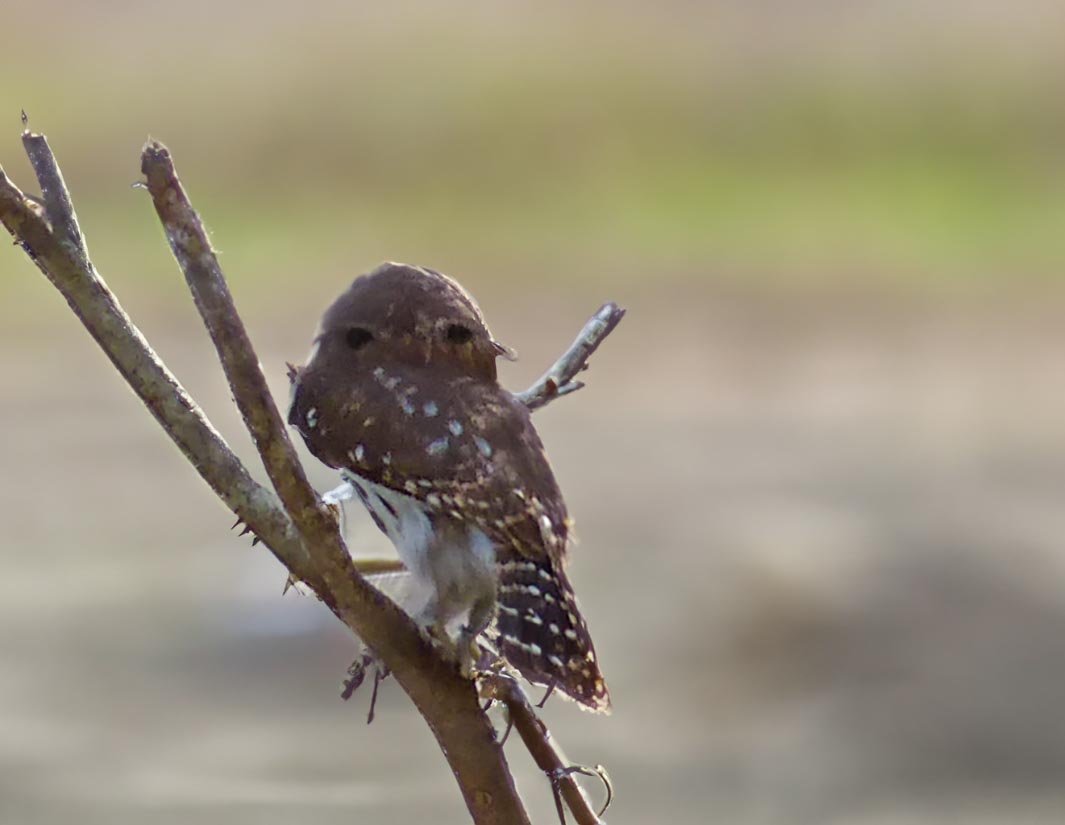
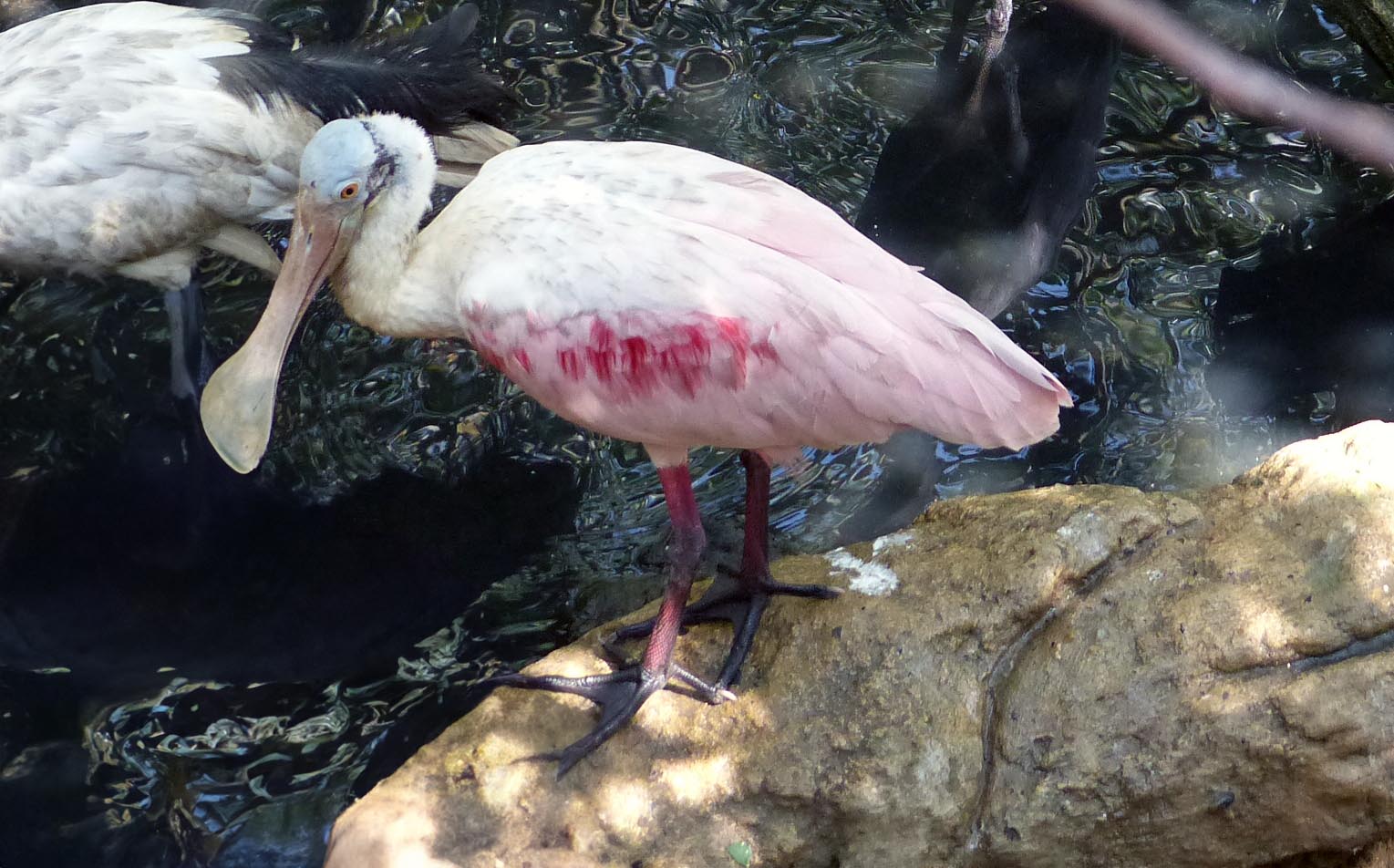
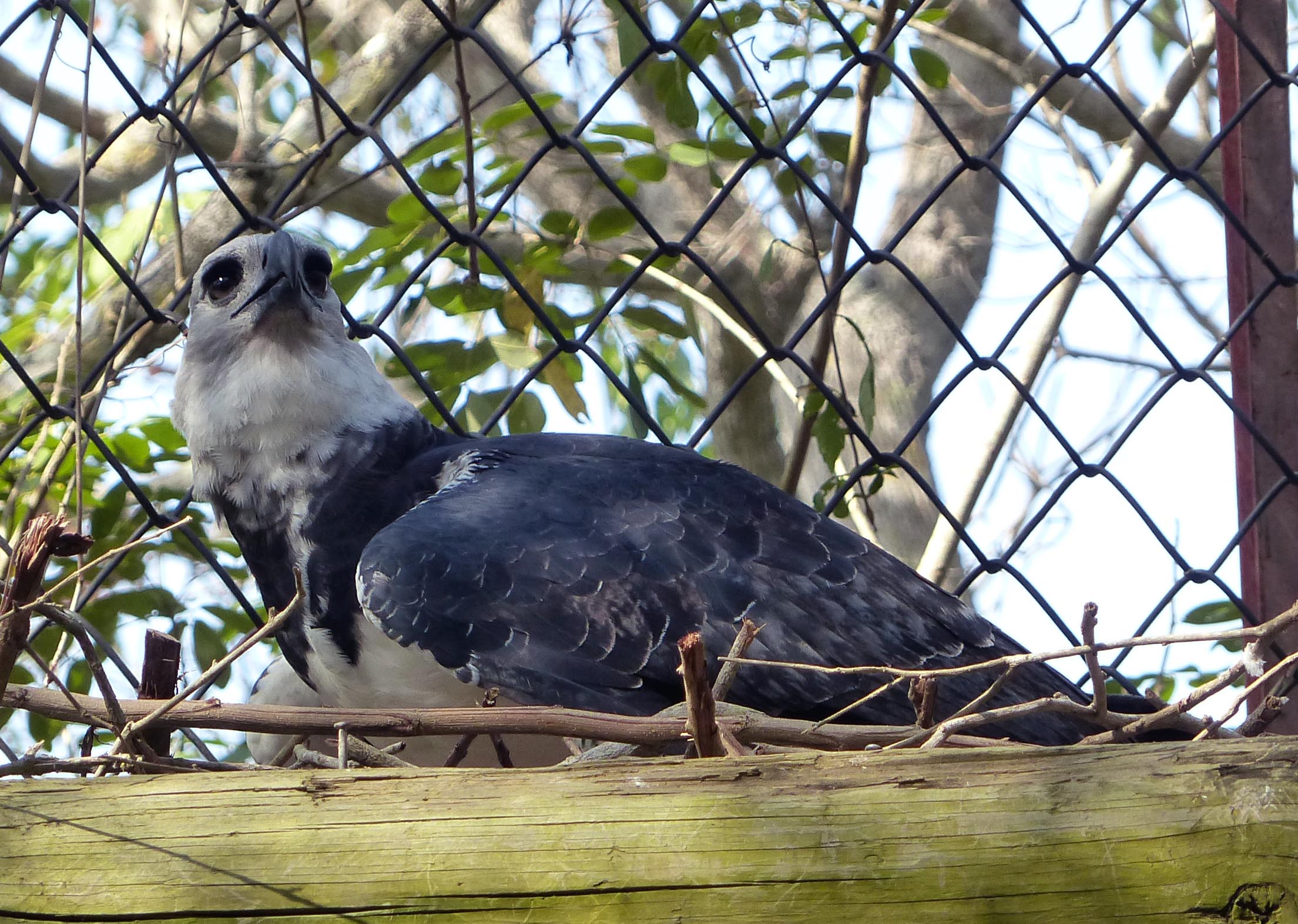
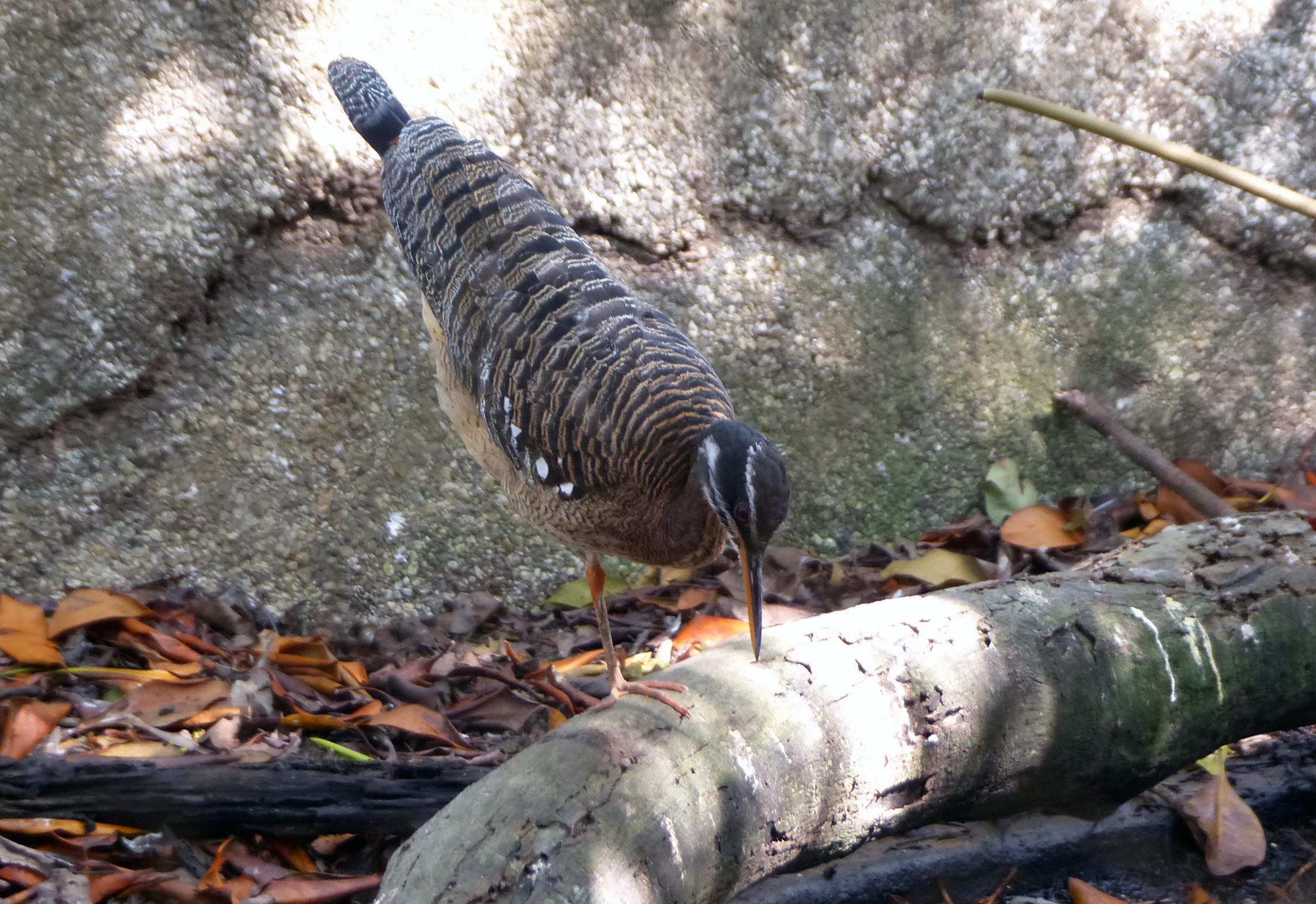
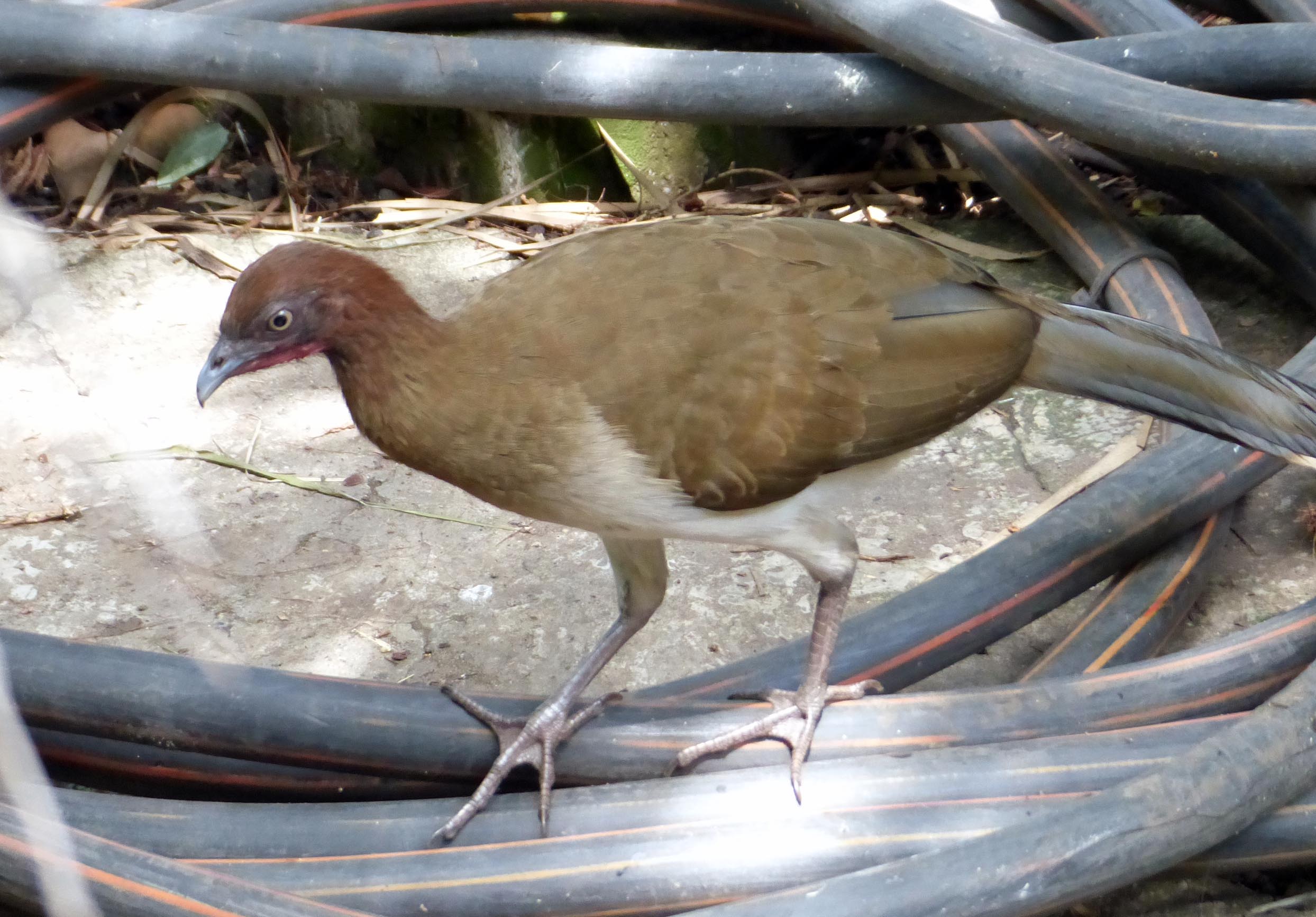
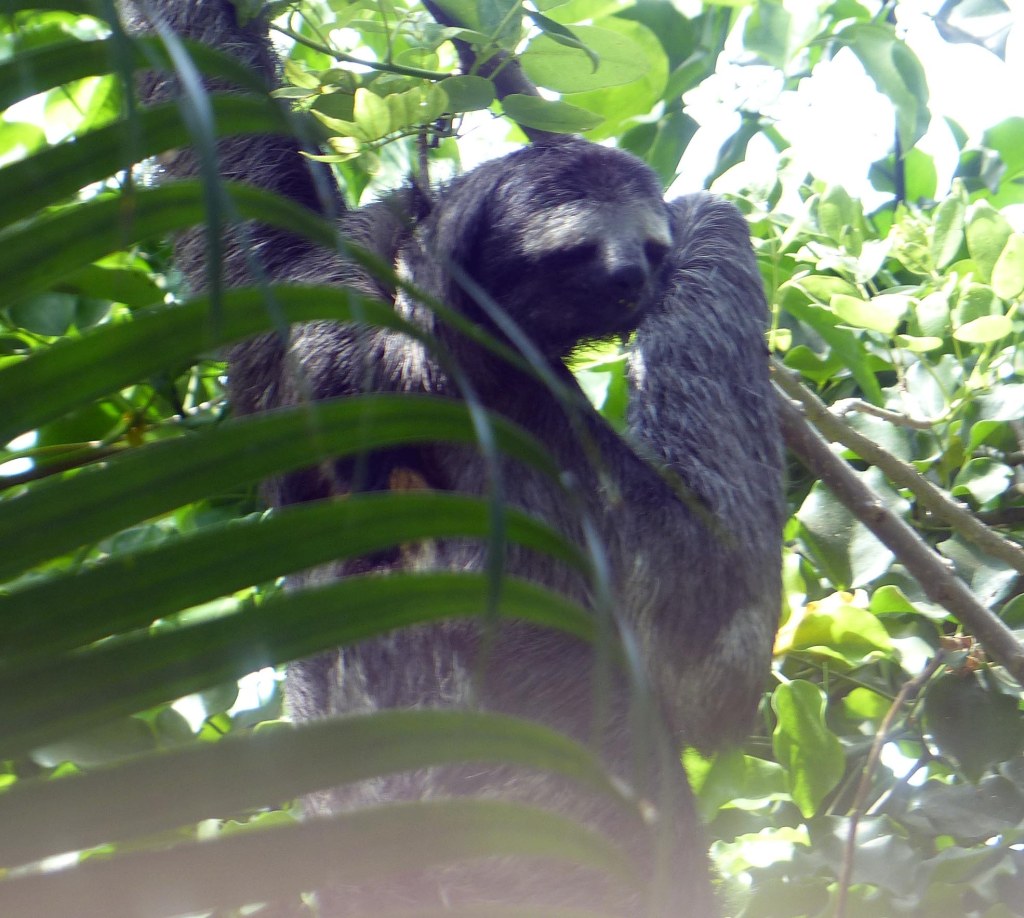
A few of the birds in the Aviary: the sparrow-sized Pygmy Owl, Spoonbill, Tiger Heron, Harpy Eagle, Chacalaca. And there are sloths.
Despite the fact that a cruise seems like the perfect opportunity to sneak in a pelagic, birding from a cruise ship isn’t very easy. Most of the time the ocean is miles and miles of nothing but, well, you know the rest.
On one transatlantic crossing, I saw a total of one seabird, a Bermuda Petrel, before we got to the Azores from Fort Lauderdale. The real birding pelagics I’ve been on always involve chucking cod-liver oil into the sea from much smaller boats to attract the tube-noses, and that wasn’t about to happen here.
Without chumming with cod-liver oil or fish guts, one has to be very fortunate to see any animal life on the briny deep. I’ve to learned this the hard way. Sitting next to a ship’s window with binoculars poised becomes laughable after a while. Later in the day, you can at least order a cocktail, which looks to non-birding passengers like having one of those was your purpose all along.
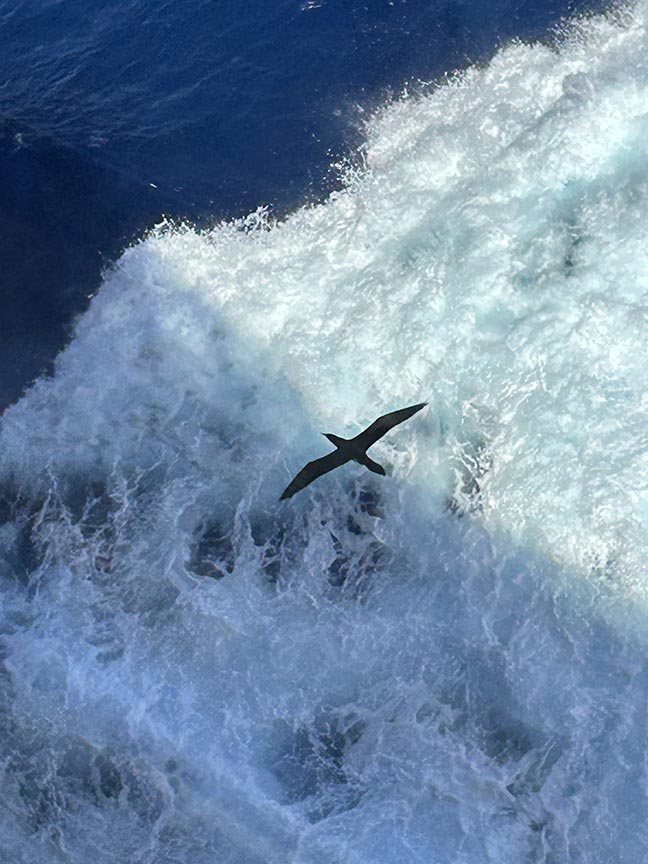
We had great luck, though, on a recent cruise in the western Caribbean. This happened when the ship passed through a school of flying fish around the time we were looking out the coffee shop window. Suddenly numerous Brown Boobies, a Red-footed Booby or two, and a Masked Booby appeared and began chasing down the fliers. A remarkable sight! The fish are about a foot long, and very fast.
Flying Fish
Probably one fish in five lost the race, zooming across the surface for 50 or 60 feet, only to be picked off at the last moment. Would avoiding the birds have saved them? Maybe. But, no doubt the fish took to the air because something else was pursuing them – tuna maybe, or a school of jacks, or swordfish even. So, for these remarkable creatures, danger lurked above and below.
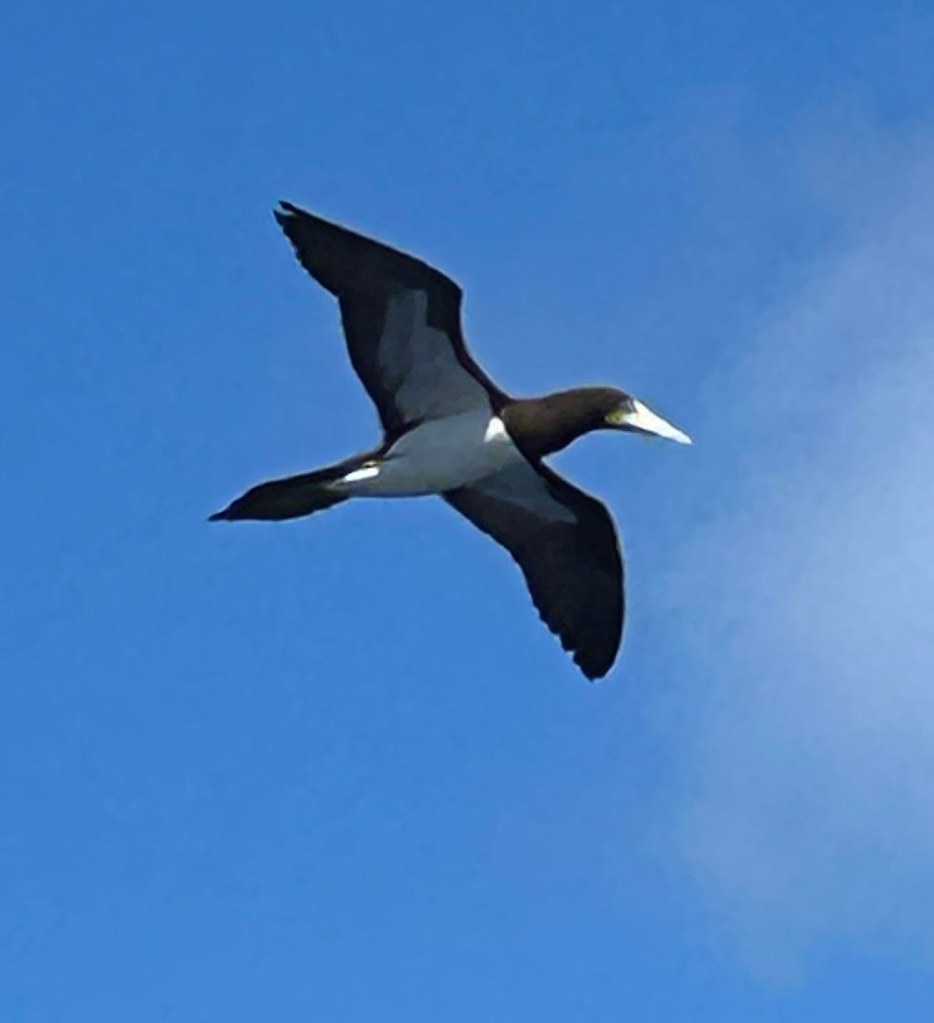
Brown Boobies, dressed in formal dark-chocolate brown and white, seemed especially good at picking off a meal as it skimmed through the ship’s wake, wing-like fins flashing.
The birds are very fast, and agile. Being at a window when the flying fish and the Boobies appeared was pure coincidence, and the best kind of luck.
Brown Booby
Red-footed Booby
Luckily, cruise ships also dock, which meant Half Moon Cay, Aruba, then Colombia, Panama, Costa Rica, and Jamaica, for us. Lots of birding opportunities.
Half Moon Cay is a private island belonging to the cruise company. It’s a beach place in the Bahamas. V. and I aren’t beach people so the island held little interest for us, especially after the snorkelling trip we’d signed up for was cancelled because of the wind.
However, using going for beer as an excuse, I left V. under an umbrella and took the long way to the bar on the chance that I might see some birds. It was mid-day, but you never know. Within a few minutes, I’d seen seven Royal Terns, a Bahama Mockingbird, a Common Ground Dove, and two Yellow-rumped Warblers.
My favourite bird here, though, was a lovely and agreeable Louisiana Waterthrush, freshly-feathered and ready for spring. Like the Bahama Mockingbird, a lifer for me, but, unfortunately, since we were supposed to be snorkelling, I hadn’t brought a camera! I had failed to learn my lesson once again.
It’s mid-afternoon. We finally ease into Paris from the périphérique (ease – wrong choice of word).
We feel, if not chipper then somewhat settled, until our GPS instructs us, “to take the eighth exit at the next roundabout.” Eighth! This can only mean the dreaded l’Étoile with the Arc de Triomphe at its centre.
I notice that the GPS has switched to using the same tone as Parisian waiters use when you’ve asked for something unusual, like a seat out of the draft.
l’Étoile! Twelve streets worth of traffic circling the Arc like a great school of rather nasty sharks, each with a different plan. In the midst of the mayhem, dozens of selfie-taking tourists sprint back and forth like unwary bait fish.
When we find street work blocking every access to our destination like Byzantine walls, we almost don’t care. Magically, we seem to have slipped into a Kamikaze-like fatalism. Perfect for navigating Paris.
No point yet in discussing the hotel and underground parking garage here. No point in casting a leaden pall over this whole exposition. But, then, miraculously, we’re 4 levels underground in our stall, and I can turn off the ignition. Neither of us are sure how we got here.
Paris! The Tuileries
A quick feed, a wash and brush-up, and we’re good to go. Art, food, culture, history – Paris has it all. Great perspectives too.
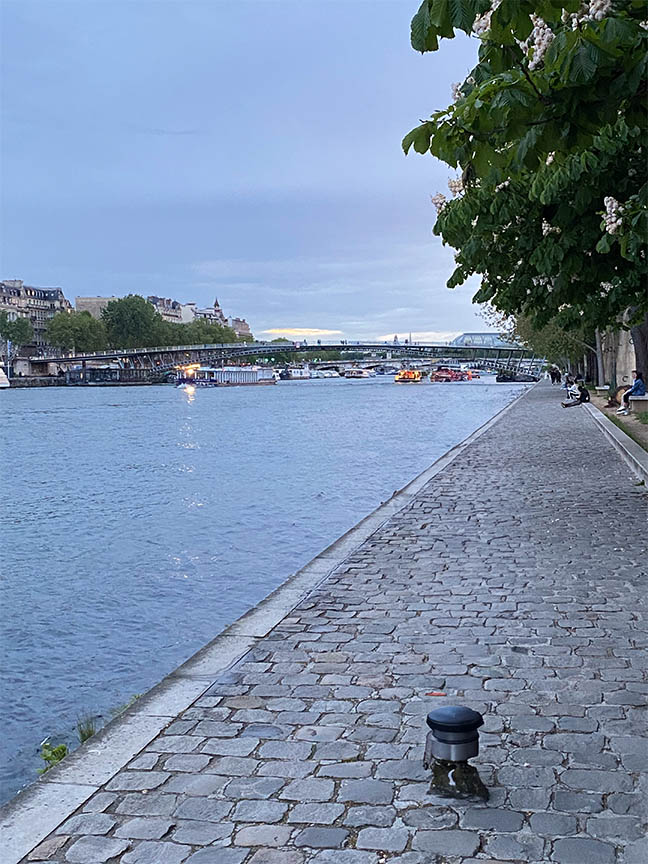
An evening view of the Eiffel tower from the Trocadero – wow! And strolling the banks of the Seine on a warm, spring evening is pretty well as romantic as it gets.
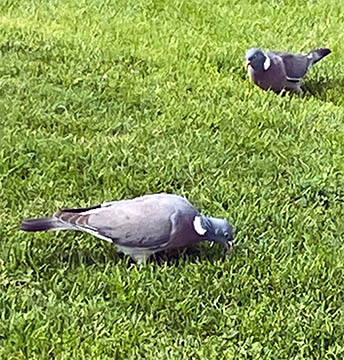
I don’t expect to see many birds (other than Wood Pigeons) in Paris. One has to know a big city very well to find unusual birds. I include Wood Pigeons in this post – this is called Bird Noetz, after all. I spot a few Blackbirds in the Tuileries too.
Wood Pigeons in the Tuileries
Wood Pigeon watching is free in Paris, but almost everything else costs from a lot to plenty. Department stores like Printemps now seem outrageously expensive. Galeries Lafayette, forget about it.
Specialty soap shops such as the one V. discovered, should have armed guards around the merchandise. You can either buy a bar of soap, or dinner – your choice. But,ah, it’s Paris, unlike any other city in the galaxy.
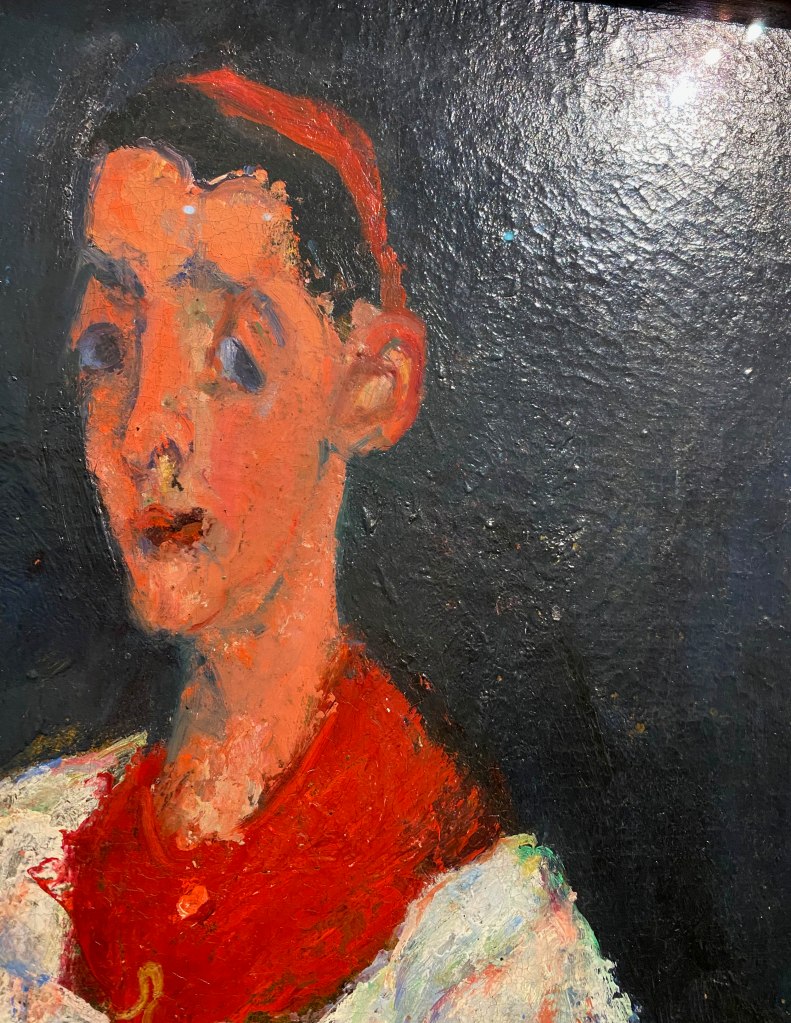
Soutine, I believe
The Orangerie is among the world’s great galleries. It’s filled with modern works, as the brochure says, from “Renoir to Matisse, from Cézanne to Picasso, from Douanier Rousseau to Modigliani and Soutine.” Even so, it’s still manageable. Lots of selfies going on here too. À chacun son goût, I guess.
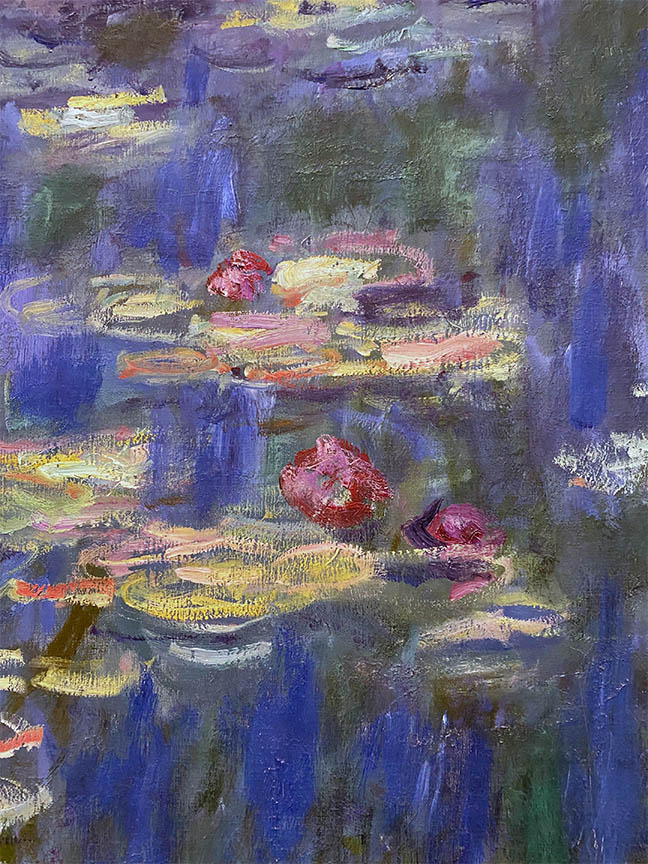
Monet’s famous Water Lilies is the star attraction, and these giant panels are stupendous works. Luminous. Colour choices and juxtaposition, sensational.
Monet – Waterlilies (detail)
Napoleon. Not everyone is a fan of the Ist Emperor, but he certainly made his mark. Spend any time at all dealing with the niceties of French bureaucracy, and you’ll see what I mean.
I once had to fill out quite a bit of paperwork to get my wallet back after I’d left said wallet on a national park ticket counter for thirty seconds. Even with my picture ID inside, it still took two hours to get the thing back. Being in France, I had the proper documents in order, and stamped, naturally.
Of course, there’s much more to Napoleon and his legacy than unnecessarily inconveniencing me. The Russians and Austrians were very badly inconvenienced by him at the Battle of Austerlitz, for example. The beautiful Alexandre III bridge is just the allies getting back at the Ist emperor.
A fascinating and complex individual, Bonaparte, and the subject of countless studies and books. The city of Paris is a more monument to Baron Haussmann of course, but there is a lot here that is Napoleon too. His tomb in the Invalides is a must for students of history.
Napoleon’s bicornefrom Waterloo – Don’t you hate it when your hat gets wet!
Bonaparte’s Sarcophagus
The Cluny
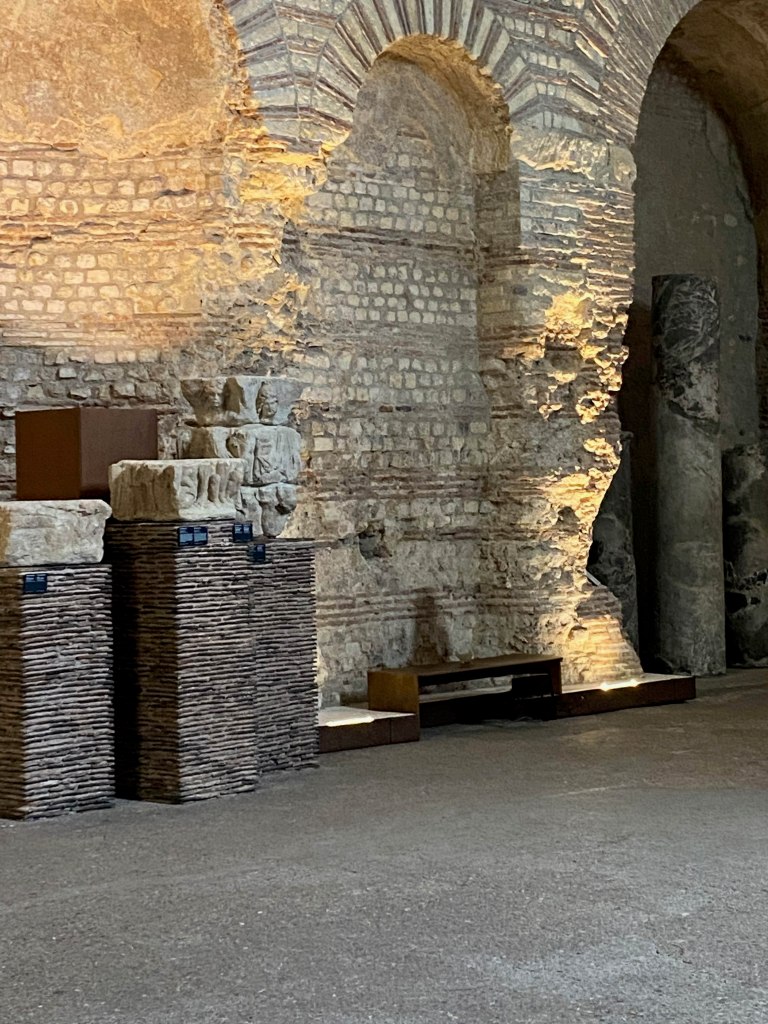
The impressive Cluny museum in the Latin Quarter preserves a bit of medieval Paris. More than a bit, actually. One of the best collections of western European medieval art anywhere is preserved here.
The frigidarium of an Roman bath complex forms the ‘bones’ of the museum. Incidentally, Clunaic style influenced the art and architecture of much of western Europe during this period.
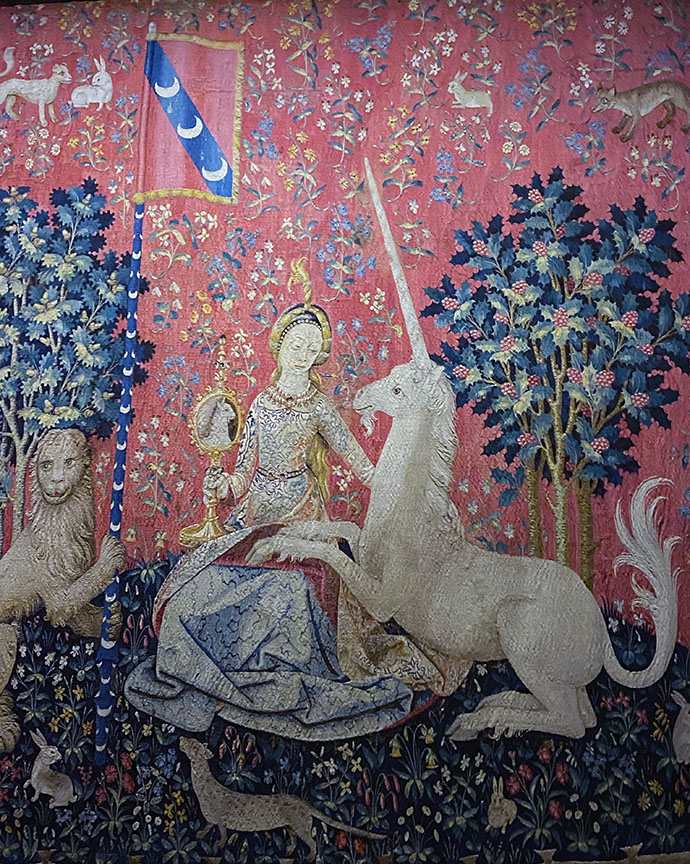
The museum famously houses the Lady and the Unicorn tapestries. A late medieval work loaded with symbolism, this is a testament to the skill of the weavers of Flanders. Perhaps Monet thought about the tapestries when he painted Water Lilies. Ukyio-e prints, sure, but maybe these too.
The unicorn symbolizes purity and religious grace. Only virgins can capture unicorns, by the way. Just so you know.
Cluny courtyard, Roman Baths, and the Demoiselle et le Licorne
It’s Paris and, of course, the food is great. The food court at the Bon Marche always lures us in. This time, no exception. Often, we wonder if the visit is an excuse to roam from eatery to eatery.
I hear many that French people lament the fading of some customs such as the 3-hour lunch. Probably it’s more the non-locals, like us, that bolt and run, Parisians seem as meal conscious as ever.
We try to let the French public choose where we eat. If a place is bustling it’s likely good; if it’s as quiet as “an undiscovered tomb” (as Henry Higgins says), it’s almost certainly not.
After a good meal, and a glass or two of decent wine, there’s the evening stroll along the Seine. Nice way to end our visit. Tomorrow, Sancerre.







 Bird Noetz