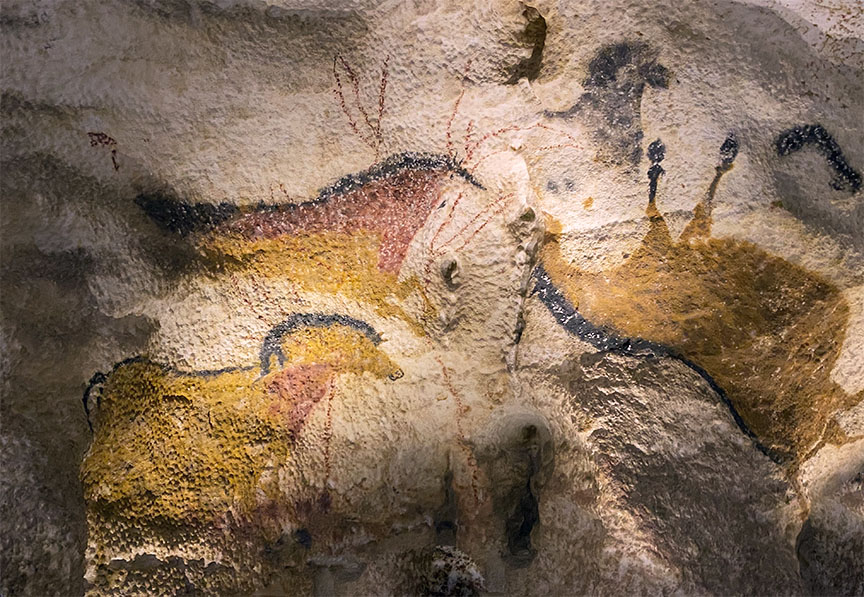
Ice Age Horses
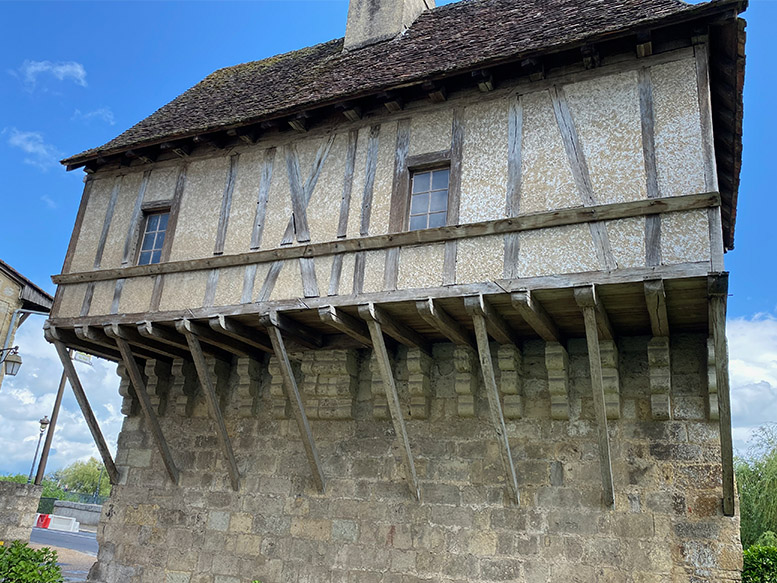
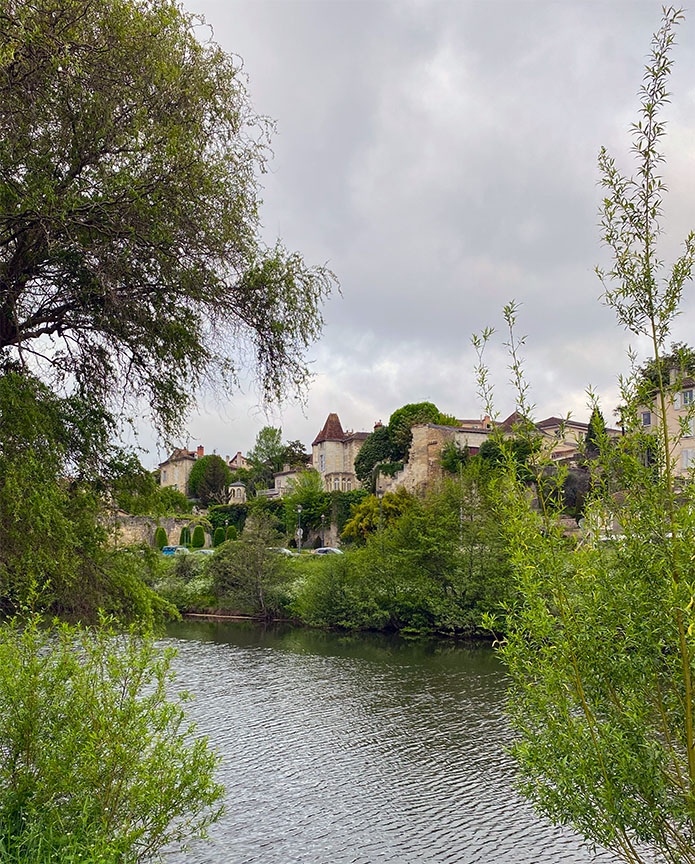
A bit longer in Perigueux, with a chance to visit its museums, would have been nice. However, we had tickets to see the famous paleolithic art of Lascaux. Plus we had to be in Paris that evening. So, after a quick breakfast, we packed up and hit the road.
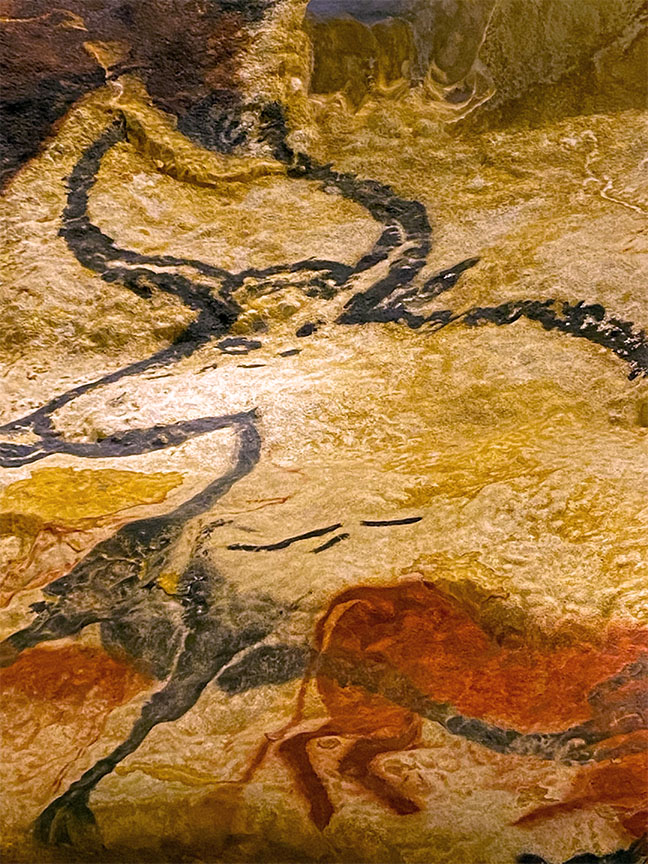
Auroch
I had longed to see Lascaux when I was a young archaeology student. Impossible then when gourmet macaroni and cheese was high living. Now, I’ve long forgotten the professors who taught me, and much of what I learned about the palaeolithic – it’s been a while – but Lascaux stuck with me.
Someone, or a bunch of people, have called Lascaux the “Sistine Chapel of Paleolithic Art”. I’m not sure why it isn’t the other way round, chronologically-speaking, but anyway. Certainly, the paintings are remarkable. And there are others. The Karst bluffs along the Vézère are famous for their caverns. Many were occupied on and off over the last 40 000 years or so of the last ice age. Amazing place!
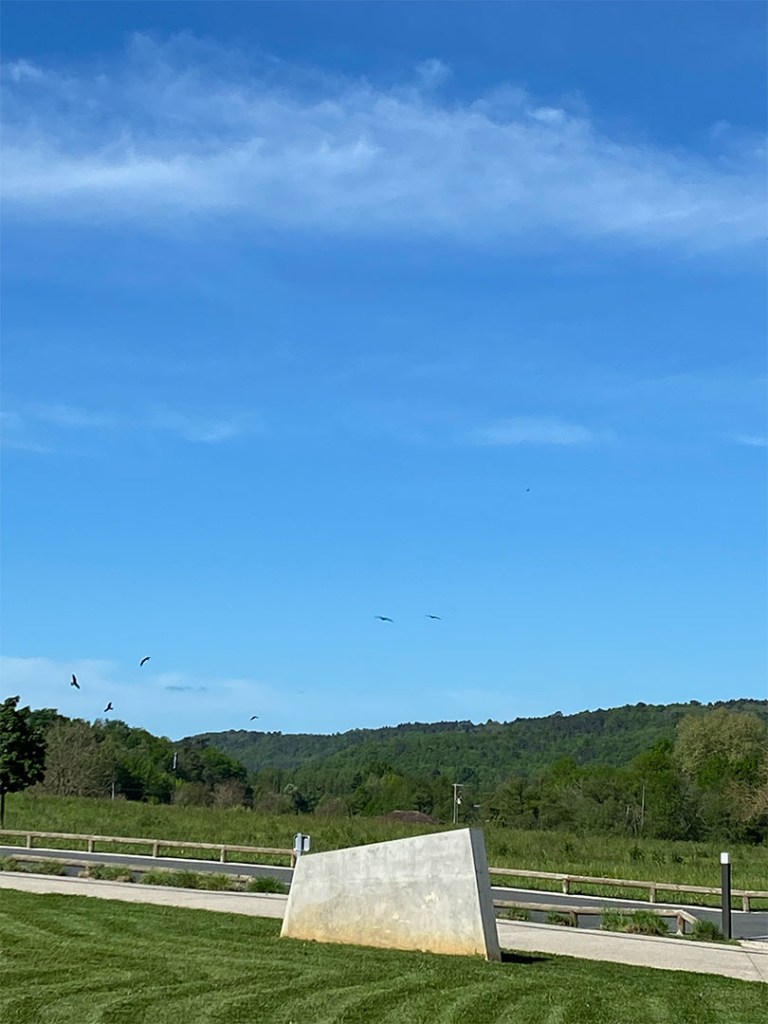
Red Kytes
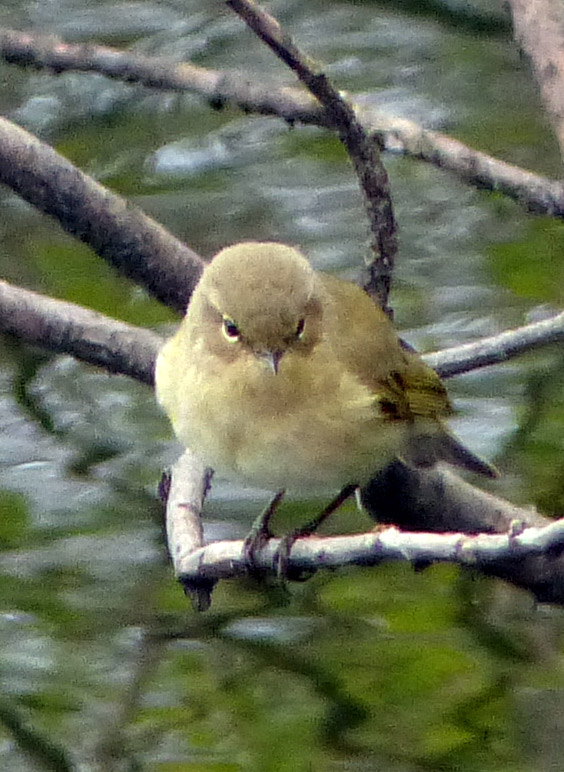
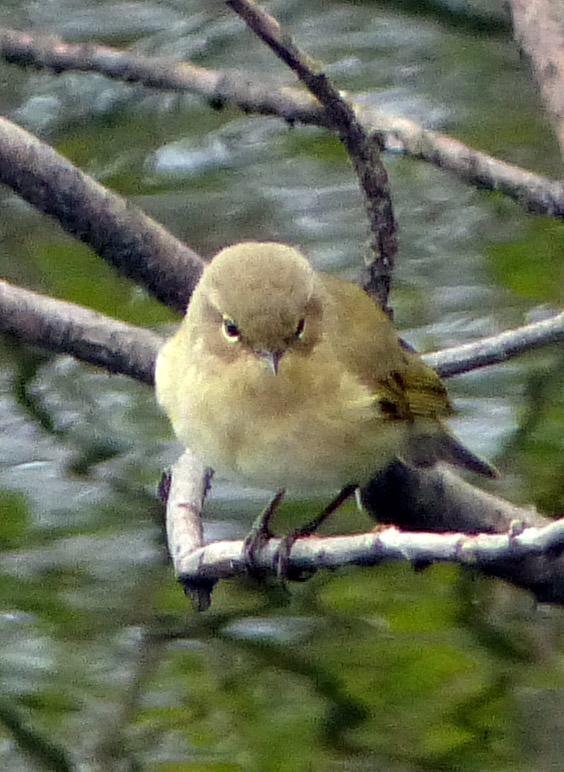
We arrived on a perfect day, sunny and mild, with a slight breeze. A few dozen migrating Red Kytes, and what looked like a Booted Eagle or two, kettled over low, heavily-treed hills, drifting west on shifting thermals. My real camera having just decided to give up the ghost a day or two back, I had to depend on my phone – not at all ideal for bird photography.

The Limestone Hills of the Vézère Valley
A warm day like this would have been rare when the cave walls were painted. It was the last ice age, after all, when giant deer, aurochs, wild horses, rhinos, and mammoths roamed the neighbourhood. The portraits of such beasts adorn the cavern walls. Were they created for magical purposes, or otherwise? Nobody can say. Europe was quite Arctic-like then. Inside a cavern probably wasn’t a bad place to be. So, there’s that.
With the cavern-riddled hills as a backdrop, the buildings containing the exhibits overlook the pleasant village of Montignac.We couldn’t see the actual caverns of course. These were closed to the CO2-breathing public many years ago. Instead we see exact re-creations of important galleries. And they certainly seem perfect, even down to the smell of cold stone. Or perhaps I was imagining that. A subconscious childhood memory maybe from when I explored the limestone caves in the cliffs surrounding the town where I lived. I once scratched my name on the cold stone. Maybe I painted a picture of a deer too, maybe.
These paintings are terrific – powerful, realistic representations of ice-age beasts. They are dated to the Solutrean, or Magdelanian. The aesthetic seems consistent with that of the beautiful, cunningly-flaked, leaf-shaped projectile points from the period. Beautiful things they are too!

My student attempt to flintknap a Solutrean Point. Not very good,I suppose, but, the right shape. Trying to replicate artifacts teaches archaeology students something about the methods and skills of the tool-makers.


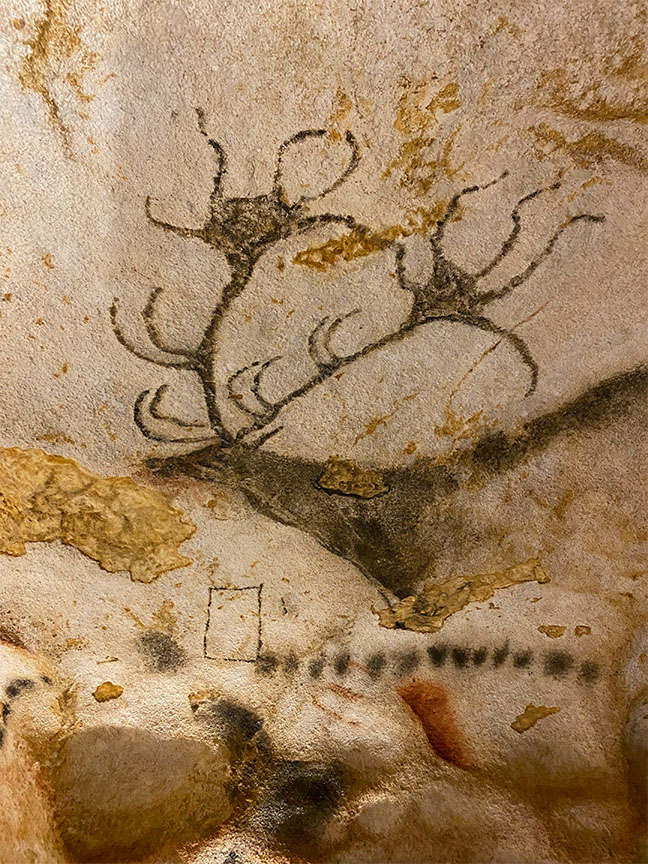
Ice Age Beasts and Mysterious Markings. The artist (s) obviously ‘played’ with images, as with the antlers on this deer.
As to the significance and purpose of cave art. Who knows? Seventeen thousand years is a long time, and, as David Lowenthal once pointed out, “The Past is a foreign country; they do things differently there.”
While the paintings are indeed spectacular, the object that fascinated me most was a small, red-stone lamp. Easy enough to miss, but charming too.
I like to think that the person who made and used this lamp made some of the pictures too. Thinking about that actually gave me a bit of a shiver. I was seeing, in that humble artifact, the hand and mind of a long-dead, working artist, and, in a way, communicating with them.

Lamp
Indeed, it is the small accidents of survival that can, in a flash, bridge the millennia between oneself and a maker – the slip of the brush, the thumbprint in the clay, the misplaced notch on the spear shaft. They blur time and cause it to slide a bit. Suddenly, an age or two seems like nothing at all. The small, casually-dropped things, the trivial artifacts, often have more emotional power than the famous, colossal, historic monuments. Not that I won’t go look at those too!



 Bird Noetz