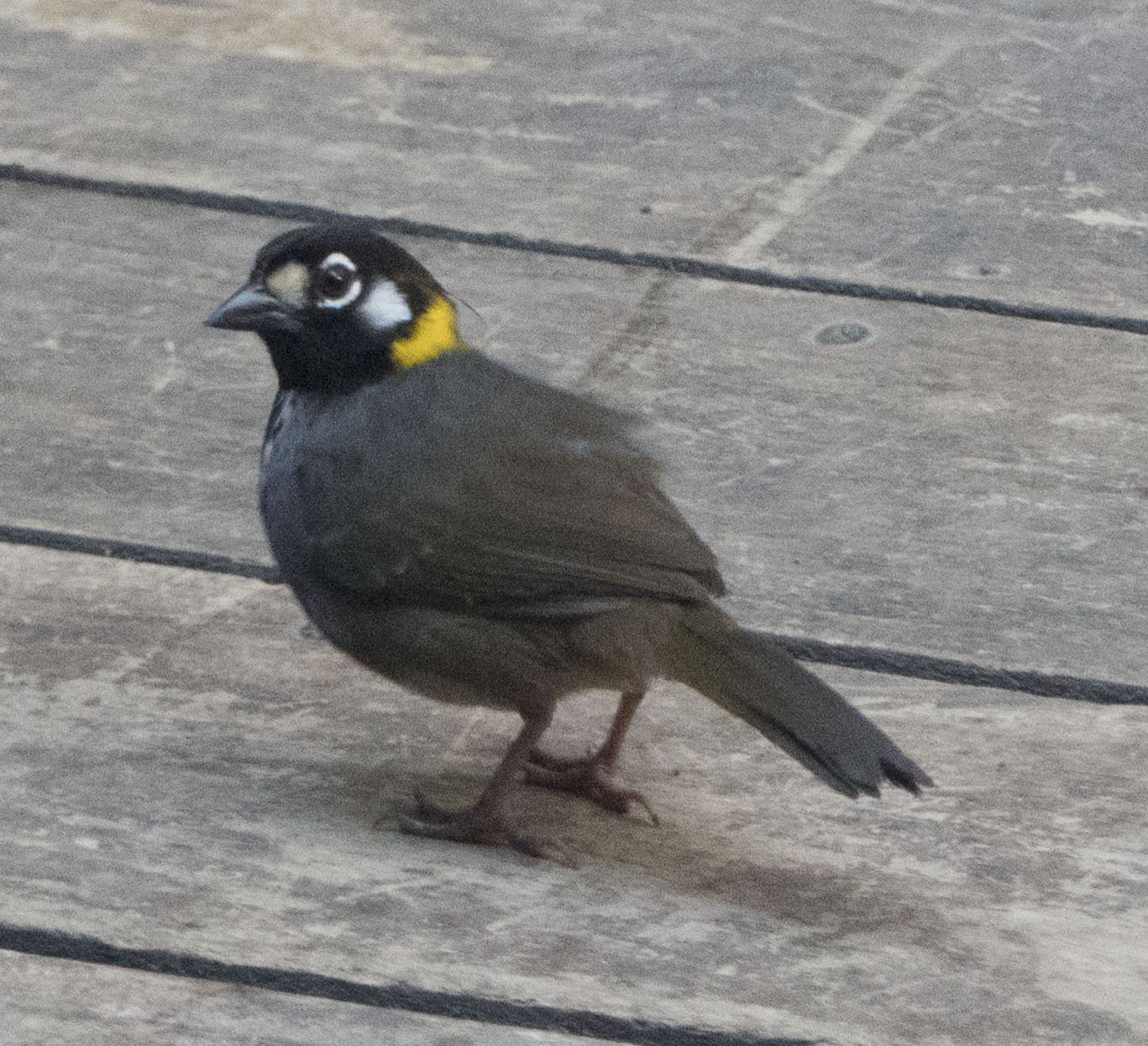
Cartagena

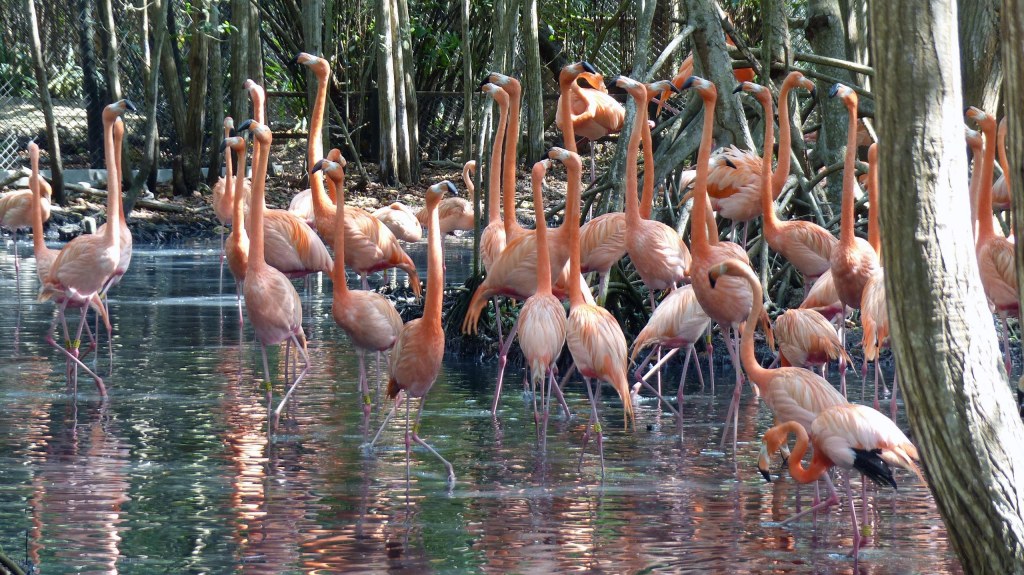
American Flamingos

I first heard about this fortress-guarded outpost of the Spanish Empire when, many years ago, as a kid, I read about how Francis Drake captured and plundered the town in 1586. Fortresses still guard the harbour, but English pirates are in short supply. I wasn’t able to check Drake’s bird list, but I’m sure he did okay. Colombia has over 2000 species!
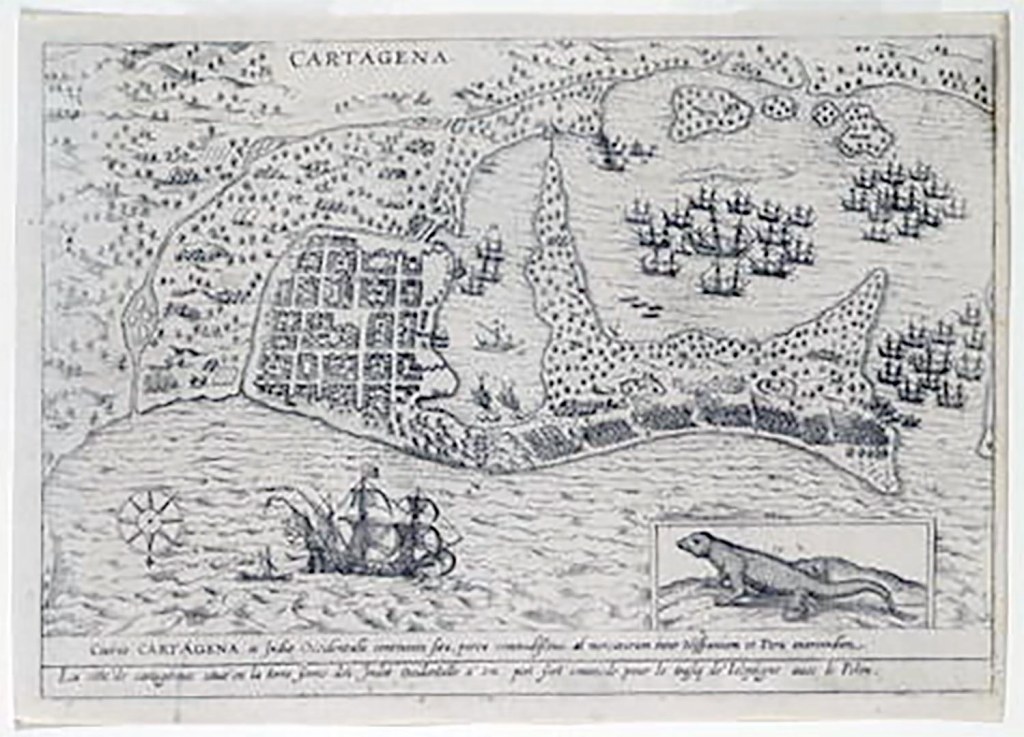
Cartegena in 1586

Cartegena is presently a largish, prosperous city with an ambience that reminds one of Mexico – a little. Another reminder that Latin America is not a monolith, neither geographically nor culturally. Unfortunately, out stay was so brief that we weren’t able to sample much of the country of Gabriel Garcia Marquez. Coconut ice cream was about it.
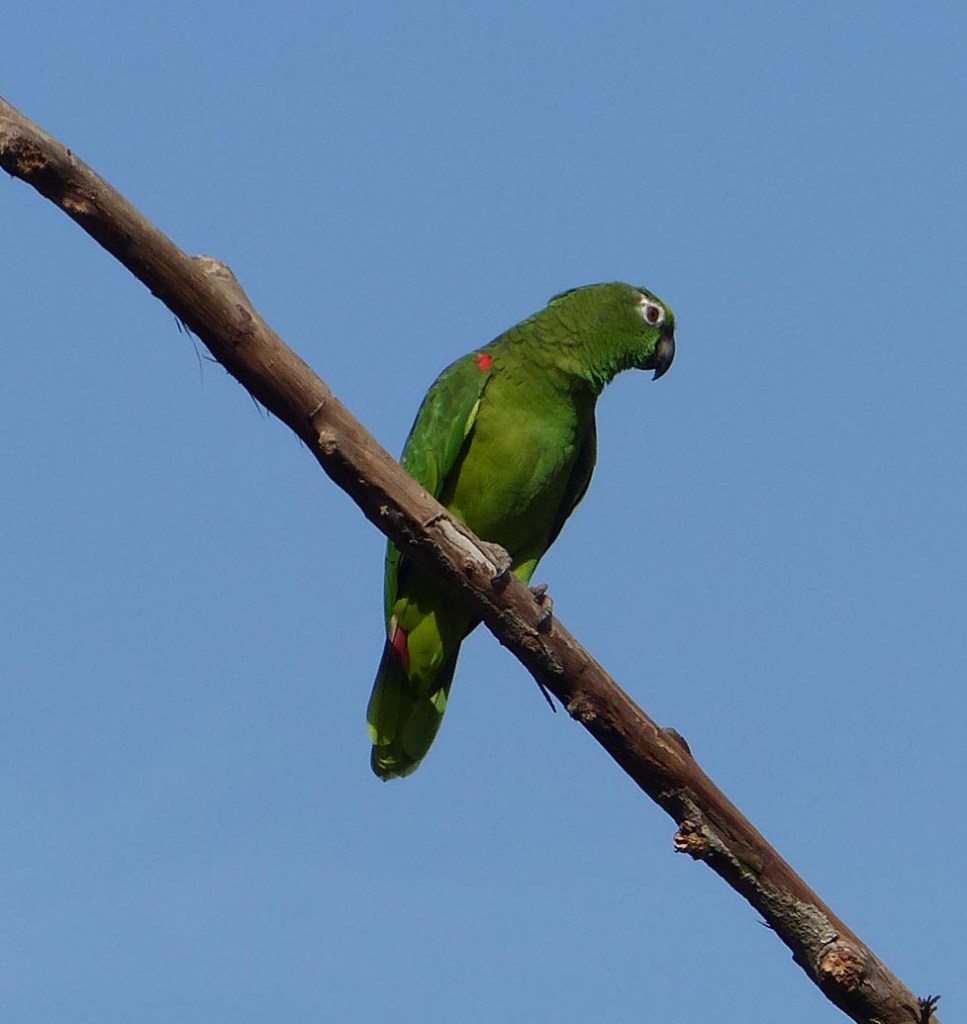
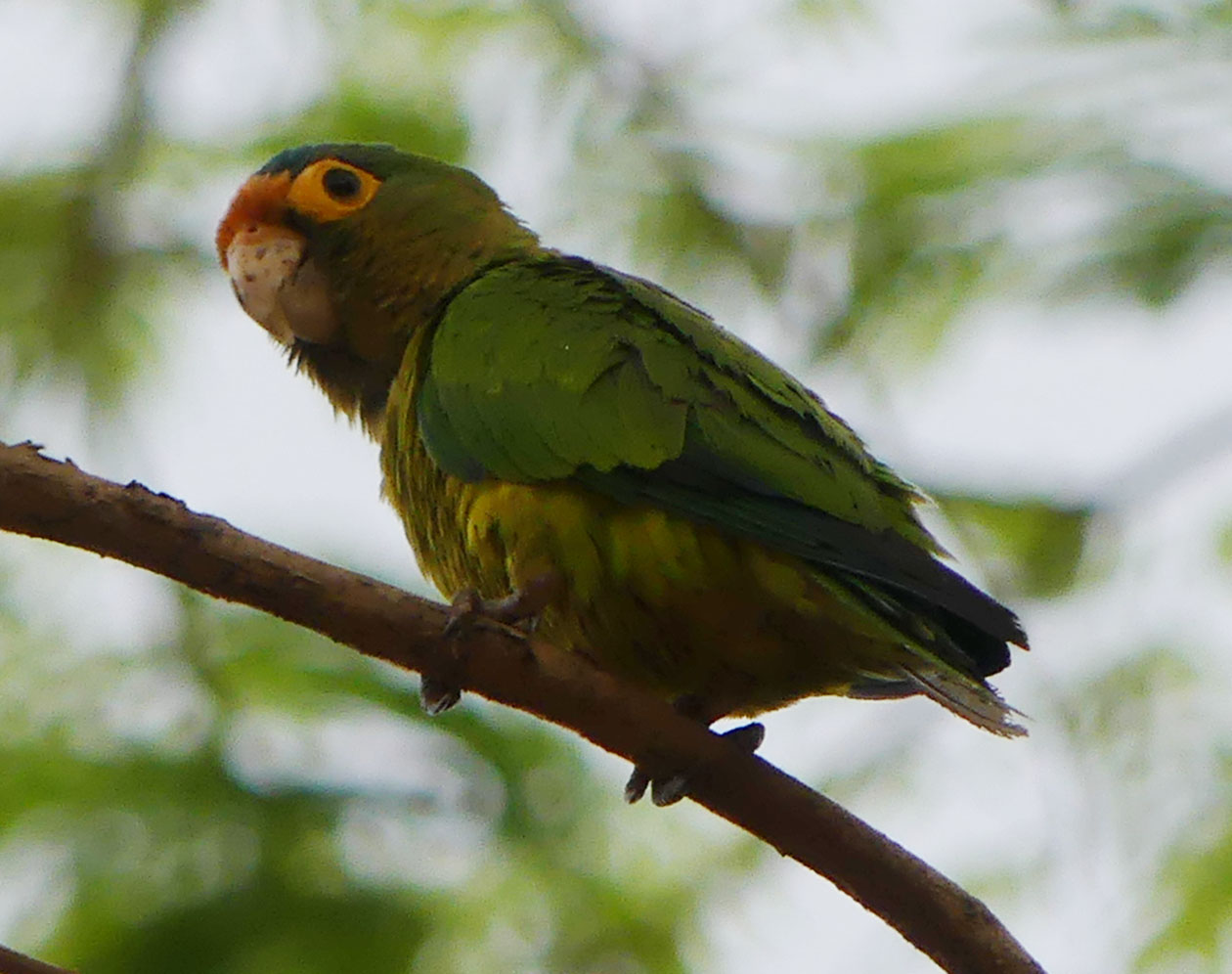
Mealy Parrot

The National Aviary is an hour or more from the cruise terminal by bus, the route taking us past farmland and housing developments. I spotted a few hawks enroute, including a Roadside Hawk and a Common Blackhawk.

The aviary seems well-maintained and is a pleasure to visit. Lots of birds hanging around the enclosures, of which there are just enough. I did get a chance to see the splendid Cock of the Rock This was a very rare bird when I was a boy, and one that I fantasized about capturing on an Indiana Jones style expedition into the jungle.
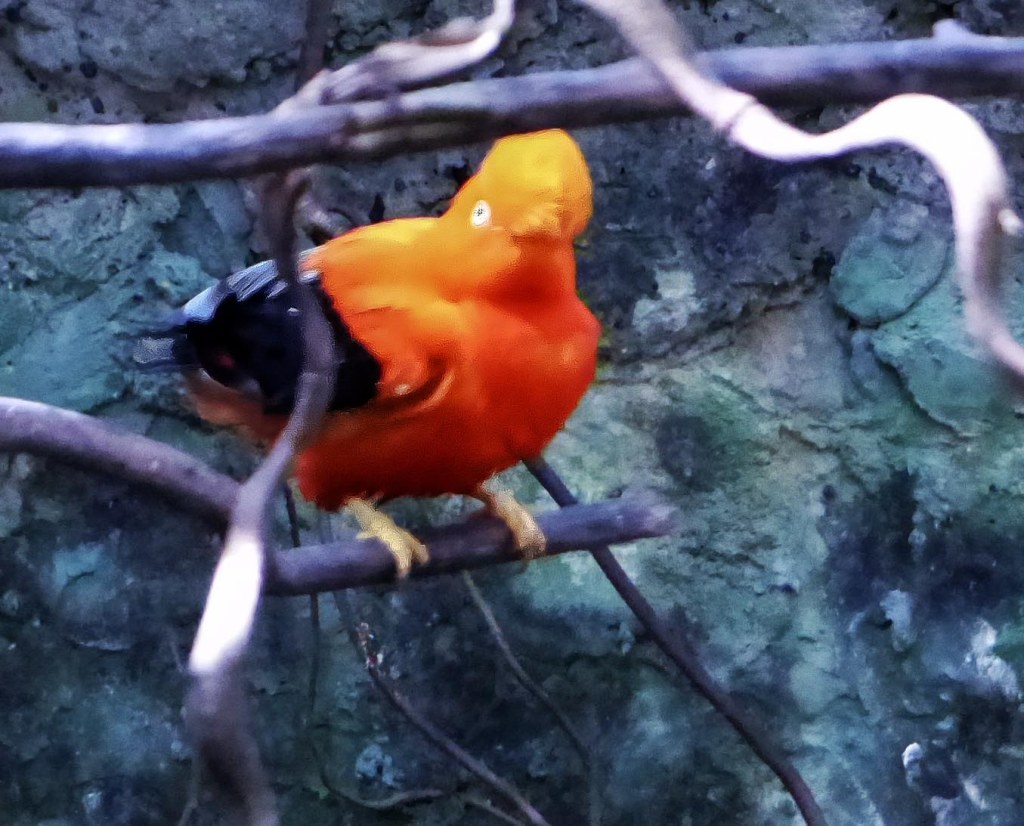
Cock of the Rock
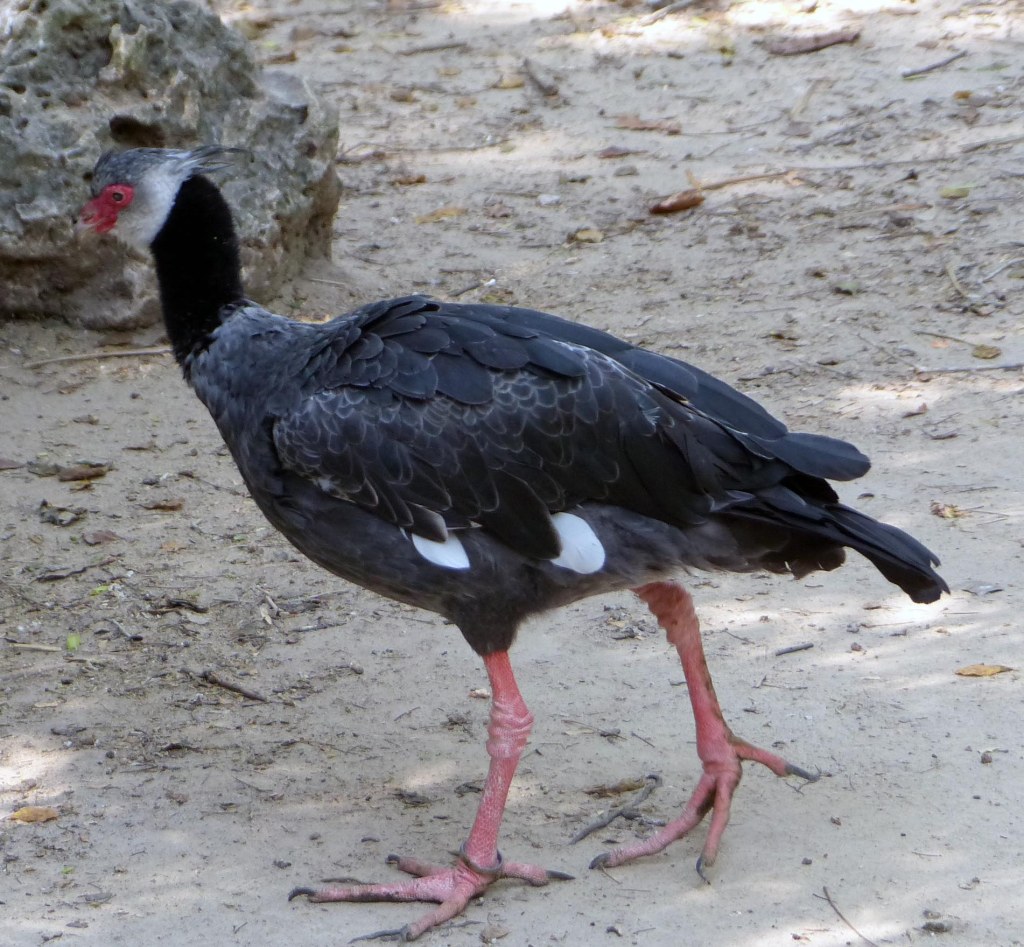
Southern Screamer
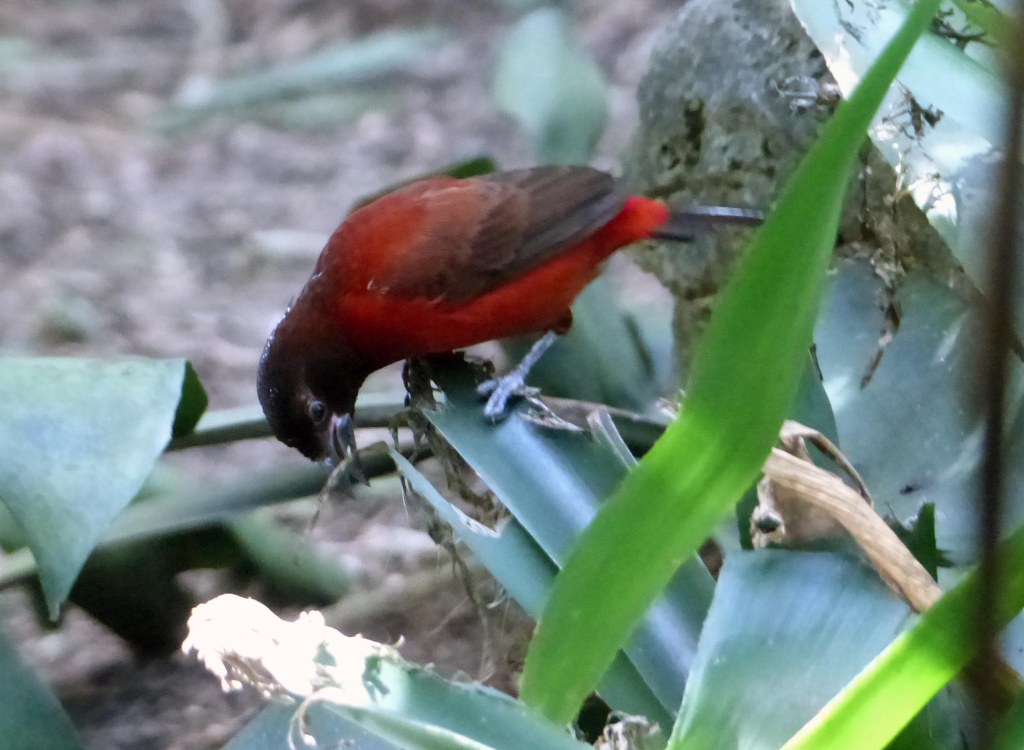
Scarlet-Rumped Tanager (female, I think)

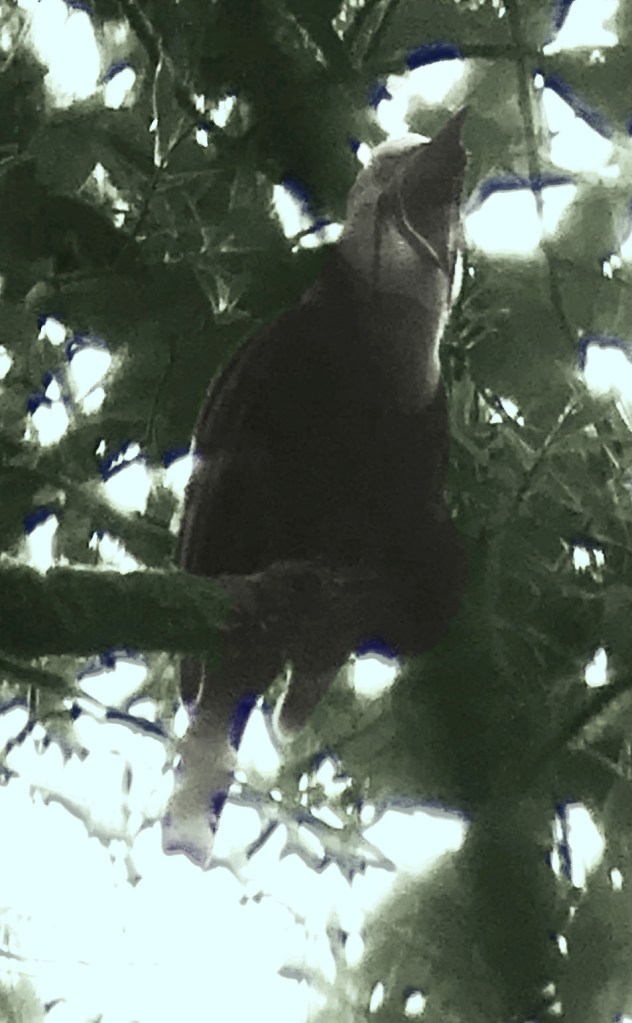
My favourite bird here was the Russet-throated Puffbird. I spotted this one watching the proceedings from a convenient branch. Definitely a wild bird. After a few minutes, it was gone, vacating the premises when my back was turned. Cute bird, though.

Russet-throated Puffbird
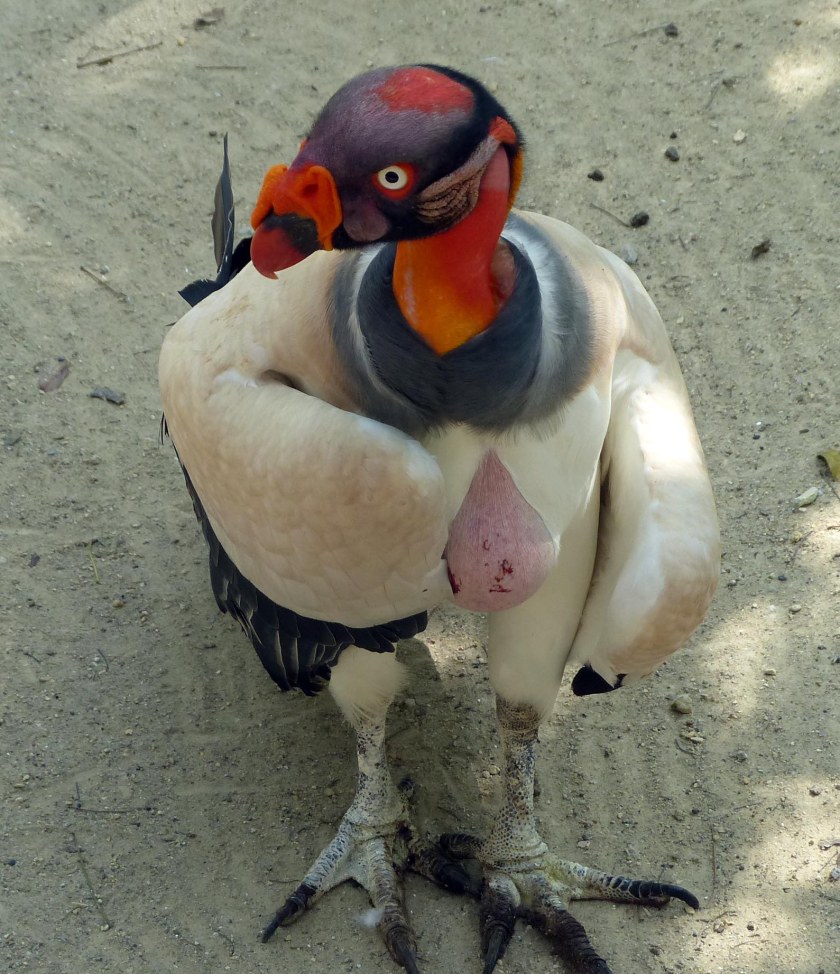
King Vulture

King Vultures — the Aviary has several of these wonderful birds in its collection. I saw one in the wild, flying over the Panama Canal locks. Quite a majestic bird, as this chap clearly knows. Unfortunately, I didn’t get a shot of the wild bird for all sorts of reasons, but, at least I get to see the rescued ones at the Aviary.

This bird had a broken wing, but checkout those feet! No wonder the Kings get first go at the carcass.
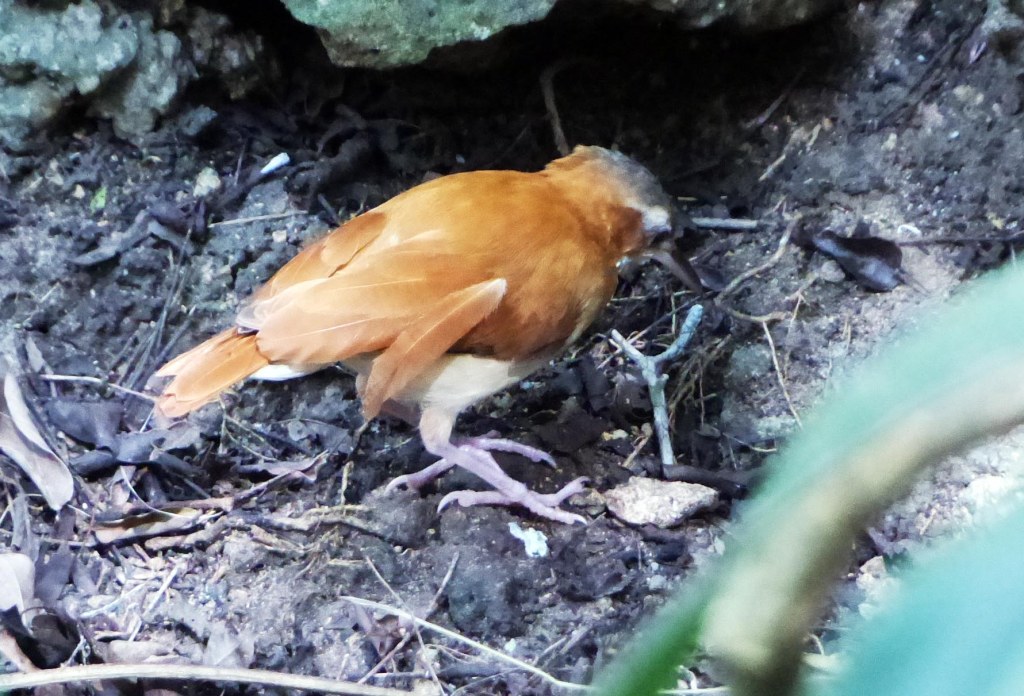
This Nightingale Thrush was busy digging around among the roots, perhaps looking for a tasty bug.

Nightingale Thrush
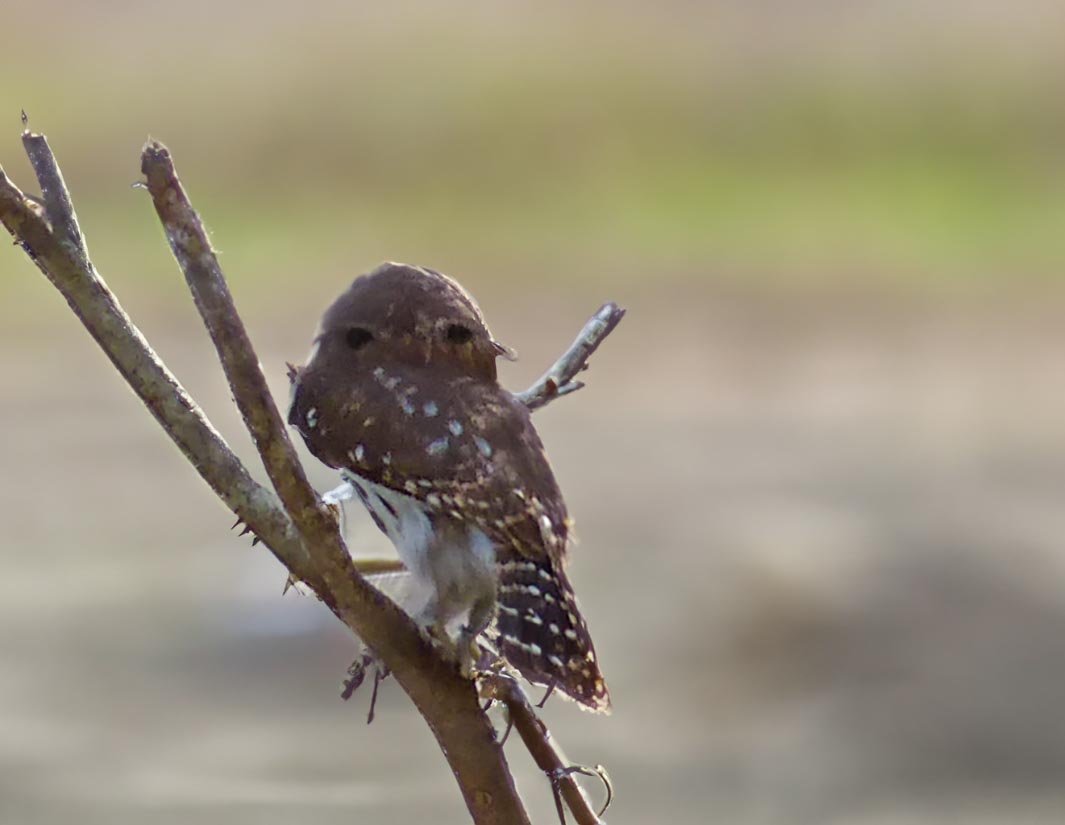
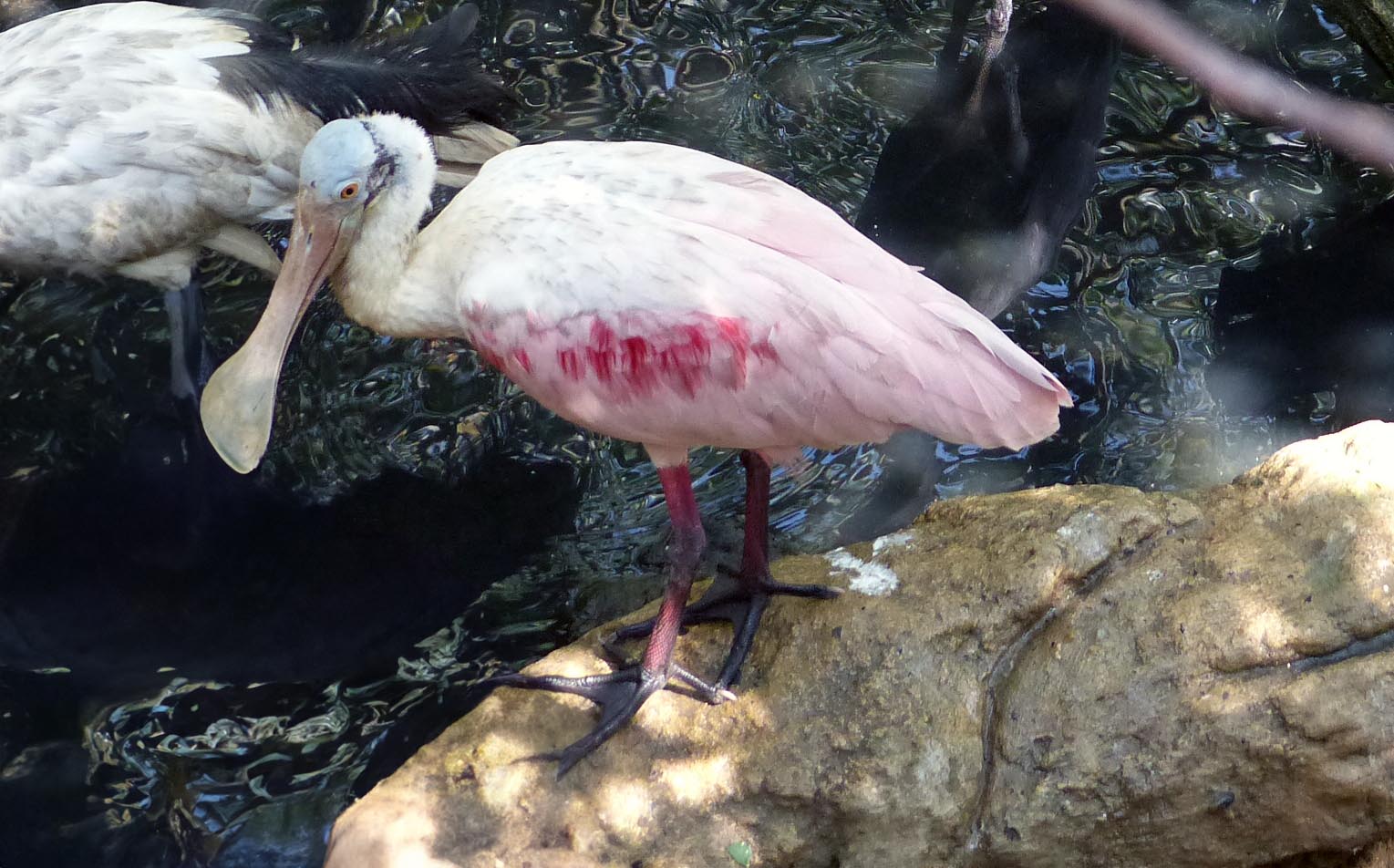
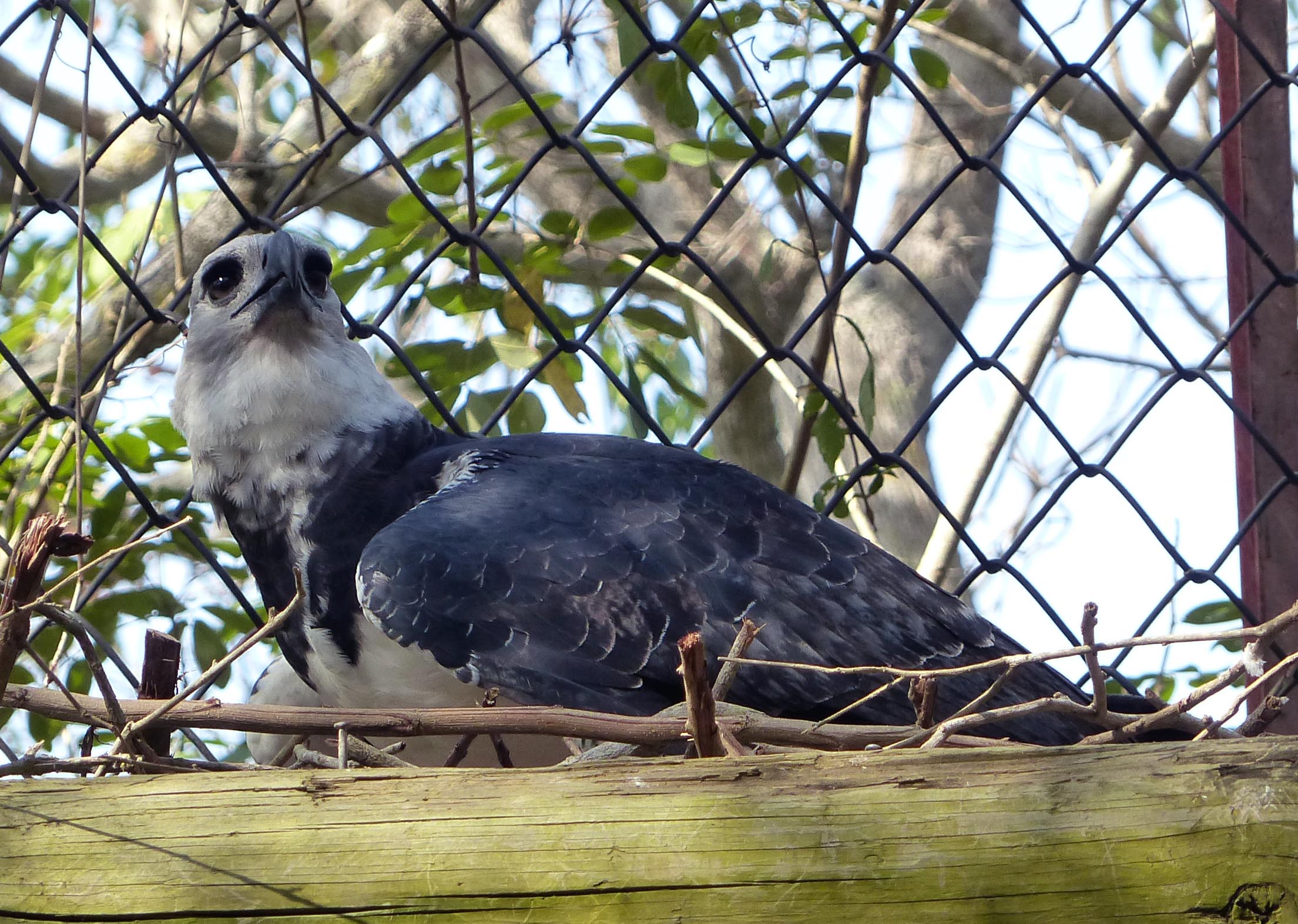
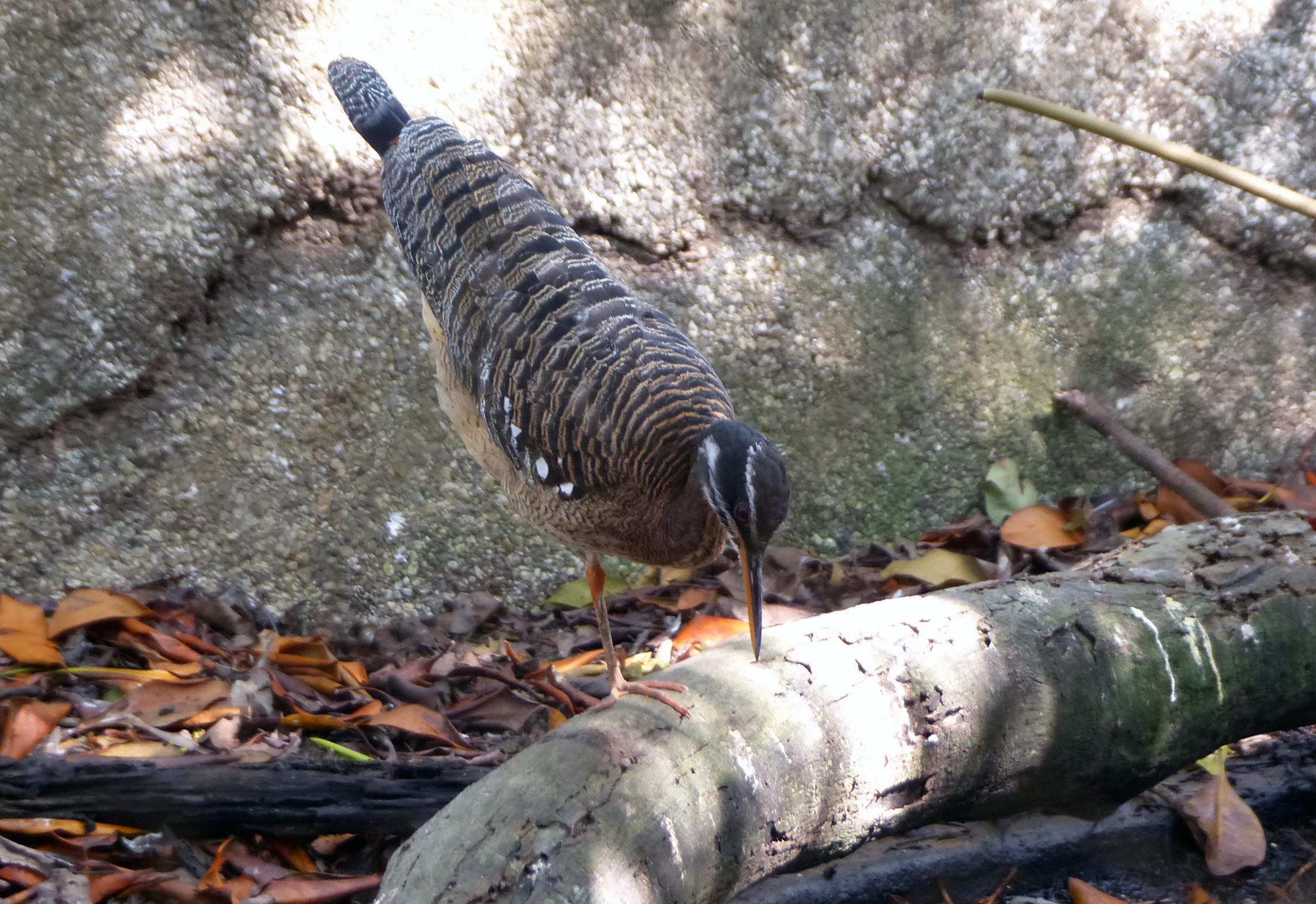
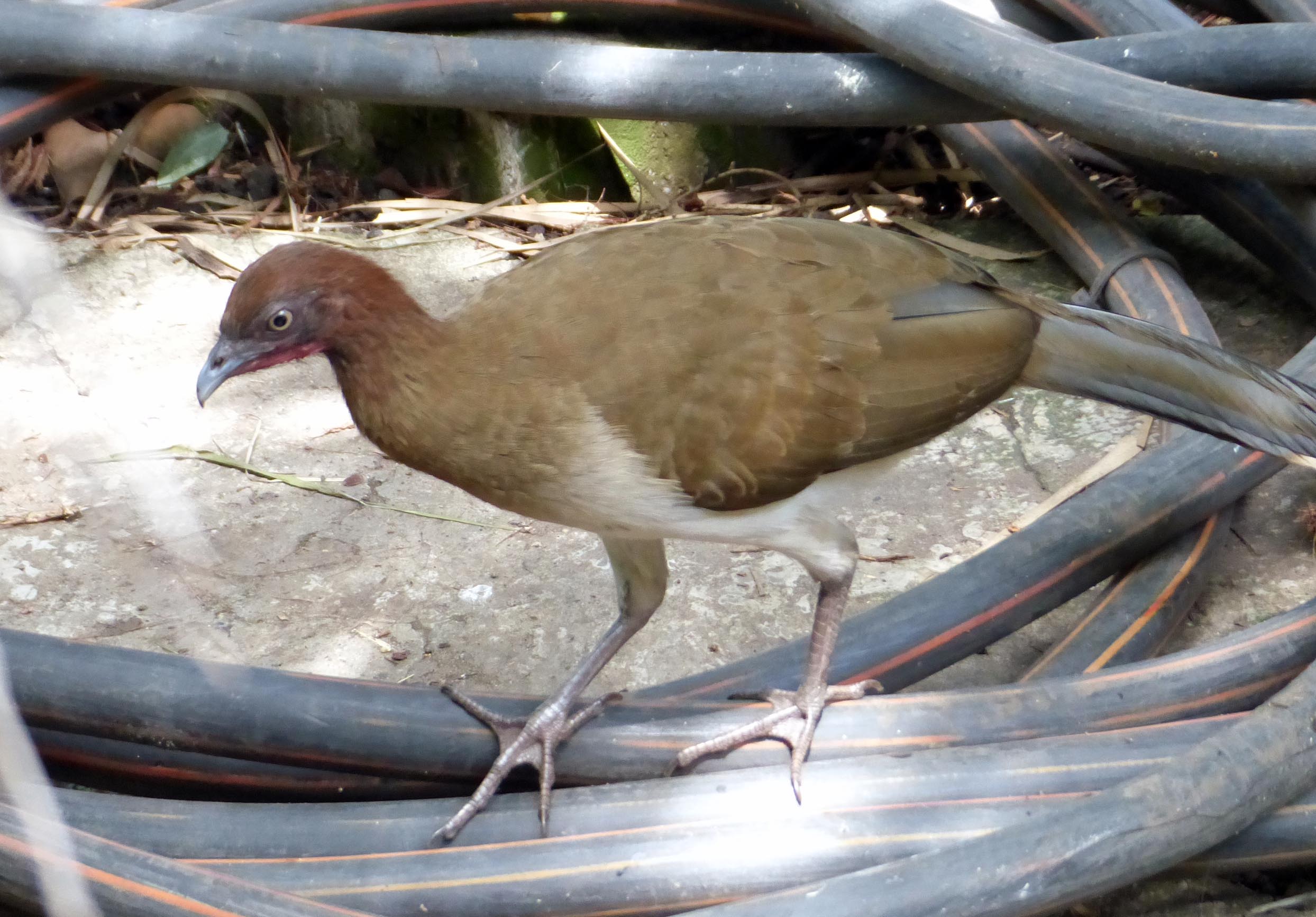
A few of the birds in the Aviary: the sparrow-sized Pygmy Owl, Spoonbill, Tiger Heron, Harpy Eagle, Chacalaca. And there are sloths.
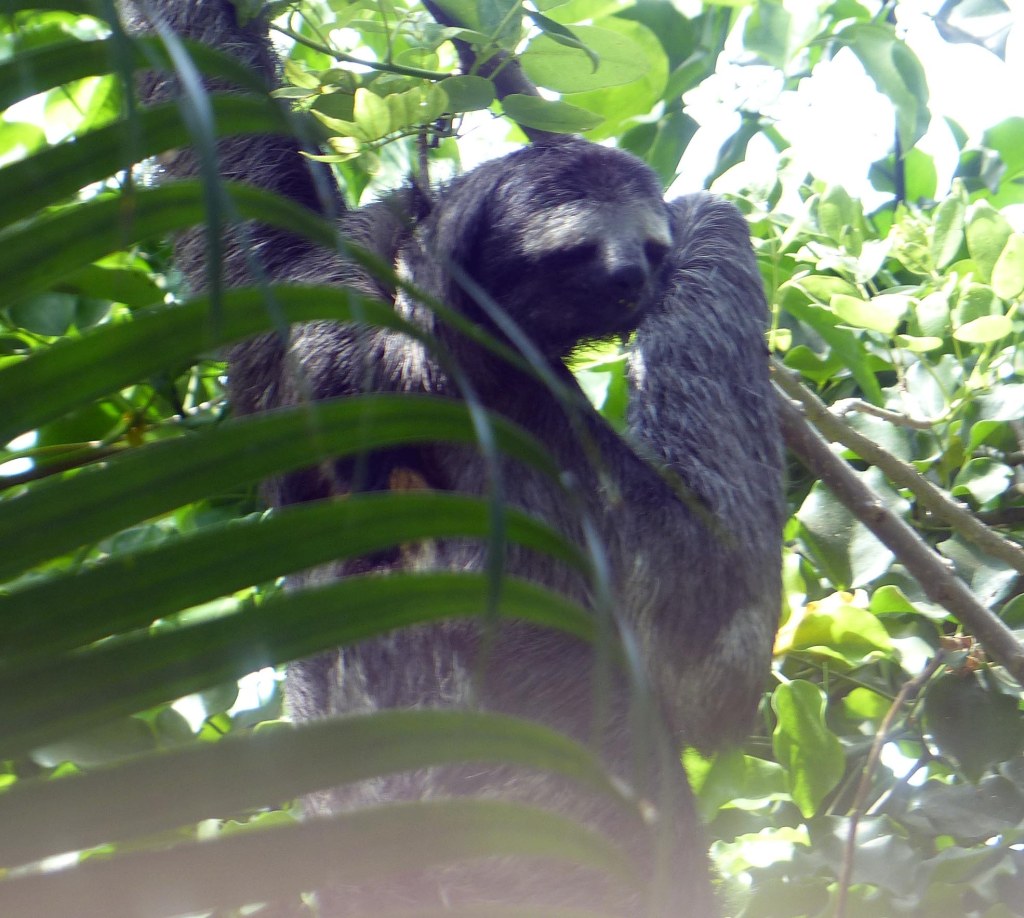
Three-toed Sloth
Cruise Ships and Flying Fish

Despite the fact that a cruise seems like the perfect opportunity to sneak in a pelagic, birding from a cruise ship isn’t very easy. Most of the time the ocean is miles and miles of nothing but, well, you know the rest.

On one transatlantic crossing, I saw a total of one seabird, a Bermuda Petrel, before we got to the Azores from Fort Lauderdale. The real birding pelagics I’ve been on always involve chucking cod-liver oil into the sea from much smaller boats to attract the tube-noses, and that wasn’t about to happen here.

Without chumming with cod-liver oil or fish guts, one has to be very fortunate to see any animal life on the briny deep. I’ve to learned this the hard way. Sitting next to a ship’s window with binoculars poised becomes laughable after a while. Later in the day, you can at least order a cocktail, which looks to non-birding passengers like having one of those was your purpose all along.

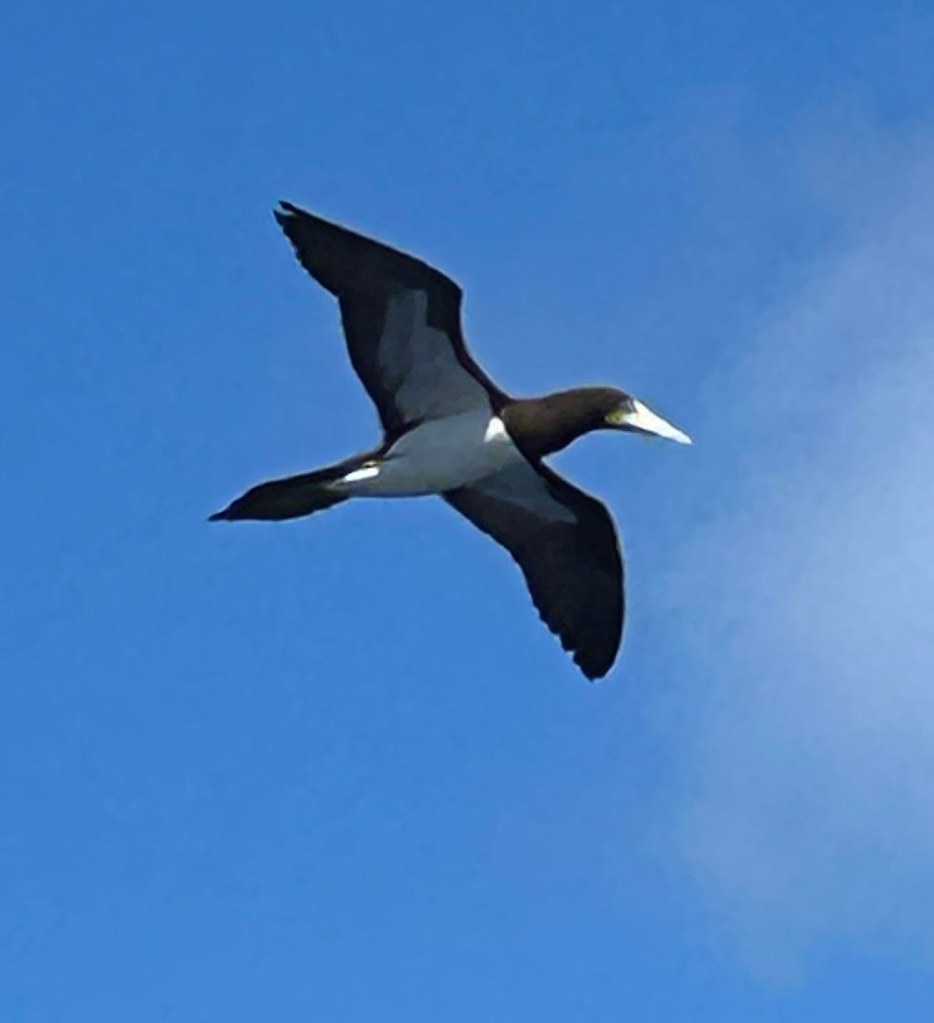
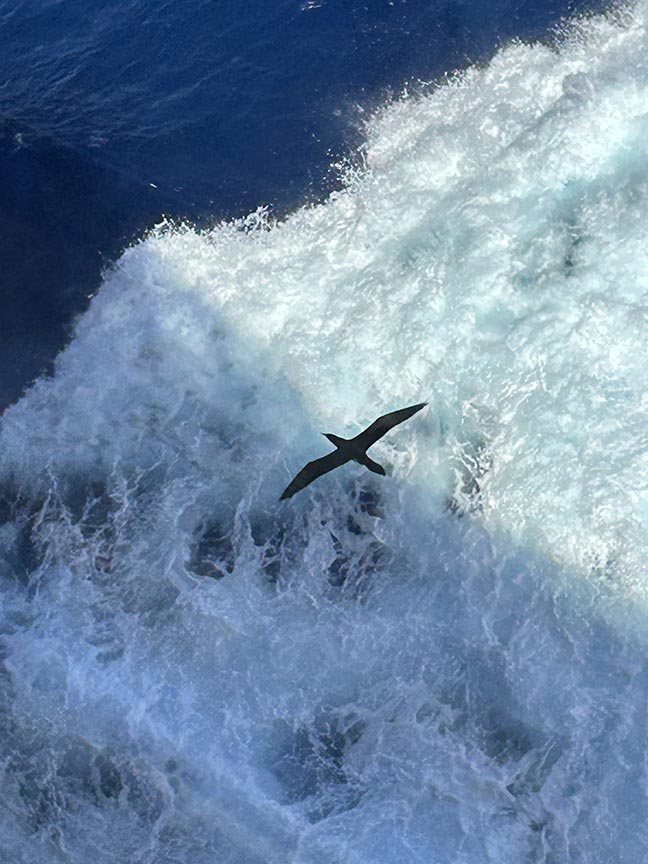
We had great luck, though, on a recent cruise in the western Caribbean. This happened when the ship passed through a school of flying fish around the time we were looking out the coffee shop window. Suddenly numerous Brown Boobies, a Red-footed Booby or two, and a Masked Booby appeared and began chasing down the fliers. A remarkable sight! The fish are about a foot long, and very fast.

Flying Fish

Probably one fish in five lost the race, zooming across the surface for 50 or 60 feet, only to be picked off at the last moment. Would avoiding the birds have saved them? Maybe. But, no doubt the fish took to the air because something else was pursuing them – tuna maybe, or a school of jacks, or swordfish even. So, for these remarkable creatures, danger lurked above and below.

Brown Boobies, dressed in formal dark-chocolate brown and white, seemed especially good at picking off a meal as it skimmed through the ship’s wake, wing-like fins flashing.

The birds are very fast, and agile. Being at a window when the flying fish and the Boobies appeared was pure coincidence, and the best kind of luck.

Brown Booby

Red-footed Booby

Luckily, cruise ships also dock, which meant Half Moon Cay, Aruba, then Colombia, Panama, Costa Rica, and Jamaica, for us. Lots of birding opportunities.

Half Moon Cay is a private island belonging to the cruise company. It’s a beach place in the Bahamas. V. and I aren’t beach people so the island held little interest for us, especially after the snorkelling trip we’d signed up for was cancelled because of the wind.

However, using going for beer as an excuse, I left V. under an umbrella and took the long way to the bar on the chance that I might see some birds. It was mid-day, but you never know. Within a few minutes, I’d seen seven Royal Terns, a Bahama Mockingbird, a Common Ground Dove, and two Yellow-rumped Warblers.

My favourite bird here, though, was a lovely and agreeable Louisiana Waterthrush, freshly-feathered and ready for spring. Like the Bahama Mockingbird, a lifer for me, but, unfortunately, since we were supposed to be snorkelling, I hadn’t brought a camera! I had failed to learn my lesson once again.

Red Kytes and Polychrome Bulls: Visiting Lascaux

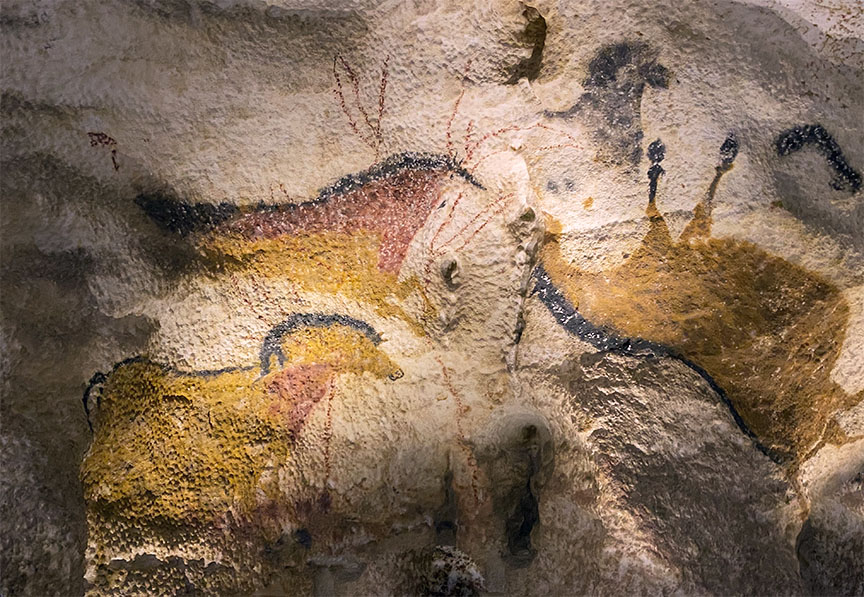
Ice Age Horses

A bit longer in Perigueux, with a chance to visit its museums, would have been nice. However, we had tickets to see the famous paleolithic art of Lascaux. Plus we had to be in Paris that evening. So, after a quick breakfast, we packed up and hit the road.

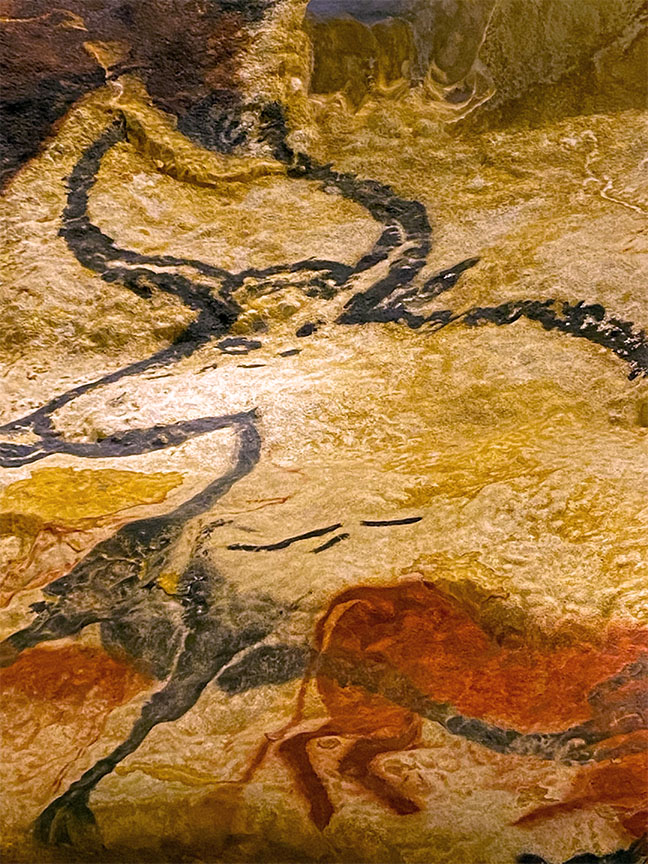
Auroch

I had longed to see Lascaux when I was a young archaeology student. Impossible then when gourmet macaroni and cheese was high living. Now, I’ve long forgotten the professors who taught me, and much of what I learned about the palaeolithic – it’s been a while – but Lascaux stuck with me.

Someone, or a bunch of people, have called Lascaux the “Sistine Chapel of Paleolithic Art”. I’m not sure why it isn’t the other way round, chronologically-speaking, but anyway. Certainly, the paintings are remarkable. And there are others. The Karst bluffs along the Vézère are famous for their caverns. Many were occupied on and off over the last 40 000 years or so of the last ice age. Amazing place!

Red Kytes

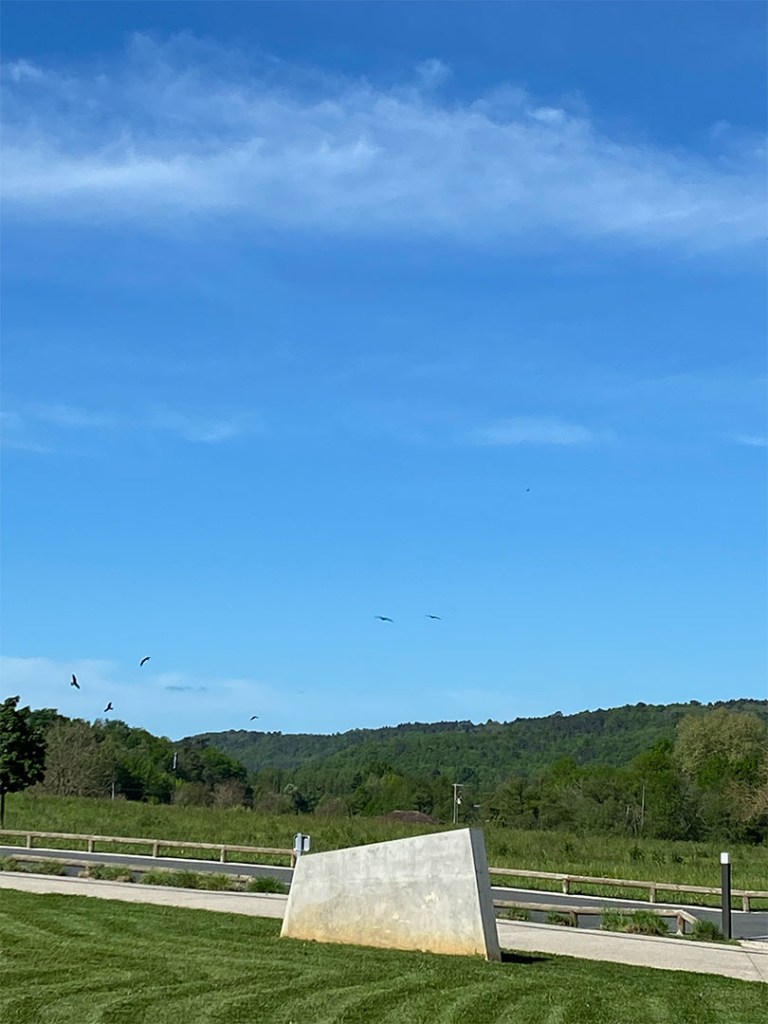
We arrived on a perfect day, sunny and mild, with a slight breeze. A few dozen migrating Red Kytes, and what looked like a Booted Eagle or two, kettled over low, heavily-treed hills, drifting west on shifting thermals. My real camera having just decided to give up the ghost a day or two back, I had to depend on my phone – not at all ideal for bird photography.

The Limestone Hills of the Vézère Valley

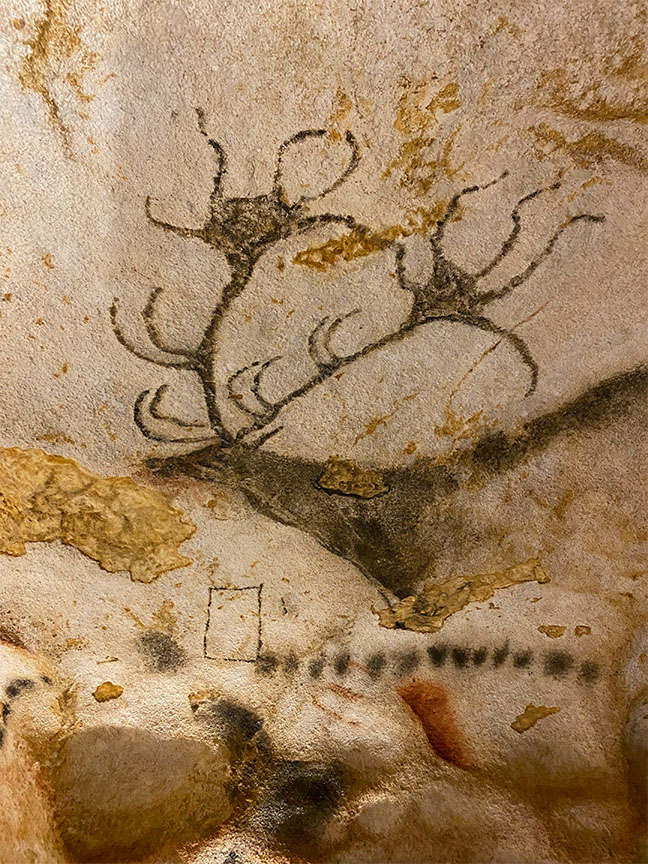
A warm day like this would have been rare when the cave walls were painted. It was the last ice age, after all, when giant deer, aurochs, wild horses, rhinos, and mammoths roamed the neighbourhood. The portraits of such beasts adorn the cavern walls. Were they created for magical purposes, or otherwise? Nobody can say. Europe was quite Arctic-like then. Inside a cavern probably wasn’t a bad place to be. So, there’s that.

With the cavern-riddled hills as a backdrop, the buildings containing the exhibits overlook the pleasant village of Montignac.We couldn’t see the actual caverns of course. These were closed to the CO2-breathing public many years ago. Instead we see exact re-creations of important galleries. And they certainly seem perfect, even down to the smell of cold stone. Or perhaps I was imagining that. A subconscious childhood memory maybe from when I explored the limestone caves in the cliffs surrounding the town where I lived. I once scratched my name on the cold stone. Maybe I painted a picture of a deer too, maybe.

These paintings are terrific – powerful, realistic representations of ice-age beasts. They are dated to the Solutrean, or Magdelanian. The aesthetic seems consistent with that of the beautiful, cunningly-flaked, leaf-shaped projectile points from the period. Beautiful things they are too!

My student attempt to flintknap a Solutrean Point. Not very good,I suppose, but, the right shape. Trying to replicate artifacts teaches archaeology students something about the methods and skills of the tool-makers.

Ice Age Beasts and Mysterious Markings. The artist (s) obviously ‘played’ with images, as with the antlers on this deer.

As to the significance and purpose of cave art. Who knows? Seventeen thousand years is a long time, and, as David Lowenthal once pointed out, “The Past is a foreign country; they do things differently there.”

While the paintings are indeed spectacular, the object that fascinated me most was a small, red-stone lamp. Easy enough to miss, but charming too.

I like to think that the person who made and used this lamp made some of the pictures too. Thinking about that actually gave me a bit of a shiver. I was seeing, in that humble artifact, the hand and mind of a long-dead, working artist, and, in a way, communicating with them.

Lamp

Indeed, it is the small accidents of survival that can, in a flash, bridge the millennia between oneself and a maker – the slip of the brush, the thumbprint in the clay, the misplaced notch on the spear shaft. They blur time and cause it to slide a bit. Suddenly, an age or two seems like nothing at all. The small, casually-dropped things, the trivial artifacts, often have more emotional power than the famous, colossal, historic monuments. Not that I won’t go look at those too!

Périgueux: The Dordogne

Isle River Bank – Local Inhabitant

Our next stop should have been Paris, but Paris on May Day seemed an even worse option than Bordeaux. Instead we leapt (figuratively speaking) at the chance to spend a couple of nights in the old pilgrim town of Périgueux in the Dordogne – famous for its medieval streets and massive cathedral. Bordeaux was great, but birding there, well…

Saint Front Cathedral in Périgueux

Périgueux is on the banks of the River Isle in the heart of the Périgord, home of foie gras, black truffles, and duck confit. A number of authors have set books here and in the region, including Michael Crichton. Martin Walker too, with his enjoyable Bruno mysteries.

The massive Romanesque Saint Front cathedral dominates the medieval core of the town, which has a history going back to pre-Roman Gaul and beyond. The museum here is reportedly quite good.

The prehistoric cave paintings at Lascaux, also, are not far away. They date back 17,000 years or so. More about those in my next post.

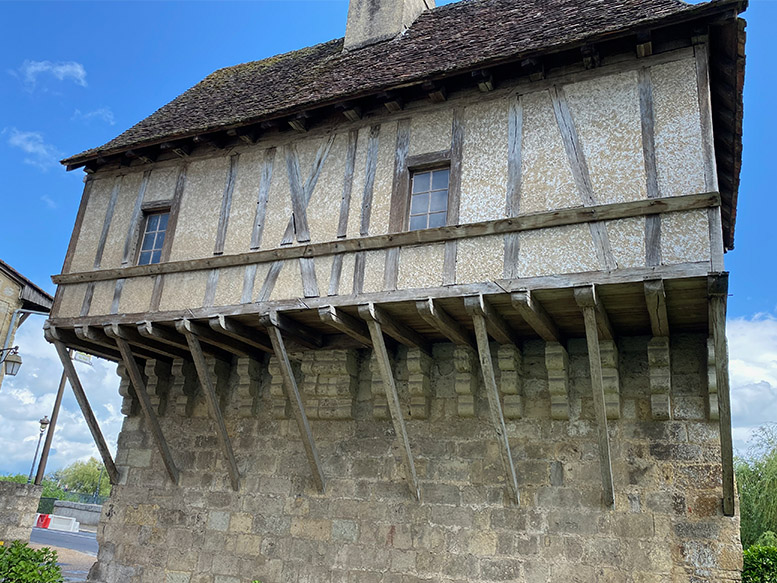
Périgueux Architecture

Unfortunately, most restaurants and shops in Périgueux were closed both days – this being Sunday, followed by May Day – as were the Gallo-Roman and Military Museums. Drat!
Still, the cool afternoon was pleasant; the streets narrow and interesting. We had to limit ourselves to window shopping. Probably just as well. They do seem to sell some nice stuff.

We stopped for charcuterie at an outdoor cafe, one of the few places open, but whose name neither of us can remember. The glass of champagne here surprisingly inexpensive, nicely complimenting the generous platter of cured meats and the cheeses.

With not much else to do but enjoy the slightly breezy afternoon, we lingered with glasses of Bergerac, the local wine. Bergerac is under an hour away from here.
The red seemed rather like a Bordeaux, but softer – more Merlot in this blend, I think; the white crisp and aromatic Sauvignon Blanc, exactly what V. likes best. No sign here of Cyrano however.

Sunday in Périgueux

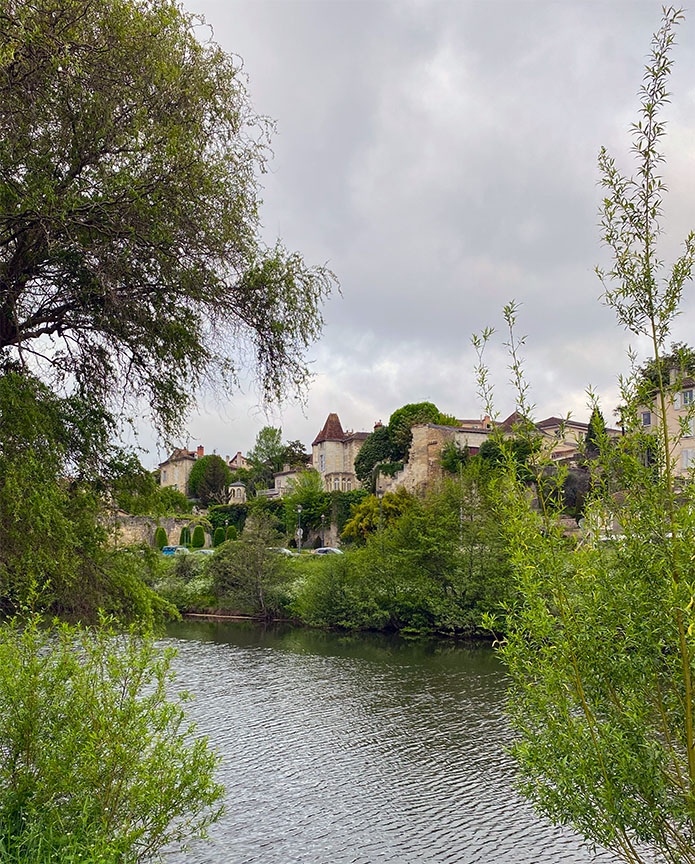
The Isle is a pleasant, unhurried river with treed banks down to the water, and a paved walkway. Aside from a couple of early morning strollers, and a dog walker or two, there was no traffic to disturb the many small birds singing and calling from the thickets.

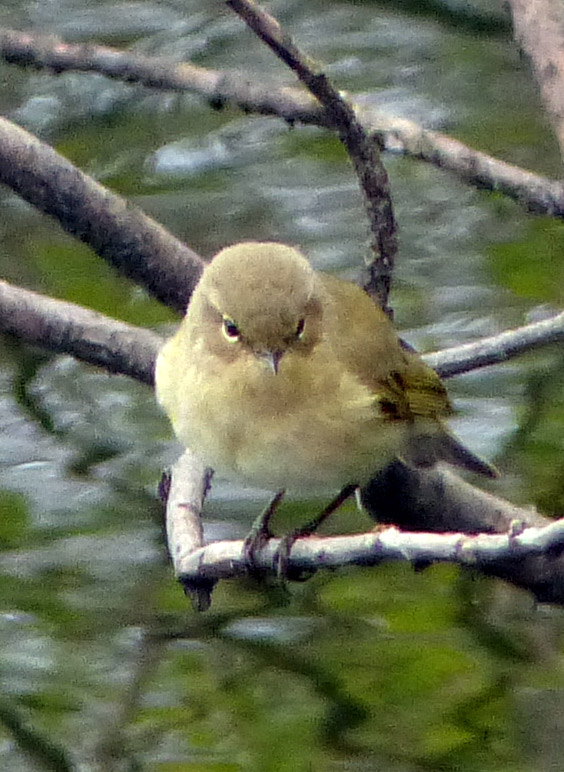
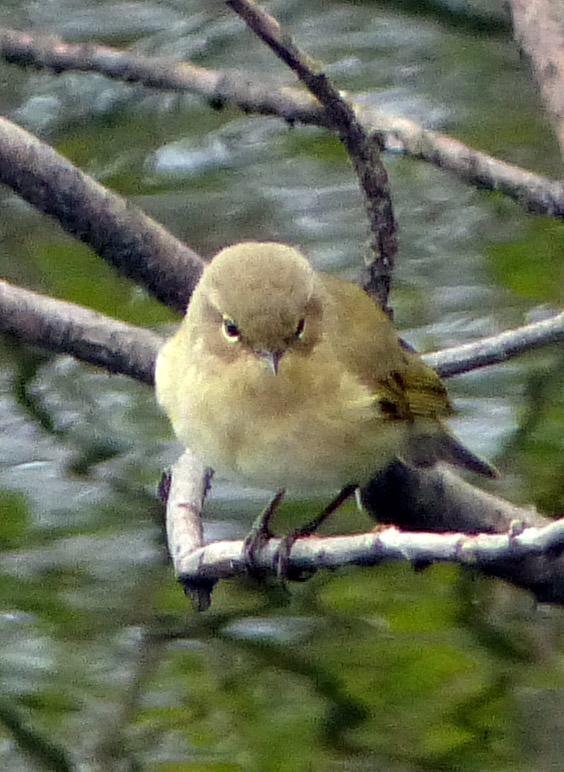
My Merlin app confirmed nineteen species, from European Pied Flycatcher to Common Chiffchaff.

Hearing birds was easy, spotting them was almost impossible. At one point, I half-slid down on bank trying to get a better look at the Pied Flycatchers, and almost ended up in the drink. That would have been embarrassing. Would I have remembered how to say, “throw me a line!” in French? I doubt it.

The Flycatchers are pretty little black and white birds, and new to me. Very active, and, in the thick foliage, almost impossible to photograph.

The River Isle in Early May

So…I’m going to say, Chiffchaff.

The valley of the river also has its share of parks, walks, and historic sites, including chateaux. Driving through the area was quite pleasant. Lots of limestone.

I have mixed feelings about chateaux, although they’re pretty impressive. But who got exploited here when the aristos built and managed the place, I wonder? That’s the Liverpool in me talking. Sorry.

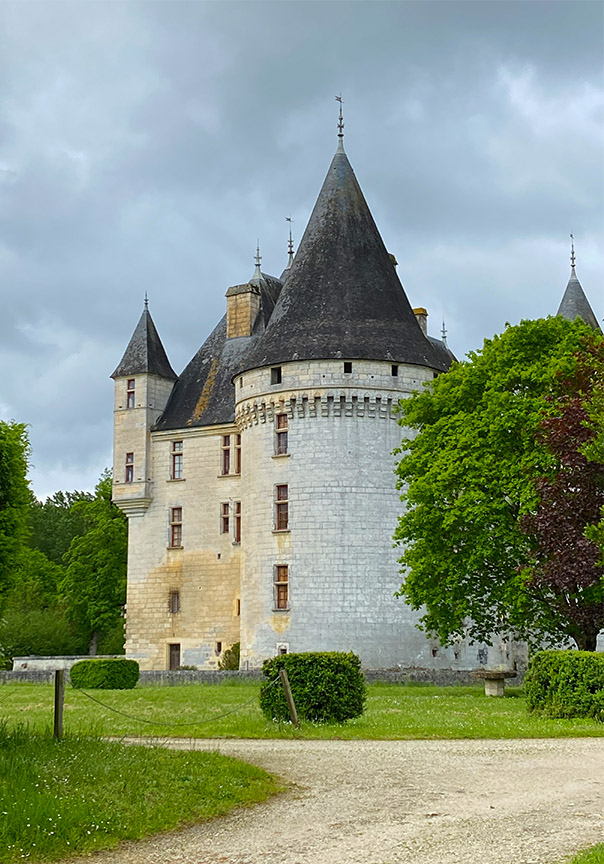
Chateau Puyguilheme

With a bit of imagination, one can people the turrets and galleries with imaginary musketeers, courtly ladies, and Cardinal Richelieu. The period is right, I think, for this place – 16th century. Still, it’s lovely and quiet today. Renaissance architecture, it has been renovated by the French state. Closed when we visited.

Jeepers! Honey Creepers

Leaving the present, and terrible, international situation for a bit. Thinking of more pleasant things….

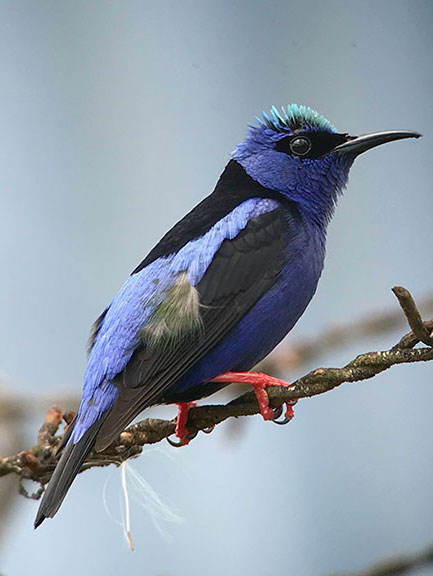
Red-Legged Honey Creeper
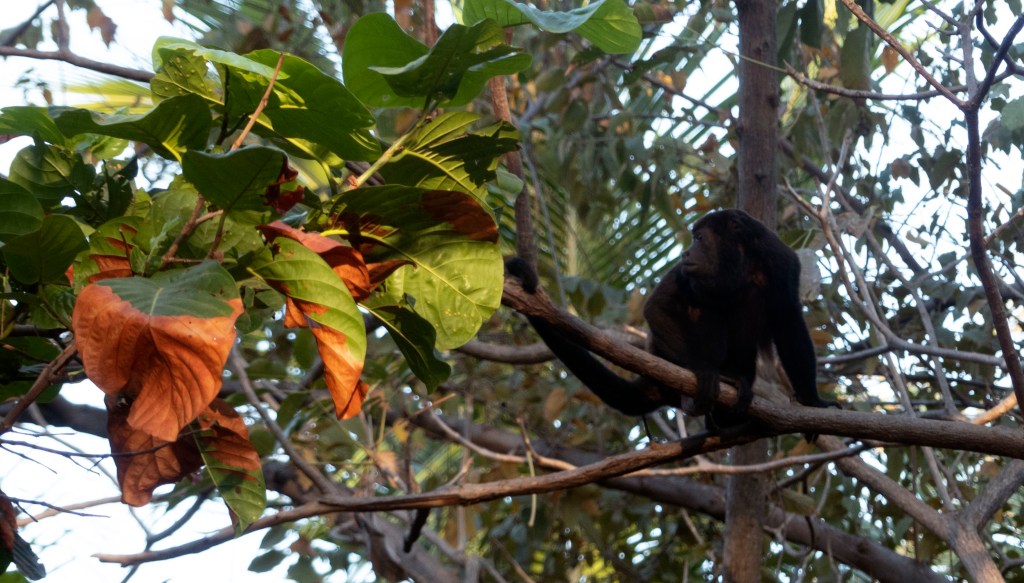
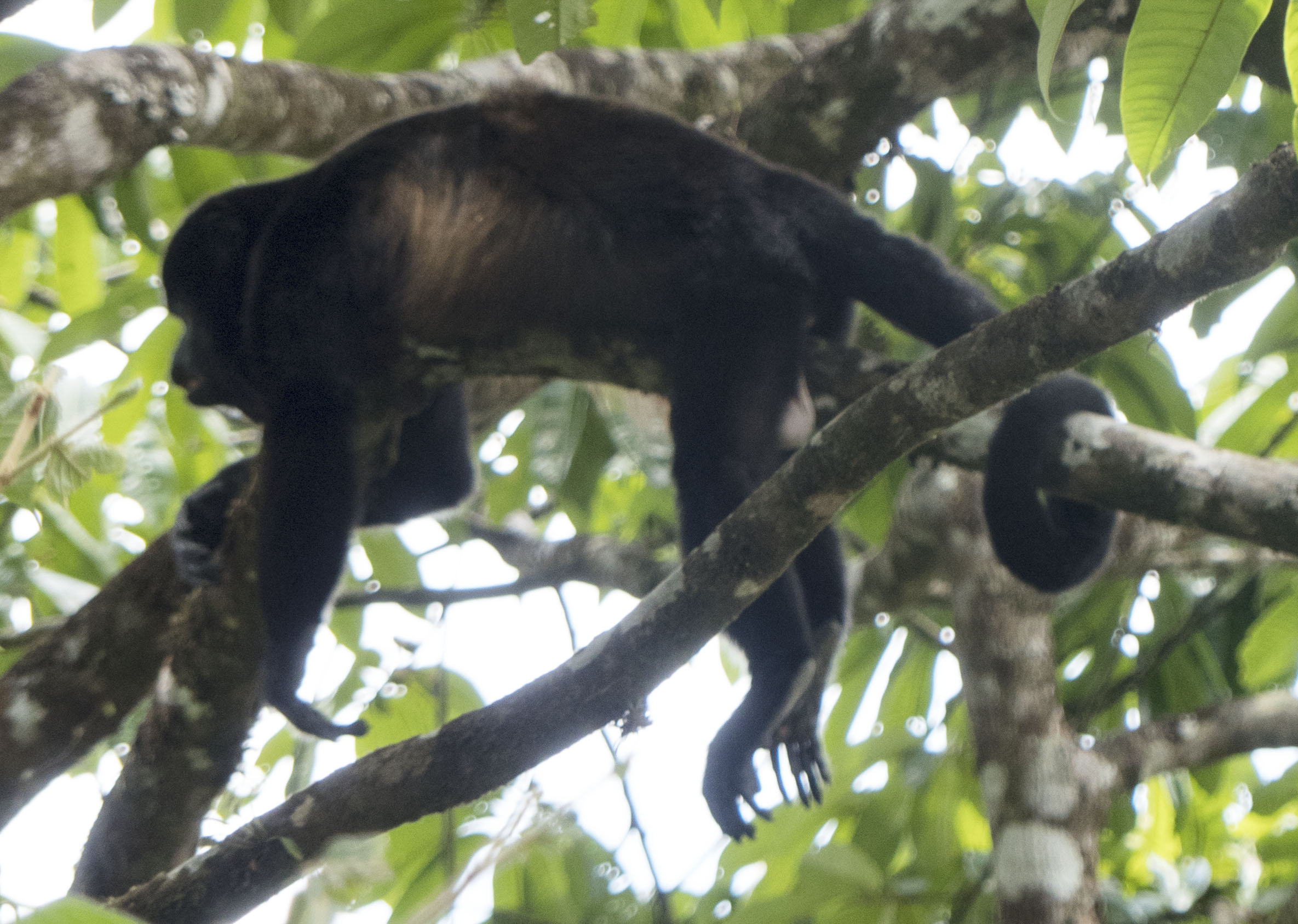
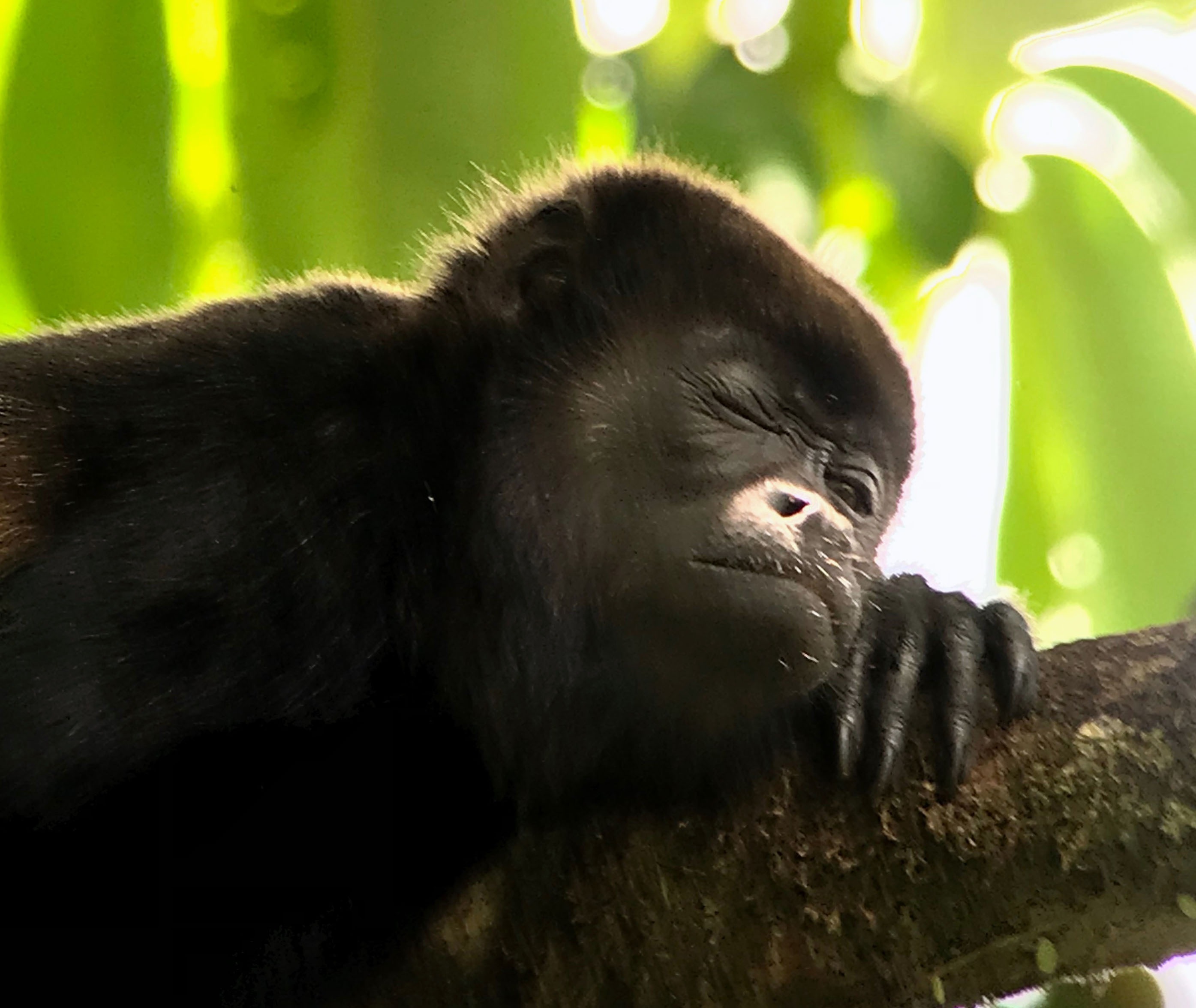
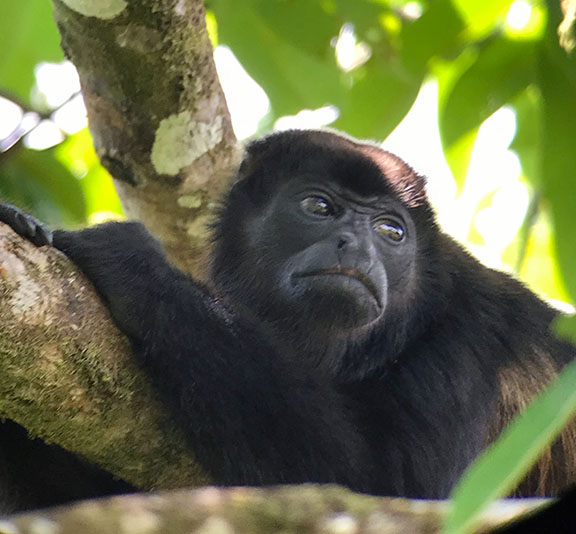
Howler Monkey

For us, going to the tropics has been out of the question for the past two years-like a lot of people, I guess. Darn pandemic! We’ve certainly missed those evening breezes coming off the Caribbean, and the smells of Latin-American food being cooked down the beach somewhere. One night, in desperation, we even watched that Jeff Bridges movie from the 80’s, the one shot at Isla Mujeres and Tulum. We ordered in Mexican food, drank a few bottles of Sol, and had fun picking holes in the plot. Still, it’s not quite the same.

At least, I can rummage through my pictures of tropical birds. These are from Costa Rica, from the Cloud Forest at Monte Verde. The more observant reader might notice that not all images are of birds. Well, any port in a mountaintop storm.

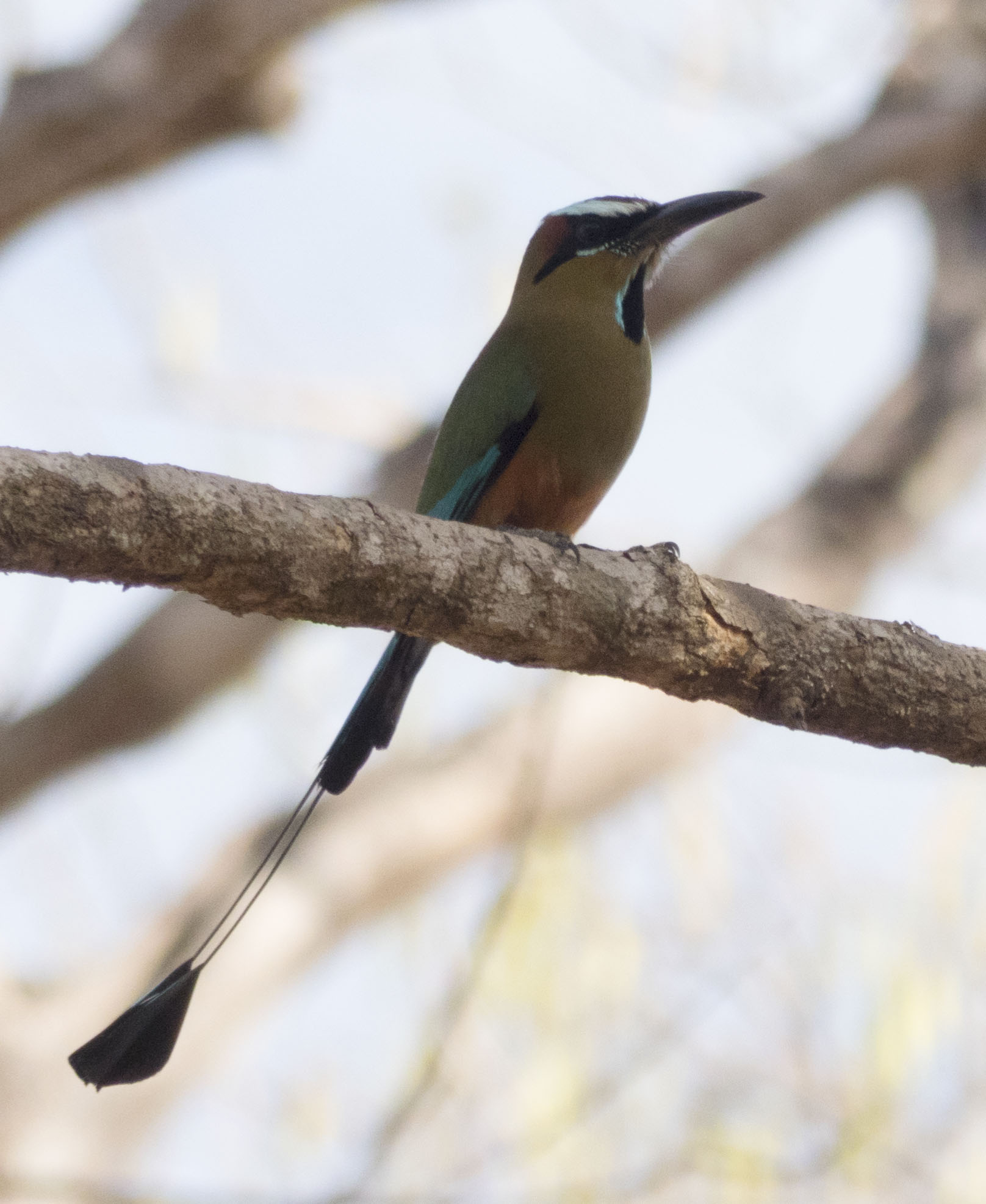
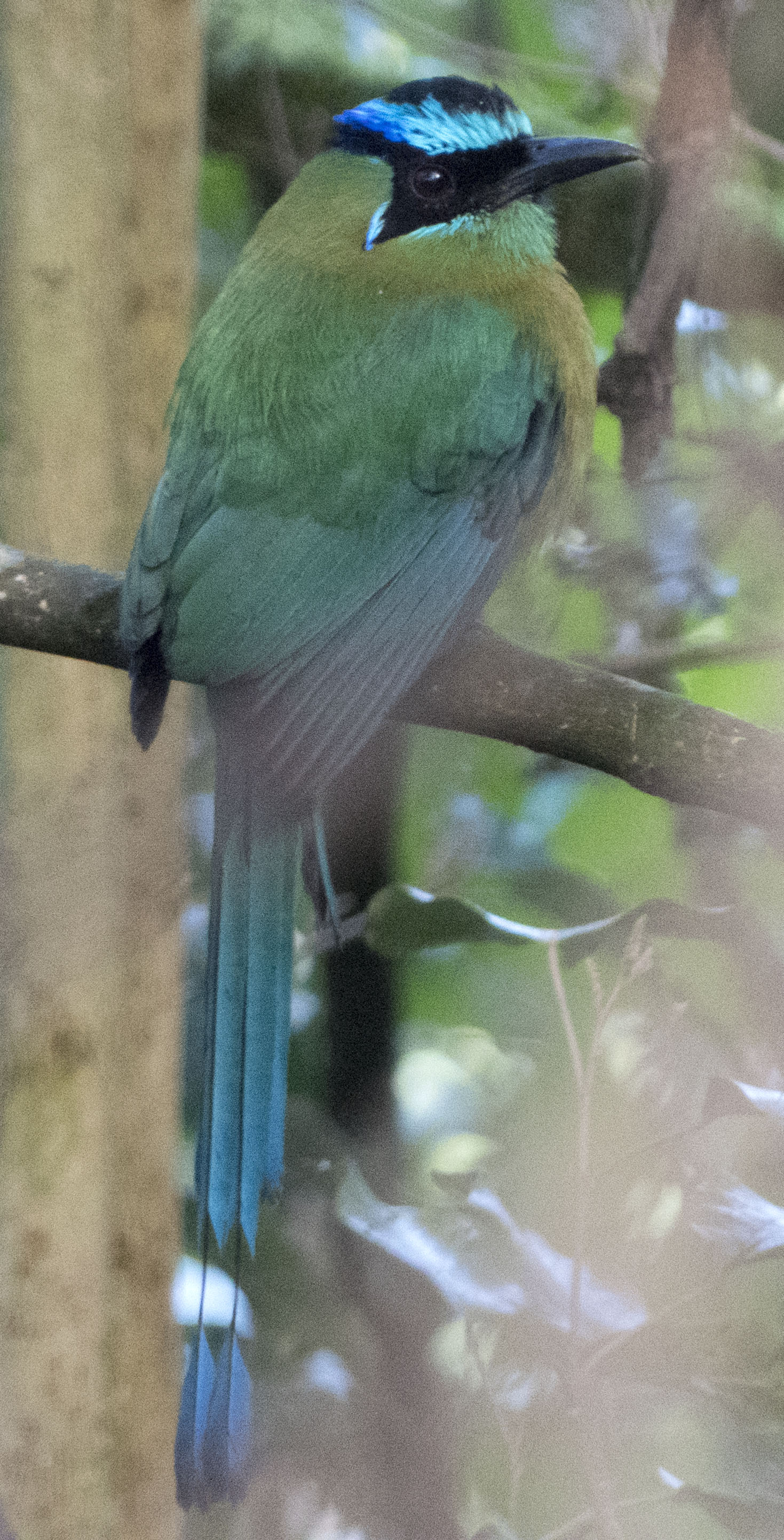
Turquoise-browed Motmot

On that trip, V and I spent a few nights at a lodge near the Cloud Forest Reserve. Our driver, on his first run ever, checked google maps, and picked what was likely the worst road in the region to get us there. When we arrived an hour or so after the regular van, we were as well-shaken as a protein drink. Later on, we took a (guided) jungle walk at night, which came complete with tarantulas, little rivers of Leaf-cutter Ants, a ghostly Olingo high in the trees, and sleeping Trogons.

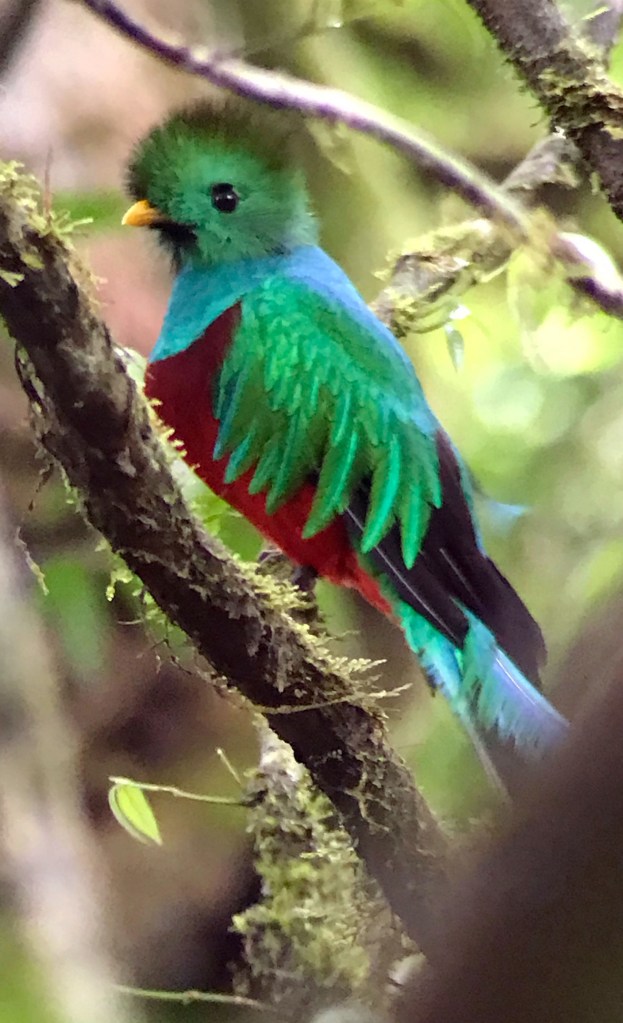
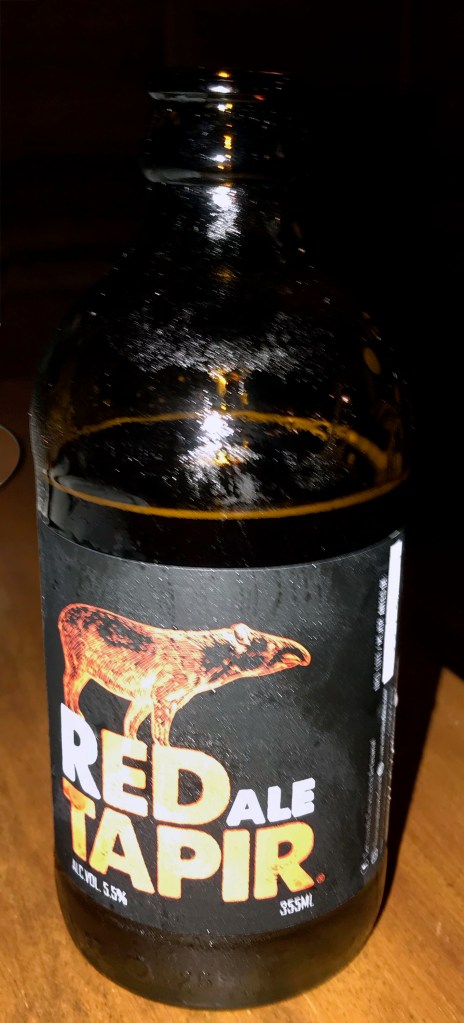
The next night was so windy that we thought the roof of our bungalow was going to blow off. At dinnertime, we huddled in our puffer jackets eating pasta and drinking Red Tapir Ale, thinking fondly of the beach we’d left behind at Playa Hermosa. Our birding tour of the Cloud Forest almost didn’t happen-the guide being afraid that jungle trees might fall on us. In spite of rain and wind, however,we ventured out and ‘got’ our ‘target birds – the Resplendent Quetzal and one of the loudest birds in the world, the Three-Wattled Bellbird (hard to see, but easy to hear).

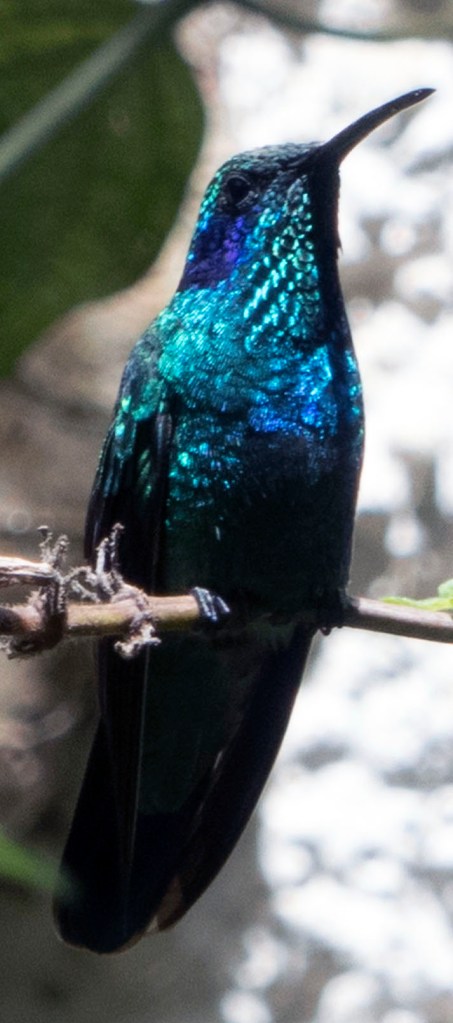
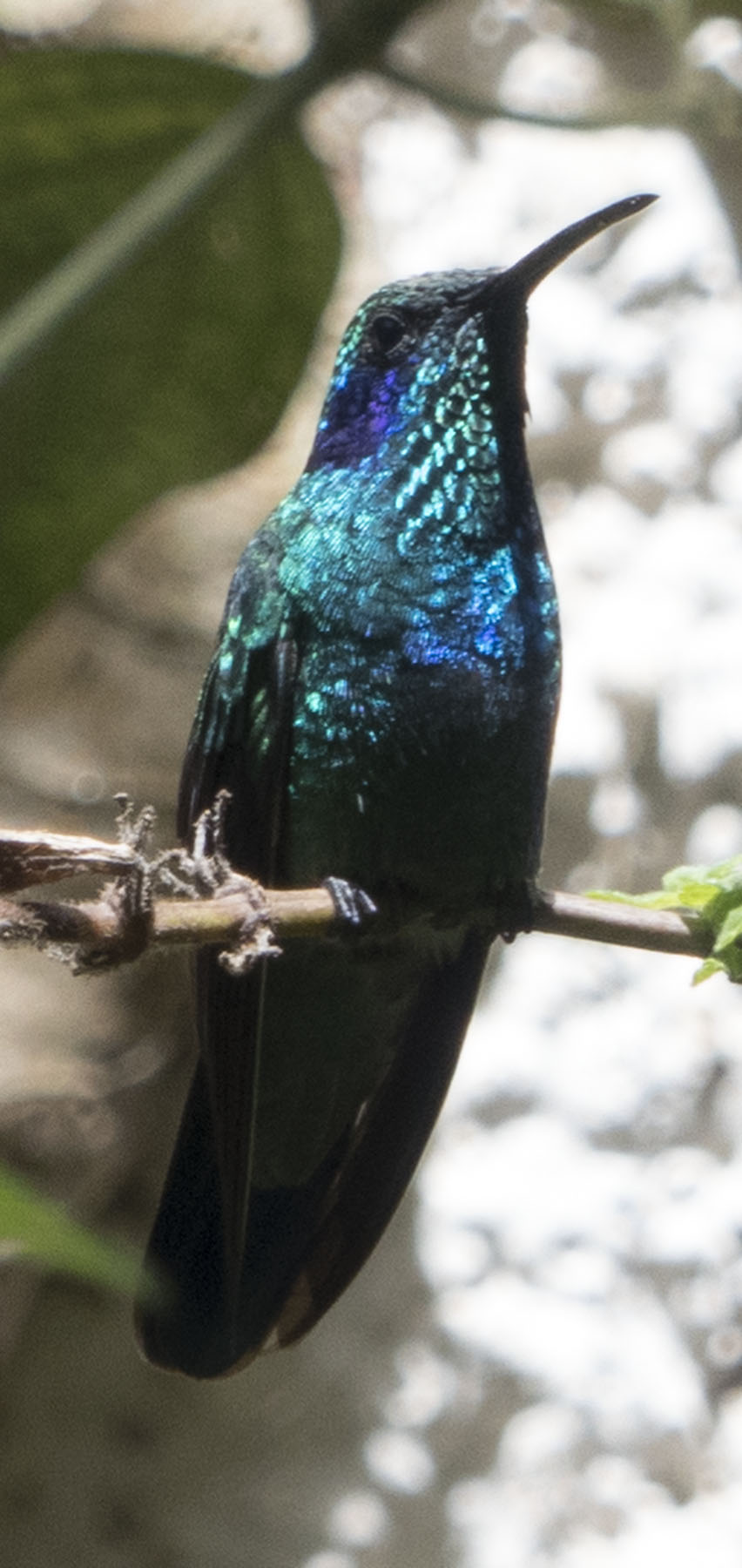
Violet-eared Emerald
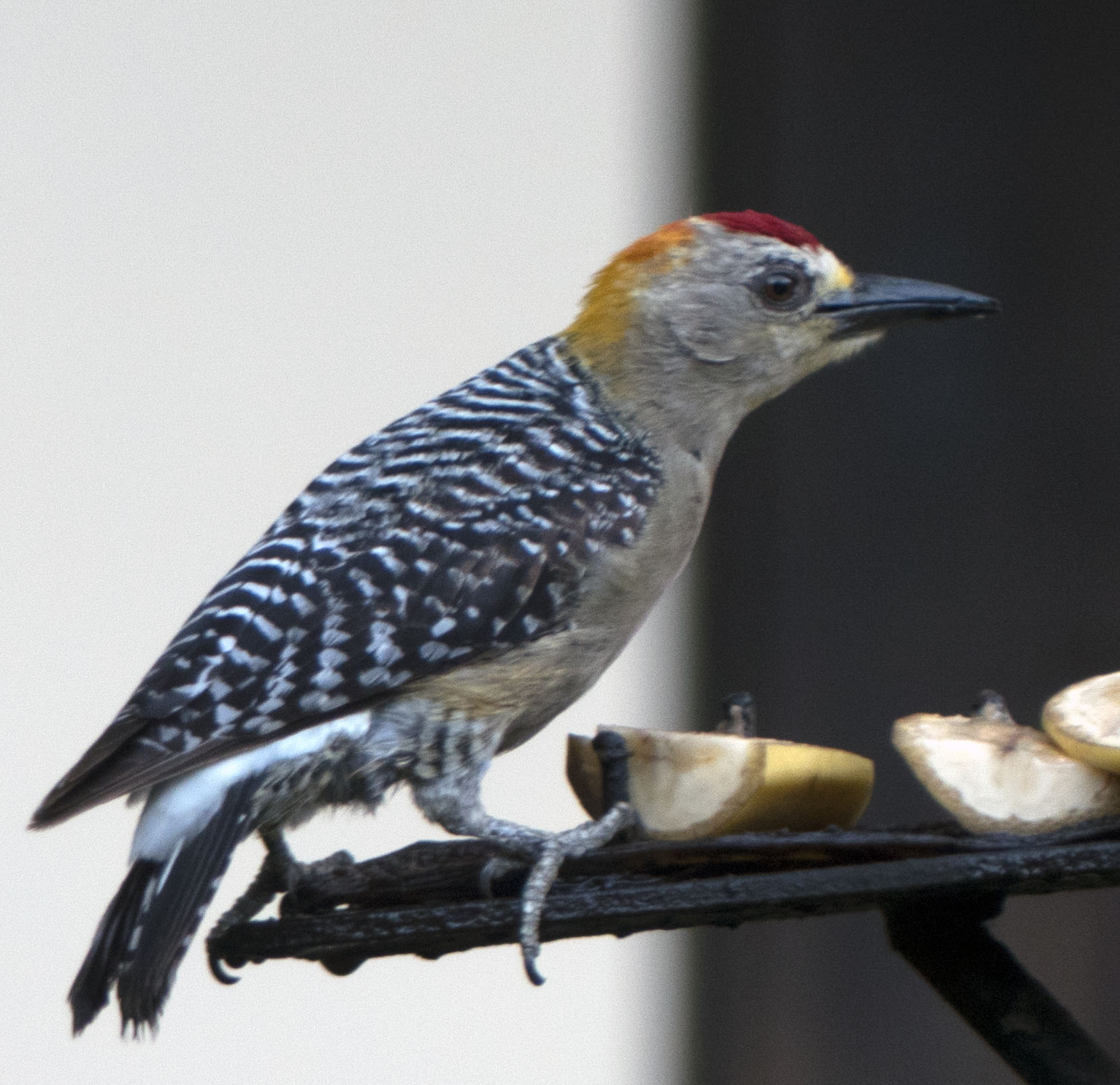
Hoffmann’s Woodpecker
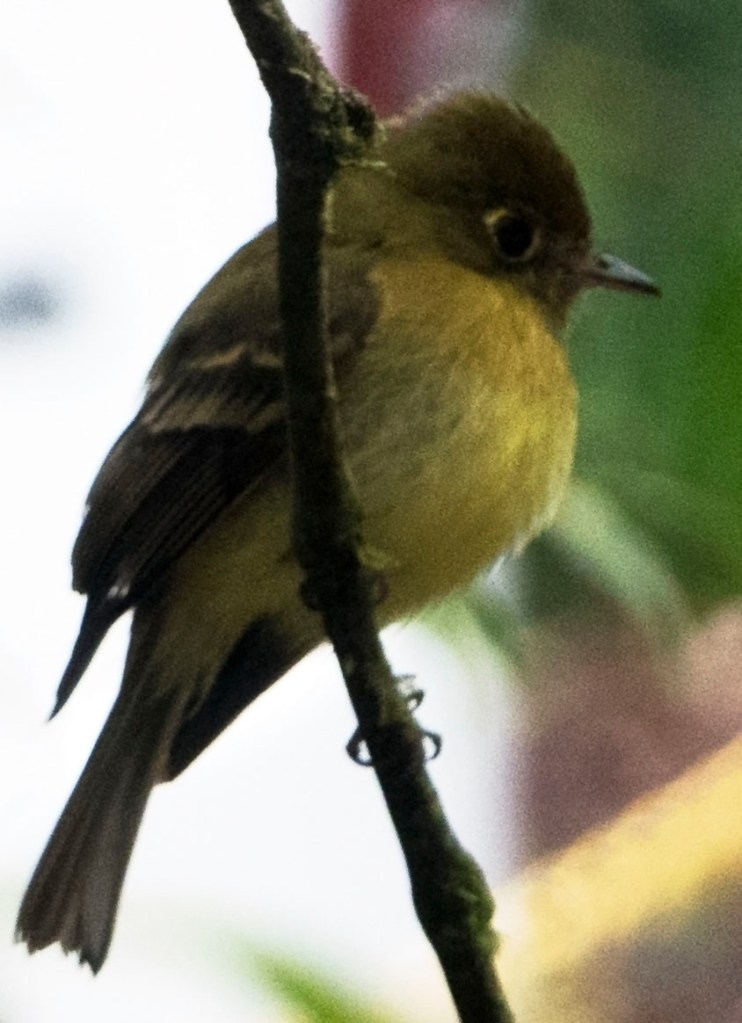
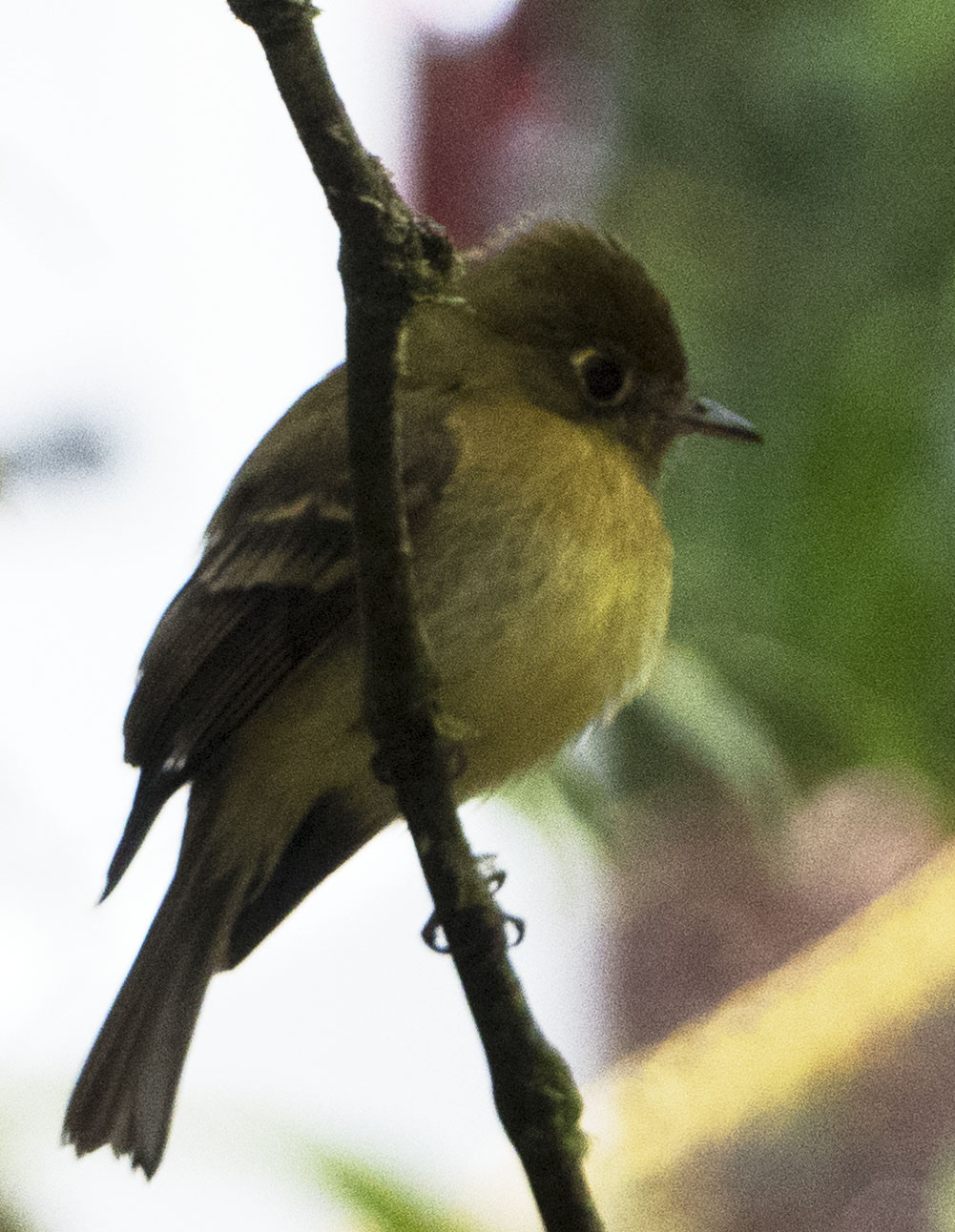
Yellowish Flycatcher
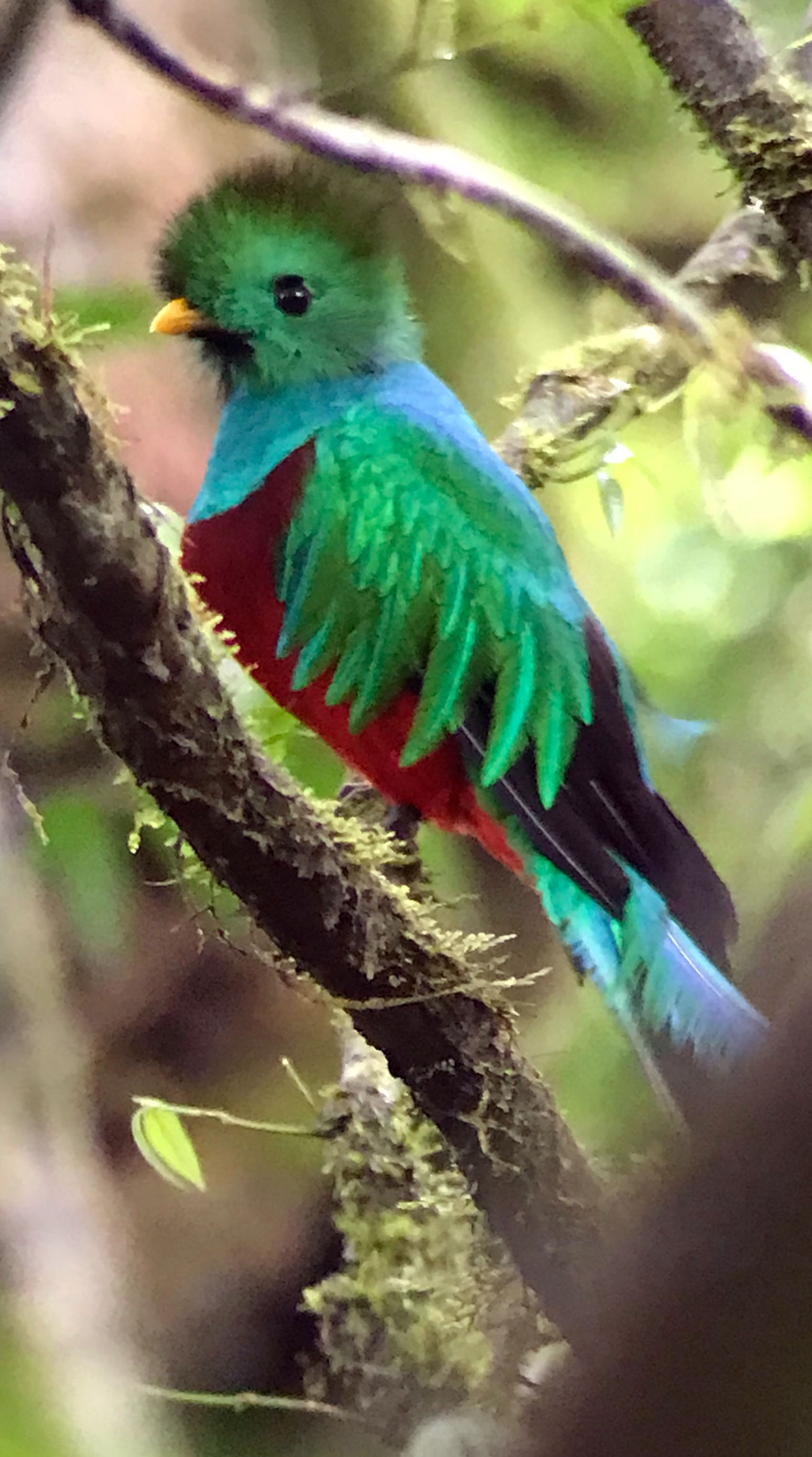
Resplendent Quetzal
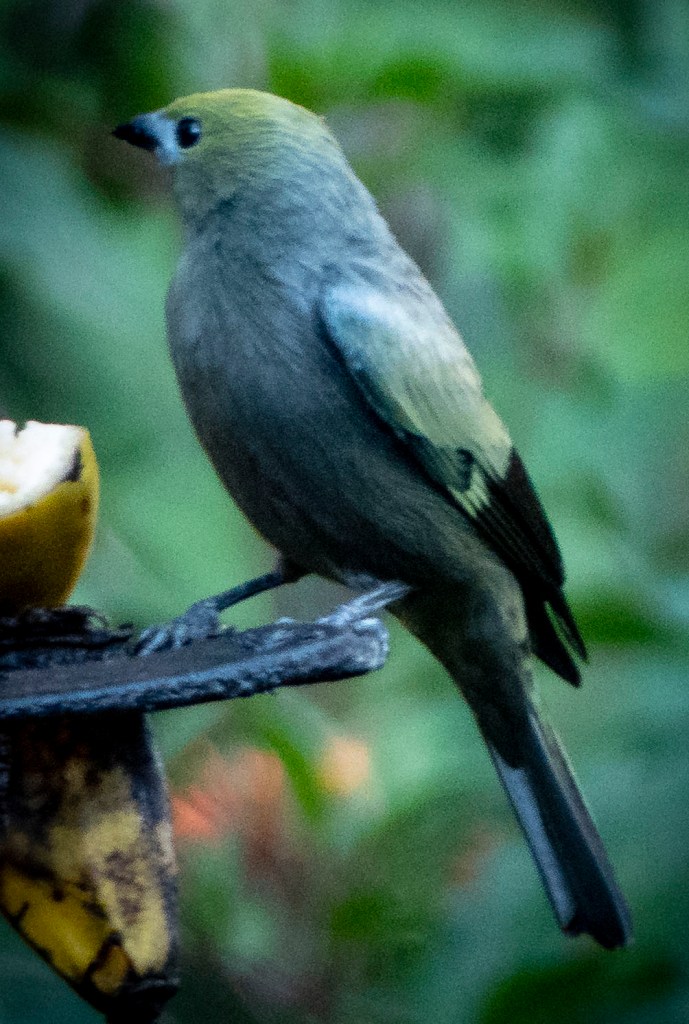
Blue-gray Tanager
Three-wattled Bellbird
Red Tapir Ale
Cloud Forest Day

Cloud Forest Night

Memories of Oaxaca

Crested Caracara

The Dancing Men

****************

They have faded into the valleys,

Those Kings who sipped

the thin mountain air

like gods.

Only we, the

Dancing Men remain in the high city,

waiting, waiting

for our own Gods to release us.

Prisoners still, we linger

on these misty pathways above the clouds.

MC 2001/2022

*The Dancing Men are 300 or so stone carvings of captives at the ancient Zapotec city of Monte Alban. Most look contorted, as if tortured and mutilated, and are thought to represent captives, most likely of high rank. Unfortunately, I can’t find the pictures I took of them.

Estero San Jose (Los Cabos, Mexico)

SaJoseRestuaryja2520

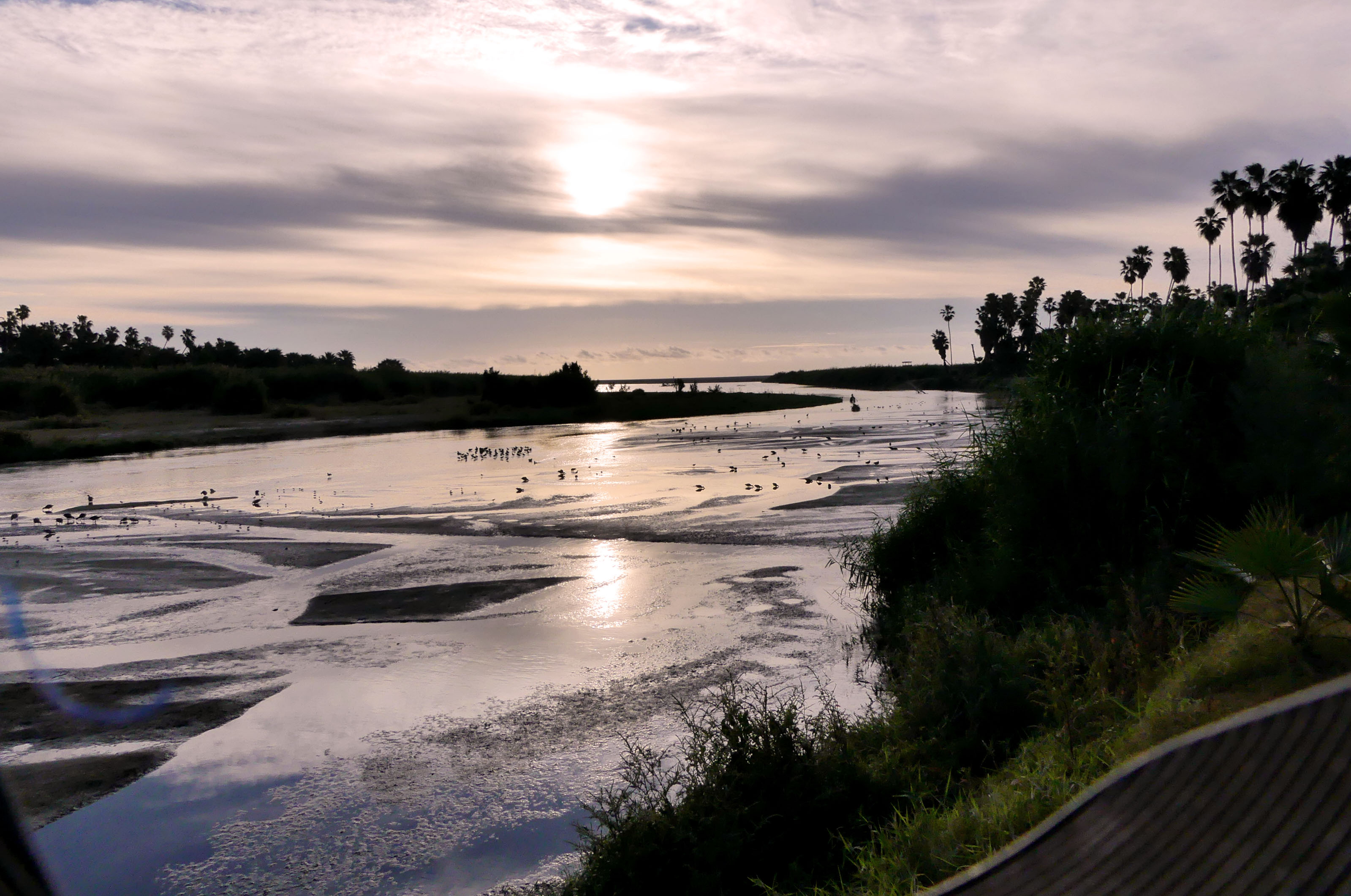
San Jose River Estuary

I took a long hiatus and finally published the third book in my Archie Stevens Mystery series. This one is called Raven Creek. Now, I’m back with nature, mixing birding with a family vacation in San Jose de Los Cabos. I head for the San Jose River estuary every morning just after sunrise. It’s a quiet time, the temperature is perfect, and the birds are active.

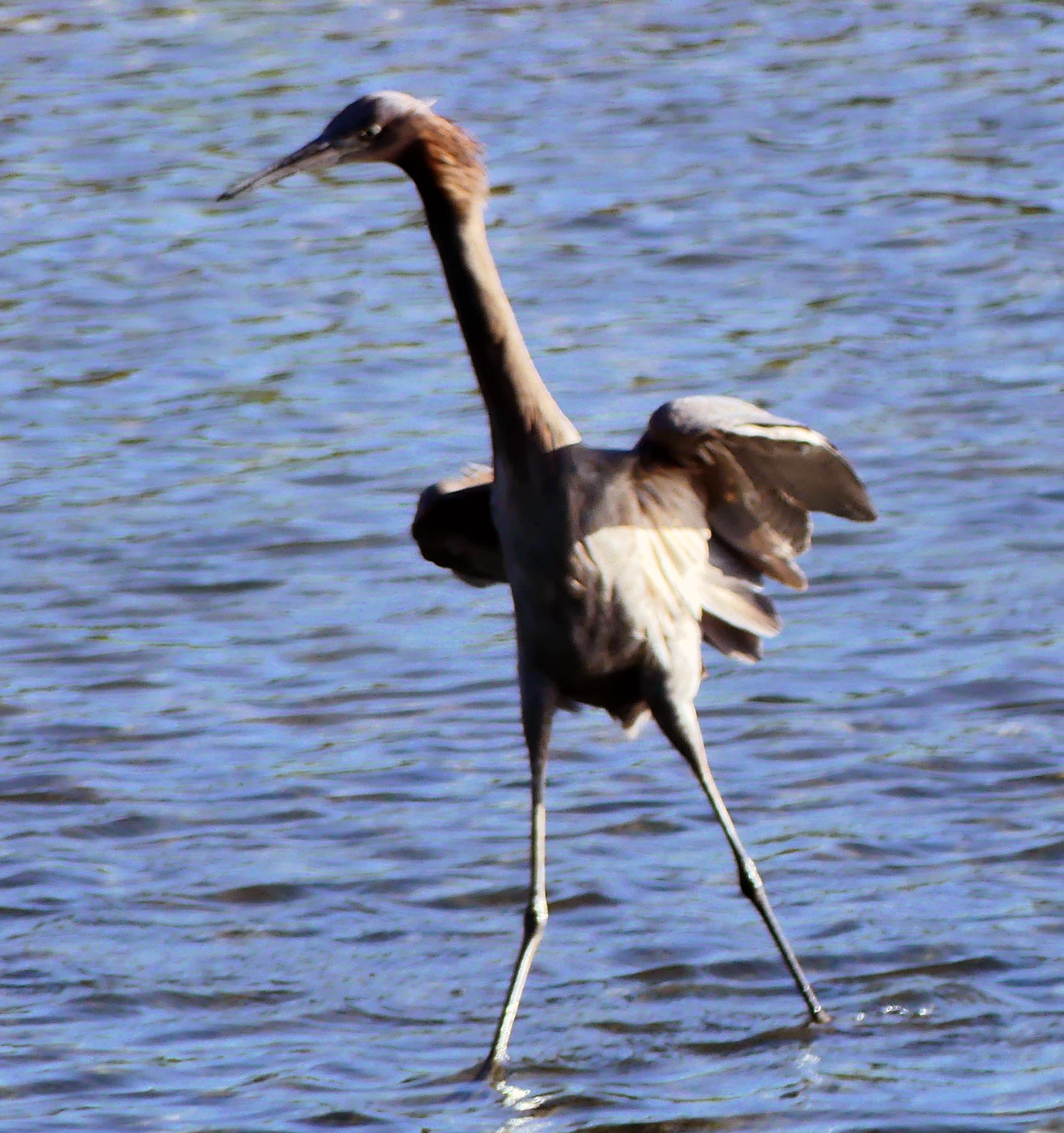
It’s my second visit to this estuary, this haven for dowitchers, egrets, herons, ibis, ducks, and other bird species. A Zone-tailed Hawk appears. A nice surprise. These guys usually pretend to be Turkey Vultures, and drop down on their prey who don’t expect trouble from the relatively harmless Vultures. My old pal, the Reddish Egret, is here, jumping around like a bird possessed. They hunt like this and it must work. I shouldn’t find it comical, I suppose, but I do.

RddEgrtJa2320

Reddish Egret

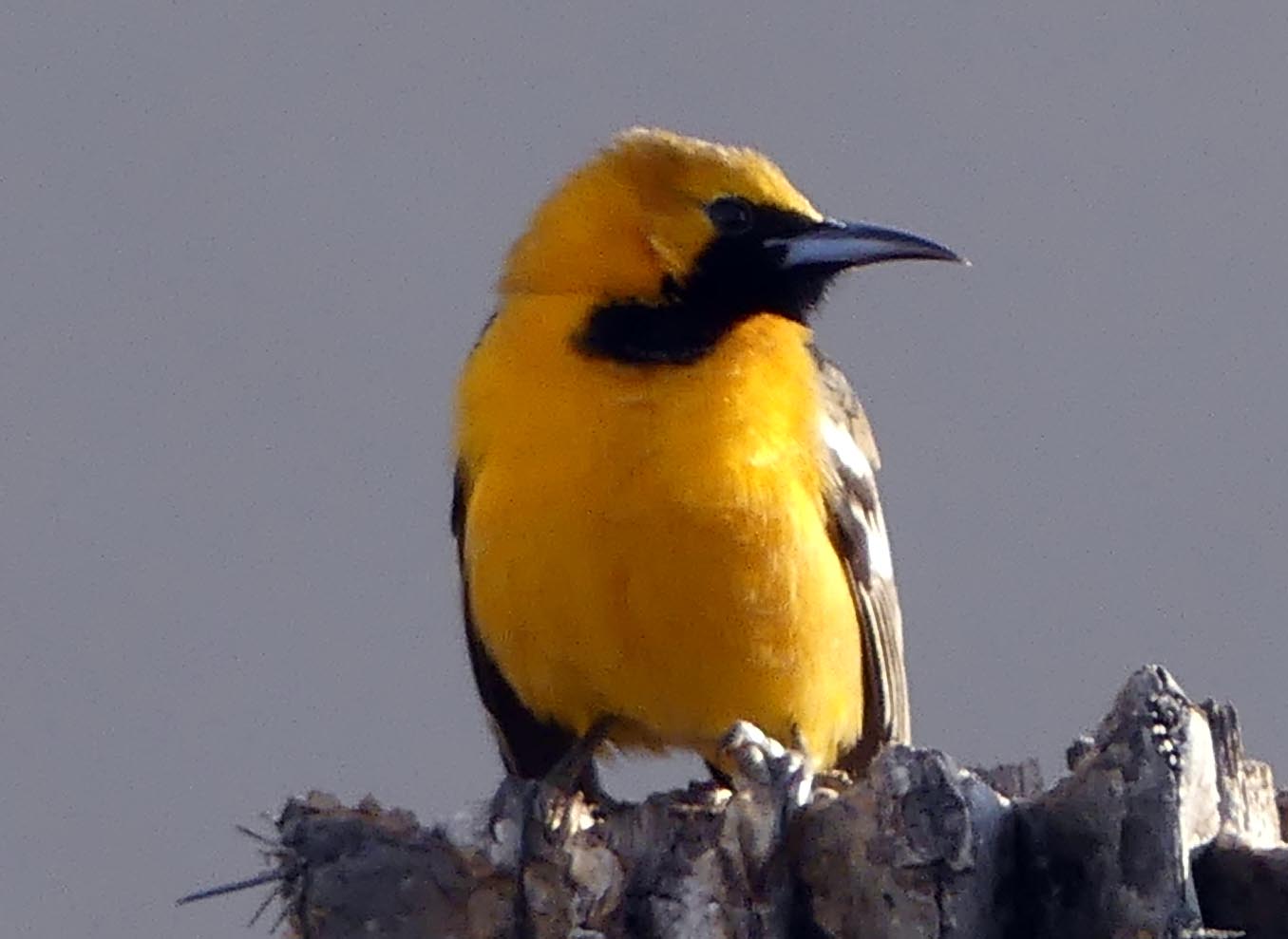
A pair of Hooded Orioles flash past and dive into a Palo Verde, him a bright orange and black, her a soft moss green. They startle a Cactus Wren who lets loose with its rattling call. And Gila Woodpeckers seem to be everywhere, sounding very much like the squeaky toys babies, and dogs, seem to like.

HdOrileJan1518

Hooded Oriole

White-faced Ibis work the shallows, probing with their long, curved bills, dressed as always as if they’ve just come from a funeral, stalking, with excessive gravitas, through groups of very busy dowitchers, plovers, sandpipers, and bright Cinnamon Teal. Lots of activity today and everyday, at least in winter; birds come and go up and down the river, moving from sandbar to sandbar, in constant motion.

WFIbisJa2420

White-faced Ibis – Morning Spruce-up

Several locals told me that a hotel chain is trying to get rid of the bird sanctuary here to clear the way for yet another hotel! It’s hard to imagine such foolishness, but we see a great deal of nonsense in the world these days. The birds, of course, are unaware of this. They are used to visitors and tend to ignore them. You don’t see that everywhere. This is a magical place and I hope it will remain so forever.

A side note: in 1588, two English galleons took on water from this river before they attacked and captured a Spanish treasure ship near the ‘Arches” at San Lucas. One of the ships ‘Desire’ then completed the third circumnavigation of the globe. The other ship, called ‘Content’, didn’t follow Desire and disappeared — loaded to the gunwales with treasure. With a little imagination, you can almost see two galleons standing off beyond the surf, and watch their longboats breaching the breakers so the barefoot crew can fill casks and barrels in the river.


ZThawkJan2320

Zone-tailed Hawk


MocknfinchJa2720

Northern Mockingbird and Chum


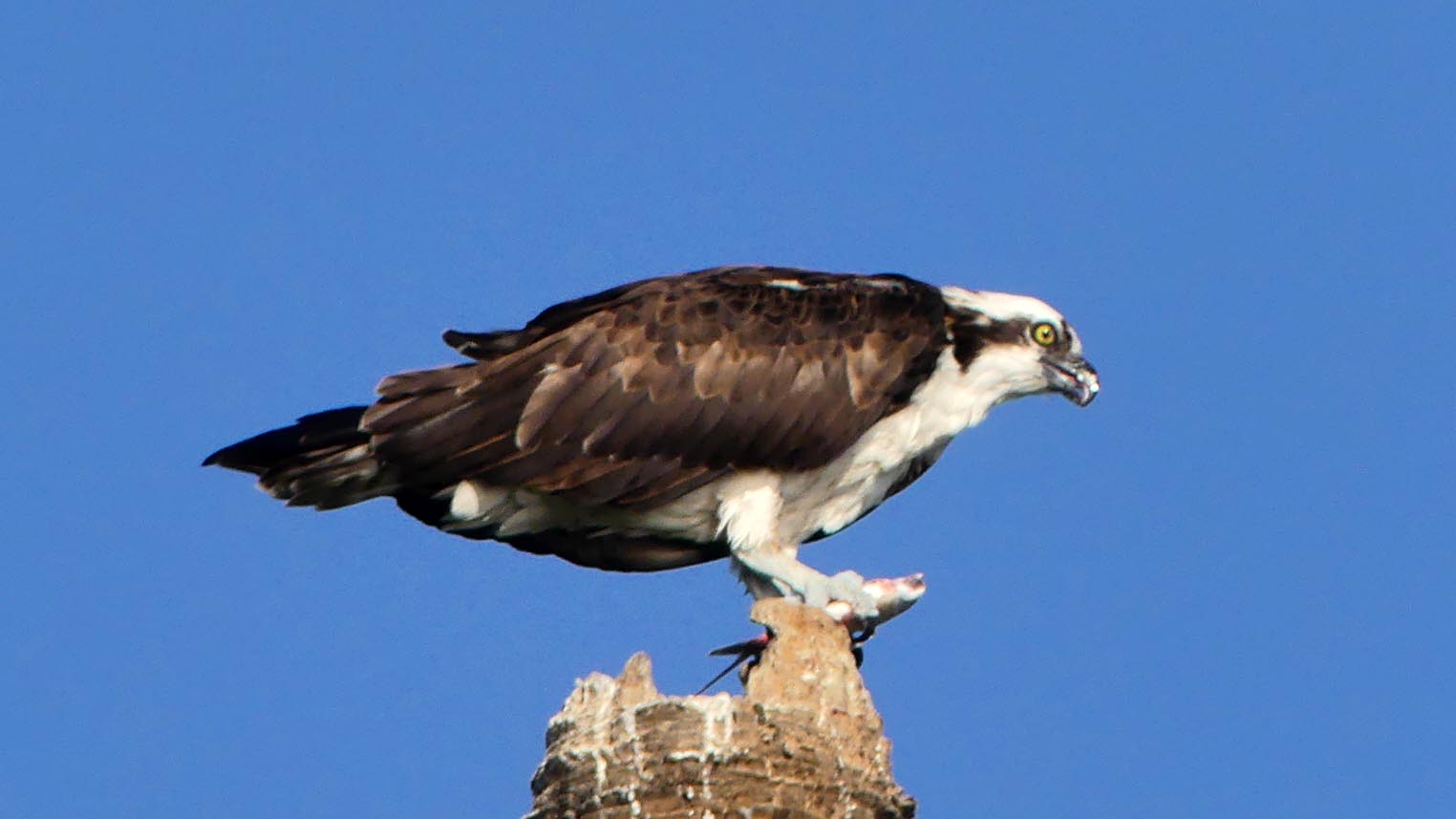
OspJa2320

Osprey Breakfast

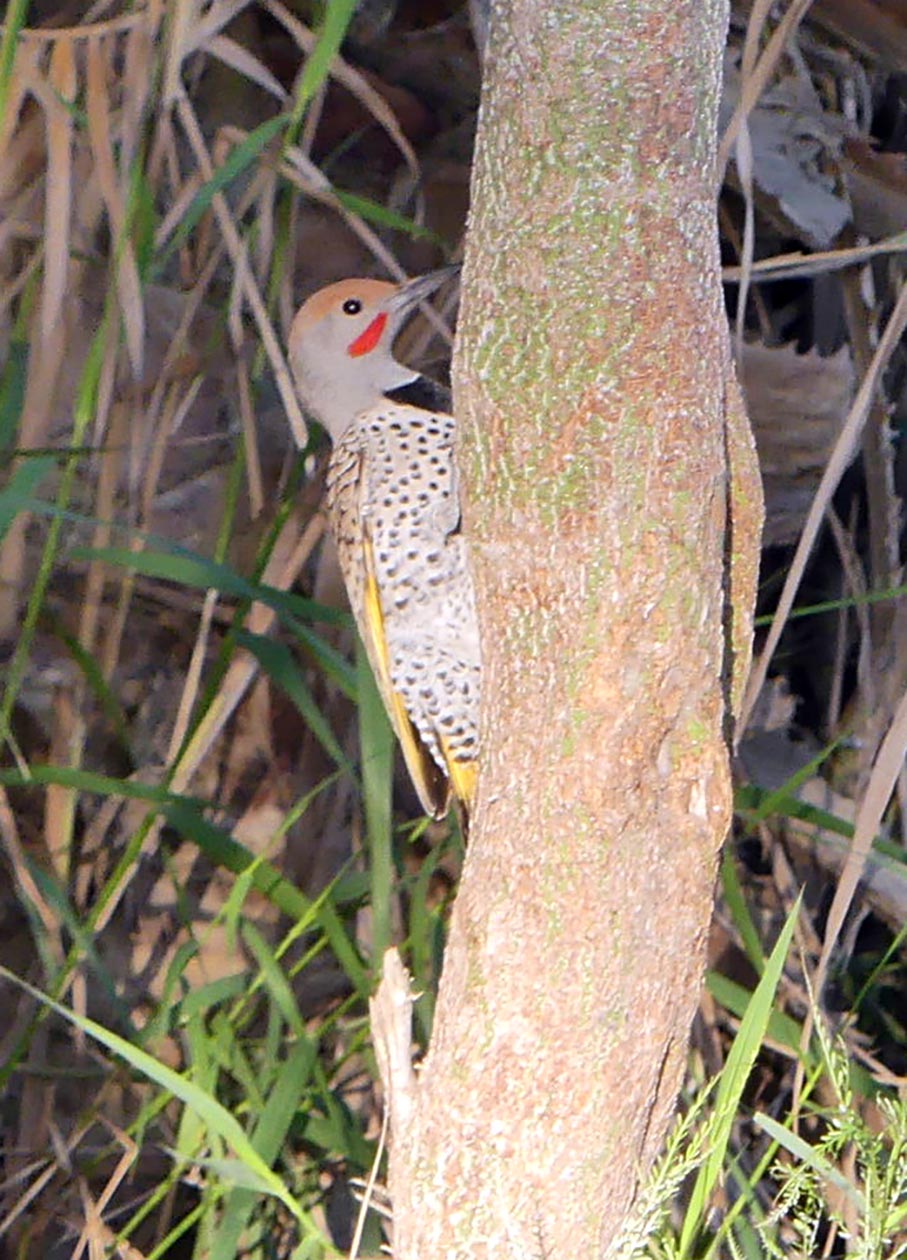
Glddflickja2720

Gilded Flicker

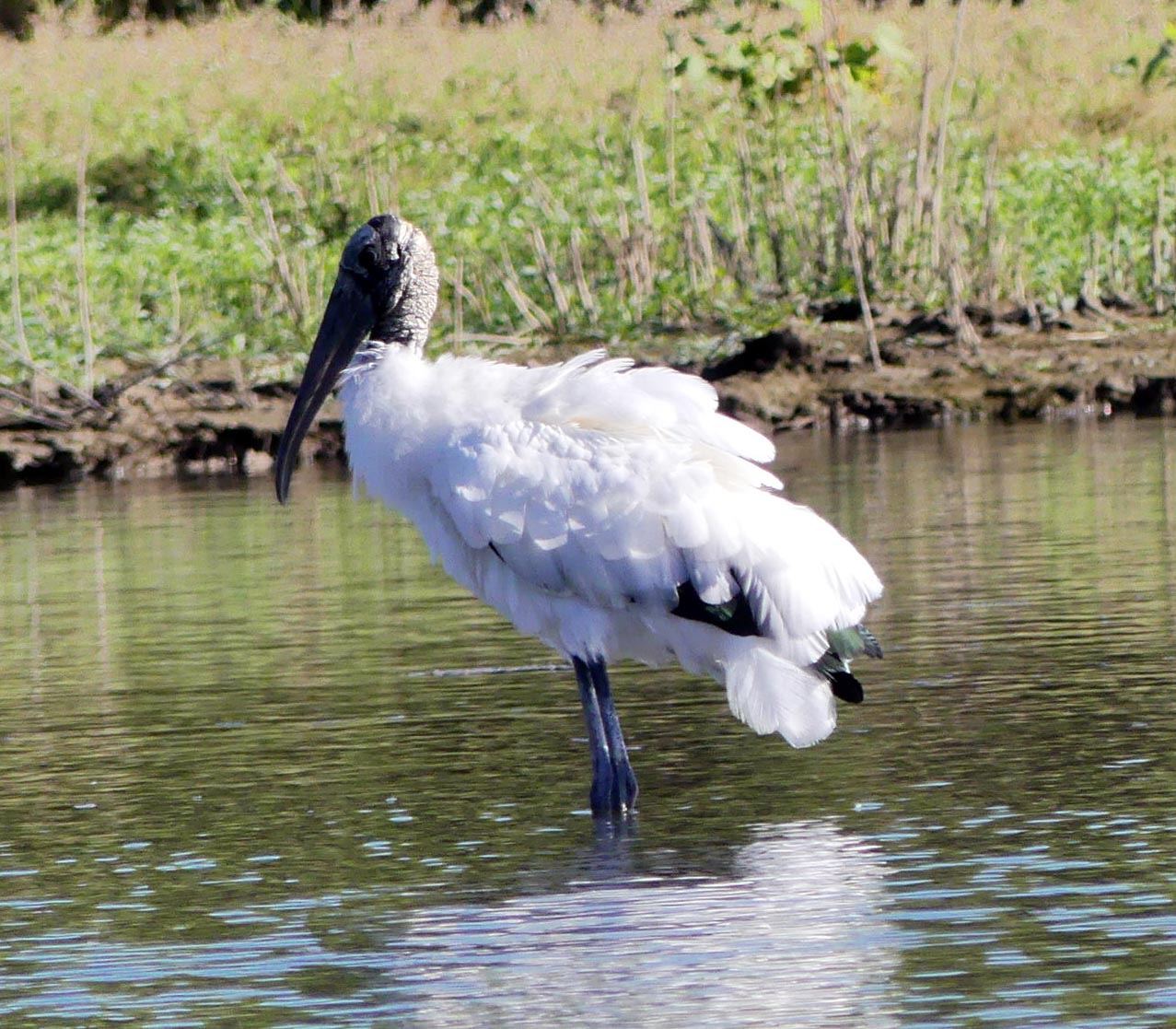
WSrkxJa2720

Wood Stork – rare bird here

CardJa2720

DowitchersJan2220

Long-billed Dowitchers


SanJriverJan2320

The River

Costa Rica Birds and Beasts Continued

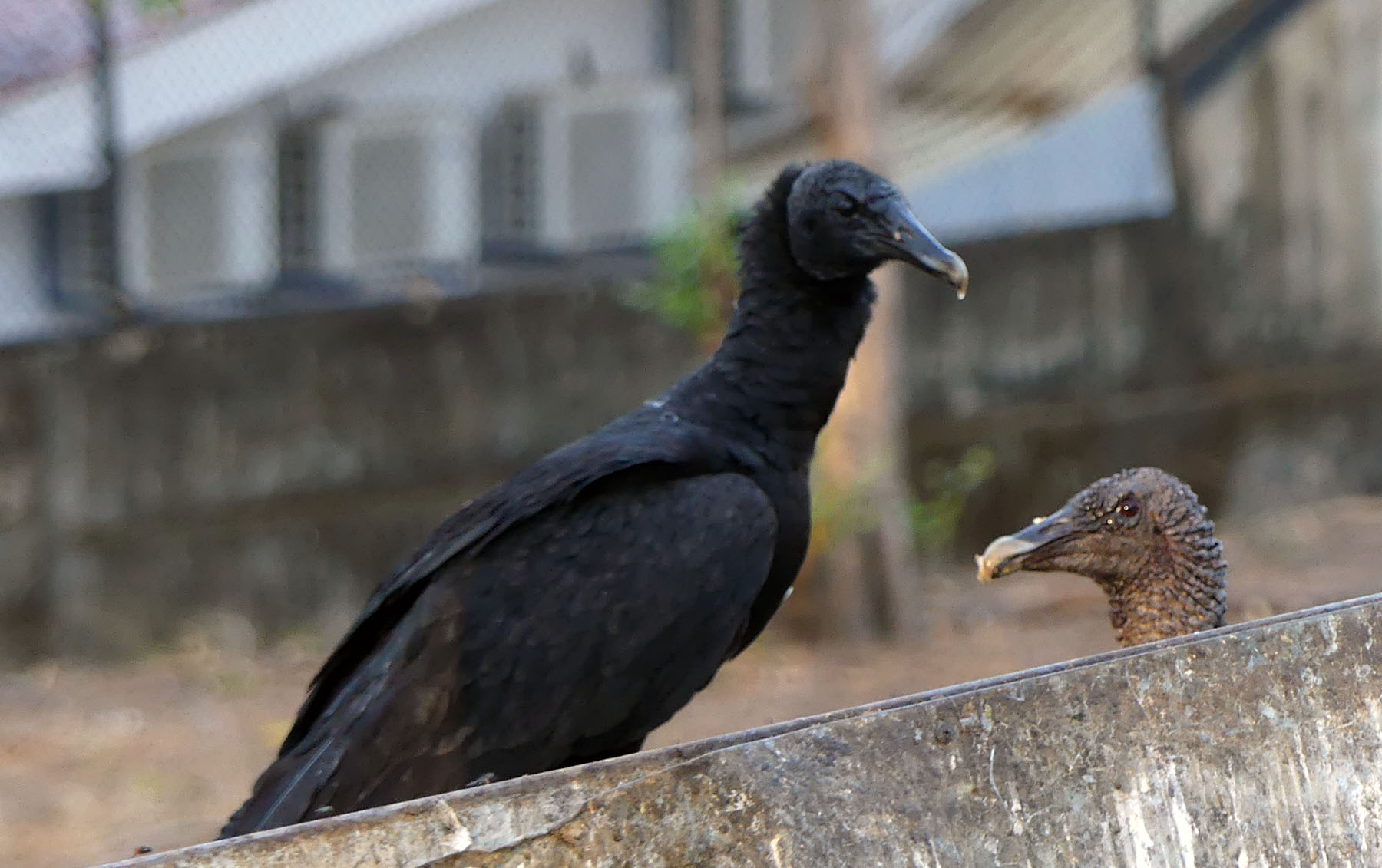
blvultsmar1019

Black Vultures – Okay, we’re not pretty…useful, not pretty.

crstdjaymar1019

White-throated Magpie Jay

crocsmar919

American Crocodiles – Tempisque River

Orngfrontparakeetmar219 Orange-fronted Parakeet

howlrmar1319

Howler

Banaqutmar319

Bananaquit

rufsnapedwrnsmar219

Rufous-naped Wrens

YCnighthrnmar319

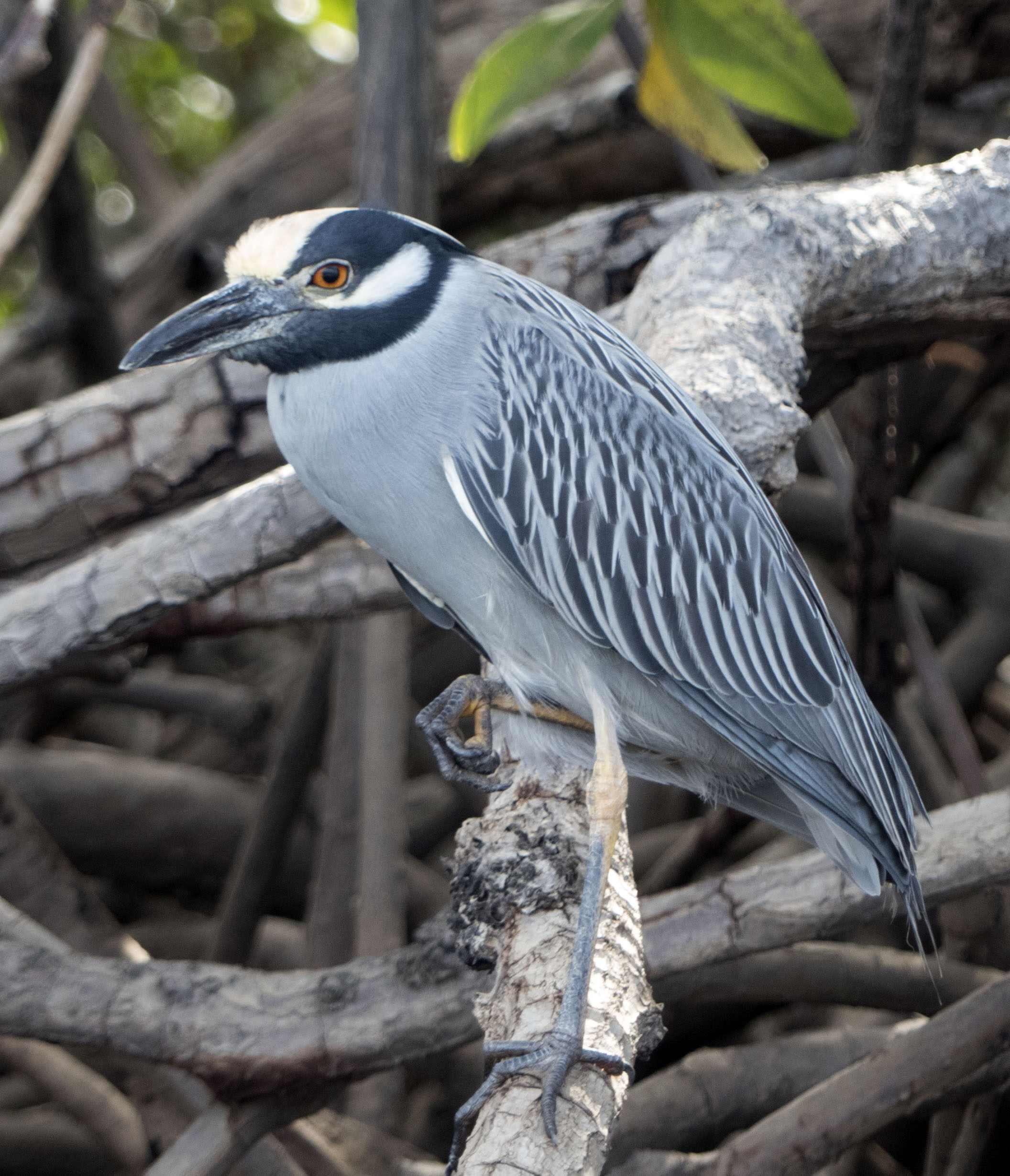
Yellow-crowned Night Heron

oropendulanests

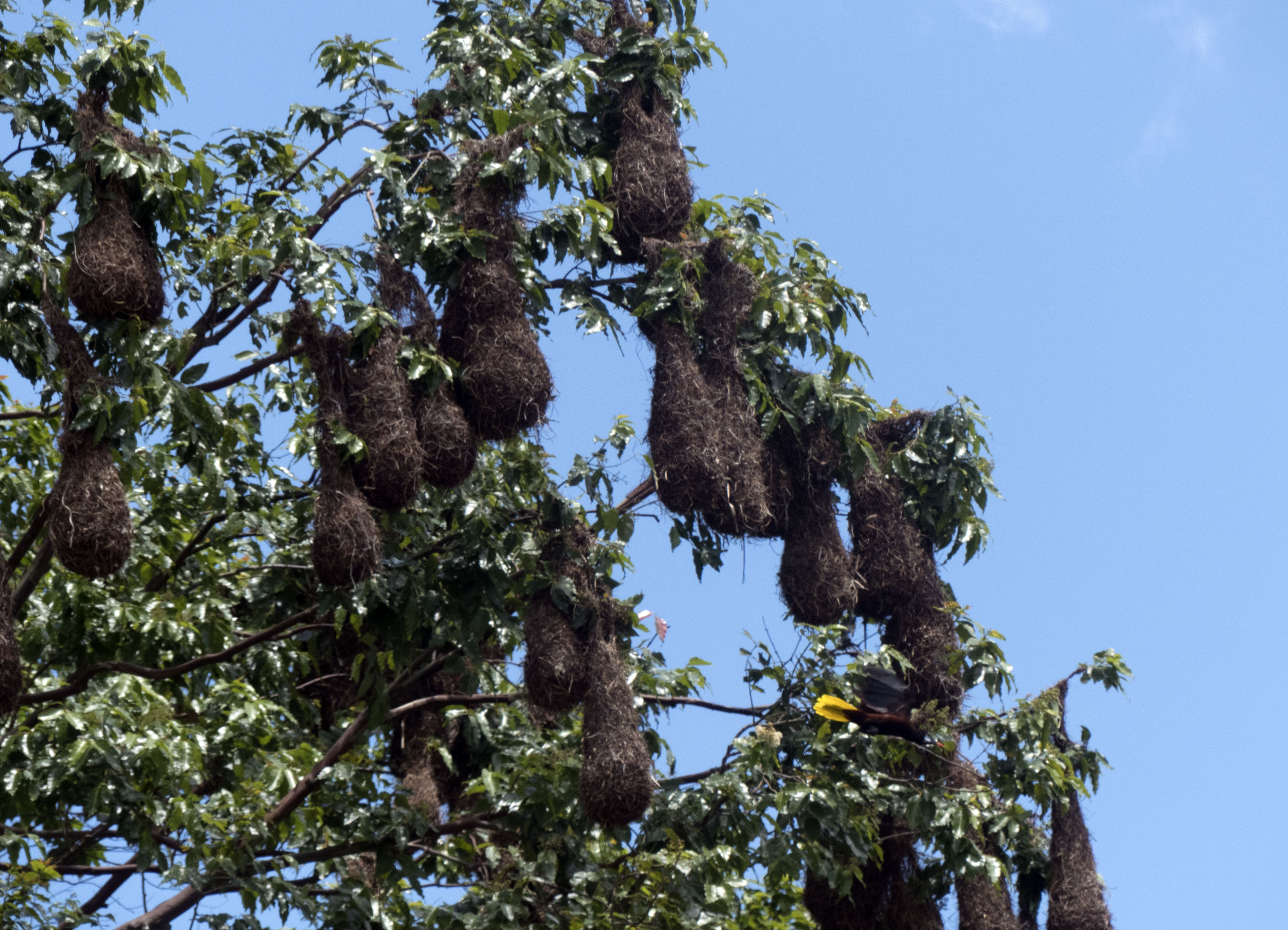
Oropendola Colony

Tamarindoorchsmar319

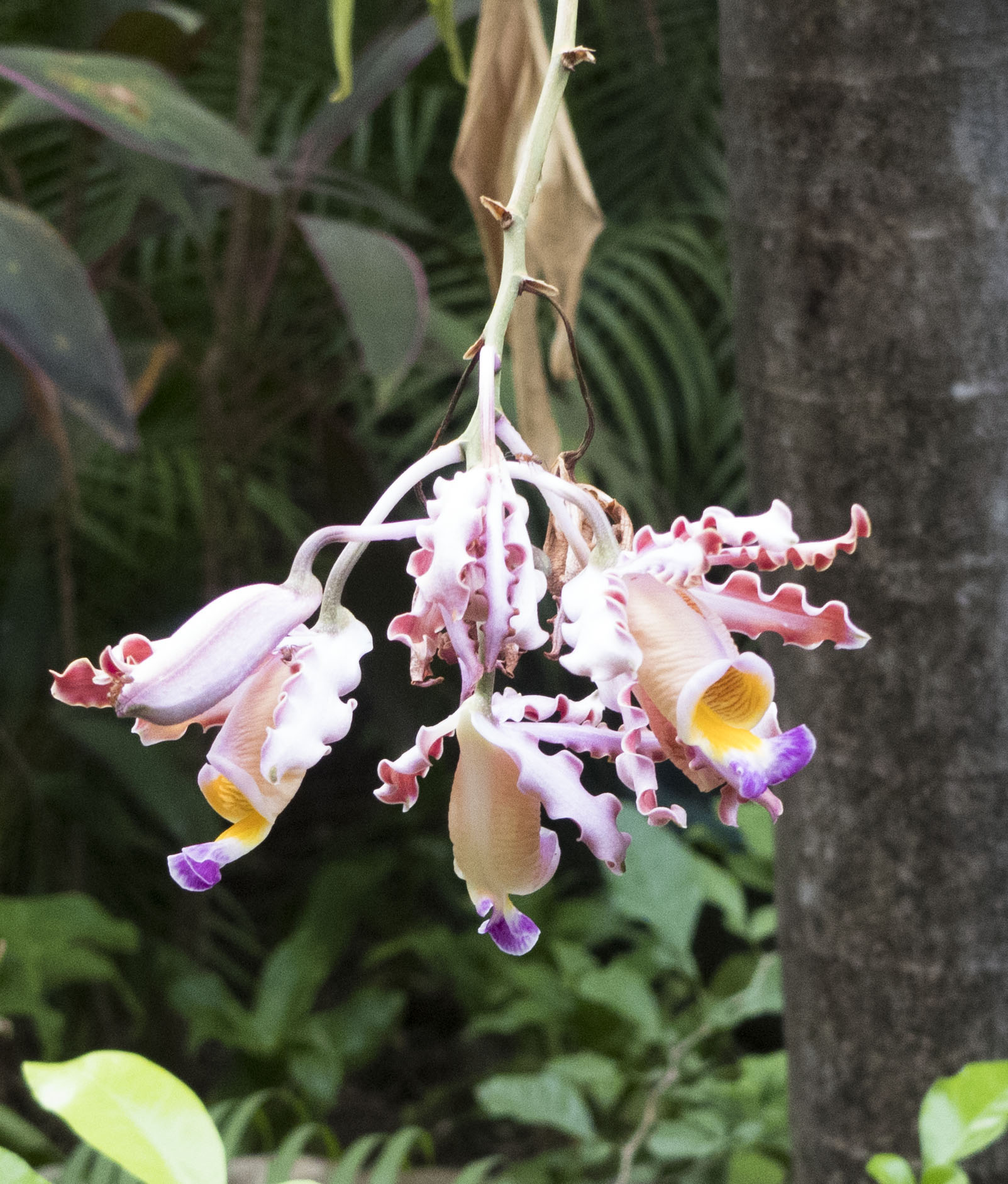
Orchid

clyclrdthrushmar1319

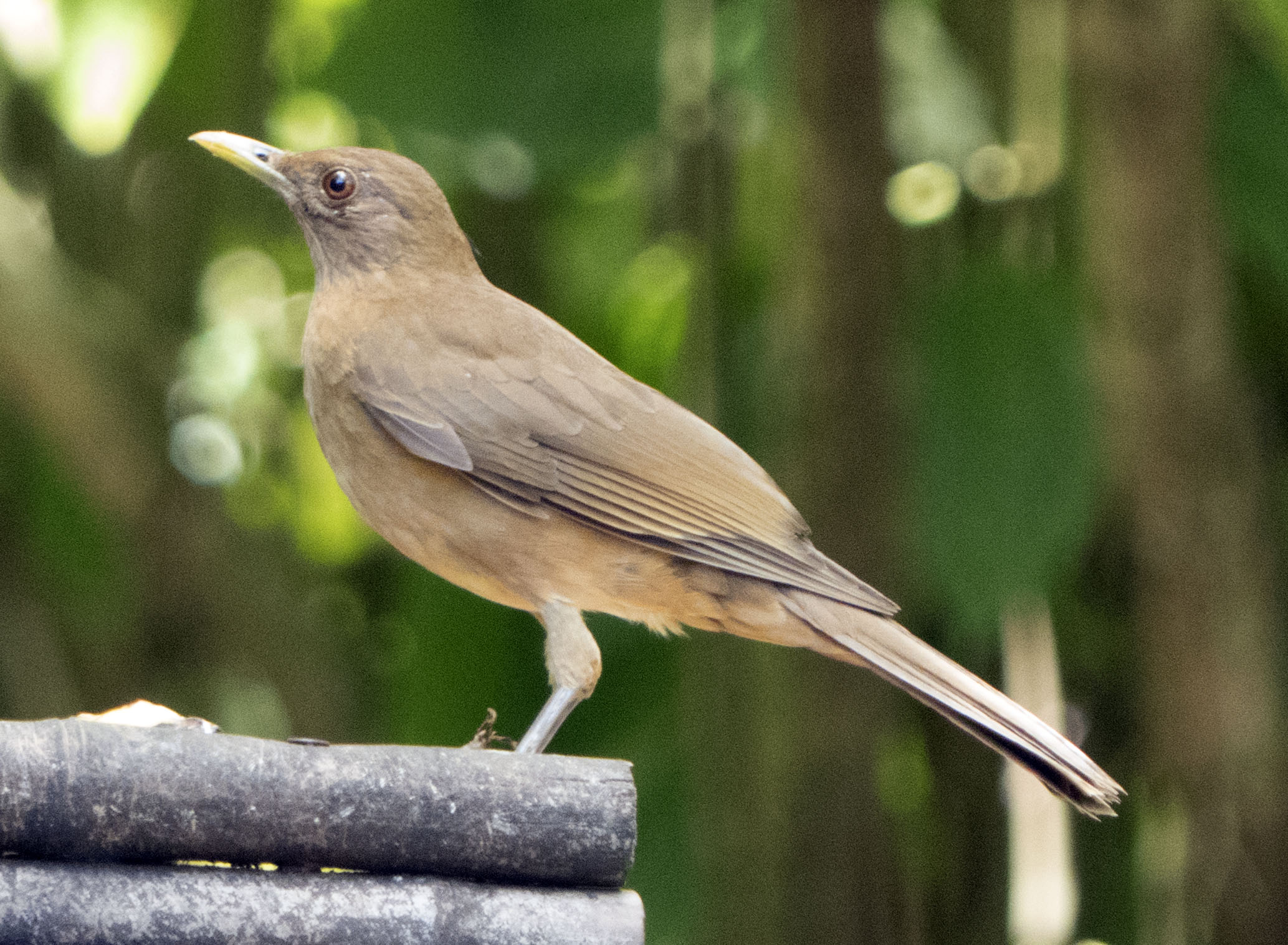
Clay-colored Thrush

Stick InsectMar519

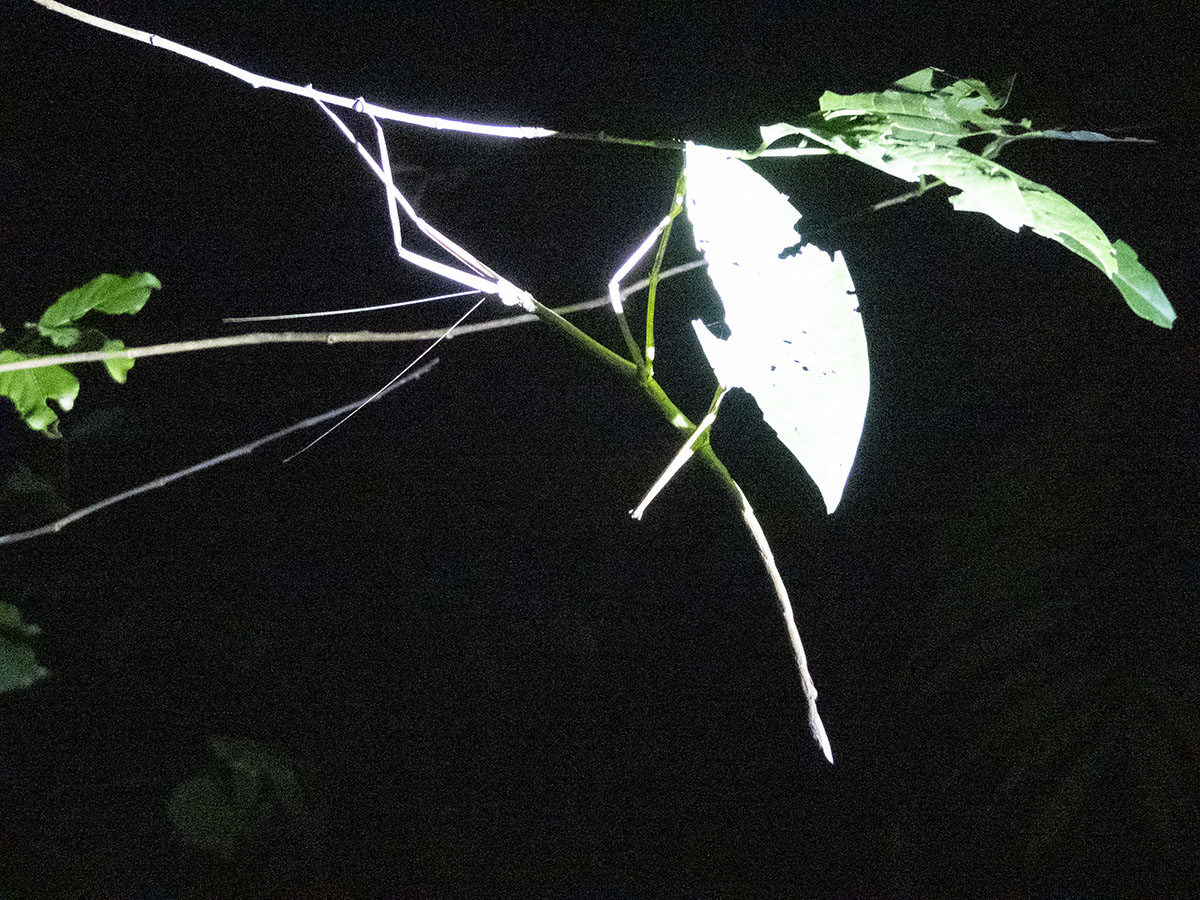
Stick Insect

VarsqurllMar14

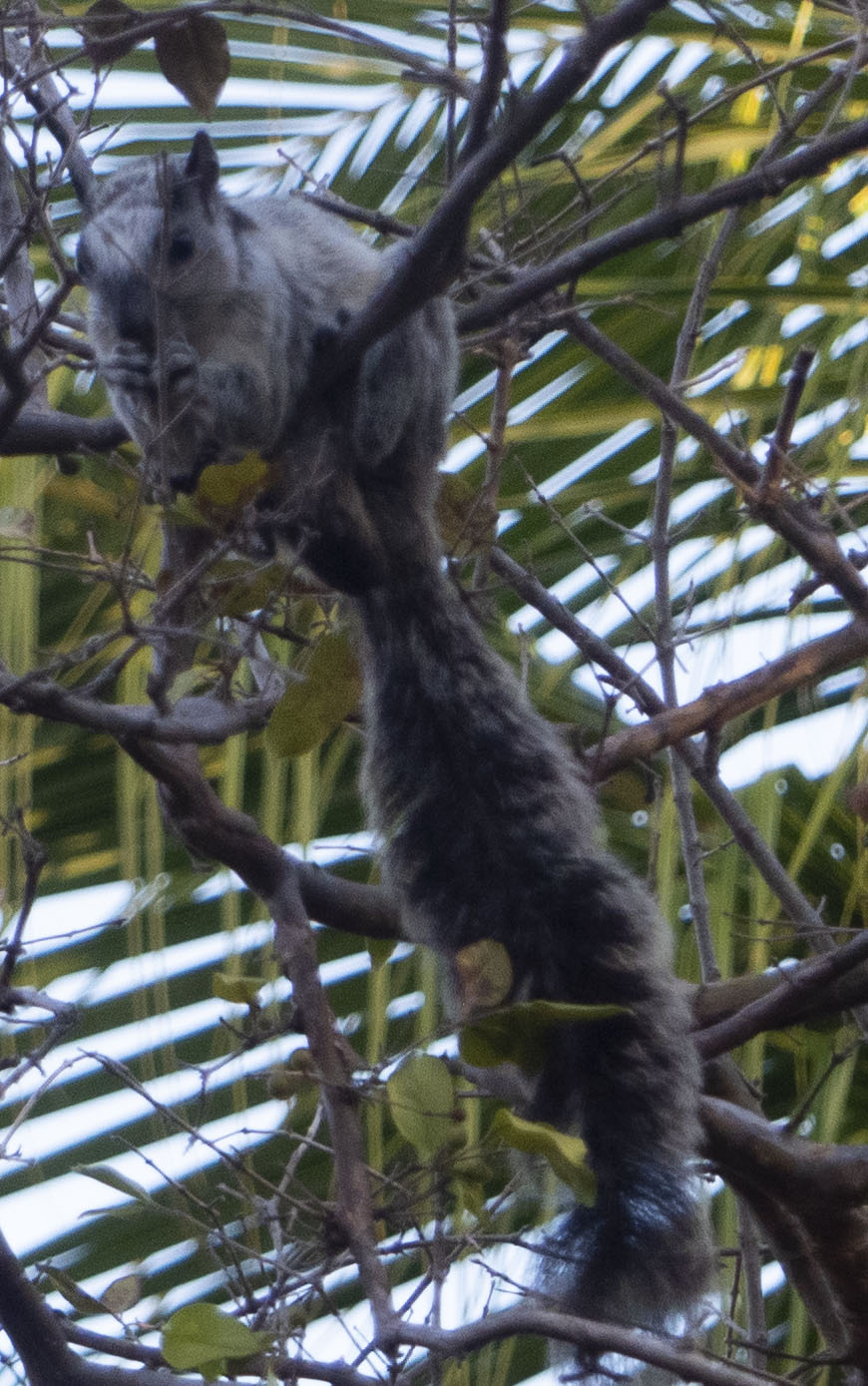
Variegated Squirrel

HMonkMar619

I’m Done…


Costa Rica Wildlife

Decades ago, some friends and I planned to drive the Pan-American Highway from Vancouver BC to Tierra Del Fuego. It never happened. The 1956 VW van I’d rebuilt and camperized never made it to Costa Rica — the government of that country took the time to us well. I finally got to the, for me, fabled highway. Not as glamorous as I thought, incidentally. More important, I got to experience Costa Rica’s wonderful wildlife.

howlmonk1mar619

Howler Monkey

FerrpygpwlMarch1419

Ferruginous Pygmy Owl

rdlghcrpmar1319

Red-legged Honeycreeper

Currasmar919

Crested Currasow

strkbkormar1019

Streak-backed Oriole

Blcwldorlmar619

Black-cowled Oriole

JabiruMar919

Jabiru

bhtrogmar1319b

Black-headed Trogon

MomtMar319

Turquoise-browed Motmot

yellowishflymar619

Yellowish Flycatcher

wfamazmar919

White-fronted Amazon


Monteverde

monteverde1

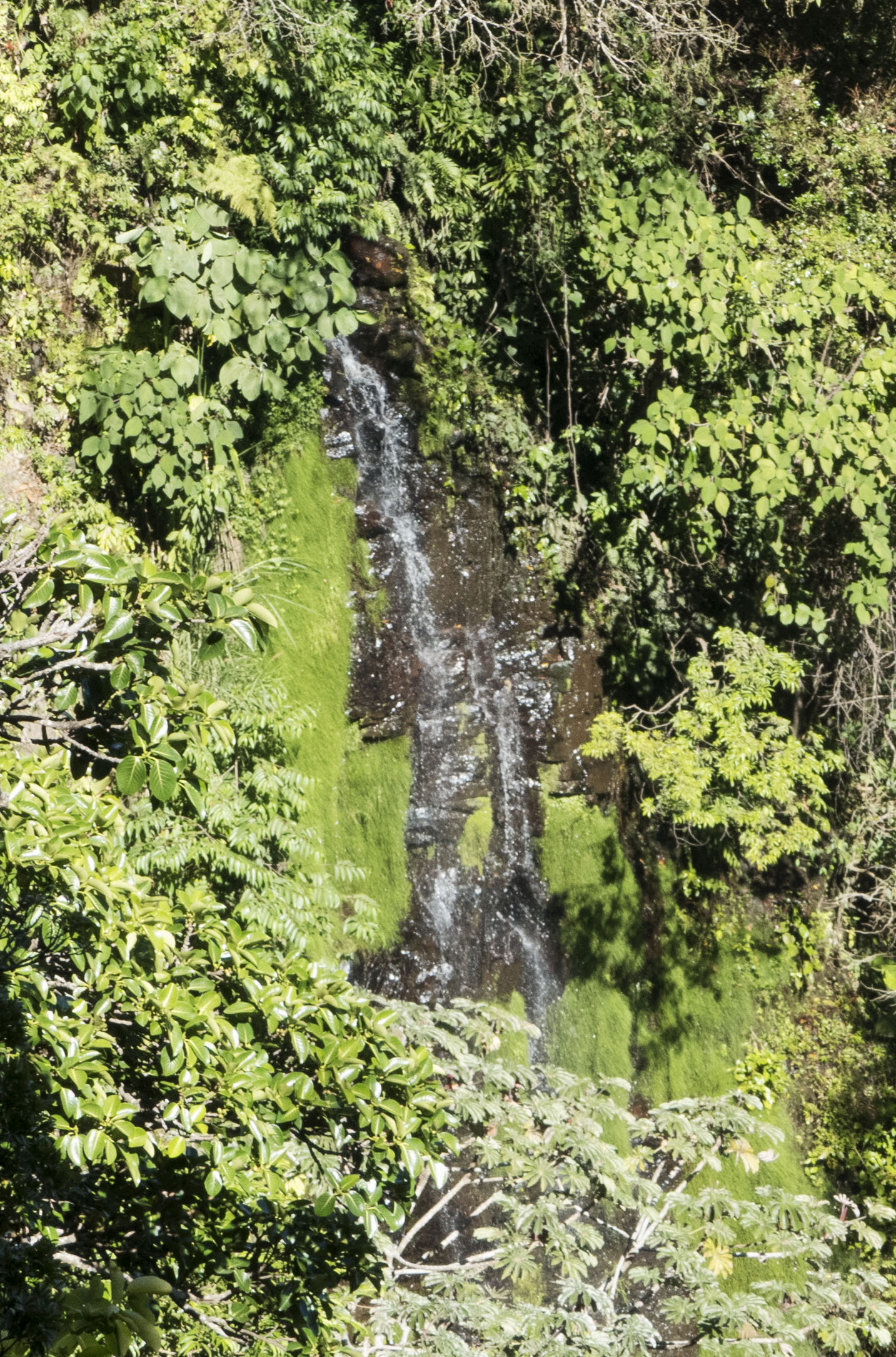
Monteverde Waterfall

We needed our down jackets up here. After a few nights of winds strong enough to move furniture, plus intermittent rain, we finally entered Monteverde’s Cloud Forest. Noisier than we expected. Three-wattled Bellbirds are the main culprits. Although they make, we think, some of the loudest bird calls anywhere, they are devilishly difficult to track down — even when they open their big mouths and bellow. But Bellbirds aren’t the only prizes. The Resplendent Quetzal tops the list of Cloud Forest must-sees. We get lucky. Gorgeous. So many more birds in this delightful country. I recorded over eighty lifers in Costa Rica and missed a few hundred more.

Three-wattled Bellbird

crstdguanmar619

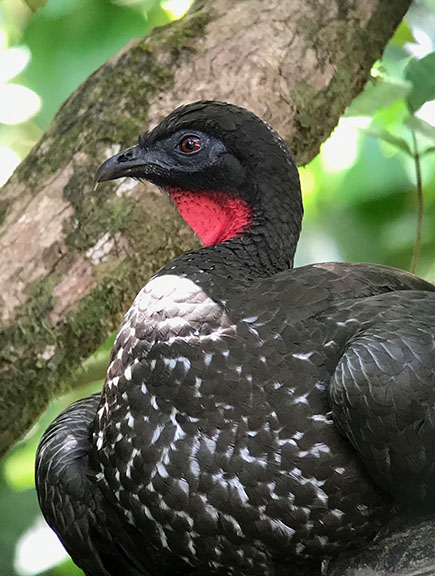
Crested Guan

ResplquetzlMar619

Resplendent Quetzal

violetearmar619

Violetear

bcrndmtmtMar619

Turquoise-browed Motmot

Hoffmanswdmar619

Hoffman’s Woodpecker

Palmtanmar619

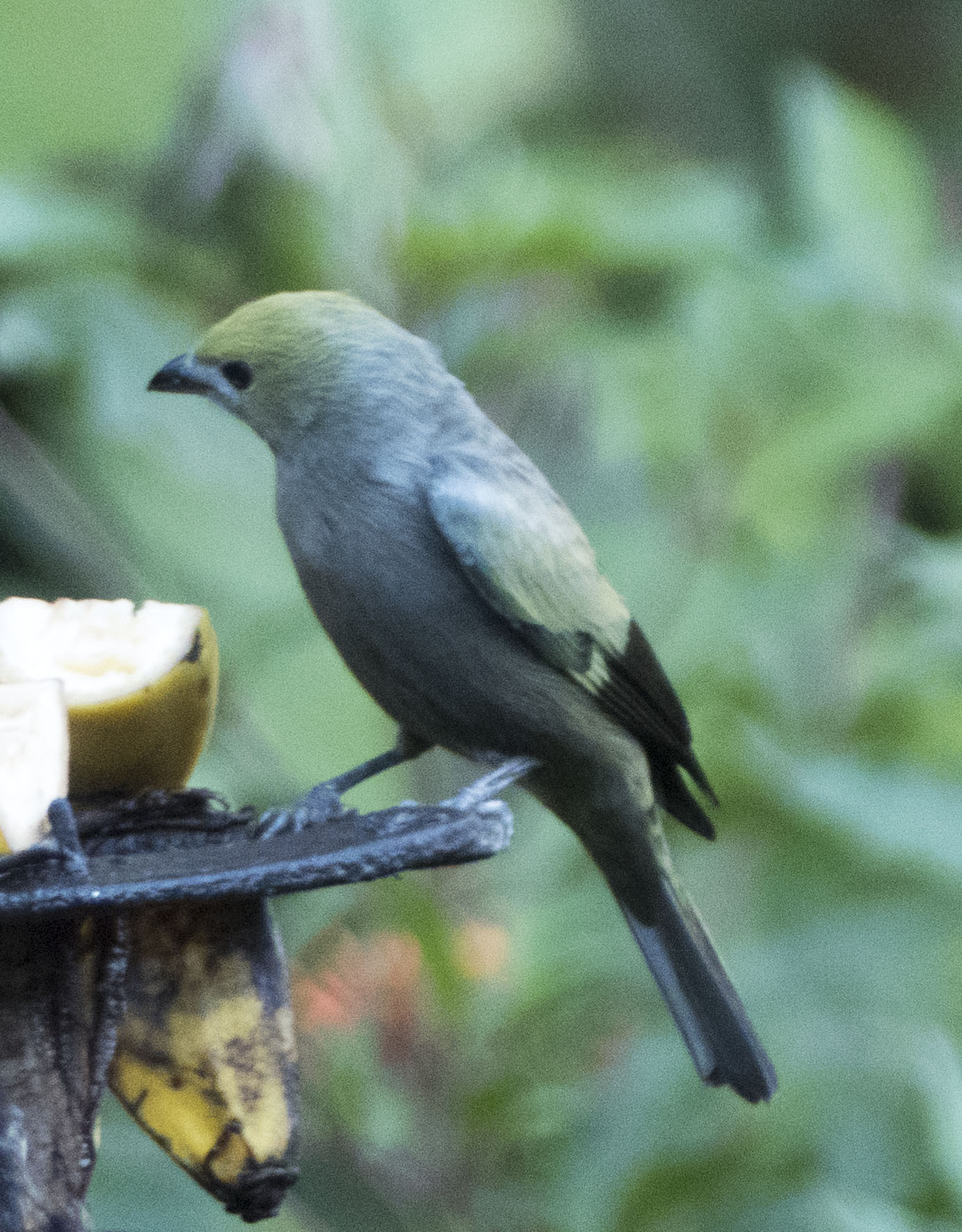
Palm Tanager

WCGrndsparrmar619

White-eared Ground Sparrow